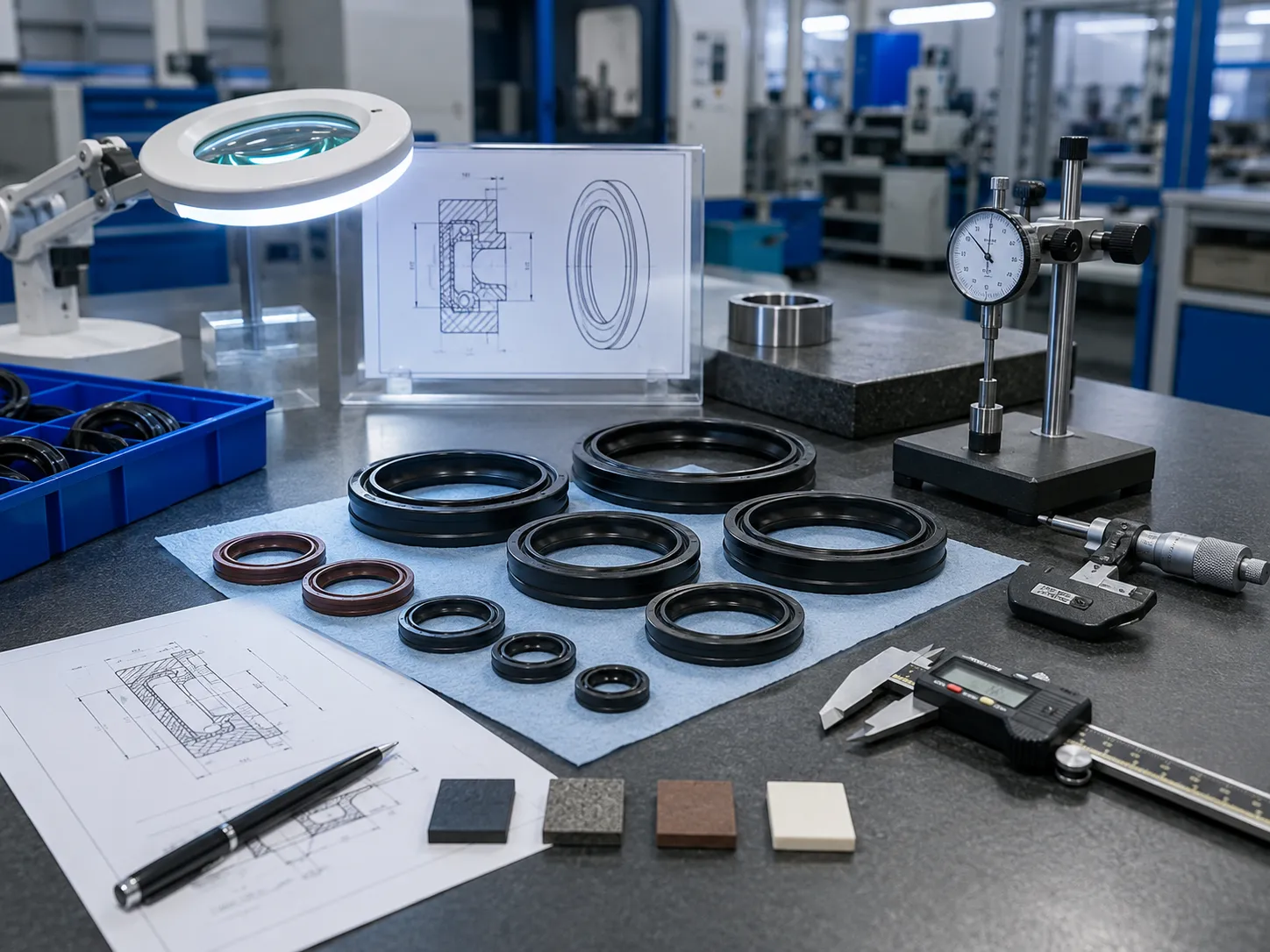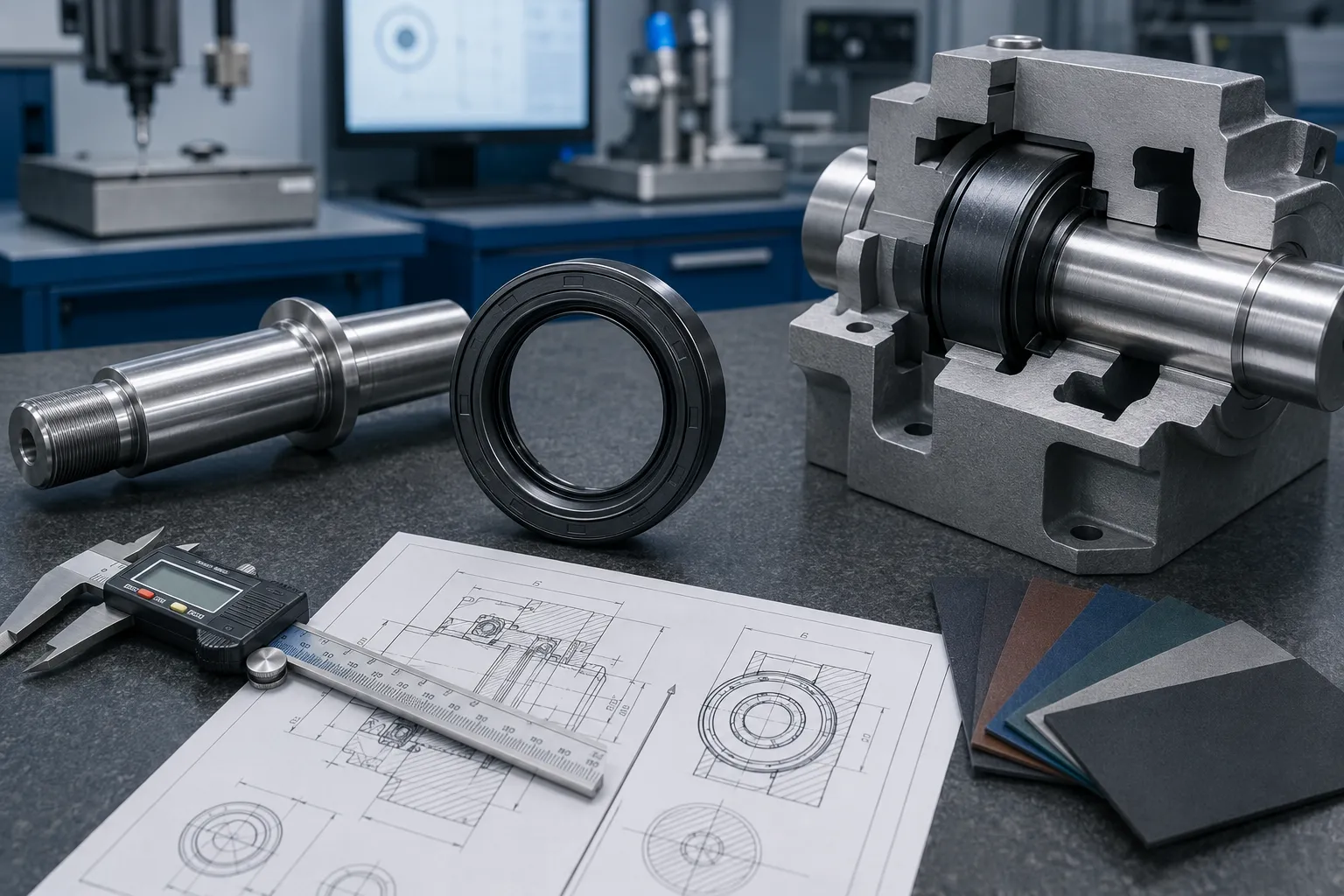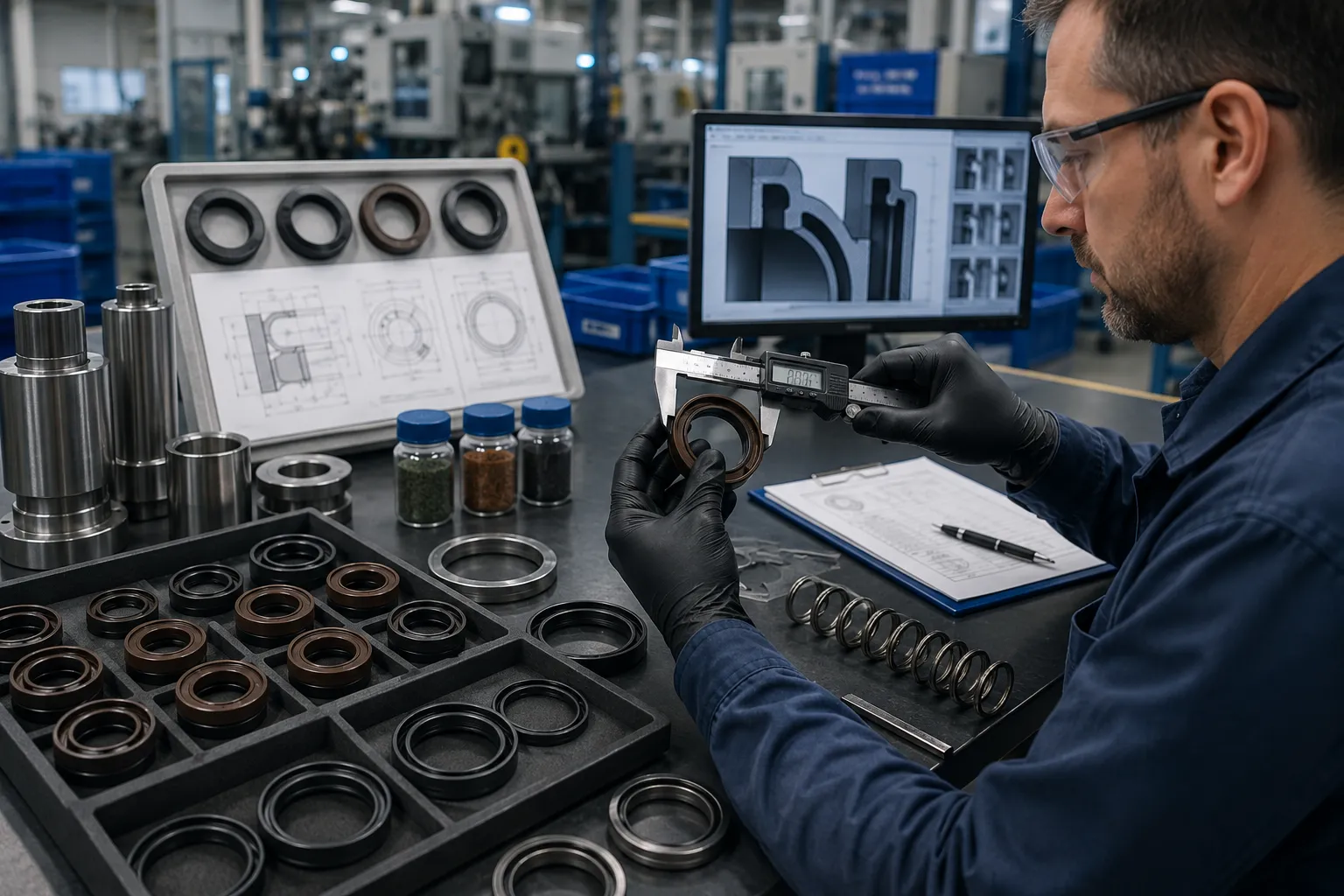
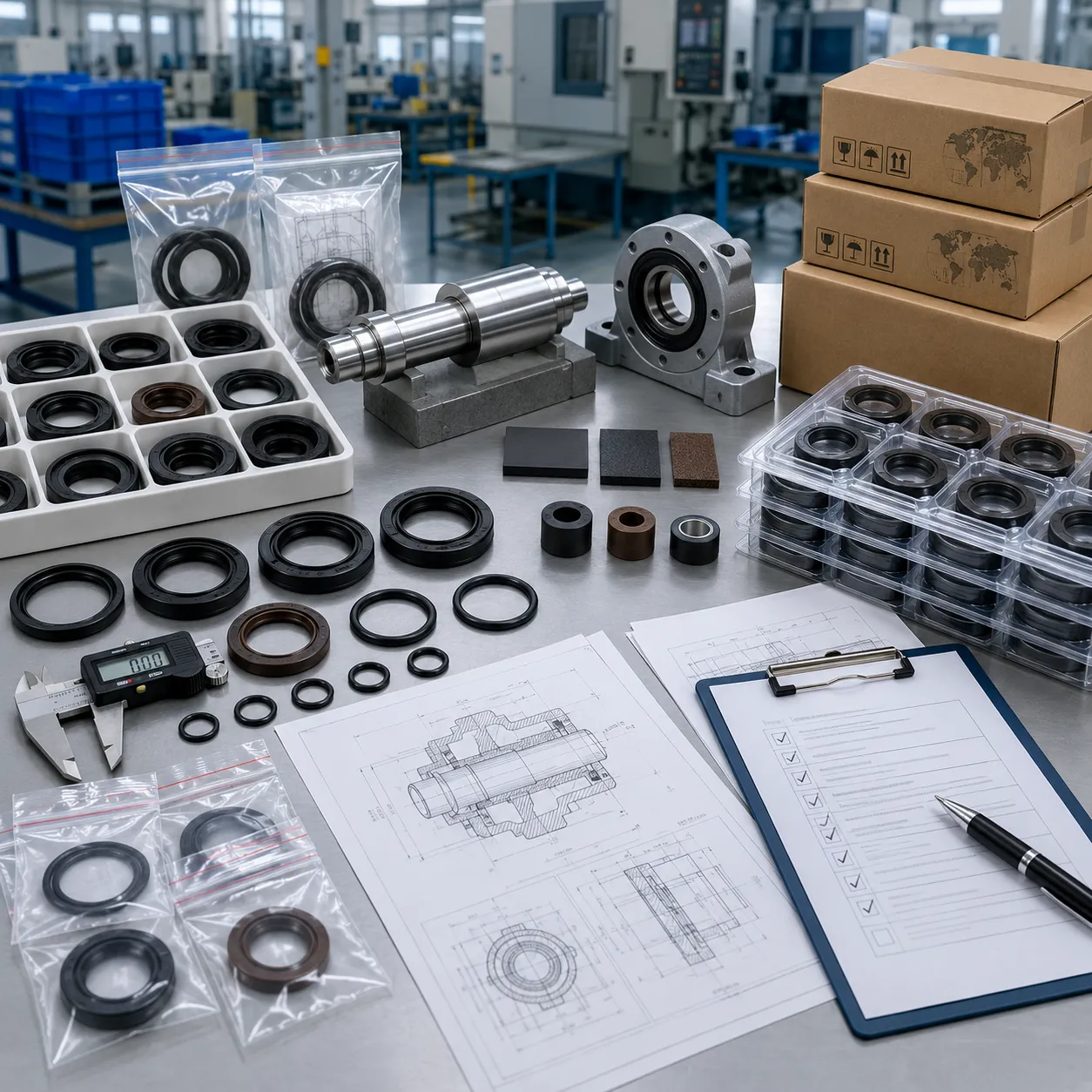
Wholesale O-rings and oil seals are often purchased together because both products are used in engines, transmissions, pumps, gearboxes, hydraulic systems, agricultural machinery, industrial equipment, and maintenance programs.
However, they should not be evaluated in exactly the same way.
An O-ring may look simple, but its performance can depend on material, hardness, cross-section, tolerance, fluid compatibility, temperature, pressure, groove design, and compression condition.
A rotary oil seal may have the same ID, OD, and width as another product but still differ in lip profile, material, spring quality, outer diameter structure, dust-lip design, shaft contact position, and suitability for the real operating environment.
This means the lowest quotation is not always the lowest long-term cost.
A low-priced seal that does not fit correctly, hardens too early, leaks under temperature, fails after contact with the wrong fluid, or varies between production batches can create repeat maintenance, customer complaints, inventory loss, shipping costs, and downtime.
The right purchasing process should confirm the product specification before production begins, verify samples before a larger order, define packaging and labeling requirements, and create a repeat-order reference that reduces ambiguity later.
This guide explains what importers should check before ordering O-rings and oil seals from China.
Why O-Rings and Oil Seals Need Different Buying Checks
O-rings and oil seals are both sealing products, but they work in different ways.
An O-ring is usually compressed between two stationary or moving surfaces to prevent fluid or gas from escaping. It may be used in static sealing, hydraulic systems, pneumatic systems, pumps, valves, fittings, cylinders, engines, and many industrial assemblies.
A rotary oil seal is designed to retain lubricant around a rotating shaft. It commonly uses a sealing lip, spring, elastomer body, metal reinforcement, and sometimes an auxiliary dust lip.
Because the sealing principles are different, the product information required for purchasing is also different.
For O-Rings, Confirm:
Inner diameter
Cross-section diameter
Material
Hardness
Color requirement, if relevant
Fluid compatibility
Temperature range
Pressure condition
Static or dynamic use
Groove dimensions
Existing standard or reference
Quantity per size
Packaging requirement
For Oil Seals, Confirm:
Inner diameter, or shaft diameter
Outer diameter, or housing bore diameter
Width
Seal type
Main lip and dust-lip arrangement
Material
Garter spring requirement
Rubber-covered or metal-cased outer diameter
Shaft speed
Fluid type
Operating temperature
Pressure condition
Shaft condition
Housing bore condition
Installation depth
Original sample, drawing, or OEM reference
A supplier can quote a product quickly from a size list.
But a reliable order should be based on the actual operating condition, not only on a nominal dimension.
Start With a Clear Product Specification
The first step is to define the product requirement before requesting quotations.
A request such as “Need 500 oil seals, 35 × 52 × 7 mm” is incomplete.
A request such as “Need 500 FKM TC oil seals, 35 × 52 × 7 mm, spring-loaded, double lip, rubber-covered OD, for a high-temperature engine oil application” gives the supplier a much better basis for quotation and sample confirmation.
The same principle applies to O-rings.
A request such as “Need 1,000 O-rings, 20 × 3 mm” may not be enough.
The supplier may need to know whether the O-ring is for mineral oil, fuel, water, air, hydraulic fluid, refrigerant, chemical exposure, or another medium. They may also need to know whether it is static, dynamic, high-pressure, high-temperature, or used in an outdoor environment.
A Practical O-Ring Inquiry Example
Product: O-ring
Size: ID 20 mm × cross-section 3 mm
Material: NBR or FKM, supplier to recommend based on application
Hardness: confirm suitable hardness for the application
Fluid: mineral hydraulic oil
Operating temperature: up to 100°C
Application: static hydraulic fitting
Quantity: 5,000 pcs
Requirement: individually sealed bags by size, carton labels with size, material, quantity, and batch reference
A Practical Oil Seal Inquiry Example
Product: Rotary oil seal
Size: 35 × 52 × 7 mm
Type: TC-style, spring-loaded primary lip plus dust lip
Material: FKM required
Fluid: engine oil
Operating temperature: elevated temperature near engine timing area
Shaft condition: smooth, no visible wear groove
Housing: standard machined bore
Quantity: 2,000 pcs
Requirement: sample approval before bulk production, labeled inner bags, export cartons, and product-size confirmation before shipment
A detailed request reduces the risk of comparing products that only appear equivalent.
Confirm O-Ring Dimensions, Material, and Hardness
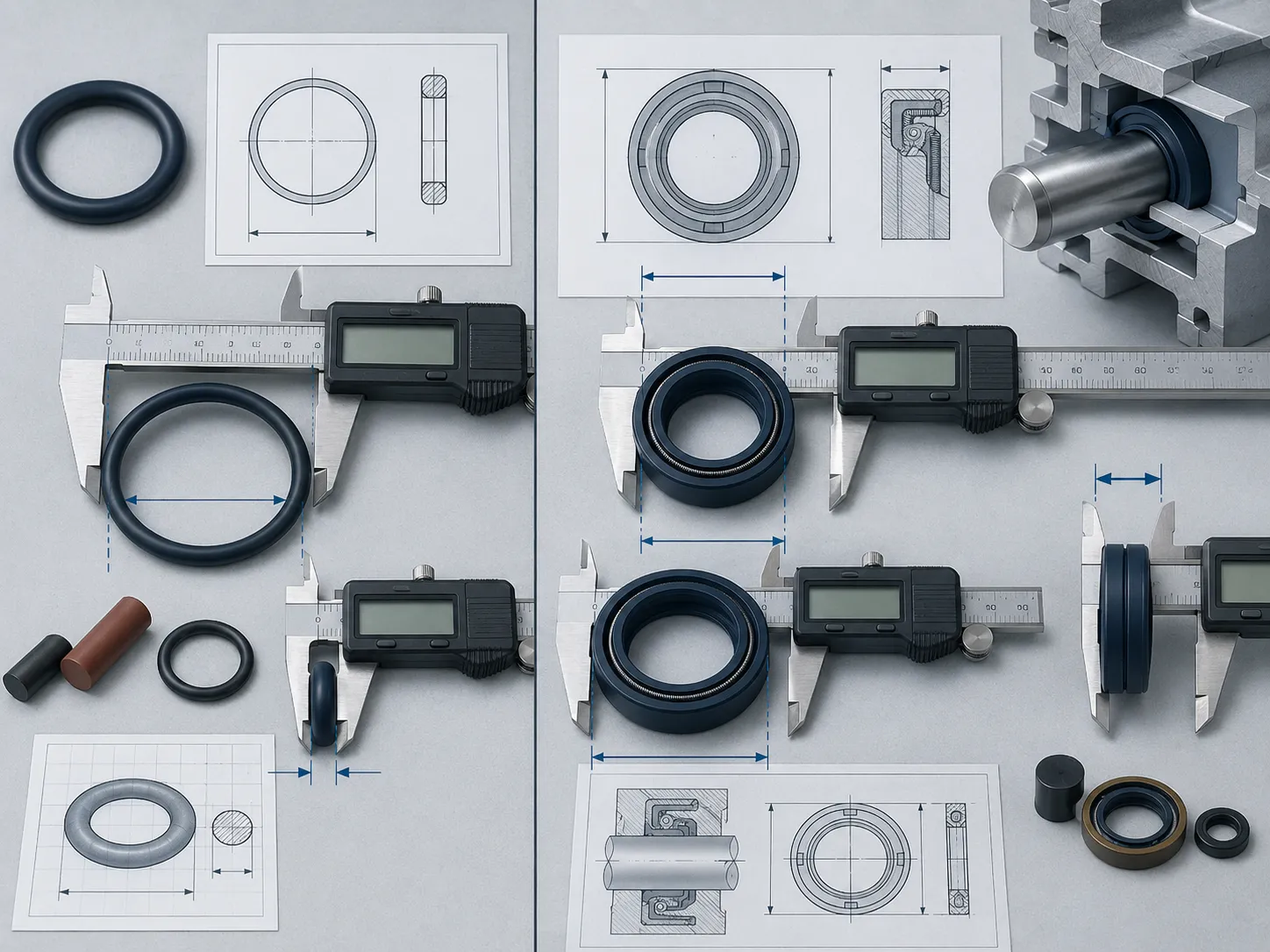
O-ring dimensions should be checked carefully before ordering.
The most common measurement is:
Inner Diameter × Cross-Section Diameter
For example:
20 × 3 mm
This usually refers to a 20 mm inner diameter and a 3 mm cross-section diameter.
However, the same general size can still perform differently depending on:
Material
Hardness
Tolerance
Surface finish
Compression condition
Groove size
Pressure level
Fluid type
Temperature
Dynamic or static movement
Chemical exposure
Why O-Ring Material Matters
Common O-ring materials may include:
NBR
FKM
EPDM
Silicone
HNBR
PTFE
PU
Other engineered elastomers or polymers
The material should be selected based on the actual service condition.
For example:
NBR may be suitable for many mineral-oil and general industrial applications.
FKM may be considered for higher temperature, fuel, synthetic-oil, or more demanding chemical exposure.
EPDM may be suitable for selected water, steam, or glycol-related applications, but it should not be assumed suitable for petroleum oil.
Silicone may offer wide temperature flexibility but may not be the best choice for every dynamic or abrasion-prone application.
PTFE may be considered for specialized chemical, friction, or temperature requirements.
The supplier should be able to explain why a material is proposed.
Why O-Ring Hardness Matters
Hardness influences how an O-ring compresses, resists extrusion, handles pressure, and fits into a groove.
A softer O-ring may provide easier compression in some static applications.
A harder O-ring may be considered where pressure, extrusion resistance, or mechanical stability is more important.
However, hardness should not be selected by price or appearance alone.
The correct hardness depends on:
Material type
Fluid
Pressure
Clearance gap
Groove design
Temperature
Dynamic movement
Required compression
Installation method
When replacing an existing O-ring, provide a sample whenever possible. A supplier can measure the cross-section, review material appearance, and compare the product against the actual application requirement.
Confirm Oil Seal Type, Lip Structure, and Outer Diameter Design
For oil seals, dimensions alone are not enough.
A 35 × 52 × 7 mm seal can be produced in several structures.
Common differences include:
Single lip or double lip
Main lip with or without auxiliary dust lip
Rubber-covered outer diameter
Metal-cased outer diameter
Standard lip or special lip profile
NBR, ACM, FKM, PTFE, or another material
Standard garter spring or special spring material
Standard rotary seal or pressure-capable design
Standard lip position or repositioned lip contact point
In many markets, common type codes include:
Type | Common Structure | Typical Use |
|---|---|---|
SC | Single primary lip with rubber-covered outer diameter | Clean or protected oil-retention applications |
TC | Primary lip plus auxiliary dust lip with rubber-covered outer diameter | Applications with moderate dust, splash, or contamination exposure |
SB | Single primary lip with metal outer case | Stable, accurately machined housing bores |
TB | Primary lip plus auxiliary dust lip with metal outer case | Metal-housing applications with added contamination protection |
These names are widely used, but supplier-specific structures may vary.
Always request a cross-section, product photo, drawing, or approved sample when the type code alone does not clearly define the design.
Why the Outer Diameter Matters
A rubber-covered outer diameter may help create a better static seal in some cast, slightly imperfect, or mildly worn housing bores.
A metal-cased seal may provide a rigid press fit in a stable, accurately machined housing.
Changing from one outer-diameter style to another without checking the housing condition can create fitment or leakage problems.
Why the Dust Lip Matters
A dust lip can help reduce contamination reaching the main sealing lip.
It may be useful in applications exposed to:
Road dirt
Outdoor dust
Water splash
Agricultural debris
Sand
Mud
Metal particles
General industrial contamination
However, a dust lip does not make a standard rotary seal suitable for every harsh environment.
High pressure, deep water exposure, abrasive slurry, shaft runout, damaged bearings, severe mud, and wheel-end service may require a more specialized sealing arrangement.
Check Material Compatibility Before Ordering
Material selection should be based on actual operating conditions, not only on the supplier’s catalog.
For both O-rings and oil seals, ask the supplier to confirm the proposed material against:
Fluid type
Fluid additives
Continuous operating temperature
Temperature peaks
Pressure condition
Shaft speed for rotary seals
Dynamic movement for O-rings
Chemical exposure
Water or steam exposure
Fuel exposure
Dust and contamination exposure
Low-temperature startup condition
Expected service life
A product may fit physically but still fail early because the material is not compatible with the fluid or temperature.
For example, an O-ring that works with mineral oil may not be suitable for another fluid family.
A standard NBR oil seal may work well in a moderate-temperature gearbox but may harden or lose flexibility in a hotter engine or synthetic-lubricant application.
A supplier should not automatically recommend a premium material for every product.
At the same time, they should not recommend the cheapest standard material without reviewing the application.
The best choice is the material that matches the actual operating condition.
Review Samples Before Placing a Larger Order
A sample is not only a product sample.
It is a test of whether the supplier can understand the requirement and reproduce the correct product.
For standard stock products, samples can confirm:
Dimensions
Material appearance
Hardness, where relevant
Lip structure
Spring position
Outer diameter structure
Packaging quality
Product markings
Housing fit
Shaft fit
Initial installation behavior
For custom products, samples should also confirm:
Drawing accuracy
Lip contact location
Special width
Material selection
Custom spring arrangement
Custom outer diameter
Installation depth
Seal direction
Tooling result
Compatibility with the actual equipment
Sample Approval Checklist for O-Rings
Check:
ID
Cross-section
Material
Hardness
Surface condition
Flash or molding defects
Roundness
Packaging
Color, where relevant
Fit in the actual groove
Compression behavior
Initial fluid compatibility where practical
Sample Approval Checklist for Oil Seals
Check:
ID
OD
Width
Main lip structure
Dust-lip structure
Spring position
Material
Outer diameter structure
Seal direction
Lip condition
Shaft fit
Housing fit
Installation depth
Contact point on the shaft
Packaging
Initial leakage after testing
For important or repeat-order programs, retain:
Approved sample
Approved drawing revision
Product photos
Final material requirement
Packaging reference
Label requirement
Internal product code
Supplier product code
The approved sample should become the reference for future production.
Compare Quotations by Specification, Not Unit Price
Two quotations may look similar but cover different products.
For example, one supplier may quote:
NBR oil seal
Single-lip structure
Standard spring
Bulk bag packing
No product label
No pre-shipment inspection record
Another supplier may quote:
FKM oil seal
Double-lip structure
Different spring material
Individual size-specific packaging
Batch labels
Approved-sample retention
Pre-shipment photo confirmation
The unit prices may be different because the products and service scope are different.
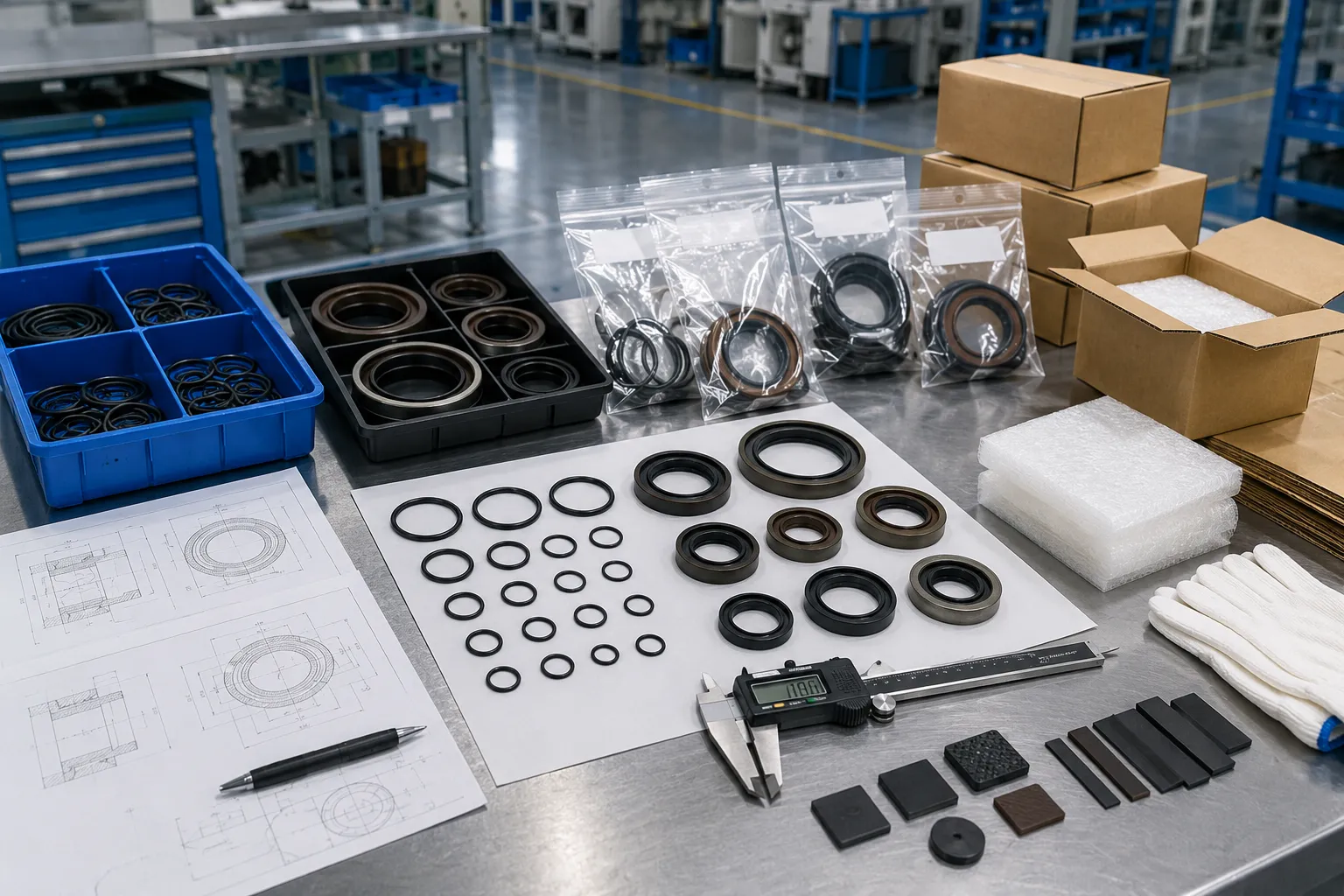
Before comparing quotations, create a side-by-side specification table.
Comparison Item | O-Rings | Oil Seals |
Dimensions | ID and cross-section | ID, OD, width |
Material | NBR, FKM, EPDM, silicone, PTFE, other | NBR, ACM, FKM, PTFE, silicone, other |
Hardness | Required where relevant | Usually secondary to seal profile and material |
Structure | Standard O-ring, backup ring, special profile | SC, TC, SB, TB, PTFE, cassette, custom profile |
Application | Static, dynamic, pressure, fluid | Shaft speed, fluid, temperature, contamination, pressure |
Samples | Dimension, material, groove fit | Lip design, spring, housing fit, shaft contact |
Packaging | Bags by size, kits, labels | Individual packing, size labels, cartons, batch marks |
Documentation | Size list, material reference | Drawing, sample approval, inspection and packaging details |
Repeat control | Batch and material consistency | Material, lip profile, spring, drawing, packaging consistency |
A lower price should be questioned when the material, structure, packaging, or quality-control level is unclear.
Confirm Packaging, Labeling, and Kit Requirements
Packaging is part of product quality.
Poor packaging can lead to mixed sizes, contaminated products, deformed oil seal lips, lost springs, damaged metal cases, missing O-rings, incorrect counts, and warehouse confusion.
O-Ring Packaging Checks
Confirm:
Quantity per bag
Size-specific inner bags
Material identification
Color requirement
Mixed-size or single-size packing
Kit configuration
Label format
Carton quantity
Batch reference
Private-label requirement
Moisture protection where needed
Oil Seal Packaging Checks
Confirm:
Individual packaging or grouped packing
Size-specific labels
Seal type
Material code
Quantity per inner bag
Carton quantity
Batch reference
Protective packing for metal-cased seals
Protection against dust and moisture
Private-label requirement
Carton marking
Export carton strength
For mixed product orders, do not rely on handwritten labels alone.
Ask for a clear packing list that identifies:
Product code
Product size
Type
Material
Quantity
Carton number
Net weight
Gross weight
Batch reference, where required
For repair kits, confirm the full component list.
A hydraulic seal kit, O-ring kit, or maintenance kit should have a defined bill of materials so that the same kit can be supplied consistently in future orders.
Confirm Shipping Terms and Documentation Before Payment
The shipping arrangement should be agreed before final payment, not after production is complete.
The selected trade term should clearly state:
Named delivery place or port
Export responsibility
Main transportation responsibility
Import clearance responsibility
Insurance responsibility
Risk-transfer point
Freight cost responsibility
Local delivery responsibility
Destination charges
Required shipping documents
Do not assume that a quoted unit price includes export packing, inland transport, export customs work, freight, destination handling, duties, taxes, insurance, or final delivery.
For international orders, confirm with the freight forwarder or customs broker what documents are required for the destination market.
Depending on the shipment and destination, the practical document set may include:
Commercial invoice
Packing list
Bill of lading or air waybill
Product description
Country-of-origin information when required
Shipping marks
Product labeling information
Material information where requested
Product-specific compliance documents where applicable
The supplier should provide accurate product descriptions and packing information.
The importer should confirm destination-country requirements before shipment rather than relying on a generic template.
Check Import Classification and Local Requirements Early
O-rings and oil seals can be used in many industries, including automotive, machinery, hydraulic systems, pumps, industrial equipment, and repair programs.
Import requirements can vary by:
Country or customs territory
Product classification
Material
Intended use
Country of origin
Product labeling
Packaging
Safety requirements
Automotive or industrial application
Local tax and duty treatment
Trade agreement eligibility
Before ordering, confirm with a qualified customs broker, freight forwarder, or local trade adviser:
Correct product classification
Applicable duties and taxes
Importer registration requirements
Country-of-origin requirements
Labeling requirements
Required documents
Recordkeeping expectations
Whether the goods are subject to additional controls in the destination market
Do not wait until the goods are already at the port or airport to confirm these points.
A small documentation mistake can create delays, storage charges, rework, or unexpected landed-cost changes.
Evaluate Supplier Batch Consistency
A good first sample is not enough if the bulk order does not match it.
For O-rings, batch consistency may involve:
Material consistency
Hardness consistency
Cross-section consistency
Color consistency
Surface finish
Flash control
Quantity control
Packaging accuracy
For oil seals, batch consistency may involve:
Material consistency
Lip profile consistency
Spring specification
Metal case structure
Outer diameter fit
Product dimensions
Surface finish
Lip condition
Seal direction
Packaging
Labeling
Drawing revision control
Ask the supplier how they manage:
Material identification
Production batch identification
Mold identification
First-piece inspection
In-process inspection
Final inspection
Sample retention
Approved drawing control
Nonconforming product handling
Repeat-order confirmation
Pre-shipment review
The supplier does not need to disclose proprietary formulas to show that the process is controlled.
What matters is whether the same approved specification can be reproduced reliably.
Inspect the Shipment Before Distribution or Installation
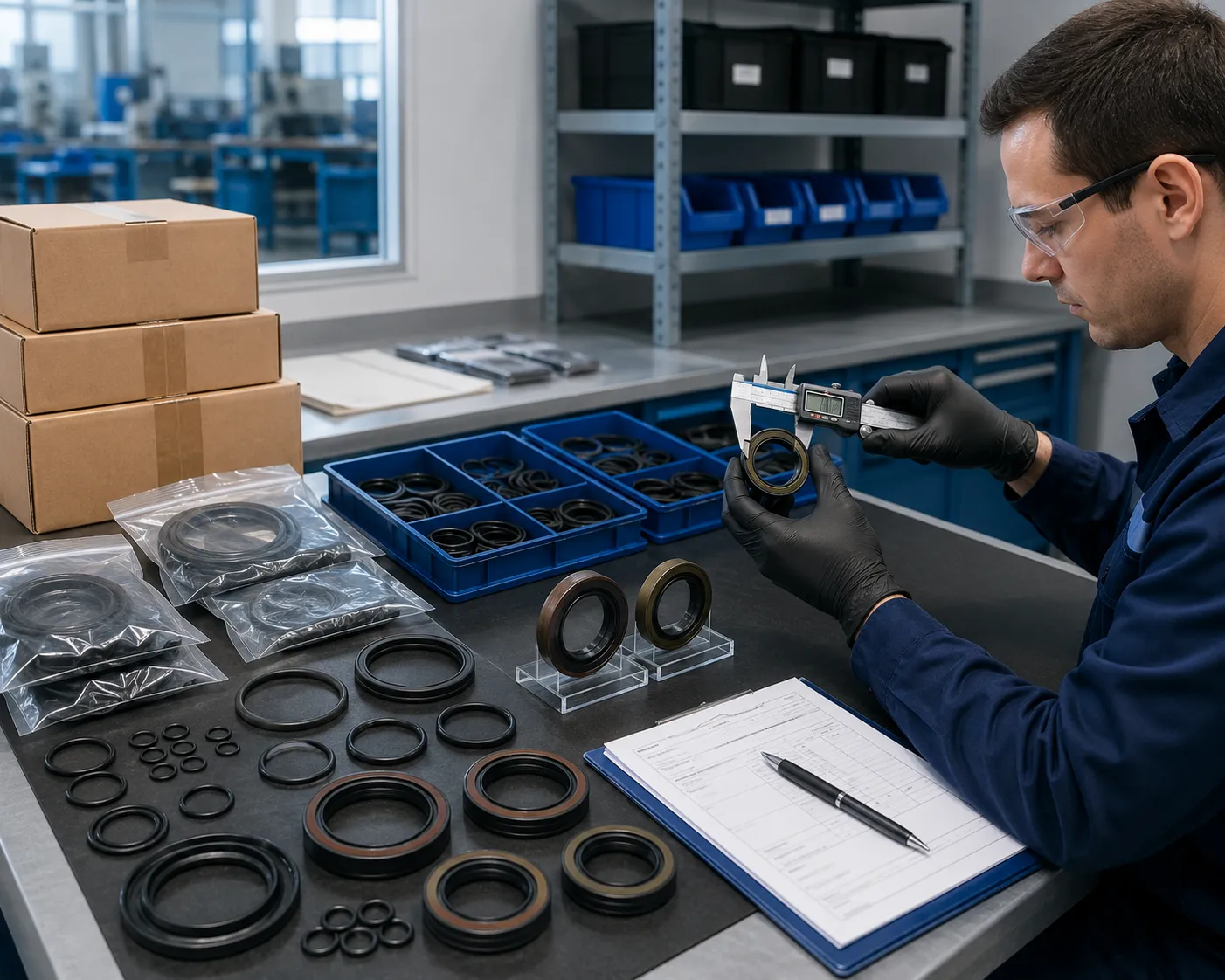
Incoming inspection is important, especially for a new supplier, a new material, a custom product, a large mixed-size order, or private-label packaging.
Do not distribute all products immediately after arrival.
Take a sample from different cartons and check the items against the approved specification.
Incoming Inspection for O-Rings
Check:
Product code
ID
Cross-section
Material indication
Hardness where practical
Surface condition
Quantity
Packaging label
Carton count
Mixed-size accuracy
Batch reference
Incoming Inspection for Oil Seals
Check:
Product code
ID
OD
Width
Lip arrangement
Spring presence
Material identification
Outer diameter structure
Product orientation
Surface condition
Packaging
Batch reference
Carton count
Match against approved sample or drawing
For important products, install a trial quantity before broad distribution.
A fitment check can identify incorrect lip direction, installation-depth problems, wrong material, housing-fit issues, or shaft-contact problems before the full shipment reaches customers or field locations.
Common Mistakes When Ordering O-Rings and Oil Seals from China
Ordering Only by Product Photo
Photos cannot reliably confirm material, hardness, lip profile, spring design, tolerance, or production consistency.
Use photos as supporting information, not as the final product specification.
Choosing Only by Lowest Price
A lower price may reflect:
Different material
Lower hardness control
Simpler seal structure
Different spring quality
Different outer diameter design
Reduced inspection
Bulk packaging
Shorter service life
Different quantity basis
Missing tooling or packing charges
Compare the complete specification before comparing price.
Using One Material for Every Application
NBR, FKM, EPDM, ACM, silicone, PTFE, and other materials have different strengths.
A single material is not automatically suitable for engine oil, gear oil, fuel, hydraulic fluid, water, steam, chemicals, and high-temperature service.
Ignoring Shaft and Housing Condition
A new oil seal may still leak if the shaft is grooved, corroded, scratched, misaligned, or moving excessively.
A seal may also leak around the outer diameter if the housing bore is damaged, worn, out of round, or unsuitable for the selected outer-diameter design.
Skipping Sample Approval
Skipping samples may be acceptable for a repeat purchase of a fully controlled standard product.
For a new supplier, new material, custom dimension, special application, or large order, sample approval is much safer.
Forgetting Packaging Details
Mixed sizes, missing quantities, unclear labels, and poor carton protection can create expensive warehouse and installation problems even when the seals themselves are acceptable.
Treating Shipping Terms as a Freight Quote Only
A shipping term is not just a freight label.
It affects delivery responsibility, risk, cost allocation, documentation, and import handling.
Confirm the named place, responsibilities, and destination charges clearly before shipment.
Failing to Create a Repeat-Order Reference
Without an approved reference, future orders can drift.
A supplier may use a different material, lip structure, packaging, or product code because the previous order was based only on chat messages or screenshots.
A Low-Risk First Order Process
A structured first order can reduce risk without making the process unnecessarily complicated.
Step 1: Separate Standard and Custom Items
List which products are:
Standard stock items
Standard items with special material requirements
Custom-size products
Special seal structures
Kit components
Private-label products
Trial quantities
Repeat-order products
Do not treat every line item as having the same risk level.
Step 2: Confirm the Product Specification
For each item, confirm:
Product name
Internal product code
Size
Material
Structure
Application
Packaging
Quantity
Label requirement
Sample requirement
Drawing requirement
Lead time
Step 3: Approve Samples for Critical Items
Prioritize sample approval for:
FKM, PTFE, ACM, EPDM, silicone, or special materials
Non-standard sizes
High-temperature applications
High-pressure applications
Automotive or drivetrain applications
Hydraulic seal kits
Custom lip profiles
Private-label products
Large-volume items
Products used in expensive or hard-to-service equipment
Step 4: Confirm the Final Quotation
The quotation should clearly show:
Unit price
Material
Product type
Quantity
Tooling charge where applicable
Packaging charge where applicable
Sample charge
Lead time
Payment terms
Shipping term
Delivery location
Documentation scope
Inspection scope
Product labeling requirement
Step 5: Confirm Pre-Shipment Details
Before shipment, request confirmation of:
Final quantity
Product photos
Packaging photos
Carton marks
Packing list
Product labels
Batch references where required
Gross and net weight
Carton count
Shipping readiness date
Final shipping document details
Step 6: Inspect on Arrival
Check representative cartons and compare the products against the approved sample, specification, drawing, and packing list.
For a new program, test selected products in the real application before broad distribution or repeat ordering.
How to Create a Repeat-Order Specification
After a product has been approved, create a simple repeat-order reference.
For each O-ring or oil seal, record:
Internal product code
Supplier product code
Product description
Size
Material
Hardness where relevant
Seal type
Lip arrangement
Outer diameter structure
Spring requirement
Application
Approved sample reference
Drawing revision
Packaging format
Label format
Carton quantity
Minimum order quantity
Lead-time expectation
Inspection requirement
Previous order reference
Known installation notes
This does not need to be complicated.
The goal is to ensure that a repeat order is based on the approved specification rather than a vague message such as “same as last time.”
Conclusion
Wholesale O-rings and oil seals from China can be a reliable sourcing option when the purchasing process is based on clear specifications, samples, quality checks, and repeat-order control.
For O-rings, confirm the dimensions, cross-section, material, hardness, fluid compatibility, pressure condition, and groove application.
For oil seals, confirm the ID, OD, width, material, lip design, spring arrangement, outer diameter structure, shaft condition, housing condition, temperature, fluid, speed, and contamination exposure.
Before placing a larger order, approve samples, compare quotations by complete specification, define packaging and labeling requirements, confirm shipment responsibilities, verify destination-market requirements, and inspect the first shipment before broad distribution.
A well-controlled first order makes repeat purchasing simpler, more predictable, and less dependent on assumptions.
SealVendor supports O-rings, rotary oil seals, FKM and NBR material options, TC, SC, TB, and SB structures, hydraulic sealing components, sample-based identification, OEM-reference checks, private-label packaging, drawing-based custom requirements, and repeat-order specification support.