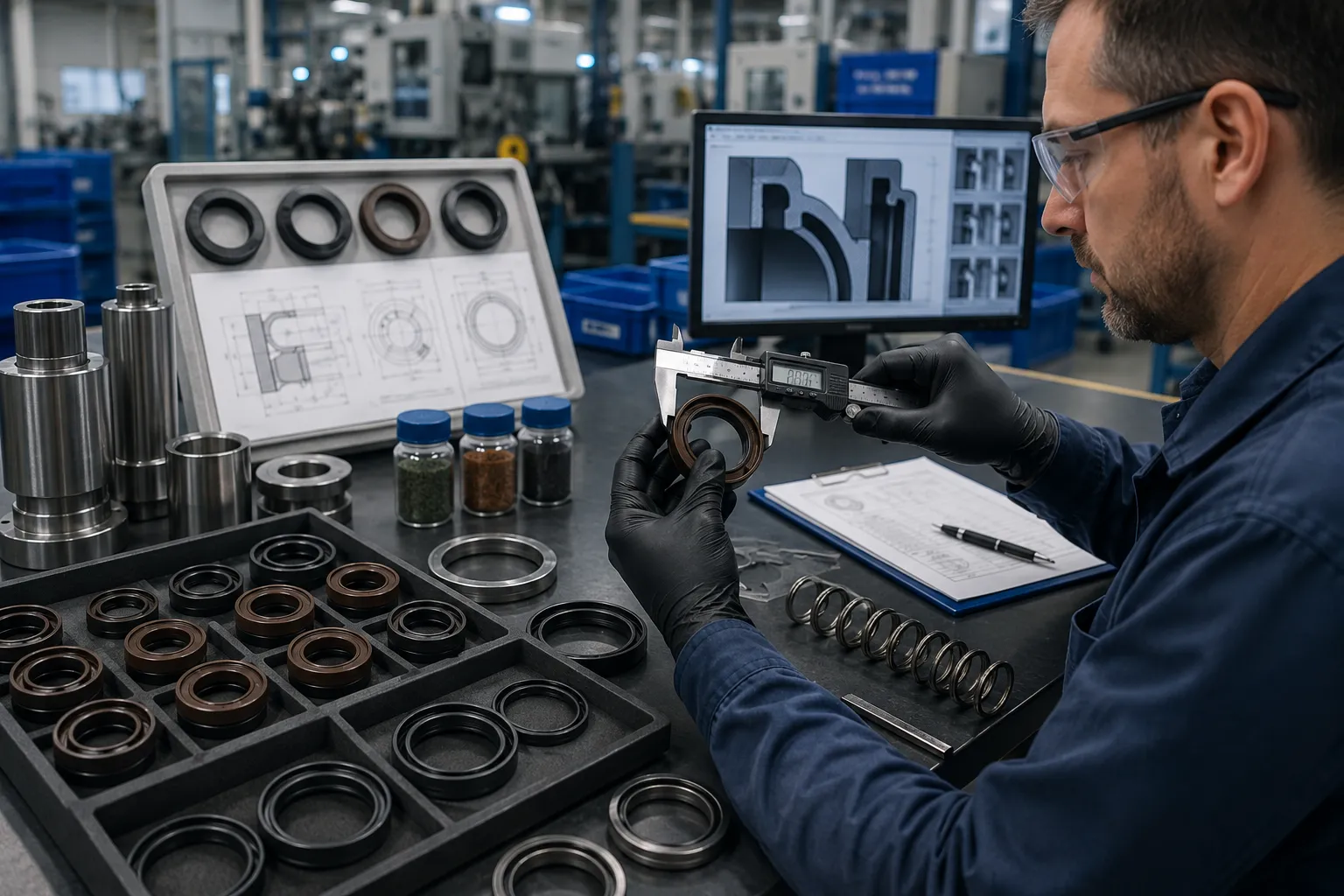
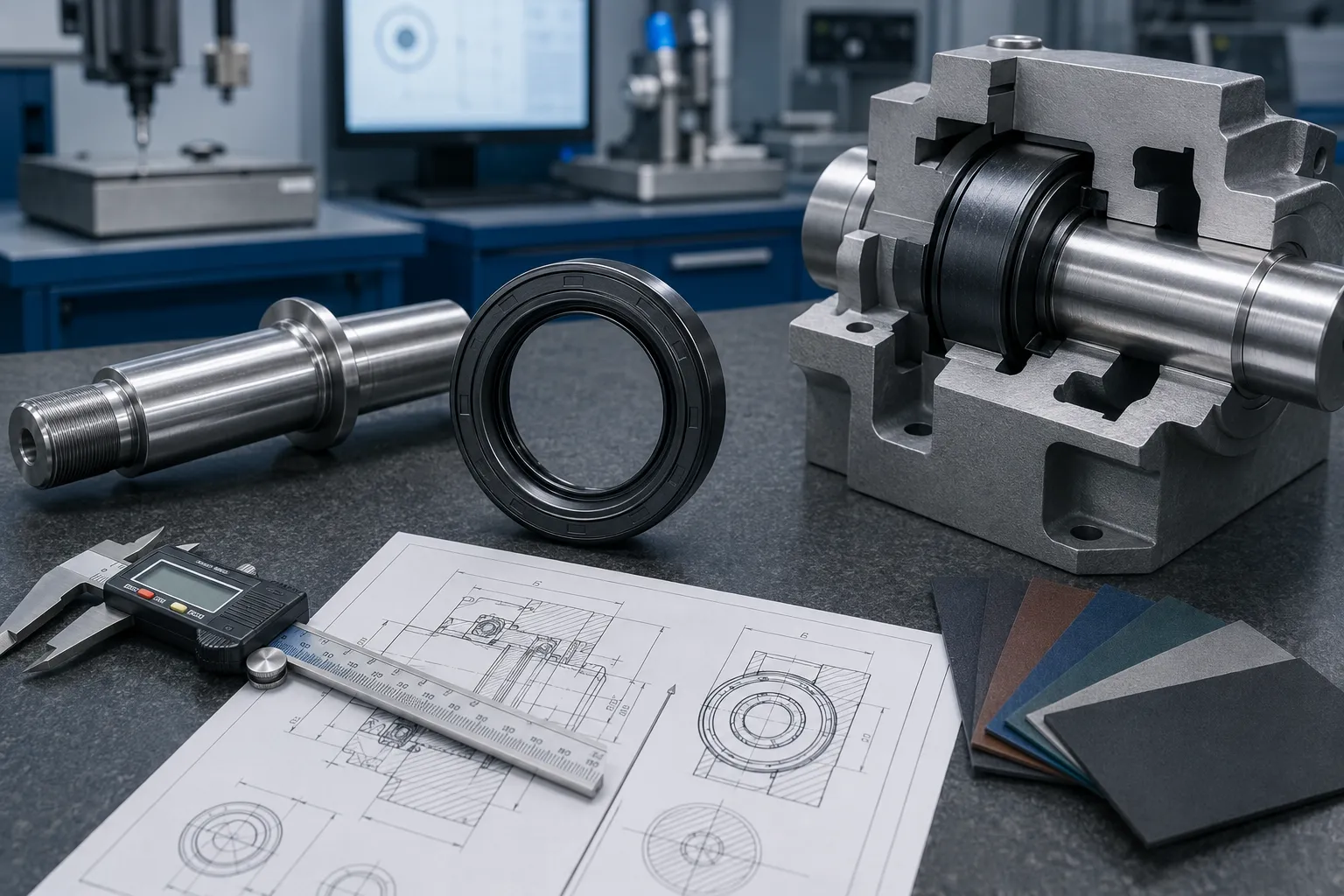
A standard oil seal is suitable for many engines, gearboxes, pumps, motors, agricultural machines, and industrial systems. However, standard sizes and standard lip designs do not solve every sealing problem.
A custom oil seal may be needed when the shaft diameter, housing bore, width, lip position, material requirement, pressure condition, temperature range, or operating environment is outside a normal catalog specification. It may also be required when an original part is discontinued, the equipment uses a non-standard housing, or a replacement seal must match an existing sample or OEM reference.
Custom oil seal manufacturing is not only about producing a different size. A reliable custom solution should consider the full sealing system: the shaft, housing, fluid, temperature, speed, pressure, contamination level, installation space, and expected service life.
This guide explains how custom oil seals are developed for industrial applications, what information should be provided to a manufacturer, and how to reduce risk before moving from sample approval to repeat production.
What Is a Custom Oil Seal?
A custom oil seal is a rotary shaft seal designed or selected to meet an application that cannot be fully covered by a standard catalog item.
The custom requirement may involve one or more of the following:
Non-standard inner diameter
Non-standard outer diameter
Special seal width
Different sealing lip position
Special shaft or housing geometry
High-temperature material
Fuel-resistant or chemical-resistant material
Additional dust protection
Special pressure capability
High-speed operation
Limited installation depth
Custom metal case structure
Special outer diameter design
OEM reference matching
Private labeling or custom packaging
A custom seal does not always require a completely new mold or an entirely new structure. In some cases, the best solution is a standard seal with a different material, lip design, spring, width, or outer diameter configuration.
The first step is to identify whether the application truly requires a custom product or whether an existing standard design can be adapted safely.
When Do You Need a Custom Oil Seal?
A custom oil seal should be considered when a standard replacement cannot meet the required dimensions or working conditions.
Common situations include:
Non-Standard Dimensions
The required shaft diameter, housing bore, or seal width may not match common catalog sizes.
For example, the application may require:
A special shaft diameter
A shallow housing bore
A wider sealing arrangement
A narrow installation space
A stepped shaft position
A non-standard lip contact location
In these cases, selecting the nearest standard size can create leakage, interference, poor housing fit, or incorrect lip contact.
High-Temperature Applications
Standard NBR may not be suitable when a seal operates near sustained engine heat, hot gear oil, turbocharger areas, high-speed machinery, or demanding industrial equipment.
A custom material selection may be needed when the application requires:
Higher heat resistance
Better resistance to heat aging
Compatibility with synthetic lubricants
Resistance to hot engine oil
Resistance to aggressive additives
Improved sealing performance over longer service periods
FKM, ACM, PTFE, and other materials may be considered depending on the real operating condition.
Special Fluid or Chemical Exposure
Oil seals may be exposed to engine oil, gear oil, transmission fluid, hydraulic oil, fuel, grease, synthetic lubricants, water, solvents, or chemical additives.
A standard material may swell, harden, crack, shrink, or lose flexibility when used with an incompatible fluid.
Custom material selection may be needed for:
Fuel exposure
Synthetic oils
High-additive lubricants
Chemical processing fluids
High-temperature hydraulic fluids
Compressor oils
Food-grade lubricants
Water and mud exposure
Corrosive environments
The fluid type should always be confirmed before selecting the seal material.
Dust, Mud, Water, or Abrasive Contamination
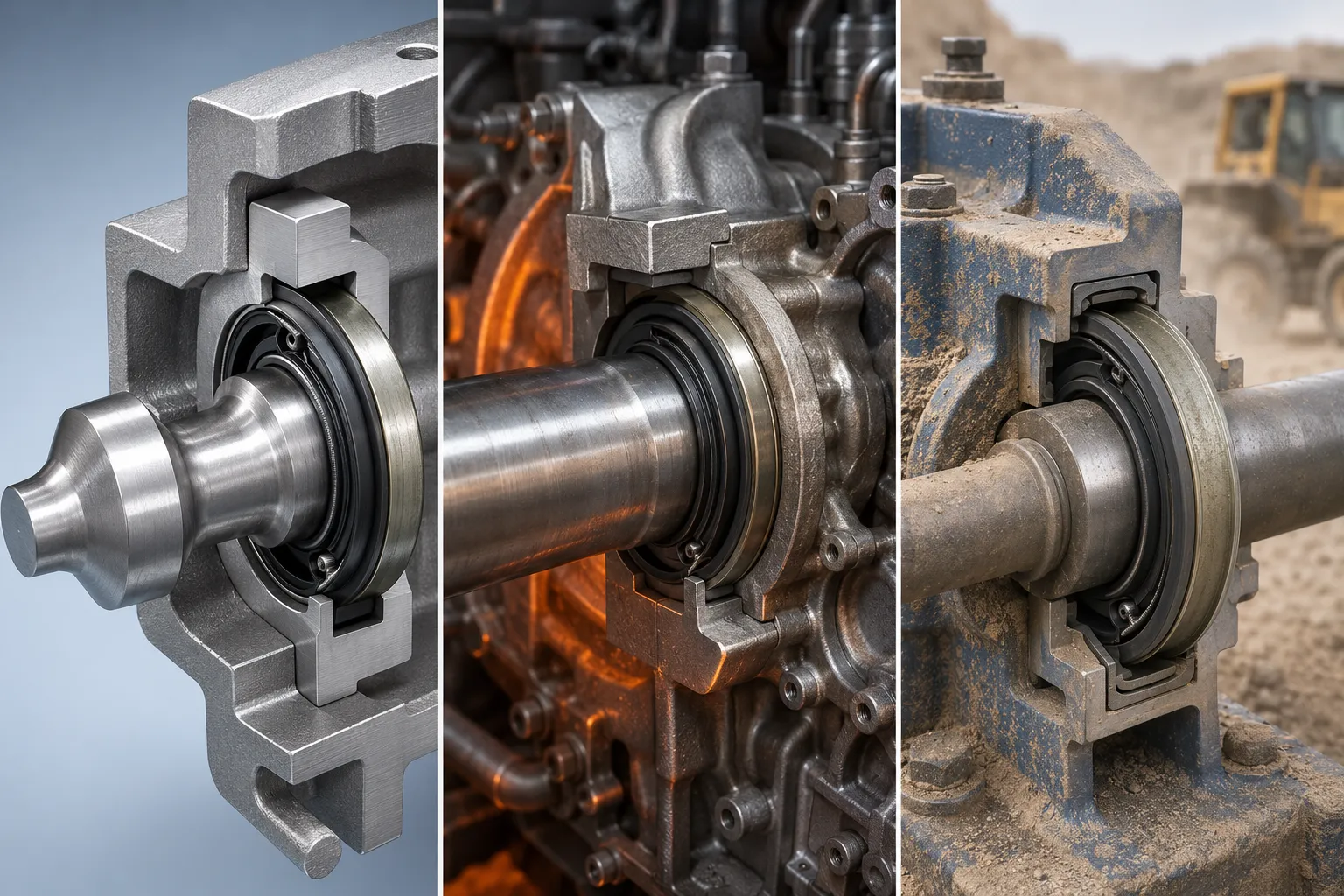
A standard single-lip seal may retain oil effectively in a clean environment but fail early when exposed to dust, sand, water splash, mud, metal particles, or outdoor contamination.
A custom solution may require:
An auxiliary dust lip
A different lip profile
A heavier-duty outer diameter design
A cassette-type sealing structure
A separate exclusion seal
A V-ring or labyrinth arrangement
Improved protection for the main sealing lip
The correct design depends on how severe the external contamination is.
Shaft Wear or Unusual Shaft Geometry
A new oil seal can still leak if the shaft has wear grooves, corrosion, pitting, excessive runout, a sharp installation edge, splines, threads, or an unusual stepped profile.
A custom solution may include:
A different lip contact position
A wider seal that moves the lip away from a worn groove
A repair sleeve solution
A modified lip profile
A special installation guide
A different spring arrangement
A seal structure designed for shaft movement or misalignment
The shaft condition should be reviewed before designing or selecting the seal.
Replacing a Discontinued or Unavailable OEM Seal
Older machinery, imported equipment, discontinued assemblies, and special industrial systems may use seals that are difficult to identify through a standard catalog.
In these cases, a custom oil seal manufacturer may work from:
Original seal samples
OEM part numbers
Product photos
Technical drawings
Machine model information
Shaft and housing measurements
Existing installation position
Application data
The goal is to identify the required size, lip structure, material, and fitment details as accurately as possible.
Custom Oil Seal Size: ID, OD, and Width
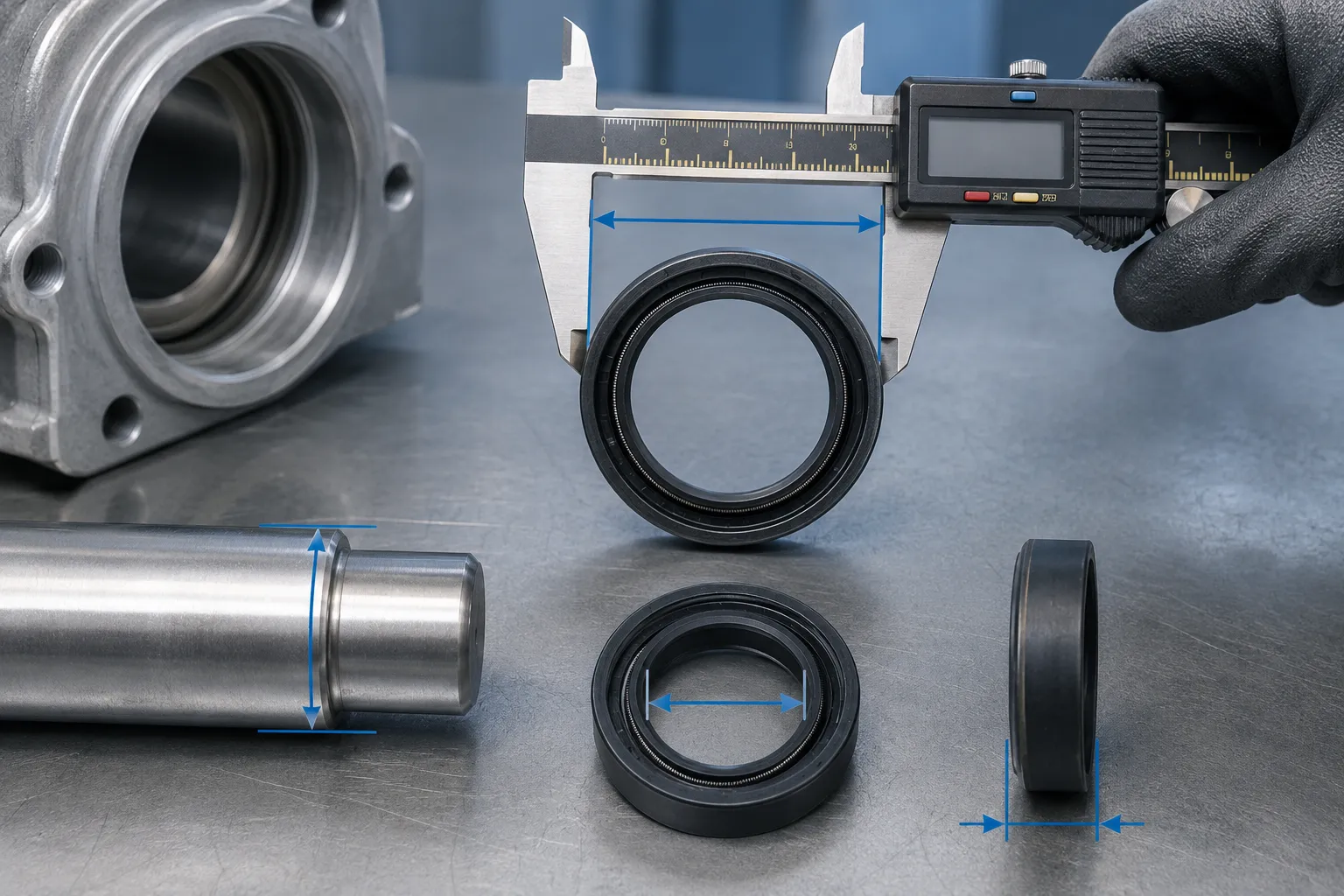
Most rotary oil seals are identified by three main dimensions:
ID × OD × Width
For example:
35 × 52 × 7 mm
This generally means:
Dimension | Meaning | Why It Matters |
|---|---|---|
ID | Nominal shaft diameter | The sealing lip must match the shaft correctly |
OD | Housing bore diameter | The seal must fit securely in the housing |
Width | Seal thickness along the shaft axis | The seal must fit the available installation depth |
For custom seals, these three dimensions are only the starting point.
The manufacturer may also need to know:
Actual shaft measurement at the sealing surface
Actual housing bore measurement
Available housing depth
Shaft step position
Existing lip contact location
Distance from the housing face to the sealing area
Nearby bearing, gear, pulley, or retaining-ring position
Shaft chamfer or lead-in geometry
Whether the seal is installed flush, recessed, or proud of the housing
A correct ID, OD, and width do not guarantee correct sealing performance if the lip sits on a worn shaft area or if the housing does not provide enough support.
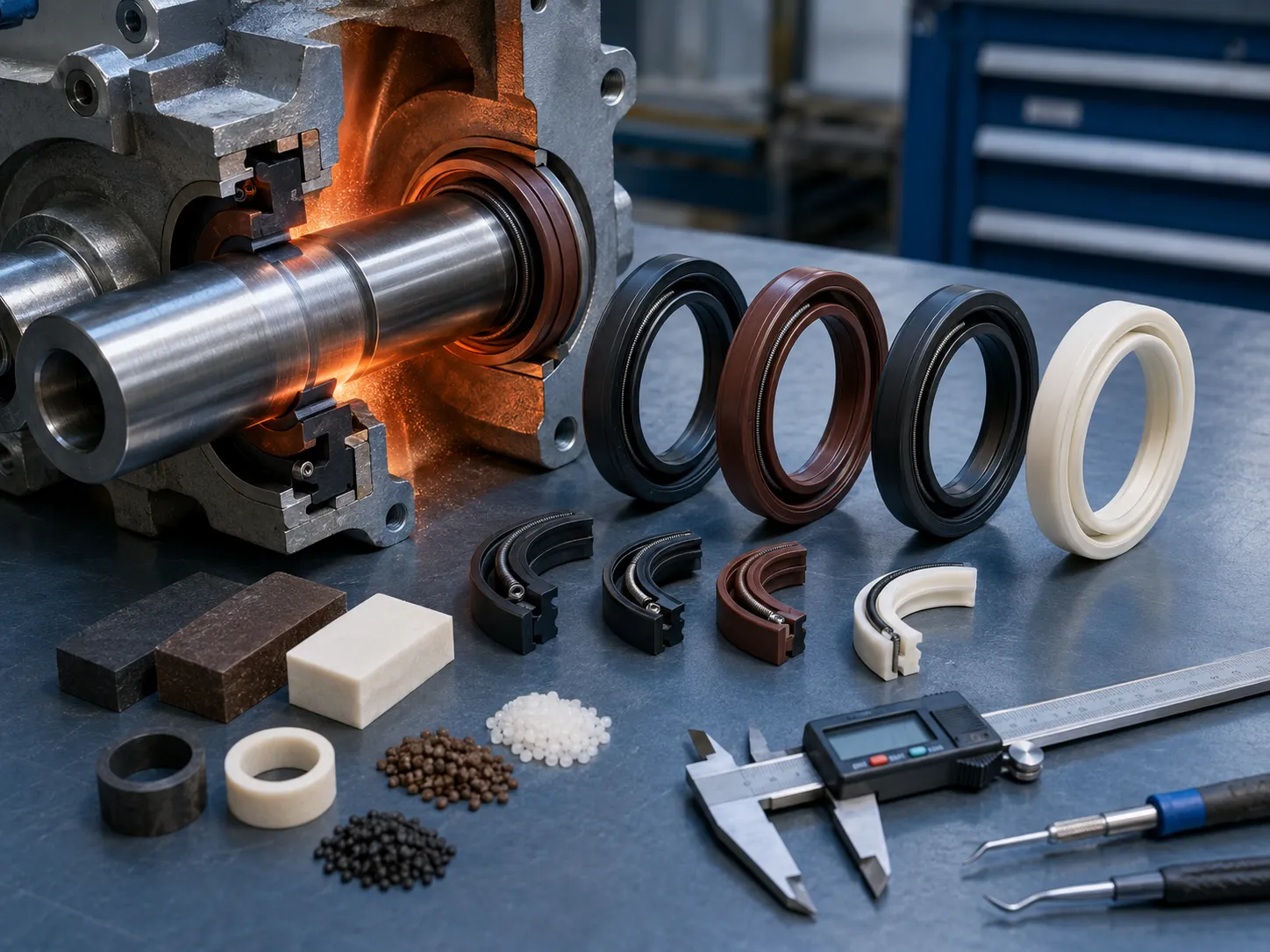
Material Options for Custom Oil Seals
Material selection is one of the most important parts of custom oil seal design.
The correct elastomer or polymer must match the fluid, temperature, pressure, shaft speed, contamination level, and service-life requirement.
NBR
NBR is commonly used for standard mineral oils, lubricants, greases, and moderate-temperature applications.
It is often suitable for:
General machinery
Standard gearboxes
Pumps
Electric motors
Agricultural equipment
Conventional automotive sealing applications
Moderate-temperature industrial systems
NBR is often a practical choice when the lubricant and operating temperature remain within its suitable range.
ACM
ACM is commonly used in automotive oil sealing applications because of its resistance to lubricating oils and higher operating temperatures.
It may be selected for:
Automotive engines
Transmission systems
Drivetrain components
Lubrication systems exposed to heat
Applications where standard NBR may not provide enough heat resistance
FKM
FKM is widely used where higher temperatures, synthetic oils, fuel exposure, or demanding fluid conditions are involved.
It may be suitable for:
High-temperature engines
Turbocharged systems
Transmission applications
Industrial gearboxes with sustained heat
Pumps and compressors
Fuel-exposed sealing areas
Extended-service applications
Equipment exposed to aggressive lubricants
FKM can improve resistance to heat aging and demanding fluid exposure, but it should be selected based on actual application data rather than used as a default upgrade.
PTFE
PTFE is used in selected applications requiring low friction, higher shaft speed capability, elevated temperatures, or specialized chemical resistance.
PTFE seal designs may be suitable for:
High-speed rotating shafts
Advanced engine and transmission sealing
Industrial process equipment
Specialized fluid environments
Applications where low friction is important
Systems requiring a different sealing principle from conventional elastomer lips
PTFE seals often require specific shaft surface conditions and installation procedures. The correct design should be confirmed before production.
Lip Design and Seal Structure Options
A custom oil seal manufacturer should be able to recommend a lip design based on the actual application rather than only on dimensions.
Common structure options include:
Seal Feature | Typical Purpose |
Single primary lip | Standard lubricant retention in clean or protected applications |
Primary lip plus dust lip | Helps reduce dust, dirt, and moisture reaching the main sealing lip |
Spring-loaded lip | Maintains contact force around the rotating shaft |
Rubber-covered outer diameter | Supports sealing against the housing bore and may improve fit in some housings |
Metal outer diameter | Often used where a rigid housing fit is required |
Special lip position | Moves the sealing contact away from a worn shaft groove |
Pressure-capable design | Used when internal pressure is higher than standard rotary seal conditions |
PTFE sealing lip | Used for selected low-friction, high-speed, or high-temperature applications |
Cassette structure | Used in heavy-duty, exposed, or highly contaminated environments |
The final structure should be selected according to the shaft, housing, lubricant, pressure, contamination level, and available installation space.
A double-lip structure may improve external contamination protection, but it does not automatically solve every leakage problem. Severe mud, slurry, high-pressure washdown, excessive shaft movement, or poor ventilation may require a more specialized solution.
What Information Does a Custom Oil Seal Manufacturer Need?
The more complete the application information, the more reliable the recommendation can be.
A useful custom oil seal request should include the following details.
Basic Dimensions
Shaft diameter
Housing bore diameter
Seal width
Available installation depth
Shaft step position
Existing seal dimensions
Existing seal lip position
Required installation depth
Existing Part Information
Original sample
Clear photos of both sides of the seal
Product markings
OEM part number
Existing supplier reference
Technical drawing
Machine or vehicle model
Assembly drawing, if available
Working Conditions
Fluid type
Lubricant additives
Operating temperature
Minimum startup temperature
Shaft speed
Rotation direction
Pressure condition
Shaft runout
Shaft misalignment
Vibration level
Exposure to dust, mud, water, chemicals, or fuel
Required service life
Shaft and Housing Condition
Shaft surface finish
Wear groove location
Shaft hardness, if known
Corrosion or pitting
Housing bore condition
Housing material
Existing sealant use
Installation method
Order and Packaging Requirements
Expected quantity
Sample requirement
Trial order quantity
Required delivery date
Packaging method
Labeling requirement
Private label requirement
Carton marking requirement
Repeat-order requirement
Even partial information can be useful. A manufacturer should identify what is missing and explain which details are important before confirming a final solution.
From Sample or Drawing to Production
A custom oil seal project should follow a clear confirmation process.
Step 1: Review the Application
The first step is to confirm the shaft, housing, fluid, temperature, and working environment.
At this stage, the manufacturer should identify whether a standard size can be used, whether a modified standard design is suitable, or whether a new custom profile is required.
Step 2: Confirm Dimensions and Structure
The manufacturer should confirm:
ID
OD
Width
Lip position
Seal direction
Outer diameter design
Metal case structure
Spring requirement
Dust-lip requirement
Material option
Installation depth
For non-standard applications, a product drawing is usually the best way to reduce ambiguity.
Step 3: Prepare a Technical Proposal or Drawing
For a new or modified seal, the technical proposal should show the main dimensions and structural features.
The drawing should make it clear:
Where the primary lip contacts the shaft
Which side faces the lubricant
Whether an auxiliary dust lip is included
Whether the outer diameter is rubber-covered or metal-covered
Whether a spring is included
Whether there are special installation or clearance requirements
The buyer should review this information before tooling or mass production begins.
Step 4: Produce and Approve Samples
A sample stage is especially important for custom dimensions, special materials, critical machinery, or larger order quantities.
The sample should be checked for:
Dimensions
Lip structure
Material
Spring condition
Outer diameter design
Fitment in the actual housing
Shaft contact position
Initial leakage performance
Packaging and marking, if required
The final production specification should match the approved sample or drawing.
Step 5: Confirm Production and Inspection Requirements
Before bulk production, confirm:
Final drawing or sample approval
Material specification
Seal type and lip configuration
Dimensional tolerance requirements
Inspection method
Quantity
Packaging
Labeling
Delivery schedule
Batch identification requirements
This step helps reduce changes and misunderstandings after production begins.
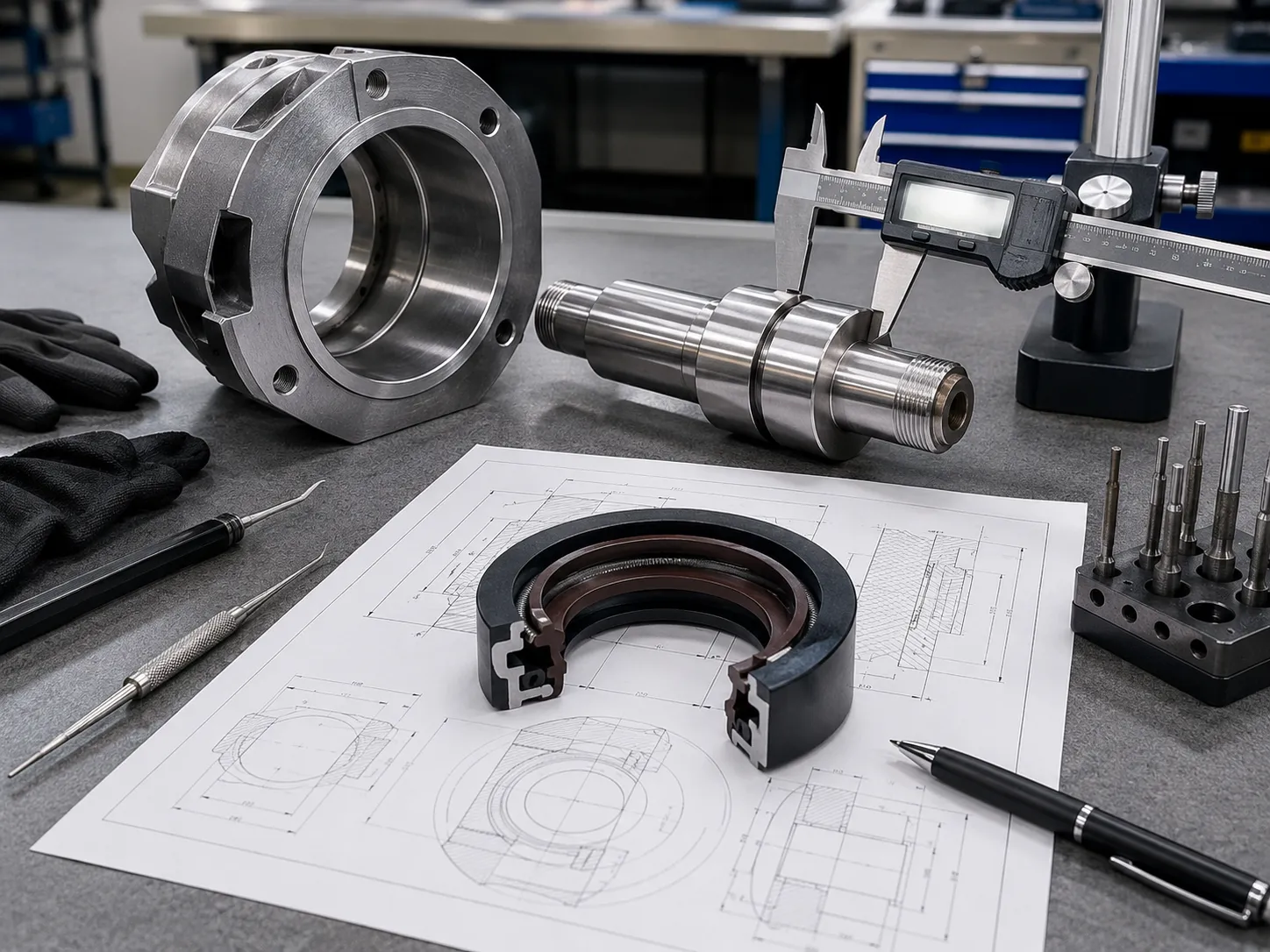
OEM Support: What It Should Mean
OEM support can mean different things depending on the project.
For a custom oil seal manufacturer, practical OEM-related support may include:
Matching an existing OEM part number
Reviewing an original sample
Comparing dimensions with an OEM reference
Reproducing a seal profile based on an approved drawing
Supporting repeat production with the same confirmed specification
Providing custom labels or packaging for a replacement program
Helping identify a discontinued or difficult-to-source seal
Maintaining a repeat-order specification after sample approval
OEM reference support should not be confused with claiming official authorization, endorsement, or affiliation with an equipment manufacturer.
The most useful approach is to confirm the physical and technical requirements of the seal: dimensions, material, lip design, installation position, and actual working conditions.
Quality Control for Custom Oil Seals
Custom manufacturing requires stronger specification control than a standard catalog order.
A reliable quality process should focus on the characteristics that affect fitment and sealing performance.
Typical inspection points include:
Inner diameter
Outer diameter
Width
Lip geometry
Spring installation
Rubber molding condition
Metal case shape
Outer diameter finish
Material identification
Product markings
Packaging condition
Batch consistency
For larger or critical orders, confirm in advance whether the manufacturer can provide:
Dimensional inspection records
Material information
Approved sample retention
Batch identification
Packaging confirmation
Photo inspection before shipment
Custom labeling
Special inspection requirements
The inspection level should match the application risk. A seal for a small general-purpose pump may not require the same documentation as a seal used in expensive industrial machinery or a critical maintenance program.
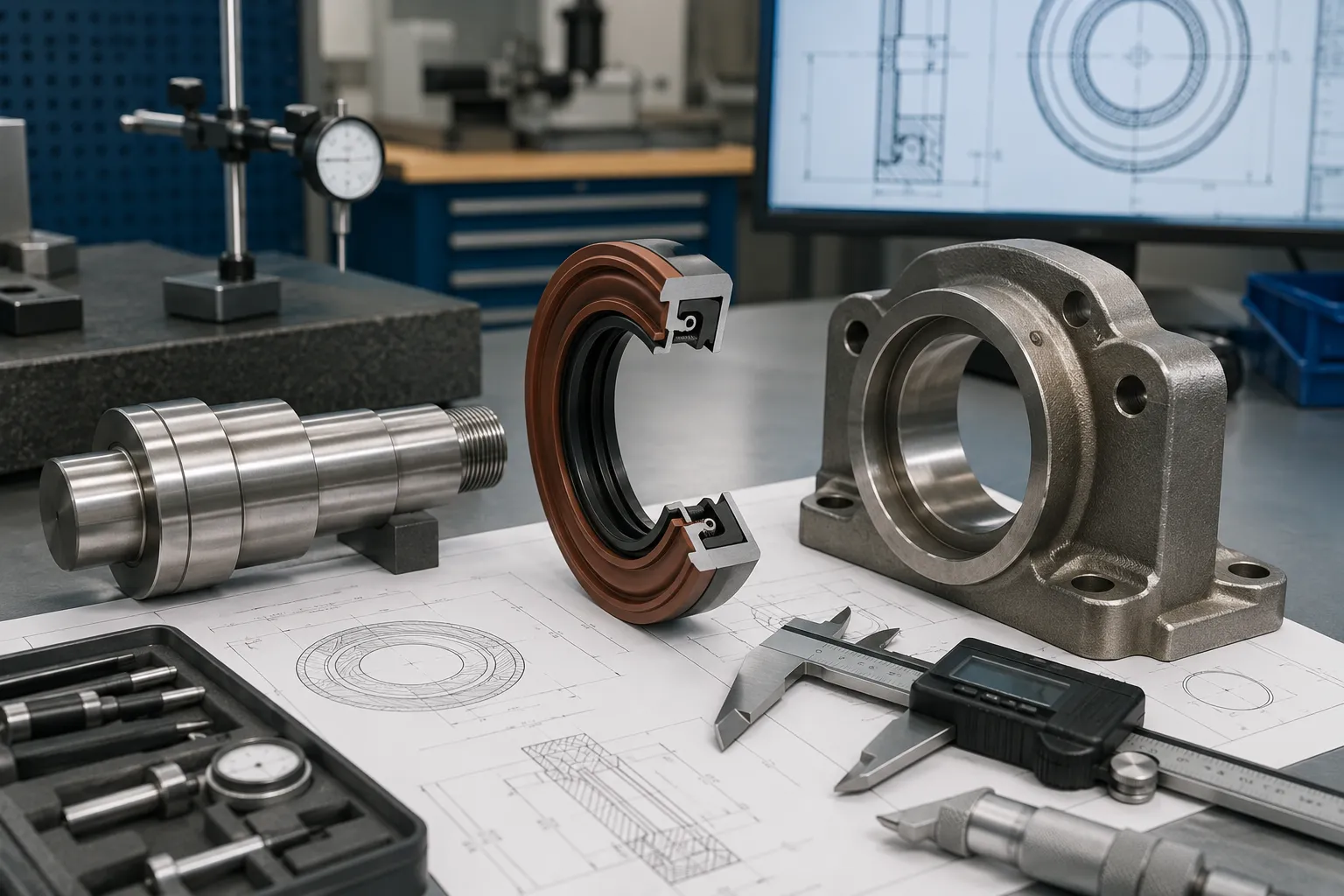
Common Mistakes in Custom Oil Seal Projects
Sending Only the Size
ID, OD, and width are important, but they do not define material, lip structure, fluid compatibility, shaft condition, or contamination exposure.
A custom request based only on three dimensions can result in a physically correct but technically unsuitable seal.
Assuming a Larger or More Expensive Seal Is Better
A wider seal, more lips, or a higher-cost material does not automatically improve performance.
The seal design must match the housing depth, shaft surface, temperature range, fluid, and environment.
Ignoring Shaft Wear
A new custom seal can still leak if it runs on a deep groove, corroded area, or damaged shaft surface.
The shaft condition must be checked before deciding on lip position or seal width.
Selecting Material Only by Temperature
Temperature is important, but the actual fluid, additives, shaft speed, pressure, and low-temperature requirements also matter.
A material should be chosen based on the complete operating condition.
Skipping Sample Approval
For custom dimensions, special materials, or critical applications, moving directly to bulk production without testing samples increases the risk of fitment issues and repeat leakage.
Treating OEM Numbers as Complete Technical Specifications
An OEM number can be helpful, but it may not reveal all design details. The application, dimensions, material, and lip profile should still be confirmed.
How to Prepare a Better Custom Oil Seal Inquiry
A clear request helps the manufacturer respond faster and reduces the chance of incorrect selection.
A practical inquiry can include:
We need a rotary oil seal for an industrial gearbox.
Shaft diameter: 45 mm
Housing bore: 65 mm
Available width: 10 mm
Current seal type: double-lip, rubber-covered OD
Fluid: gear oil
Operating temperature: up to 120°C
Environment: outdoor equipment with dust and water splash
Shaft condition: light wear groove near the existing lip position
Requirement: recommend suitable material, lip structure, and whether a wider or repositioned seal is needed.
Quantity: sample first, followed by repeat production if approved.
This kind of request gives the manufacturer enough information to evaluate dimensions, material, lip design, and potential risks.
Conclusion
A custom oil seal is not simply a non-standard size. It is a sealing solution designed around the real operating condition of the shaft, housing, lubricant, temperature, pressure, contamination level, and installation space.
The most successful custom projects begin with accurate dimensions and clear application information. ID, OD, and width are essential, but material selection, lip design, shaft condition, housing depth, and fluid compatibility are equally important.
A manufacturer should help determine whether a standard seal is sufficient, whether an existing design can be modified, or whether a dedicated custom profile is needed. Samples, drawings, and approved specifications should be used to confirm fitment before repeat production.
SealVendor supports custom oil seal projects through standard-size matching, drawing review, sample-based identification, material selection, TC and SC style options, non-standard dimensions, OEM-reference matching, and repeat-order specification support.