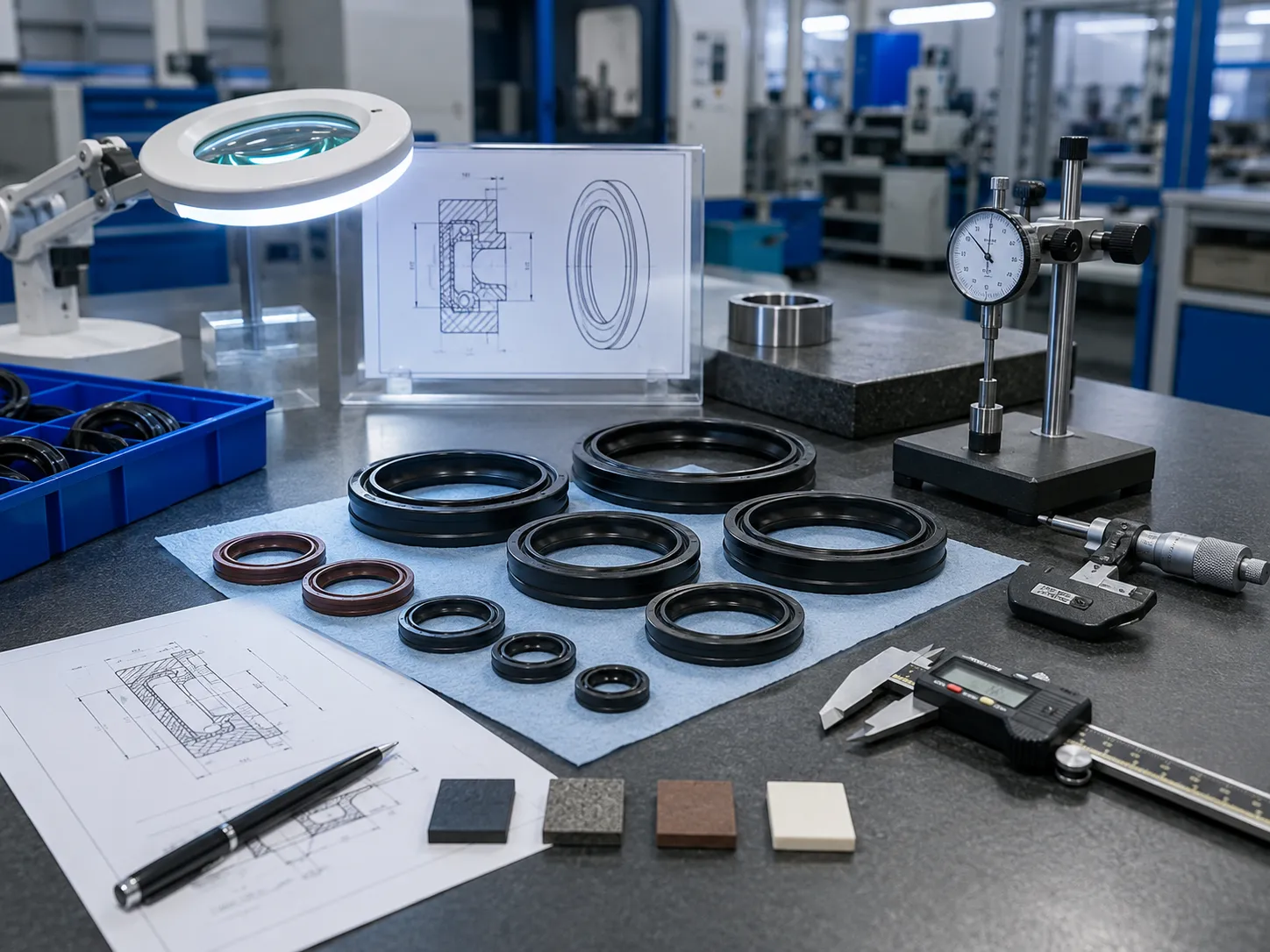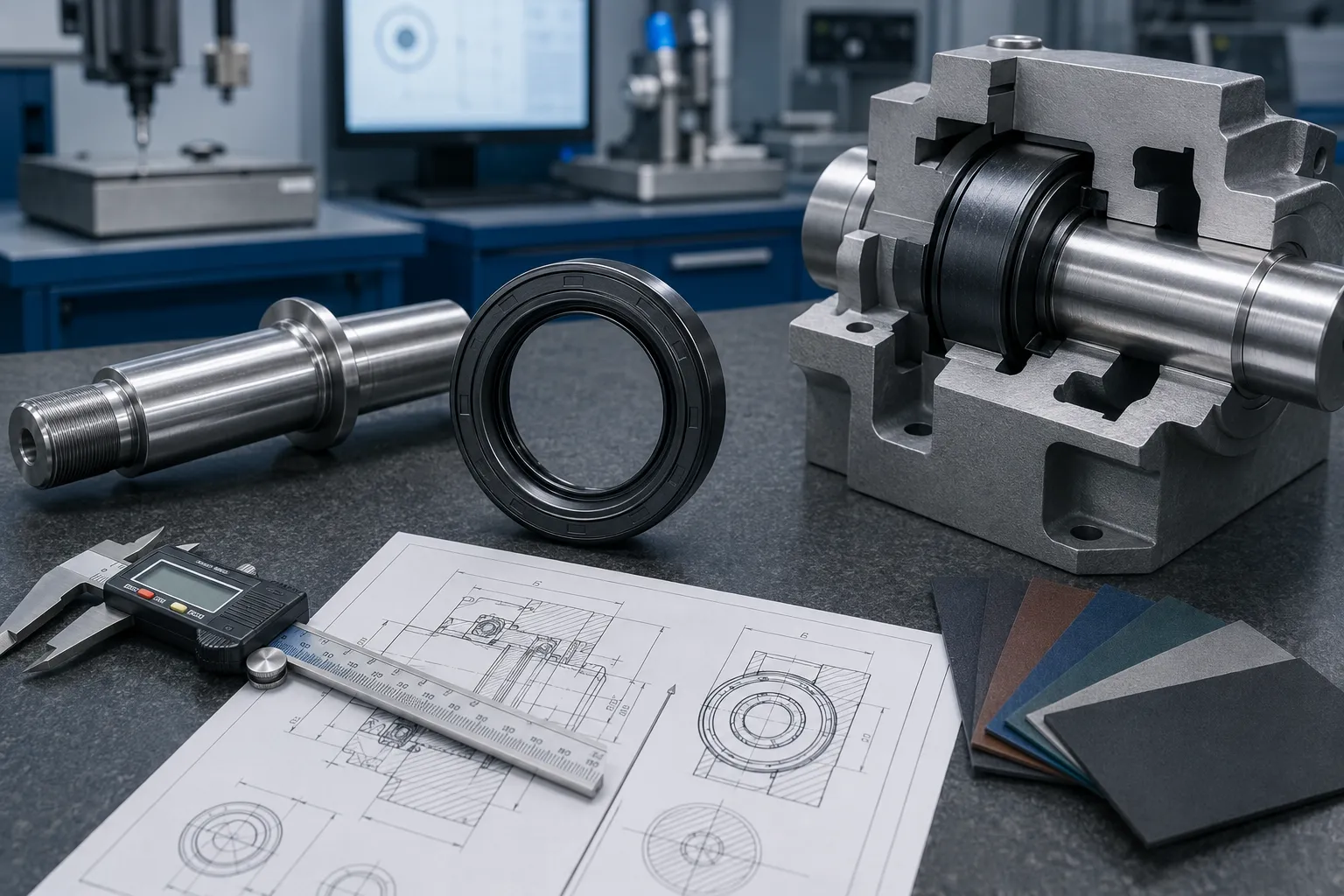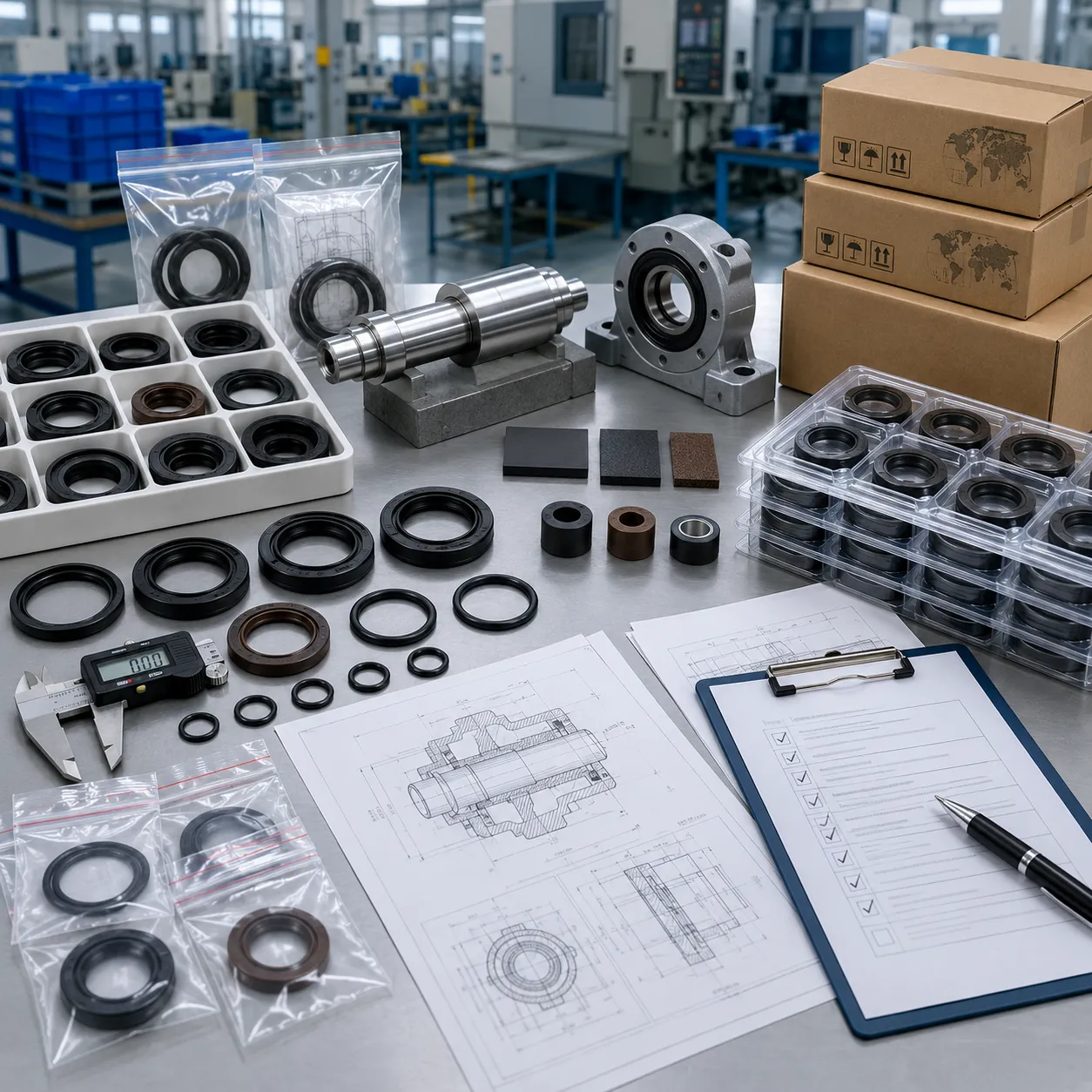
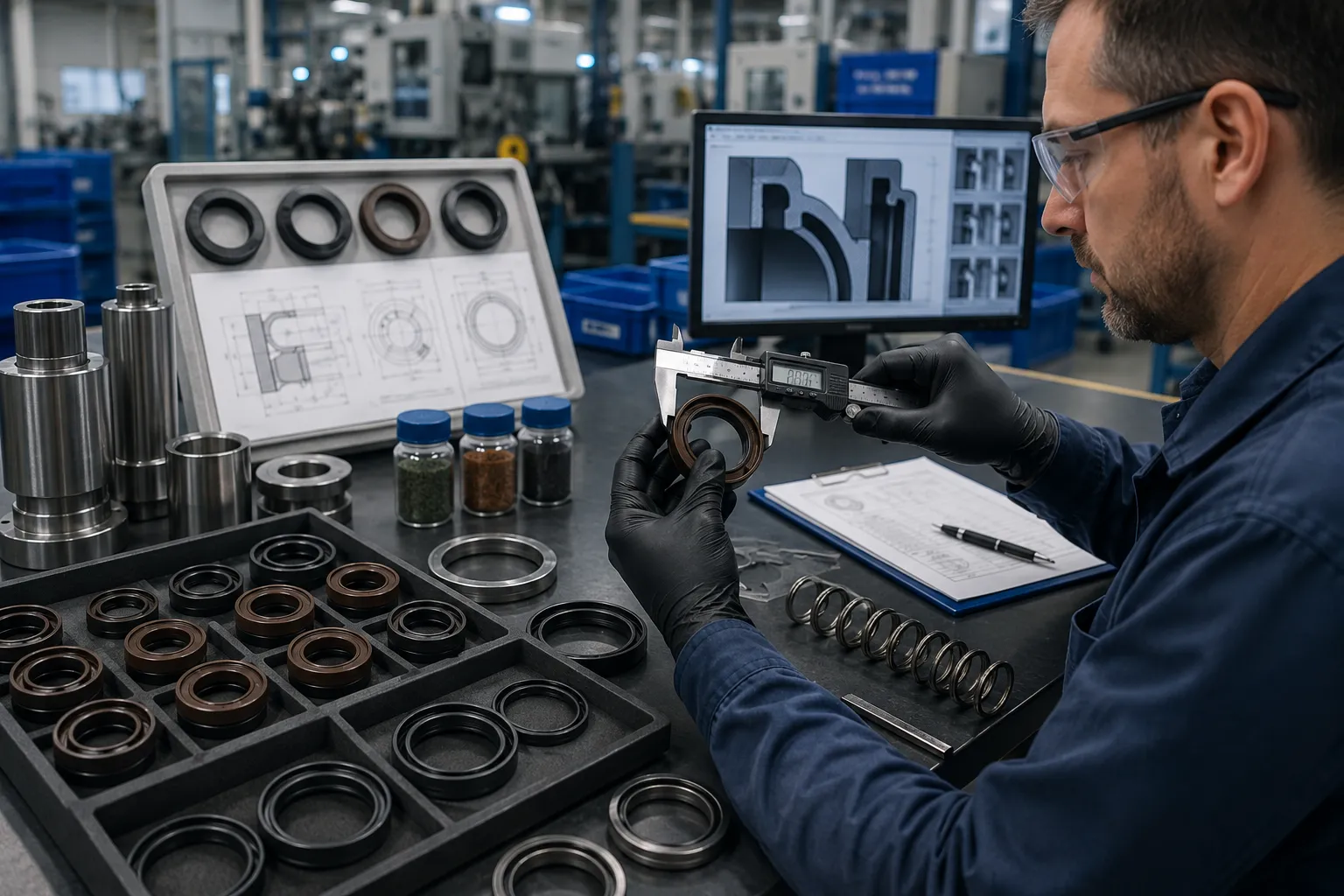
China has a large number of oil seal manufacturers, trading companies, distributors, and industrial-parts suppliers. Many can offer similar product photos, common dimensions, material names, and low quotations.
However, two suppliers offering the same nominal oil seal size may not be offering the same product.
A 35 × 52 × 7 mm rotary oil seal can differ in elastomer compound, lip profile, spring quality, outer diameter structure, metal reinforcement, molding accuracy, shaft contact position, inspection level, packaging, and consistency between production batches.
For standard replacement seals, the differences may not be visible in a product photo. For automotive, drivetrain, industrial gearbox, hydraulic, agricultural, pump, or high-temperature applications, those differences can affect leakage risk, service life, repeat repair cost, and customer satisfaction.
The goal is not simply to find the lowest-priced oil seal manufacturer in China.
The goal is to identify a manufacturing partner that can understand the application, confirm the technical requirement, maintain consistent production, provide clear documentation, support samples, and communicate honestly about what is standard, what is custom, and what needs further verification.
This guide explains how to evaluate oil seal manufacturers in China before approving samples, placing a trial order, or moving into repeat production.
Start by Defining What You Need
Before evaluating any manufacturer, define the product requirement as clearly as possible.
A supplier cannot give a reliable recommendation when the request includes only a size and quantity.
For example, an oil seal marked 35 × 52 × 7 mm may be available in several different designs:
Single-lip or double-lip structure
Rubber-covered or metal-cased outer diameter
NBR, ACM, FKM, PTFE, silicone, or another material
Standard spring or special spring material
Standard lip position or repositioned lip contact
Low-pressure or specialized pressure-capable design
Standard rotary seal or heavy-duty cassette-style arrangement
General-purpose replacement grade or application-specific design
A useful inquiry should include as much of the following information as possible:
Inner diameter, or shaft diameter
Outer diameter, or housing bore diameter
Seal width
Existing seal type
Original sample
Photos of both sides of the seal
Existing product markings
OEM part number
Equipment or vehicle model
Fluid type
Operating temperature
Shaft speed
Pressure condition
Rotation direction, if relevant
Shaft condition
Housing bore condition
Dust, water, mud, or chemical exposure
Expected order quantity
Sample requirement
Packaging requirement
Required delivery date
The clearer the specification, the easier it becomes to compare manufacturers fairly.
A supplier that asks follow-up questions about fluid, temperature, shaft condition, contamination exposure, or seal profile is often giving the project more attention than one that immediately provides a price without confirming the application.
Manufacturer, Trading Company, or Integrated Supplier?
Not every reliable oil seal supplier needs to be a single factory that produces every component in-house.
Some companies specialize in molding and assembly. Others focus on metal cases, springs, PTFE seals, hydraulic seals, industrial sealing products, export packaging, or inventory management. Some combine manufacturing with sourcing and technical support.
The important question is not only whether the company calls itself a manufacturer.
The important question is whether it is transparent about its actual role and can control the product quality being supplied.
Questions to Ask About Manufacturing Role
Ask the supplier:
Which products are produced in-house?
Which products are sourced from partner factories?
Do they mold rubber seals themselves?
Do they manufacture or source metal cases and springs?
Do they have dedicated tooling for standard sizes?
Can they develop new tooling for non-standard dimensions?
Which materials are available for regular production?
Which products are stock items?
Which products require custom production?
Can they provide factory photos, workshop information, or process details?
Who performs incoming inspection for sourced components?
Who controls final inspection and packaging?
Can they maintain the same confirmed specification for repeat orders?
A transparent supplier can still be valuable even when some components are sourced externally.
The problem is not sourcing itself. The problem is when a supplier cannot explain where the product comes from, what is controlled internally, how material is verified, or how repeat quality is maintained.
Evaluate Product Range and Application Knowledge
A broad catalog is useful, but product range alone does not prove technical capability.
A reliable manufacturer should understand which products are standard and which applications require additional review.
For rotary oil seals, the supplier should be able to discuss:
TC, SC, TB, SB, and other common structures
Main lip and auxiliary dust-lip function
Rubber-covered and metal-cased outer diameters
NBR, ACM, FKM, PTFE, silicone, and other material options
Single-lip and double-lip designs
Spring-loaded and non-spring-loaded structures
Standard rotary seals and heavy-duty sealing arrangements
Shaft and housing compatibility
Pressure limitations
Contamination protection
Seal installation direction
Standard sizes and custom dimensions
For hydraulic sealing projects, the supplier should understand the difference between:
Rod seals
Piston seals
Wipers
Buffer seals
Guide rings
Wear bands
Backup rings
Static seals
Seal kits
Cylinder bore and rod measurements
Pressure, side-load, and contamination conditions
A manufacturer does not need to promise that every product is suitable for every application.
In fact, a more credible supplier will identify uncertainty and ask for additional information before recommending a special material or custom profile.
Check Quality Control Beyond Certificates
Certificates can be useful, but they should not replace product-level evaluation.
A certificate may show that a company has a documented management system or that a specific site has been audited for a stated scope. It does not automatically confirm that every oil seal is made from the correct compound, molded consistently, inspected correctly, or suitable for a particular application.
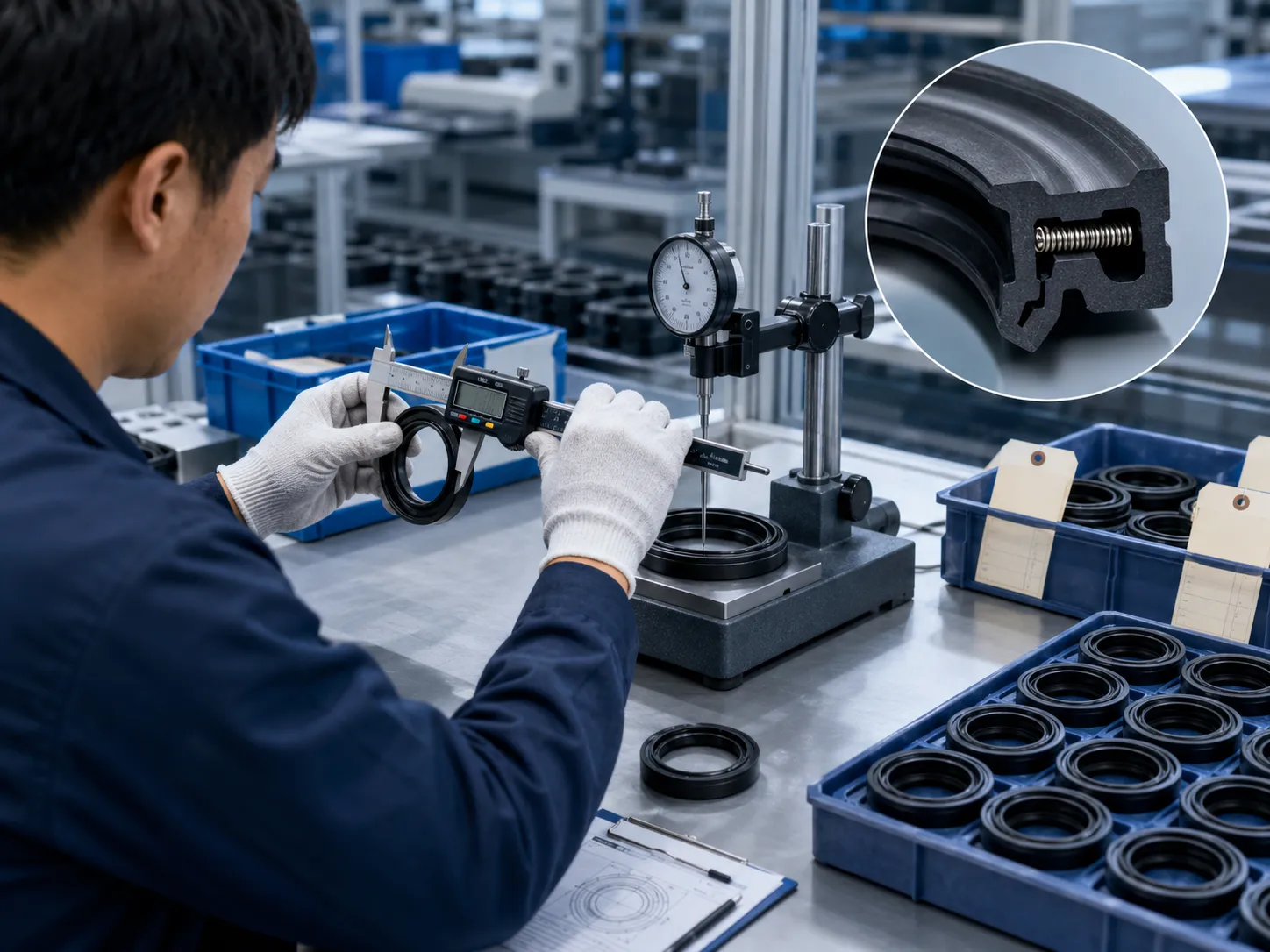
When evaluating quality control, ask how the manufacturer controls the actual product.
Important quality-control areas include:
Raw material identification
Incoming inspection of elastomer compounds
Metal case inspection
Spring inspection
Mold condition and mold maintenance
Dimensional inspection
Lip profile inspection
Spring installation check
Outer diameter inspection
Inner diameter and lip-contact check
Rubber surface inspection
Metal case condition
Batch traceability
Packaging verification
Sample retention
Final inspection before shipment
A manufacturer should be able to explain whether inspection is based on:
Incoming material checks
First-piece inspection
In-process inspection
Random sampling
Final inspection
Customer-specific inspection requirements
Pre-shipment review
Photo confirmation before delivery
For critical or repeat-order programs, useful records may include:
Dimension inspection report
Material confirmation
Product drawing
Approved sample record
Batch number
Packaging record
Final inspection record
Pre-shipment photos
Customer-specific labeling record
The required documentation should match the risk level of the application.
A standard general-purpose seal order may not need the same level of documentation as an automotive service-parts program, a heavy-equipment maintenance project, or a custom industrial gearbox seal.
How to Evaluate Material Capability
Material selection is one of the most important areas when evaluating an oil seal manufacturer.
A supplier may list NBR, FKM, ACM, PTFE, silicone, or HNBR in a catalog. The more important question is whether the supplier can explain which material is appropriate for the actual fluid, temperature, speed, and operating condition.
Questions to Ask About Seal Materials
Ask the manufacturer:
What material is proposed for this application?
Why is this material recommended?
Is it suitable for the actual fluid type?
Is it suitable for the continuous operating temperature?
What about short-term temperature peaks?
Is the application exposed to fuel, synthetic oil, aggressive additives, water, or chemicals?
Does the material need improved low-temperature flexibility?
Does the application need higher abrasion resistance?
Is the seal intended for a standard rotary application or a specialized PTFE design?
Can the supplier provide material information or application guidance?
Is the same material used for the approved sample and mass production?
How is material consistency managed across repeat orders?
Common Material Selection Logic
NBR is often suitable for standard mineral-oil and grease applications under moderate operating conditions.
ACM may be selected for many hot engine-oil and transmission-oil applications.
FKM is often considered for higher-temperature, fuel-exposed, synthetic-oil, or more demanding applications.
PTFE may be useful for specialized high-speed, high-temperature, low-friction, chemically demanding, or advanced rotary-seal applications.
Silicone may offer wide temperature flexibility but is not automatically the best choice for conventional high-load rotary oil-seal lips.
The correct material depends on the complete application.
A manufacturer should not recommend FKM simply because it is more expensive. In the same way, a supplier should not recommend standard NBR for every application simply because it is readily available.
Material selection should be supported by the fluid, temperature, shaft speed, pressure condition, contamination level, and expected service life.
Check Whether the Manufacturer Understands Seal Structure
Oil seal performance depends on more than material.
The structure of the seal must match the shaft, housing, lubricant, pressure, and environment.
A manufacturer should be able to explain the function of:
Main sealing lip
Auxiliary dust lip
Garter spring
Rubber-covered outer diameter
Metal outer case
Lip-contact position
PTFE sealing edge
Pressure-capable lip profile
Seal width
Housing fit
Shaft lead-in surface
Directional pumping feature, where applicable
External exclusion feature
Heavy-duty cassette structure
For example, a supplier should be able to explain that a TC seal commonly includes a main lip and an auxiliary dust lip, while an SC seal commonly uses a main lip without the additional dust lip.
They should also explain that the dust lip is mainly designed to reduce contamination entry. It should not be described as a second full pressure-sealing lip.
For a metal-cased seal, the manufacturer should ask whether the housing bore is accurately machined and in good condition.
For a rubber-covered outer diameter, the manufacturer should consider whether the housing bore has minor imperfections, a cast surface, or a condition where improved static sealing may be useful.
A supplier that can explain these differences is more likely to recommend a suitable product rather than simply offering the closest-looking item.
Review Tooling and Custom Development Capability
Custom oil seal capability does not only mean accepting a drawing.
A reliable manufacturer should have a clear process for deciding whether the project can use an existing mold, needs a modified standard design, or requires new tooling.
Questions to Ask About Tooling
Ask:
Is the requested size already available in an existing mold?
Can the current profile be supplied in a different material?
Can the lip contact position be changed?
Can seal width be modified?
Can the outer diameter design be changed?
Is a different dust-lip arrangement available?
Is a new mold required?
What is the tooling lead time?
Who owns the tooling after payment?
Can tooling be used for repeat orders?
How will the drawing be approved?
Can the manufacturer provide a cross-section drawing before production?
What happens if the sample does not fit or perform correctly?
Can the project move from sample approval to stable repeat production?
A custom seal project may involve:
Non-standard ID
Non-standard OD
Special width
Changed lip location
Special shaft geometry
Limited housing depth
Material upgrade
Different spring material
Alternative outer diameter structure
Dust-lip addition
High-temperature requirement
Chemical resistance requirement
Pressure-related design change
OEM sample matching
Private packaging or labeling
The supplier should identify whether the custom requirement affects tooling, molding, assembly, inspection, lead time, minimum order quantity, or cost.
Standard Mold, Modified Design, or New Tooling?
A practical manufacturer should distinguish between three common situations.
Project Type | Typical Approach |
|---|---|
Standard replacement size | Existing mold and standard production process |
Modified standard design | Existing or adapted tooling with different material, lip design, width, spring, or outer diameter arrangement |
Fully custom profile | New tooling, drawing confirmation, sample approval, and controlled production process |
Not every unusual request requires a new mold.
However, a manufacturer should not promise “no tooling needed” when the requested geometry, lip position, width, or cross-section clearly requires a different design.
Ask for a Drawing Before Approving Production
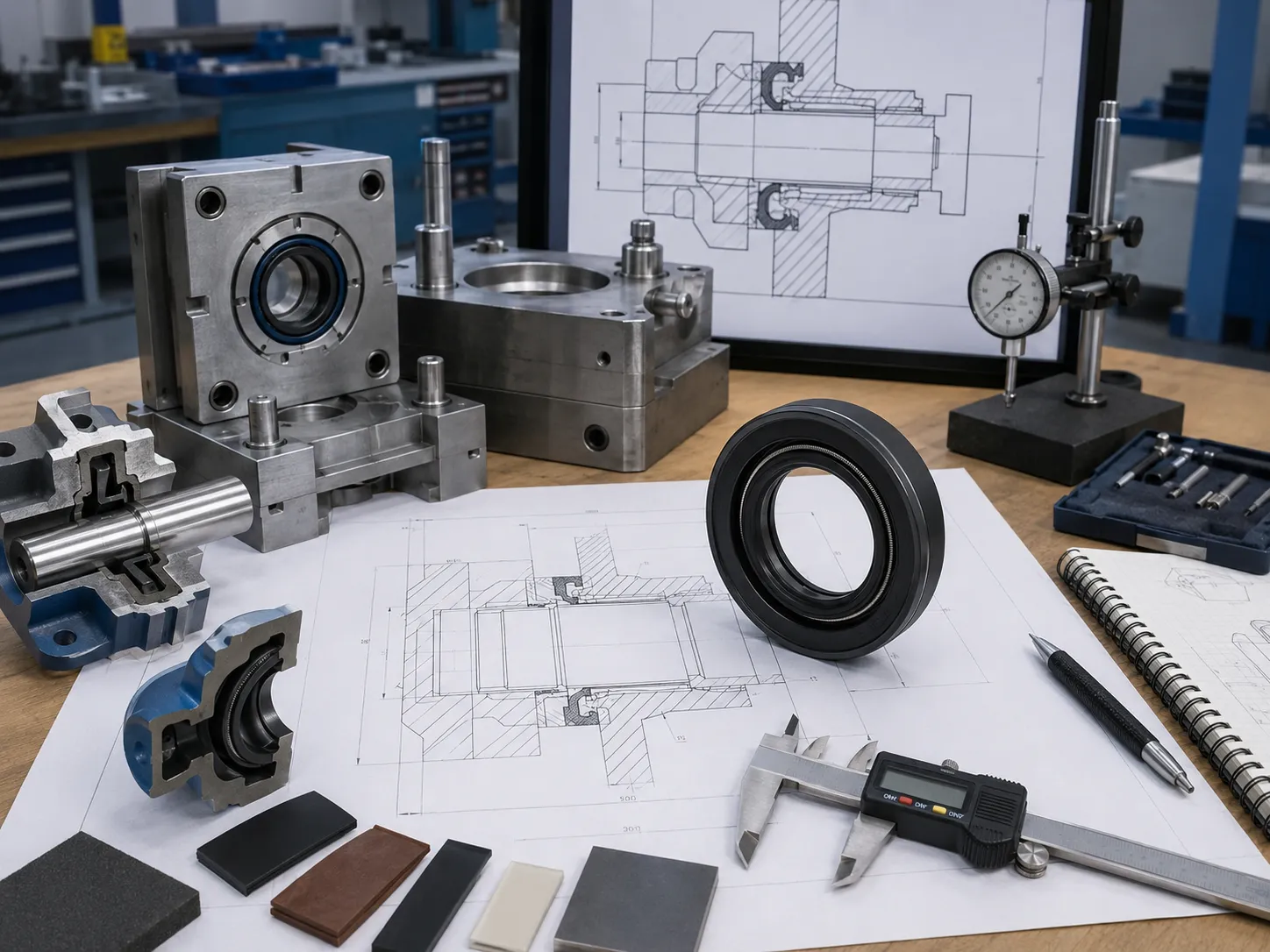
For a custom seal, a drawing is often more reliable than a written description.
The drawing should show the main technical features needed for confirmation, including:
ID
OD
Width
Lip position
Main lip direction
Dust-lip position
Outer diameter structure
Metal case arrangement
Spring arrangement
Installation direction
Installation depth where relevant
Key cross-section dimensions
Customer reference number
Revision status
The drawing should not be treated as a purely administrative document.
It is the reference point for comparing the sample, production order, inspection requirement, and repeat-order specification.
Before approving a drawing, confirm:
The lip contacts the intended shaft area
The seal width fits the housing depth
The outer diameter suits the housing bore
The main lip faces the lubricant side
The dust lip faces the contamination side where applicable
The proposed material is suitable
The seal does not interfere with bearings, gears, retaining rings, pulleys, or nearby components
The shaft surface is suitable for the selected lip type
The seal type is appropriate for the pressure condition
For difficult or high-risk projects, drawing approval should come before tooling release or bulk production.
Evaluate Sample Support Carefully
Sample support is one of the most useful ways to evaluate a manufacturer before placing a larger order.
A sample should not be treated only as a free product request.
The sample stage should confirm whether the manufacturer can turn an application requirement into a repeatable product specification.
A useful sample process may include:
Confirming the dimensions.
Reviewing the original sample, photos, drawing, or OEM reference.
Confirming material and seal type.
Reviewing the proposed cross-section or product drawing.
Producing a sample or trial quantity.
Checking dimensions and physical structure.
Testing fitment in the actual equipment.
Observing leakage, heat, wear, or installation issues.
Recording the approved specification.
Confirming that production will follow the approved sample or drawing.
When evaluating a sample, inspect:
ID
OD
Width
Lip condition
Spring condition
Material appearance
Outer diameter structure
Product markings
Packaging
Shaft fit
Housing fit
Installation depth
Lip contact location
Initial leakage
Contact with nearby components
For demanding projects, request that the supplier retain an approved reference sample or approved drawing revision for future repeat orders.
Assess Production Consistency and Batch Traceability
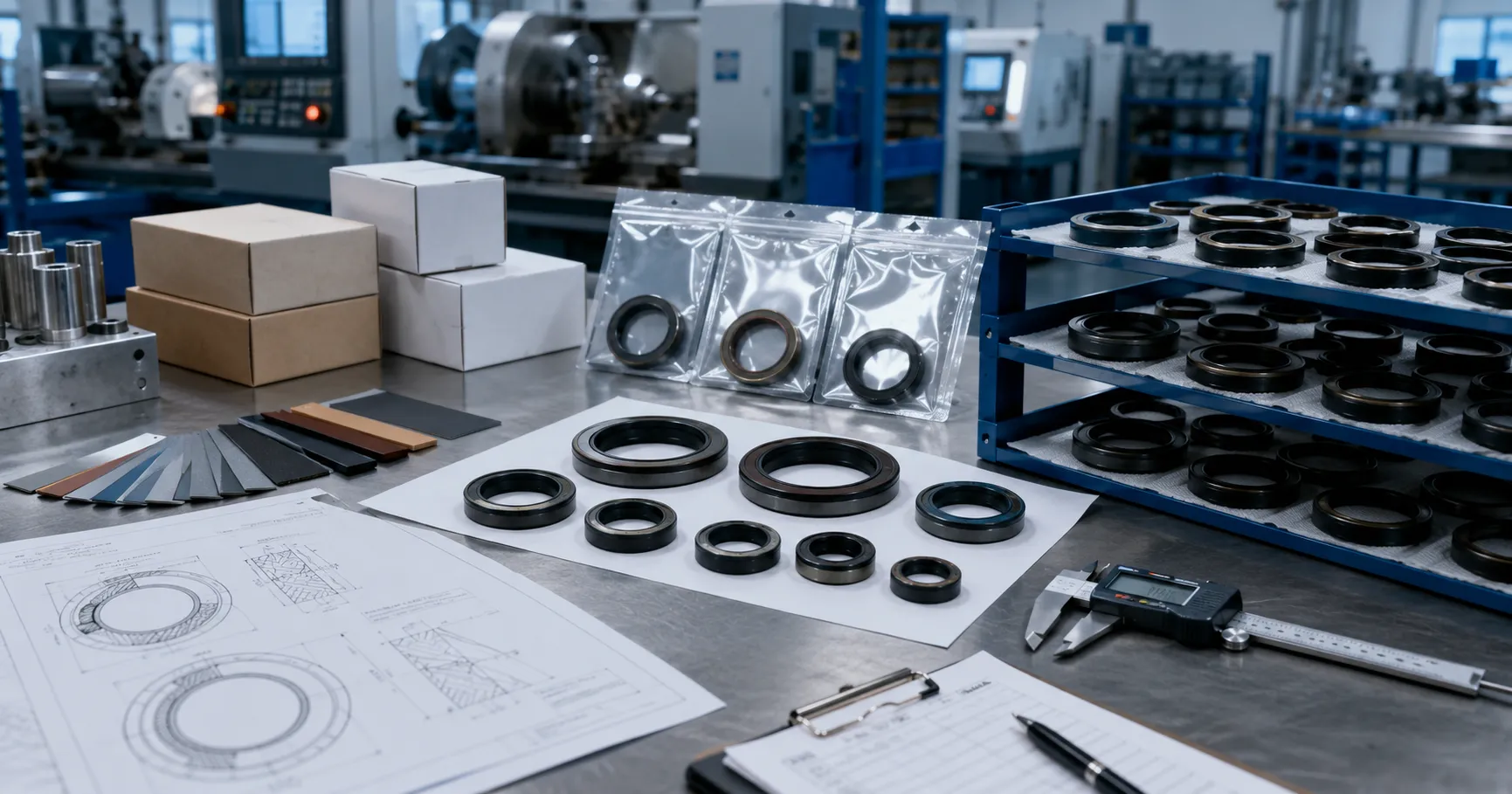
A good sample is not enough if the bulk production does not match it.
The manufacturer should have a practical way to control repeat production.
Ask how the supplier manages:
Material source consistency
Compound identification
Mold identification
Production batch tracking
Spring specification
Metal case specification
Inspection records
Approved sample reference
Drawing revision control
Packaging labels
Repeat-order product confirmation
Nonconforming product control
Complaint review
Corrective action after a quality issue
For repeat orders, the supplier should be able to confirm:
The same product code
The same approved drawing
The same material requirement
The same lip structure
The same packaging requirement
The same label format
The same batch-control approach
A supplier does not need to disclose proprietary compound formulas to demonstrate control.
What matters is whether the manufacturer can maintain the agreed material and structure consistently from one approved order to the next.
Evaluate Capacity, Lead Time, and Supply Stability
Production capability is not only about how many seals a factory can produce in one day.
It is also about whether the manufacturer can supply the correct product, at a stable quality level, within a realistic lead time.
Ask the supplier:
Which sizes are held in regular stock?
Which products are made only after order confirmation?
What is the sample lead time?
What is the normal production lead time?
What changes for FKM, PTFE, special springs, or custom dimensions?
What is the minimum order quantity?
Can the manufacturer support trial orders?
Can the supplier support repeat orders?
Can they handle seasonal demand changes?
Can they provide partial shipments when needed?
What is the expected production capacity for this product type?
What happens if a material, spring, or metal-case component is unavailable?
How are delivery delays communicated?
Be cautious when a supplier promises every material, every custom size, and immediate delivery without asking about quantity, tooling, or application details.
A realistic lead time is more valuable than an aggressive promise that cannot be maintained.
Check Packaging, Labels, and Export Readiness
Packaging is part of quality control, not only a logistics detail.
Poor packaging can allow sealing lips to deform, springs to shift, dust to contaminate the product, or different sizes to become mixed during storage and transport.
Ask how the manufacturer packages:
Individual seals
Small inner bags
Size-specific cartons
Material-specific cartons
Mixed-size orders
Trial samples
Export cartons
Pallets
Private-label orders
Custom labels
Batch-marked products
Useful labeling may include:
Product size
Seal type
Material code
Quantity
Batch number
Customer part number
Internal product code
Production date where required
Private label or brand mark
Carton number
For repeat programs, consistent labeling reduces warehouse mistakes and makes quality issues easier to trace.
For export orders, confirm:
Carton strength
Moisture protection where needed
Pallet requirement
Shipping mark format
Packing list format
Product labeling language
Country-of-origin requirement
Customs document requirement
Dangerous-goods status for any related materials, if relevant
Understand OEM Reference and Custom Branding Support
OEM reference support can be useful, but it should be described accurately.
A manufacturer may help identify or reproduce a replacement seal based on:
OEM part number
Original sample
Product photo
Machine model
Vehicle model
Technical drawing
Existing supplier code
Measured dimensions
Seal cross-section
This does not necessarily mean the manufacturer is officially authorized by the original equipment manufacturer.
A professional supplier should be clear about the difference between:
OEM reference matching
Aftermarket replacement support
Sample-based identification
Drawing-based custom production
Private-label packaging
Official OEM authorization
For private-label or customer-branded programs, ask about:
Minimum order quantity
Label format
Packaging artwork
Logo printing method
Product marking
Carton marking
Brand ownership
Packaging lead time
Artwork approval
Repeat-order consistency
Branding should be treated as part of the approved production specification, not an informal note in a chat message.
Compare Quotations by Specification, Not Only by Price
The lowest price may be based on a different material, lip configuration, inspection level, spring quality, packing method, or order condition.
When comparing quotations, place the products side by side.
Comparison Item | What to Confirm |
Dimensions | ID, OD, width, installation depth |
Seal type | TC, SC, TB, SB, PTFE, cassette, custom profile |
Material | NBR, ACM, FKM, PTFE, silicone, HNBR, or specified compound |
Lip structure | Main lip, dust lip, pressure lip, special geometry |
Outer diameter | Rubber-covered, metal-cased, or special OD design |
Spring | Standard, stainless, or specified design where required |
Application | Fluid, temperature, speed, pressure, contamination condition |
Drawing | Approved revision and cross-section confirmation |
Sample | Whether the quotation matches the approved sample |
Inspection | Dimension check, batch control, customer-specific records |
Packaging | Individual packing, labels, cartons, private branding |
Quantity | MOQ, trial quantity, repeat-order quantity |
Lead time | Sample, production, custom tooling, shipping preparation |
Commercial terms | Unit price, tooling, payment, shipping, packaging charges |
Issue handling | Replacement process, evidence requirement, corrective action |
A low quotation should be questioned when the specification is incomplete.
For example, a supplier may quote a standard NBR SC oil seal while another supplier quotes an FKM TC oil seal with a dust lip and different packaging requirement. The dimensions may be the same, but the product is not equivalent.
Red Flags When Evaluating an Oil Seal Manufacturer
A supplier does not need to be perfect, but certain warning signs deserve closer review.
Common red flags include:
Quoting without confirming the application
Recommending the same material for every project
Claiming that every seal is suitable for high temperature, high pressure, and all fluids
Refusing to provide a cross-section or drawing for a custom project
Unable to explain TC, SC, TB, or SB differences
Unable to confirm whether a product is made in-house or sourced
Unable to explain material selection
Giving conflicting answers about lead time
Promising custom production with no tooling discussion
Avoiding questions about inspection and batch control
Providing certificates with unclear company name, site, scope, or validity
Sending samples that do not match the quotation
Offering unusually low prices with incomplete specifications
Changing material or seal type without written approval
Failing to confirm packaging and label requirements
Not asking about shaft, housing, fluid, temperature, or contamination for a technical application
Using vague statements such as “same quality” without defining the specification
Avoiding responsibility when a sample or production issue appears
A reliable manufacturer may not have every answer immediately.
However, they should be willing to verify the requirement, provide a clear follow-up, and explain where confirmation is needed.
A Practical Factory Evaluation Checklist
Use this checklist before approving a new oil seal manufacturer in China.
Evaluation Area | Questions to Ask |
Company role | Is the company a manufacturer, trading company, integrated supplier, or a combination? |
Product scope | Which seal types, materials, and dimensions are produced regularly? |
Technical knowledge | Can the supplier discuss lip structure, materials, shaft condition, housing fit, and application limits? |
Quality control | How are raw materials, dimensions, lip condition, springs, metal cases, and final products inspected? |
Material capability | Can the supplier recommend materials based on fluid, temperature, speed, pressure, and environment? |
Custom capability | Can they work from samples, drawings, OEM references, and non-standard dimensions? |
Tooling | Is existing tooling available, or is new tooling required? Who owns it? |
Drawing control | Can they provide and control an approved cross-section drawing? |
Samples | Can they provide samples and retain an approved reference? |
Production consistency | How do they manage batches, material control, and repeat-order specifications? |
Lead time | Are sample, tooling, production, and repeat-order lead times realistic and clear? |
Packaging | Can they protect, label, and organize the products correctly for export and storage? |
Documentation | Can they provide relevant drawings, inspection records, packing details, and product information? |
Communication | Do they answer technical questions clearly and identify missing information? |
Claim handling | Is there a clear process for reviewing incorrect, damaged, or nonconforming products? |
A manufacturer does not need to score perfectly in every category.
But for an important or repeat-order program, the supplier should be strong in the areas that affect your actual risk: material accuracy, seal structure, custom capability, repeat consistency, lead time, and issue handling.
How to Run a Low-Risk First Order
A trial order should be structured to reduce uncertainty before moving into larger volumes.
A practical first-order process may include:
Confirm the application requirement in writing.
Confirm ID, OD, width, seal type, material, and lip structure.
Request a drawing or cross-section for non-standard items.
Confirm sample or trial quantity before bulk production.
Record the approved sample, drawing revision, and material requirement.
Confirm inspection and packaging requirements.
Place a manageable first production order.
Inspect the delivered goods before broad distribution or installation.
Test fitment and early operating performance where practical.
Record any issues and confirm corrective action before repeat production.
For a new supplier, avoid combining too many unknown variables in one order.
For example, do not simultaneously introduce a new manufacturer, a new custom mold, a new FKM compound, new private-label packaging, and a large order quantity without a staged approval process.
How to Build a Repeat-Order Specification
Once a manufacturer and product have been approved, create a repeat-order reference that avoids ambiguity.
The repeat-order specification should include:
Internal product code
Customer part number
Oil seal type
ID, OD, and width
Material
Lip structure
Outer diameter structure
Spring requirement
Drawing revision
Approved sample reference
Packaging format
Label format
Carton quantity
Inspection requirement
Product marking requirement
Lead-time expectation
Order quantity range
Approved supplier contact
Quality issue reporting method
This document can be simple, but it should be clear enough that future orders are based on the same approved requirement rather than on memory or a chat-history screenshot.
Conclusion
Evaluating an oil seal manufacturer in China requires more than comparing a catalog, certificate, or unit price.
The strongest manufacturers can explain their actual production role, understand seal structures and materials, control dimensions and batch consistency, support samples and drawings, provide realistic lead times, and communicate clearly about what is standard, what is custom, and what needs additional review.
For standard seals, confirm the dimensions, material, lip structure, outer diameter design, application condition, and packaging requirement.
For custom seals, confirm the drawing, tooling requirement, sample process, material selection, approval process, inspection requirement, and repeat-order control.
The most reliable purchasing decision is based on a complete specification and a controlled sample-to-production process, not on the lowest price alone.
SealVendor supports standard and custom oil seal sourcing through sample-based identification, material selection, TC, SC, TB, and SB structure review, drawing confirmation, OEM-reference matching, custom packaging support, and repeat-order specification management.