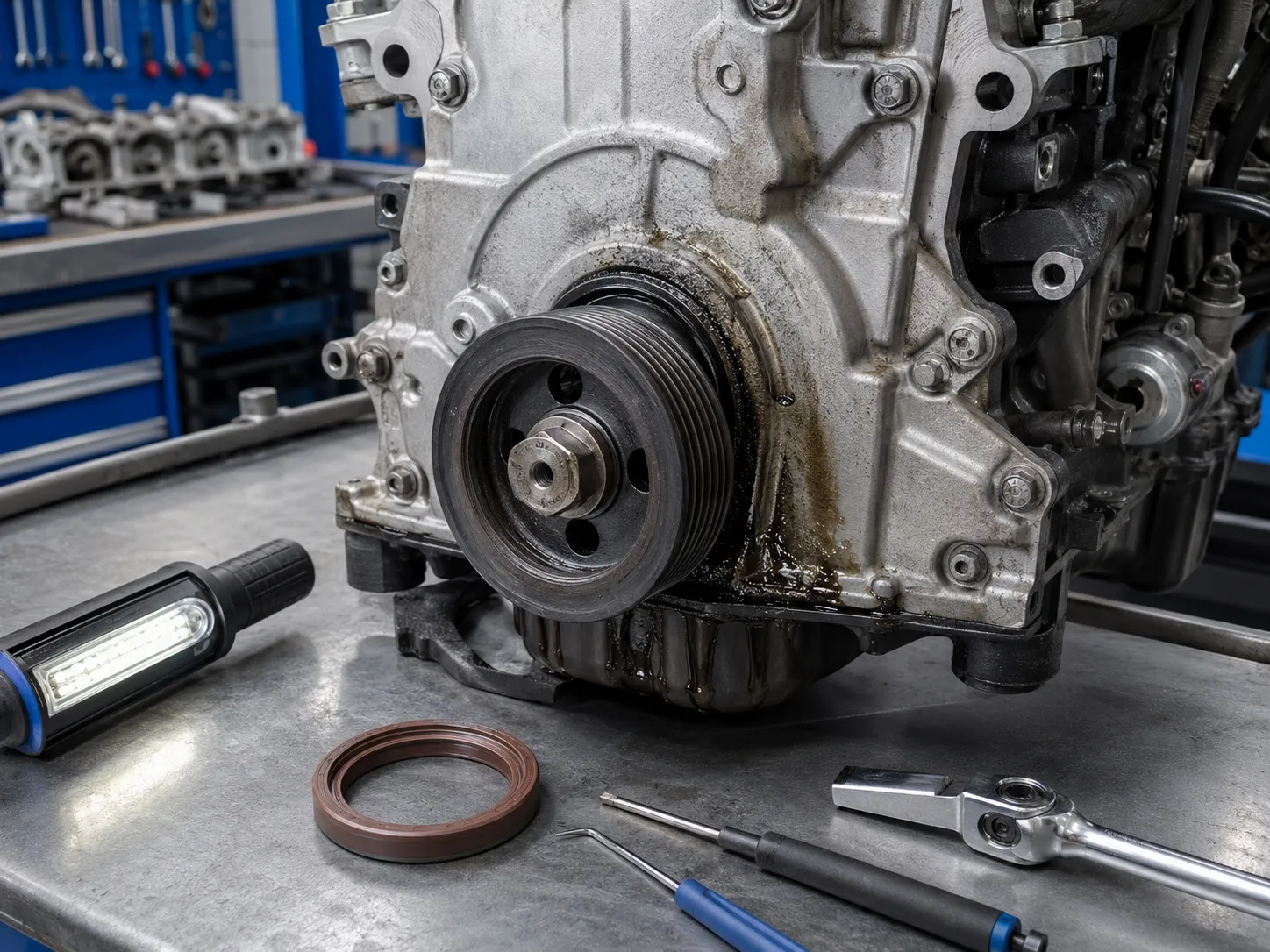
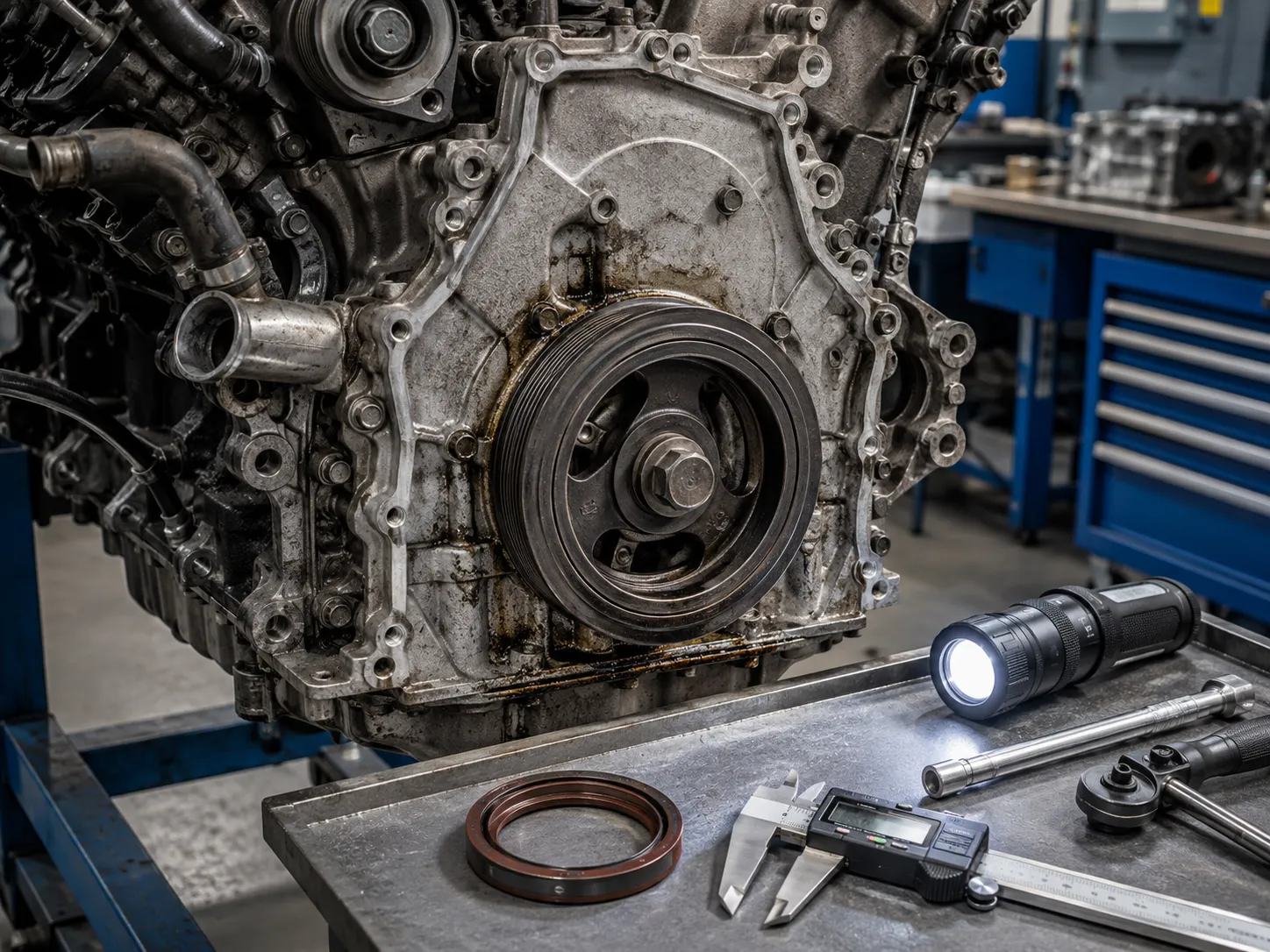
A crankshaft oil seal leak can be more serious than it appears at first. In many cases, it starts as a small oil stain near the crankshaft pulley, timing cover, or the area between the engine and transmission. However, if the seal continues to wear, the leak may worsen and lead to oil loss, belt contamination, poor lubrication, overheating, or engine damage.
The crankshaft oil seal is designed to retain engine oil within the crankcase while allowing the crankshaft to rotate smoothly. When the seal becomes worn, hardened, cracked, or damaged during installation, oil can leak from the front or rear side of the engine.
For vehicle owners, the main concern is repair costs and engine safety. For repair shops, distributors, wholesalers, and aftermarket parts suppliers, reliability is also a key concern. A poor-quality or incorrectly selected seal may cause repeated leakage, customer complaints, and unnecessary replacement work.
Choosing the right crankshaft oil seal is not only about stopping the leak. It is also about matching the correct dimensions, material, and sealing structure to the actual working conditions.
Quick Answer
A crankshaft oil seal leak can be serious if it causes visible oil drips, oil contamination on belts, low engine oil levels, or an illuminated oil warning light.
Small seepage may be monitored for a short time, but moderate or heavy leakage should be repaired as soon as possible. If the oil warning light illuminates or the oil level drops quickly, the vehicle should not continue running.
For repair shops and automotive parts buyers, the key lies in selecting a crankshaft oil seal that matches the correct dimensions, material, and structure to reduce recurrent leaks and improve repair reliability.
What Is a Crankshaft Oil Seal?
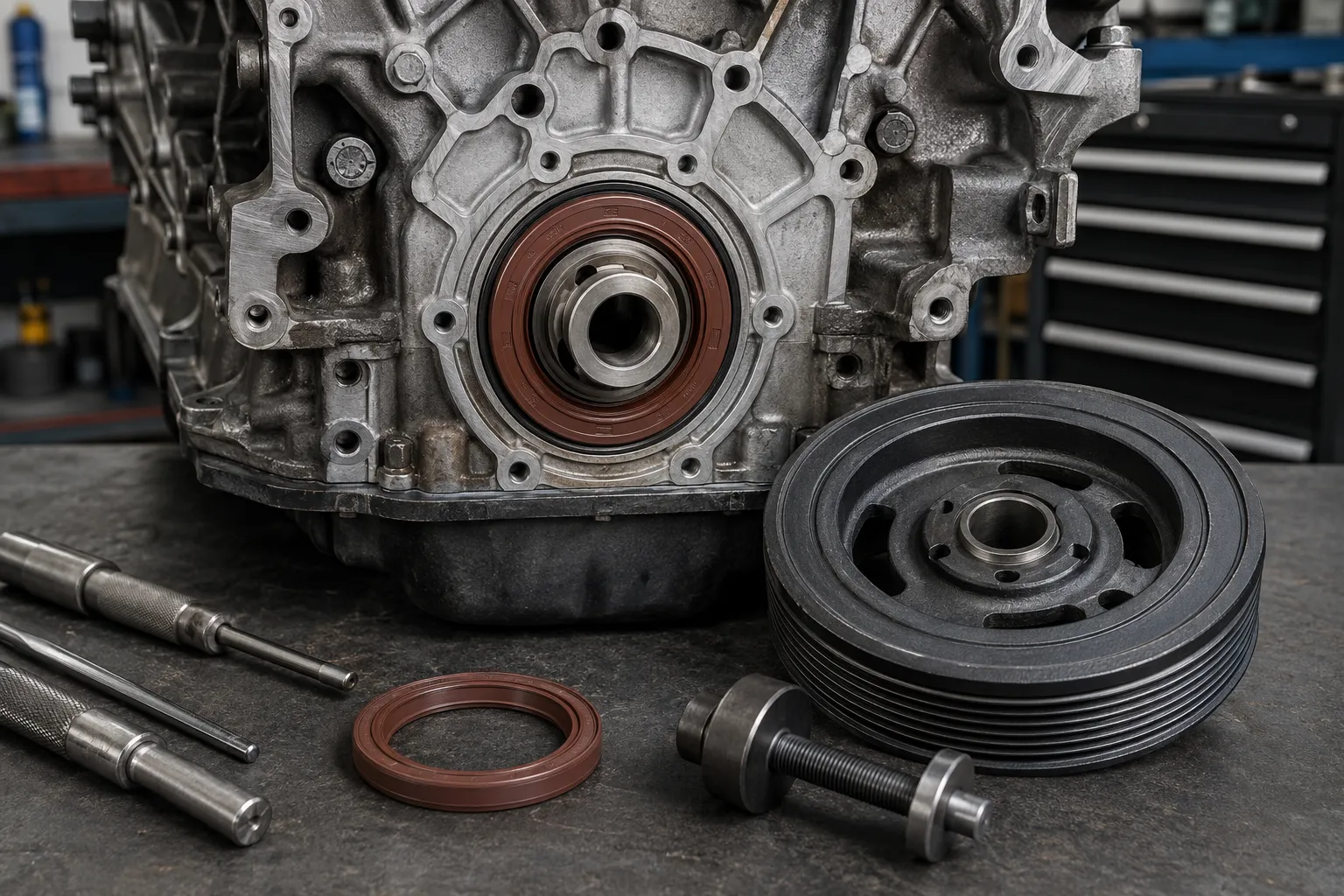
A crankshaft oil seal is a rotary shaft seal installed around the crankshaft to prevent engine oil from leaking out of the engine. It usually includes a rubber sealing lip, a metal case, and sometimes a spring-loaded lip to maintain stable contact with the rotating shaft.
Most engines have two main crankshaft oil seals:
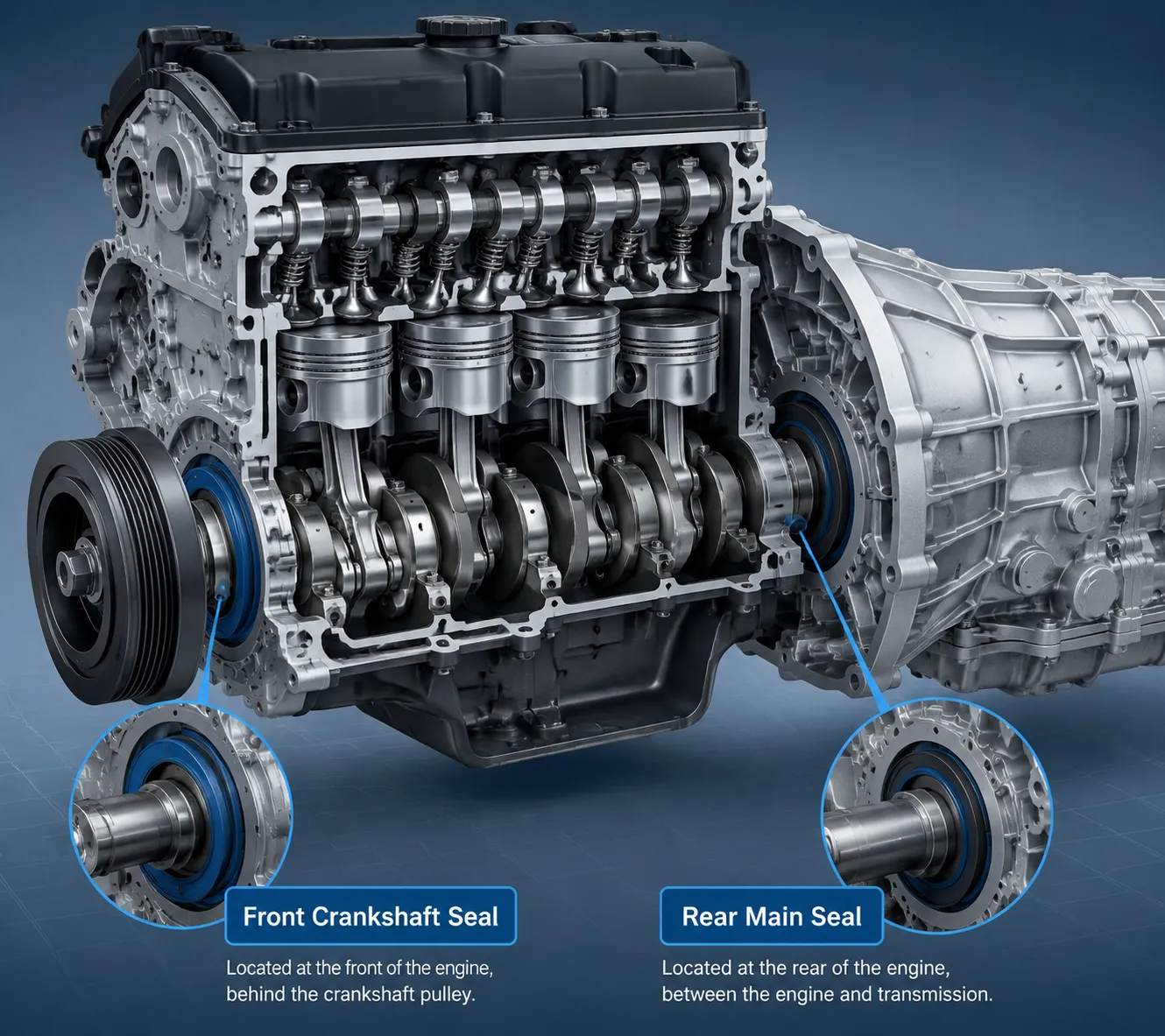
Seal Type | Location | Common Name |
|---|---|---|
Front crankshaft seal | Near the crankshaft pulley, harmonic balancer, or timing cover | Front crank seal |
Rear crankshaft seal | Between the engine and transmission | Rear main seal |
Both seals are important because engine oil must remain inside the crankcase to lubricate moving parts. Once the crankshaft seal fails, oil can escape and cause visible leakage, component contamination, and possible engine damage.
Common material options include NBR, FKM, ACM, and PTFE. The best choice depends on the operating temperature, oil type, shaft speed, installation conditions, and engine application.
Common Symptoms of a Crankshaft Oil Seal Leak
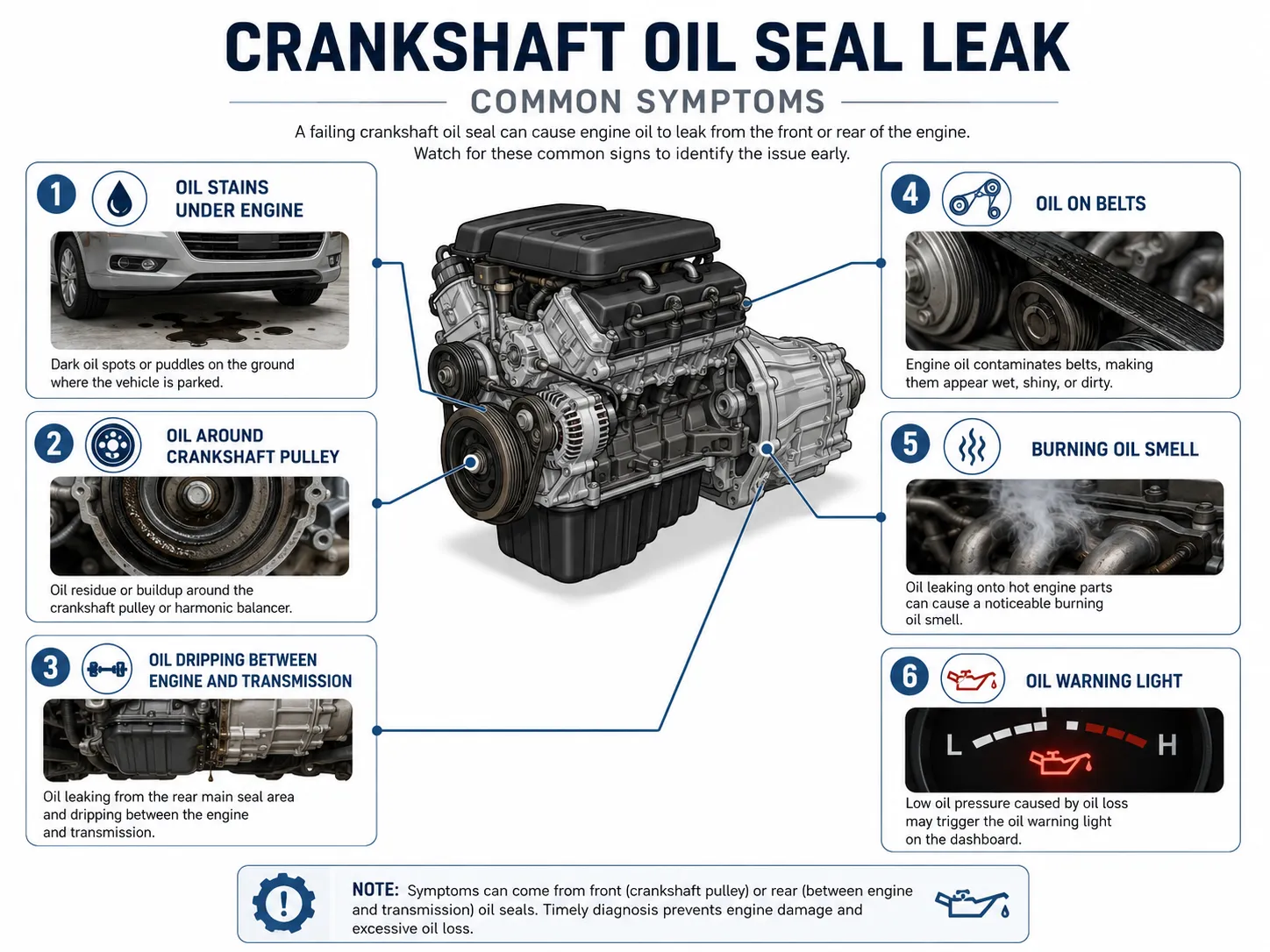
A leaking crankshaft oil seal can show different symptoms depending on the leak location and severity.
Symptom | What It May Indicate |
Oil stains under the engine | Possible crankshaft seal seepage or leakage |
Oil around the crankshaft pulley | Possible front crankshaft seal leak |
Oil dripping between the engine and transmission | Possible rear main seal leak |
Burning oil smell | Oil may be contacting hot engine parts |
Low engine oil level | Oil loss may already be affecting lubrication |
Oil on the timing belt or drive belt | Front seal leakage may be contaminating belts |
Oil warning light | Serious oil loss or low oil pressure risk |
A minor leak may produce only a few drips after the vehicle is parked. A larger leak can quickly reduce the engine oil level and increase the risk of engine wear.
For repair shops and parts suppliers, recurrent leaks after replacement may also indicate poor seal quality, incorrect material selection, improper installation, excessive crankcase pressure, or shaft surface wear.
How Serious Is a Crankshaft Oil Seal Leak?
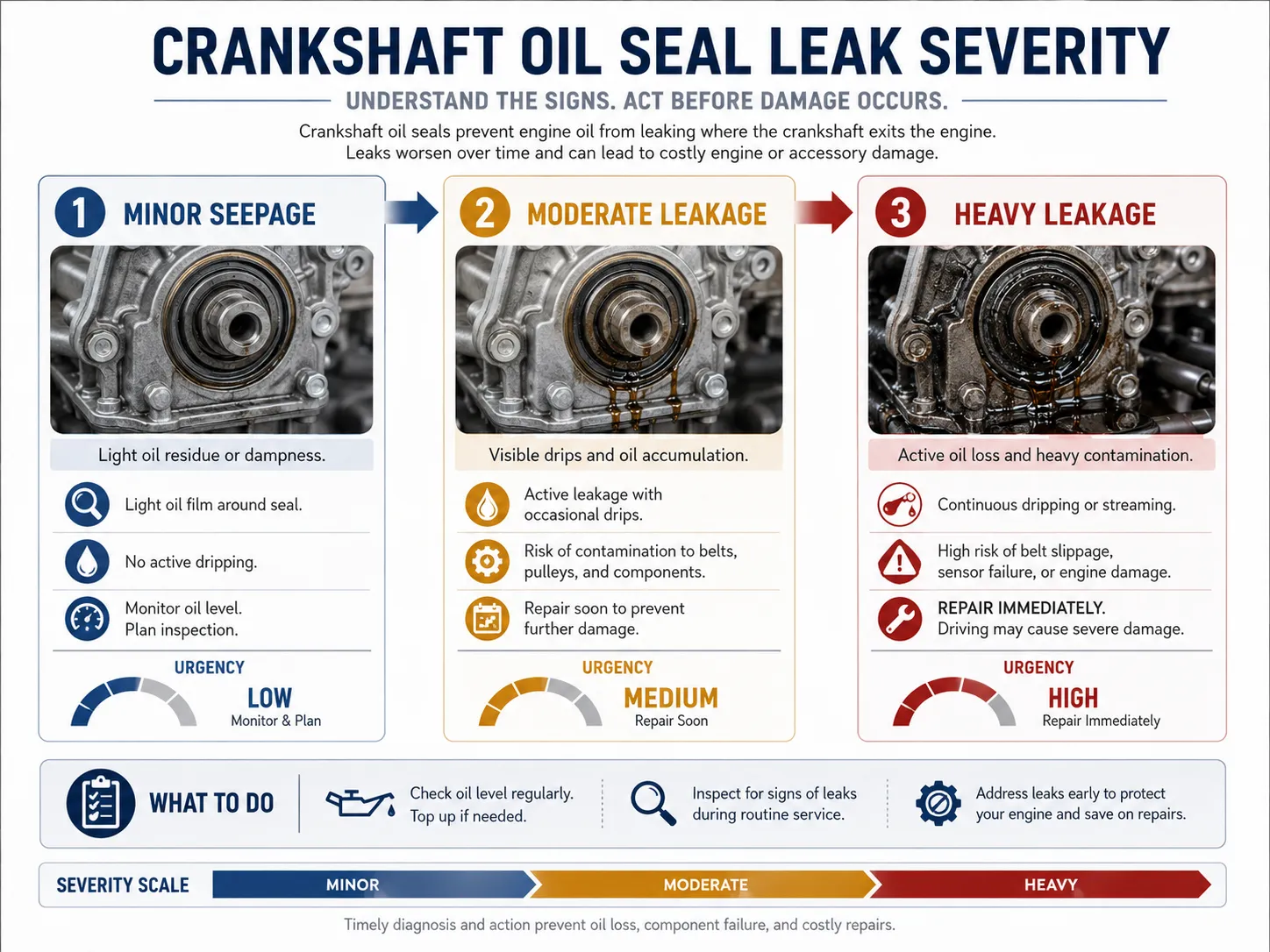
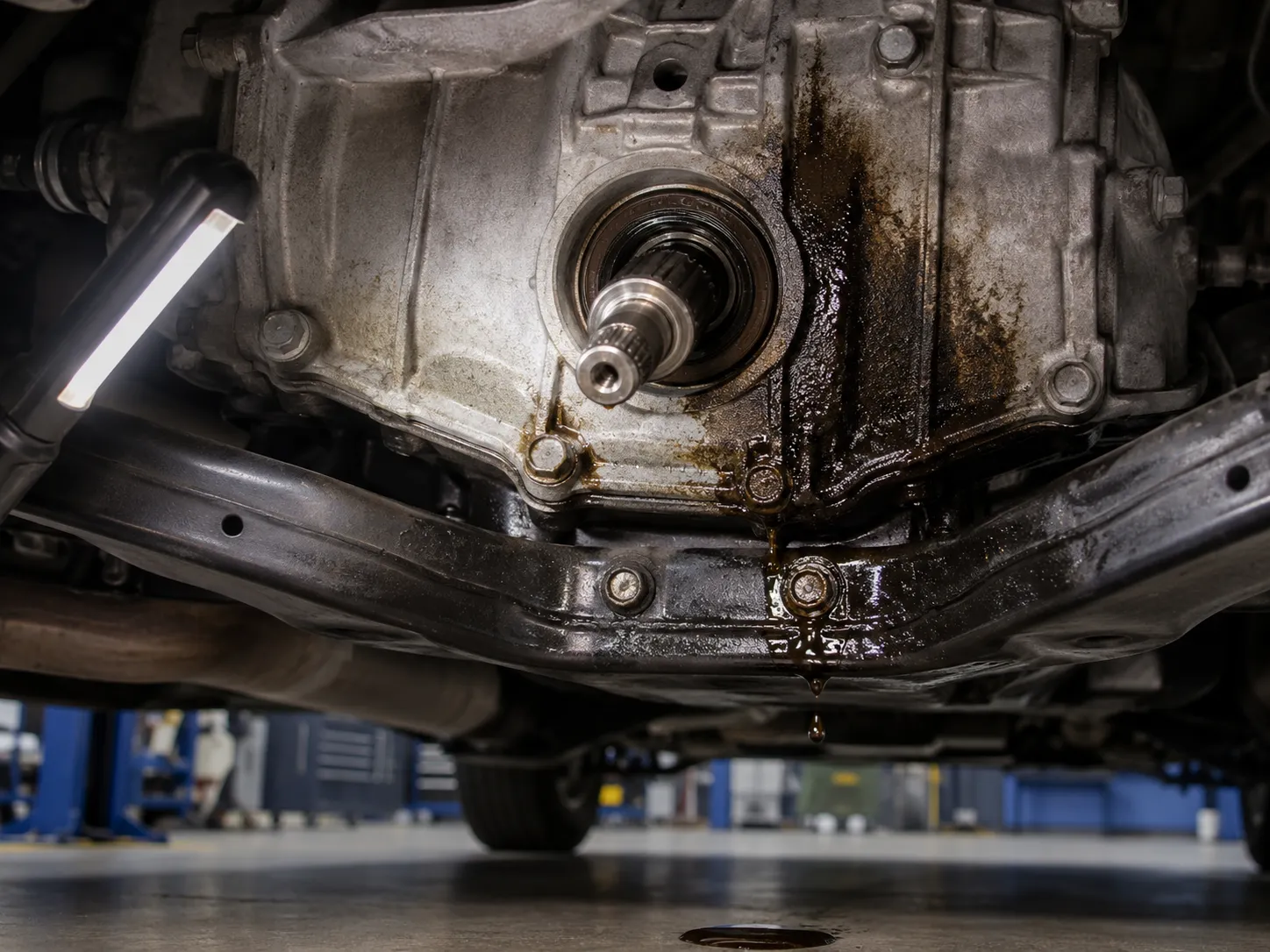
Different levels of crankshaft oil seal leakage and recommended repair actions.
A crankshaft oil seal leak can become serious if it is not repaired in time. Engine oil is responsible for lubrication, cooling, and reducing friction between moving engine parts. If too much oil is lost, the engine may suffer from overheating, increased wear, bearing damage, or internal failure.
Leak Level | What It Means | Recommended Action |
Small seepage | Light oil stain, no visible dripping | Monitor the oil level and schedule replacement |
Moderate leakage | Visible oil drips or oil spreading around nearby parts | Repair as soon as possible |
Heavy leakage | Fast oil loss, oil warning light, or heavy dripping | Stop driving and have the vehicle inspected immediately |
The greatest risk is low oil level. A small leak may not damage the engine immediately, but ignoring it can turn a simple seal replacement into a much more expensive repair.
Front Crankshaft Seal Leak vs Rear Main Seal Leak
Both front and rear crankshaft seal leaks are important, but they differ in location, inspection difficulty, and repair complexity.
Item | Front Crankshaft Seal Leak | Rear Main Seal Leak |
Location | Near the crankshaft pulley, harmonic balancer, or timing cover | Between the engine and transmission |
Common sign | Oil around the front lower engine area | Oil dripping from the bell housing area |
Inspection difficulty | Usually easier to inspect | Usually harder to confirm |
Related risk | Oil may contaminate the timing belt or drive belt | Oil may accumulate between the engine and transmission |
Repair complexity | Medium | High |
Typical repair cost | Usually lower | Usually higher |
A front crankshaft seal leak may contaminate the timing belt, serpentine belt, crankshaft pulley, or lower engine area. If oil damages the belt, it may slip, crack, or fail early.
A rear main seal leak is usually more difficult and expensive to repair because the seal is located between the engine and transmission. In many cases, the transmission must be removed before the seal can be replaced.
What Causes a Crankshaft Oil Seal to Leak?
Crankshaft oil seals can leak for several reasons. Understanding the cause helps repair teams and parts buyers select a better replacement seal.
Cause | Explanation |
Seal aging | Rubber hardens or cracks after long-term exposure to heat, oil, and vibration |
Incorrect installation | The sealing lip may be damaged, folded, or installed unevenly |
Shaft wear | Grooves, scratches, rust, or wear marks can reduce sealing performance |
Excessive crankcase pressure | Blocked ventilation may force oil past the seal |
Wrong material selection | Low-grade or unsuitable rubber may fail in high-temperature or aggressive oil environments |
Poor seal quality | Inaccurate dimensions, weak compounds, or unstable lip design can cause early leakage |
If leakage happens again soon after replacement, the problem may not only be the vehicle itself. It may also be related to seal material, dimensional accuracy, rubber quality, shaft condition, or incorrect application matching.
Can You Drive With a Crankshaft Oil Seal Leak?
You may be able to drive for a short time with a small crankshaft oil seal leak, but it is not recommended to ignore the problem.
If the leak is minor, the engine oil level should be checked frequently and the vehicle should be inspected as soon as possible. If the leak becomes heavy, or if the oil warning light illuminates, the vehicle should not be driven.
Important Warning:
Do not continue driving if the oil warning light is on, oil is dripping heavily, oil is spreading to belts, or the engine oil level drops quickly. Running an engine with low oil can cause severe internal damage and expensive repairs.
Condition | Suggested Action |
Small seepage | Monitor the oil level and plan for repair |
Visible dripping | Repair as soon as possible |
Oil on belts | Have it inspected immediately to avoid belt damage |
Oil warning light | Stop driving and have the vehicle inspected immediately |
Fast oil loss | Do not continue to run the engine |
Choosing the Right Crankshaft Oil Seal Material
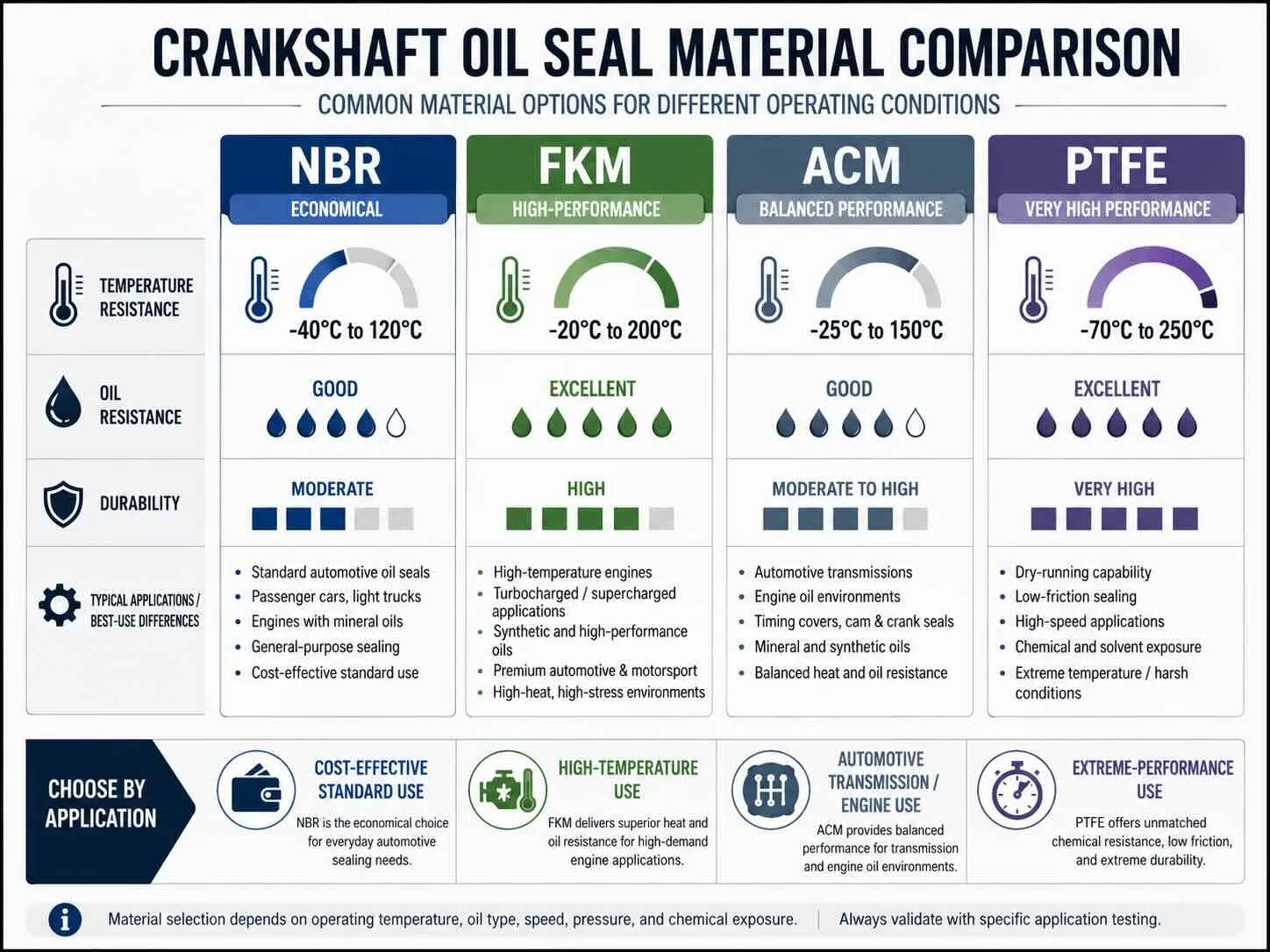
Material selection is one of the most important factors in crankshaft oil seal performance. Different materials offer different levels of oil resistance, heat resistance, wear resistance, and service life.
Material | Advantages | Suitable Applications |
NBR | Cost-effective, good oil resistance | Standard automotive engine oil seals |
FKM | Better high-temperature and chemical resistance | Demanding engine environments |
ACM | Good heat and oil resistance | Automotive engine and transmission applications |
PTFE | Low friction, excellent wear resistance, long service life | Rear main seals and modern high-performance engines |
NBR is commonly used for general oil resistance and cost-effective automotive applications. FKM is a better choice for higher temperatures and more demanding engine environments. ACM is also used in automotive sealing applications where heat and oil resistance are required.
PTFE is increasingly used in some modern high-performance engines, especially for rear main seal applications. It offers low friction, excellent wear resistance, and long service life, but it usually requires more careful installation than traditional rubber oil seals.
Crankshaft Oil Seal Selection Tips for Automotive Parts Buyers
For distributors, repair shops, wholesalers, and aftermarket parts suppliers, selecting crankshaft oil seals should not be based on price alone. A reliable oil seal should match the application, operating conditions, and replacement requirements.
Before purchasing, confirm:
Inner diameter
Outer diameter
Width
Seal type
Material
Operating temperature
Type of oil or oil grade
Shaft speed
Front or rear crankshaft position
OEM part number or reference number
Drawings or samples
Packaging and quantity requirements
If the original OEM part number is available, it can help reduce selection errors. If the part number is not available, the seal dimensions, application, and working conditions should be confirmed carefully.
Need Help Choosing Crankshaft Oil Seals?
If you need crankshaft oil seals for replacement, distribution, or custom manufacturing, you can provide the dimensions, drawings, samples, OEM part number, or reference number. SealVendor can help determine the right material, structure, and sealing solution for your application.
SealVendor supplies standard and custom crankshaft oil seals for automotive engines, industrial machinery, agricultural equipment, construction equipment, and other rotary shaft applications.
We offer:
Standard-size oil seals
Custom-size oil seals
NBR, FKM, ACM, PTFE, and other material options
Production based on drawings or samples
OEM part number or reference number matching
Bulk packaging or custom packaging
Conclusion
A crankshaft oil seal leak may look like a small problem at first, but it can become serious if ignored. Oil loss, belt contamination, overheating, poor lubrication, and engine damage are all possible risks.
For repair shops, distributors, wholesalers, and aftermarket parts suppliers, choosing the right crankshaft oil seal material, dimensions, and supplier can help reduce leakage problems, improve customer satisfaction, and lower the risk of recurrent leaks.
If you need crankshaft oil seals, rear main seals, automotive oil seals, or custom rotary shaft seals, provide the dimensions, drawings, samples, material requirements, OEM part number, or reference number. SealVendor can help determine the right sealing solution for your application.