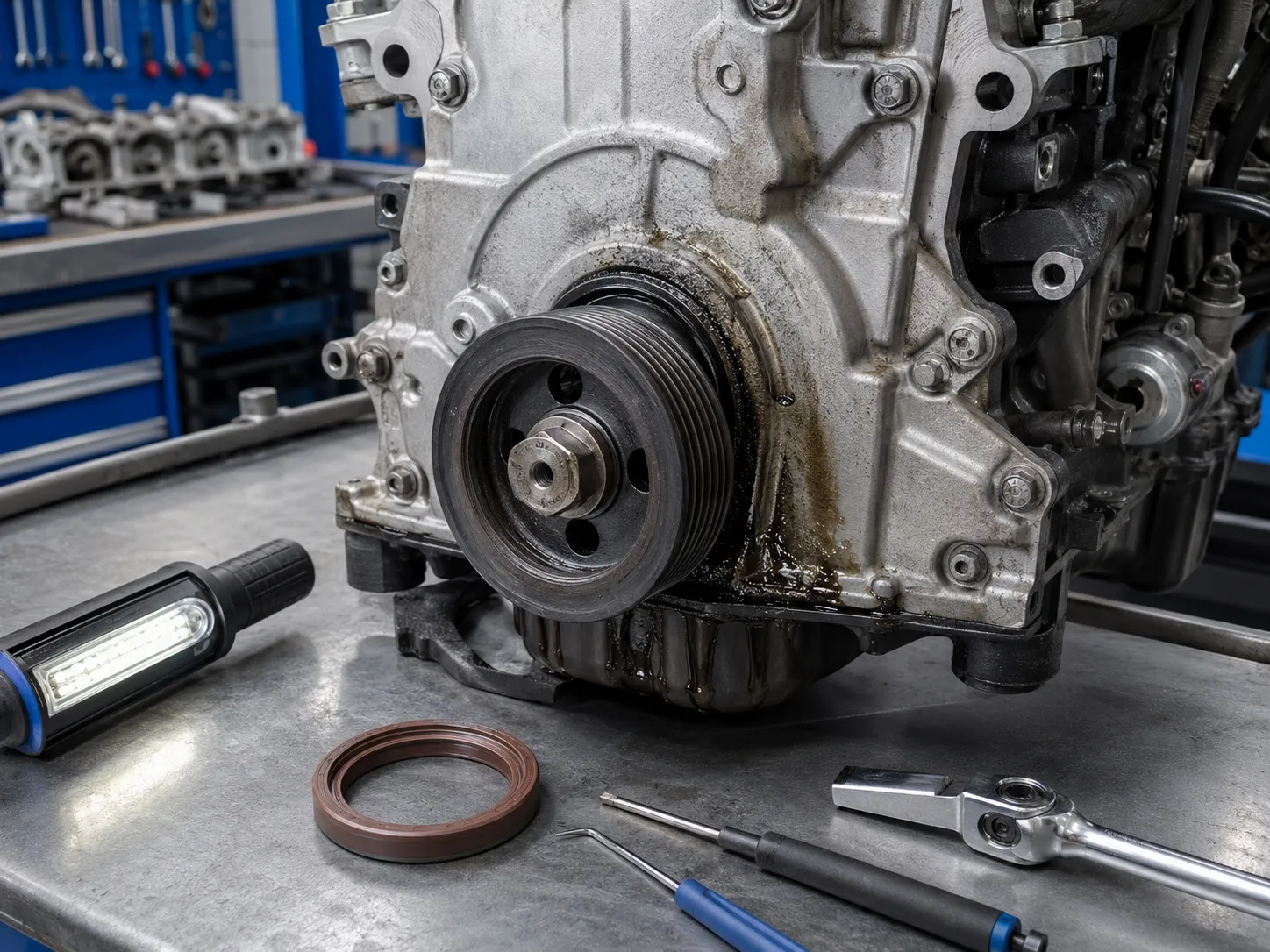
A crankshaft oil seal is a small but important component that helps keep engine oil inside the engine while the crankshaft rotates. When the seal becomes worn, hardened, damaged, or incorrectly installed, engine oil may begin to seep or leak from the crankshaft area.
At first, the problem may look minor. You may only notice a small oil stain near the engine or a few drops under the vehicle. However, if the leak continues, a bad crankshaft oil seal can lead to oil loss, belt contamination, burning oil smell, and potential engine damage caused by low lubrication.
This guide explains the most common symptoms of a bad crankshaft oil seal, why the seal may fail, how serious the leak can become, and what to check before replacing the seal.
What Is a Crankshaft Oil Seal?
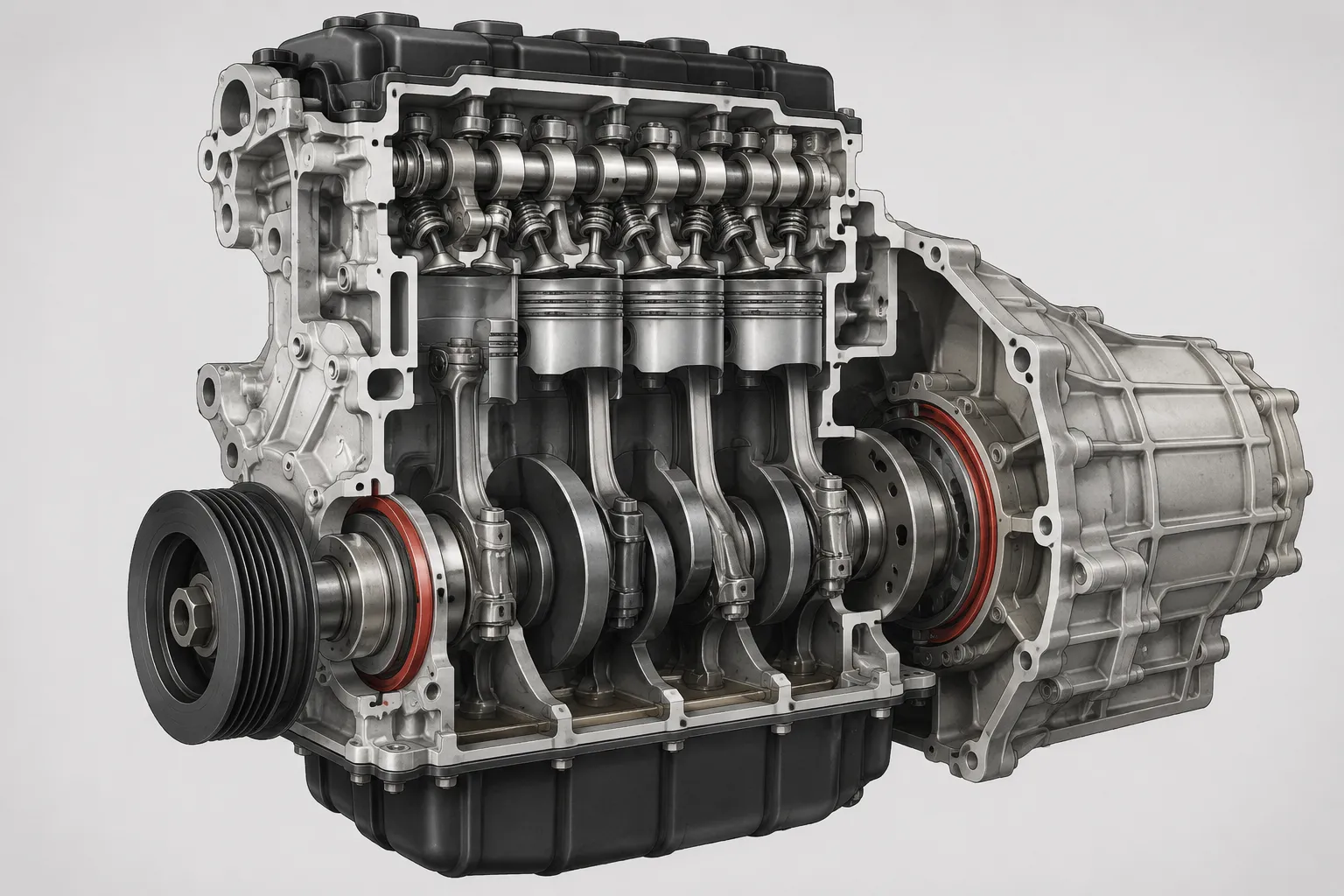
A crankshaft oil seal is a rotary shaft seal installed around the crankshaft. Its main function is to prevent engine oil from leaking out while allowing the crankshaft to rotate smoothly.
Most engines use two main crankshaft oil seals:
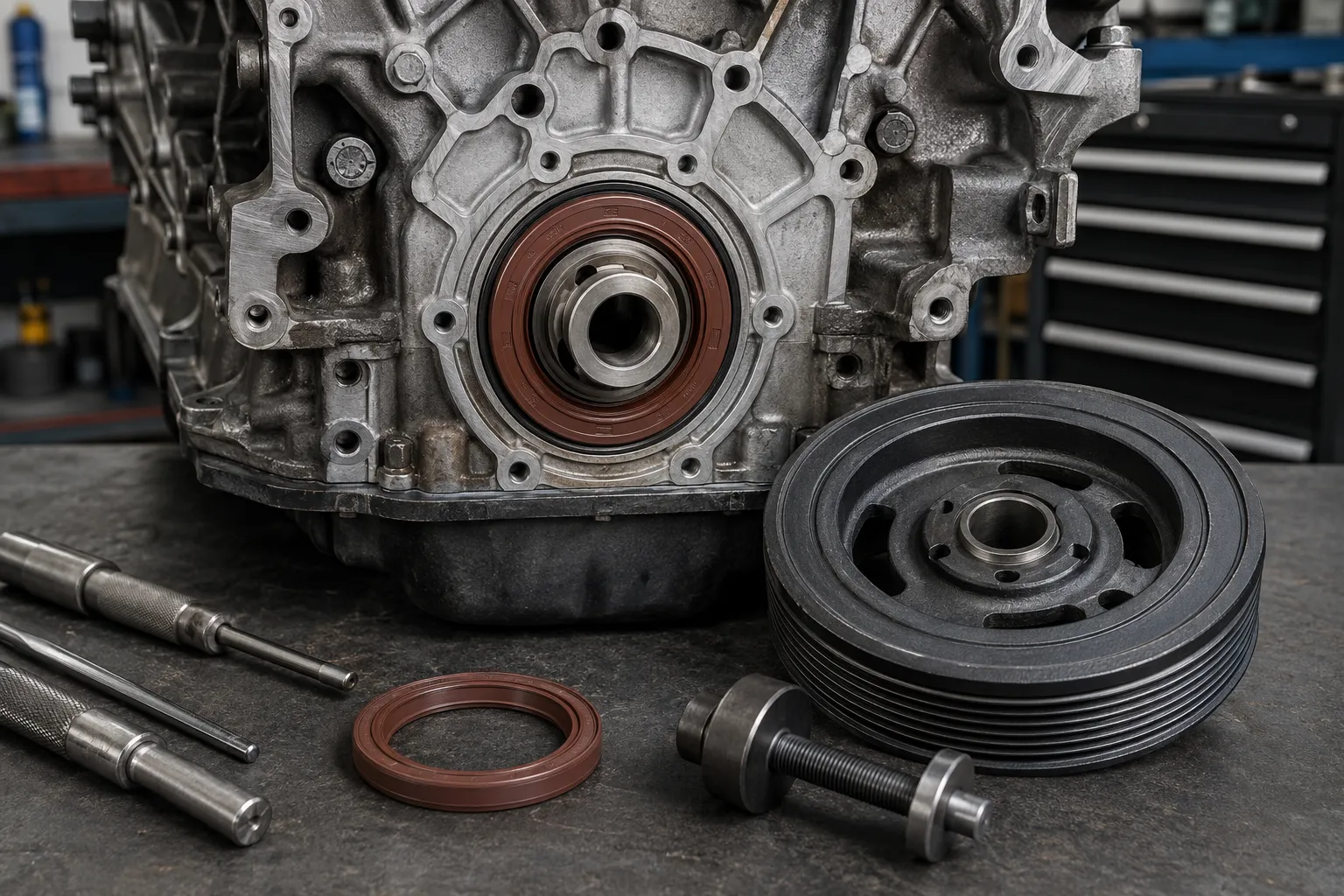
Front crankshaft oil seal: Located near the crankshaft pulley or harmonic balancer.
Rear crankshaft oil seal: Located at the rear of the engine, between the engine and transmission. This is often called the rear main seal.
The front seal is usually easier to inspect because oil may appear around the crankshaft pulley, timing cover, or lower front engine area. The rear seal is harder to access because leakage often appears between the engine and transmission housing.
Both seals work under heat, oil exposure, vibration, pressure changes, and continuous shaft rotation. Over time, these conditions can cause the sealing lip to wear, harden, crack, or lose contact pressure against the crankshaft surface.
Common Symptoms of a Bad Crankshaft Oil Seal
1. Oil Around the Crankshaft Pulley
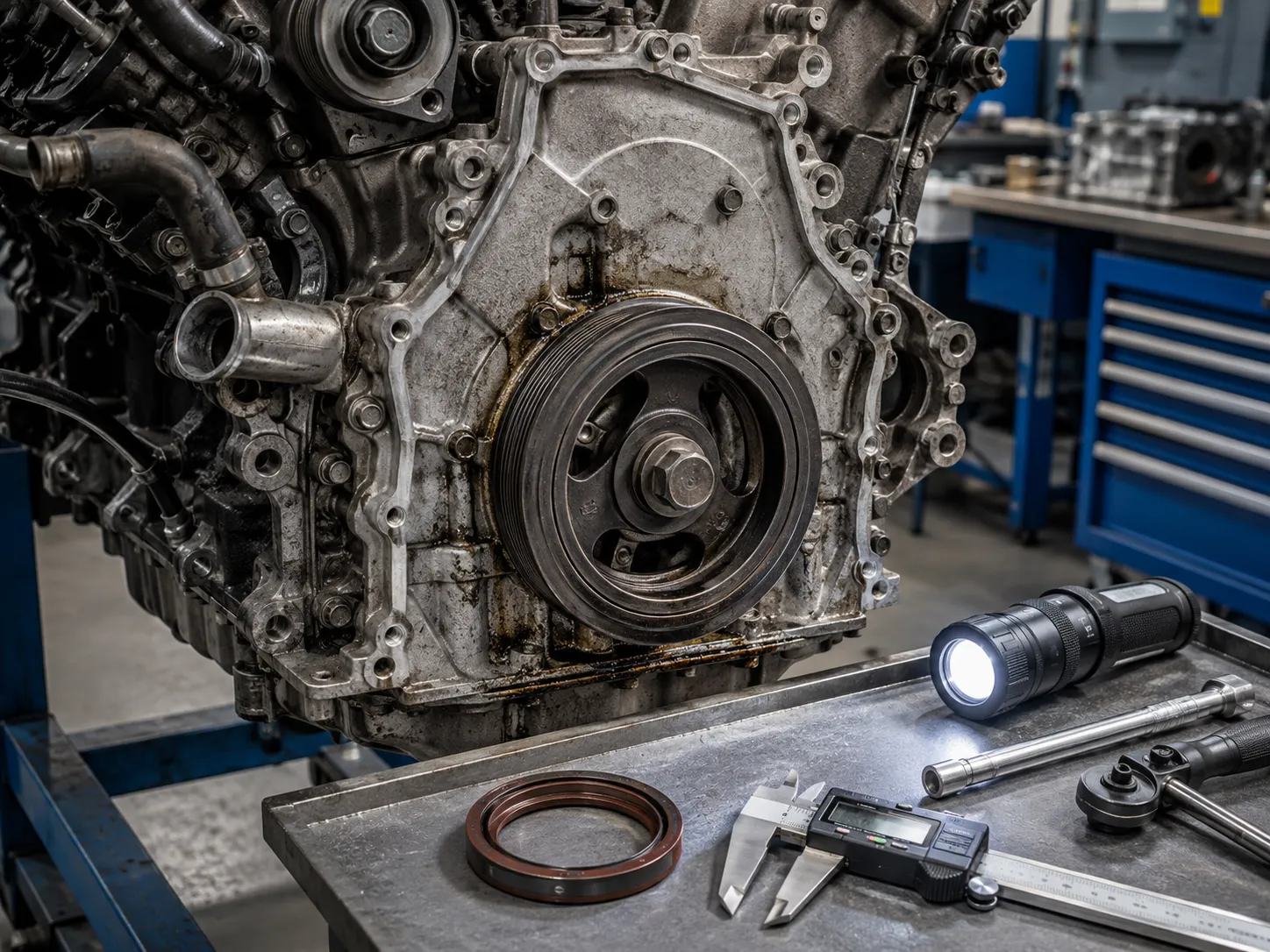
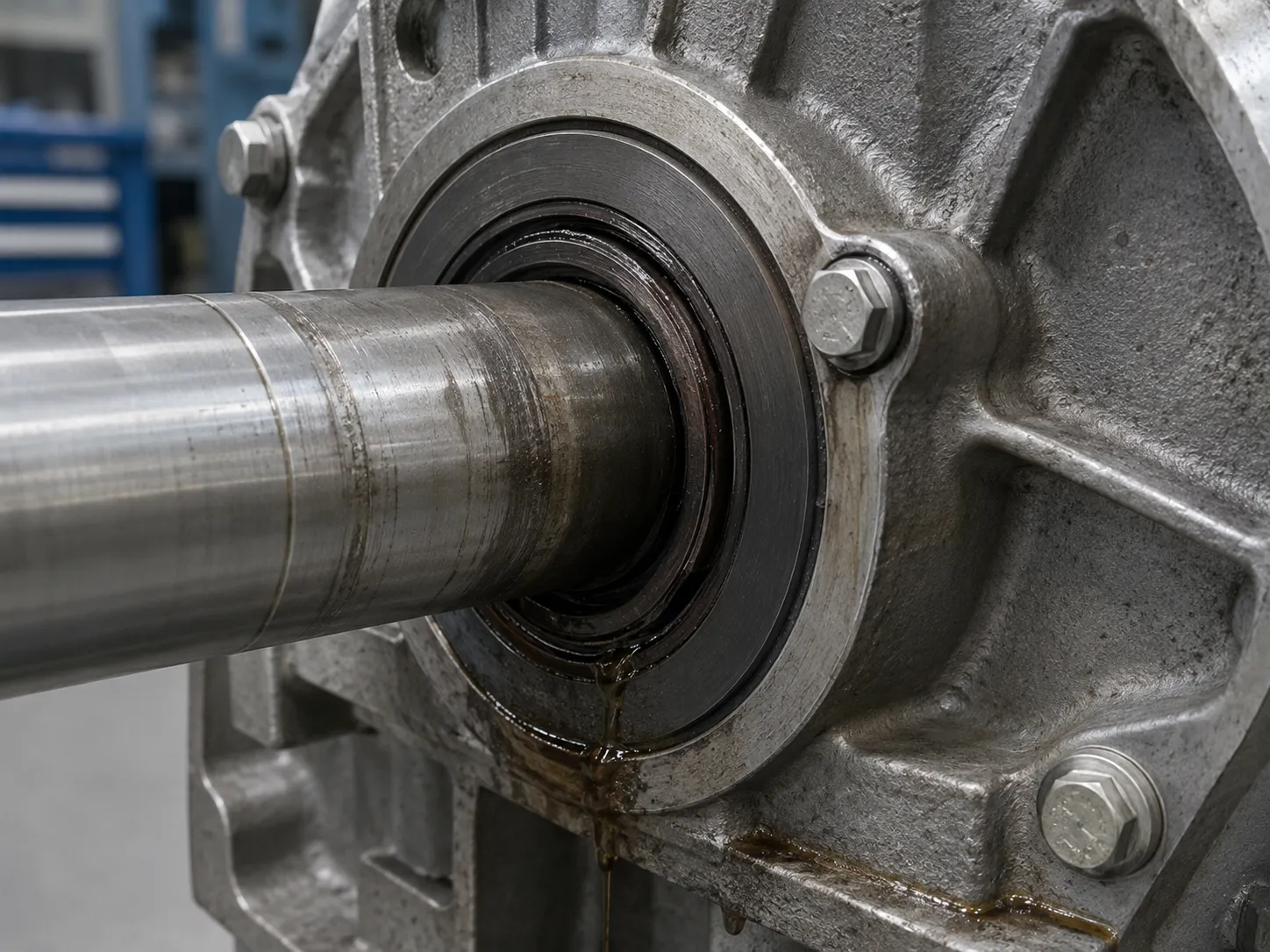
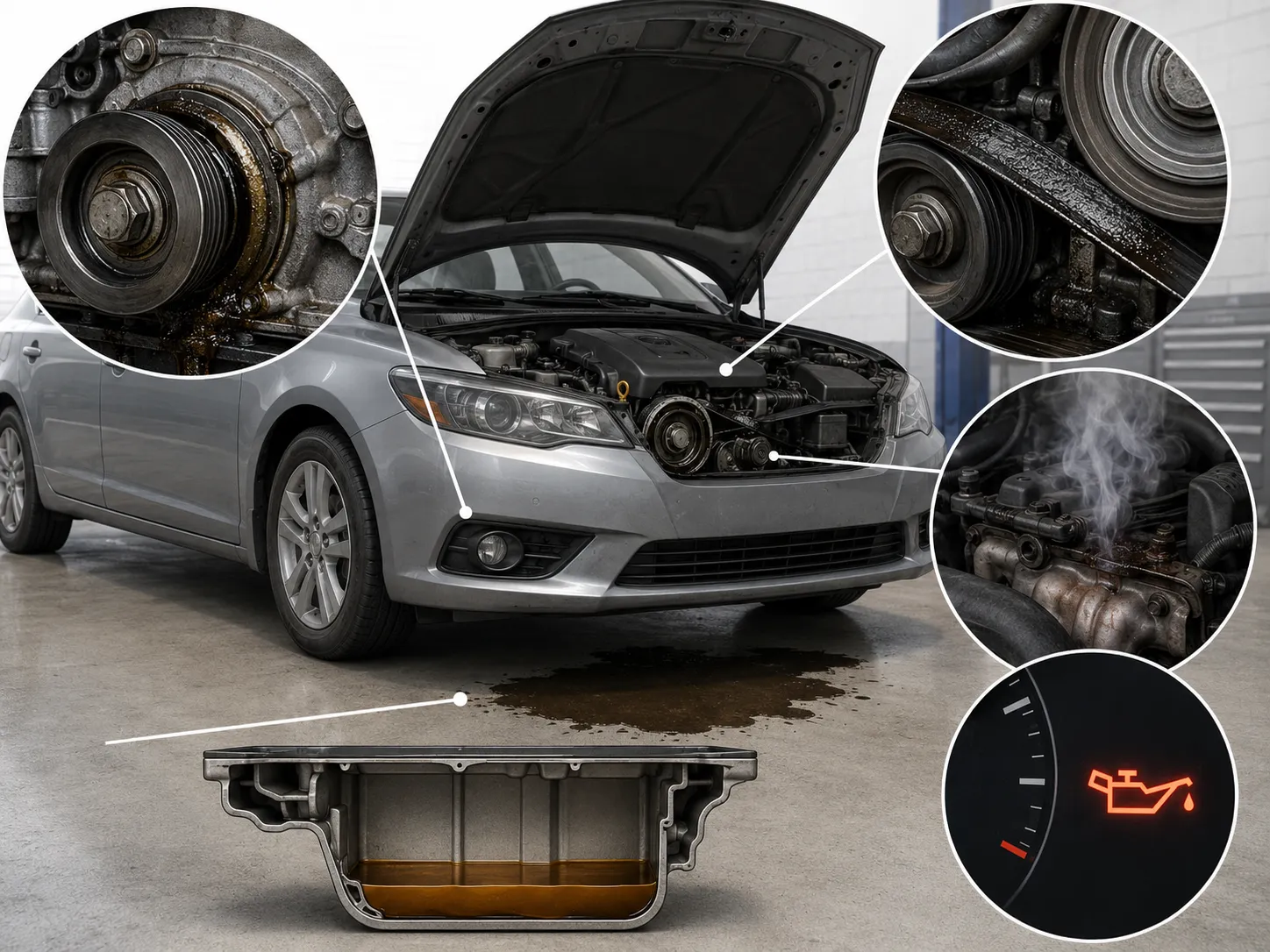
One of the most common signs of a bad front crankshaft oil seal is oil around the crankshaft pulley area. You may notice wet oil marks, dark stains, or oil spread around the front lower part of the engine.
When the crankshaft rotates, leaked oil can be thrown outward by the spinning pulley. This may make the leak appear wider than the actual seal opening. If oil is visible around the crankshaft pulley, harmonic balancer, or timing cover, the front crankshaft seal should be inspected.
2. Oil Spots Under the Vehicle
Oil spots on the ground after parking are another common warning sign. A small seep may leave only light stains, while a more serious leak may leave visible oil drops or a larger oil patch.
The exact drip location does not always show the original leak source. Engine oil can travel along covers, brackets, and lower engine surfaces before dripping down. For this reason, the crankshaft oil seal should be checked together with nearby components such as the oil pan gasket, timing cover seal, camshaft seal, and valve cover gasket.
3. Burning Oil Smell
A burning oil smell may occur if leaked oil reaches hot engine components. This is more likely when oil spreads onto exhaust parts or other heated areas near the engine.
A burning smell does not always mean the crankshaft oil seal is the only problem, but it is a sign that the leak should be checked soon. Oil on hot surfaces can produce smoke, odor, and additional safety concerns.
4. Low Engine Oil Level
A bad crankshaft oil seal can cause gradual oil loss. In the early stage, the oil level may drop slowly. As the leak becomes worse, the engine may lose oil more quickly between service intervals.
Low engine oil is more serious than the leak itself. If the engine does not have enough lubrication, internal parts may experience increased friction, overheating, and accelerated wear. If the oil level keeps dropping and no leak is visible from the top of the engine, the crankshaft seal area should be inspected.
5. Oil on Belts or Nearby Components
A front crankshaft oil seal leak may contaminate nearby belts, pulleys, and rubber components. Oil can reduce belt friction and shorten the service life of rubber parts.
If a belt looks wet, shiny, swollen, or contaminated with oil, the leak source should be repaired before replacing the belt. Otherwise, the new belt may become contaminated again soon after installation.
6. Oil Between the Engine and Transmission
If the rear crankshaft oil seal is leaking, oil may appear between the engine and transmission. This area is usually harder to inspect, and the leak may be mistaken for an oil pan gasket, transmission seal, or another rear engine leak.
A rear crankshaft seal leak often requires more labor to repair because the transmission or related components may need to be removed. Before replacement, it is important to confirm that the rear main seal is actually the source of the leak.
Front Crankshaft Seal vs Rear Crankshaft Seal Leak
A front crankshaft seal leak usually appears near the crankshaft pulley, harmonic balancer, timing cover, or lower front engine area. It may also spread oil onto belts or pulleys.
A rear crankshaft seal leak usually appears at the back of the engine, around the bell housing or the area between the engine and transmission. It is often harder to access and more expensive to repair.
Before ordering a replacement seal, always confirm whether the vehicle or machine needs a front crankshaft seal or a rear crankshaft seal. These seals may have different sizes, profiles, lip designs, and material requirements.
What Causes a Crankshaft Oil Seal to Fail?
Aging and Heat Exposure
Engine heat and long service time can cause the rubber sealing lip to harden. Once the lip loses flexibility, it may no longer maintain proper contact with the crankshaft surface.
Shaft Wear
The crankshaft contact surface can develop grooves, scratches, or rough areas over time. If the shaft surface is damaged, a new seal may still leak after installation.
Excessive Crankcase Pressure
High crankcase pressure can push oil past the sealing lip. This may happen if the crankcase ventilation system or PCV system is restricted. In this case, replacing the seal without fixing the pressure problem may not solve the leak.
Incorrect Seal Size
A crankshaft oil seal must match the shaft diameter, housing bore, and installation width. If the inner diameter, outer diameter, or width is incorrect, the seal may not fit properly or may fail early.
Wrong Material Selection
Seal material should match the working temperature, oil type, shaft speed, and application environment. Common crankshaft oil seal materials include NBR, FKM, ACM, and PTFE. Using the wrong material can lead to hardening, swelling, wear, or early leakage.
Poor Installation
Improper installation is a common cause of early seal failure. If the seal is pressed unevenly, installed too deep, scratched during installation, or installed with a folded sealing lip, leakage may occur soon after replacement.
Is It Safe to Drive with a Bad Crankshaft Oil Seal?
A small oil seep may not require immediate emergency repair, but it should not be ignored. The oil level should be checked regularly, and the leak should be monitored to see whether it becomes worse.
A heavy leak is more serious. If oil is dripping continuously, reaching belts, producing smoke, or causing the oil level to drop quickly, the vehicle should be inspected and repaired as soon as possible.
Driving with low engine oil can damage bearings, crankshaft surfaces, pistons, and other internal engine parts. If the oil warning light comes on, or if the engine oil level is below the safe range, the vehicle should not continue operating until the problem is checked.
When Should a Crankshaft Oil Seal Be Replaced?
A crankshaft oil seal should be replaced when the leak is confirmed and the seal is no longer able to hold oil properly. Replacement is also recommended if the seal is removed during engine repair, timing cover service, clutch replacement, transmission removal, or crankshaft-related maintenance.
Before replacing the seal, clean the area and confirm the true leak source. Oil from another component may travel across the engine and appear near the crankshaft seal. A careful inspection can prevent unnecessary repair work.
Replacement Tips Before Choosing a New Seal
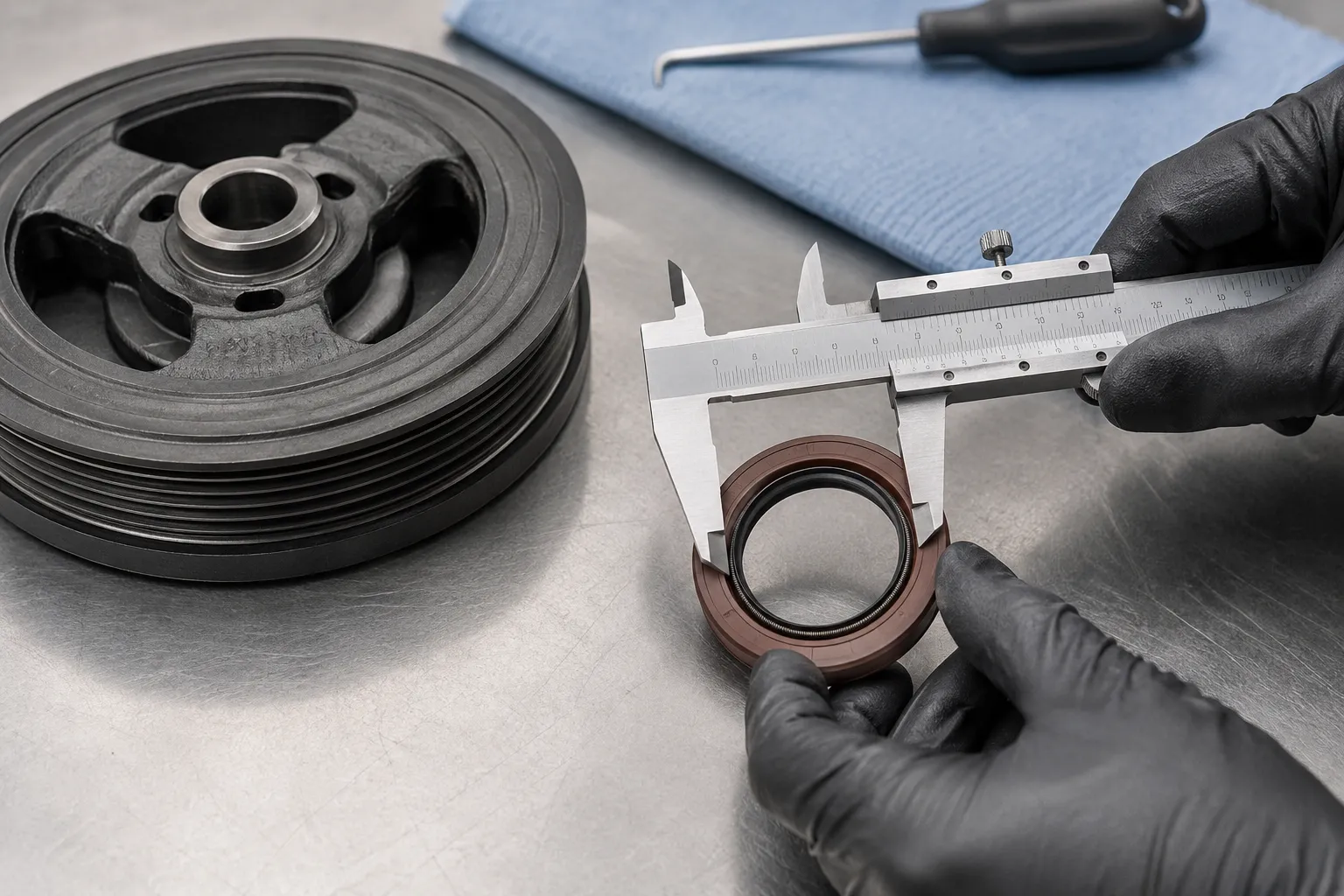
Before selecting a replacement crankshaft oil seal, check the following details:
Front seal or rear main seal position
Inner diameter, outer diameter, and width
OEM part number or original sample
Seal material, such as NBR, FKM, ACM, or PTFE
Single lip or double lip design
Dust lip requirement
Shaft surface condition
Operating temperature
Engine oil compatibility
Installation direction and seal depth
During installation, the seal should be pressed evenly into the housing. The sealing lip should be protected from sharp edges, threads, or damaged shaft surfaces. If the crankshaft has a worn groove, a repair sleeve or other surface repair solution may be needed.
After replacement, the engine should be inspected while running and checked again after a short test period. If the new seal still leaks, possible causes include shaft wear, excessive crankcase pressure, wrong seal size, poor installation, or unsuitable material.
How to Choose the Right Crankshaft Oil Seal Material
Material selection is important for seal life and leak prevention.
NBR is widely used for standard oil resistance and general engine applications. It offers good performance at a reasonable cost.
FKM provides better heat resistance and oil resistance. It is suitable for higher-temperature applications or more demanding operating conditions.
ACM is commonly used in automotive sealing applications where resistance to heat and oil is required.
PTFE may be used for special applications involving higher speed, lower friction, or more demanding sealing conditions.
The best material depends on the engine type, working temperature, oil type, shaft speed, and service environment. Choosing only by price may lead to early failure if the material does not match the application.
Conclusion
Common bad crankshaft oil seal symptoms include oil around the crankshaft pulley, oil spots under the vehicle, burning oil smell, low engine oil level, oil on belts, and leakage between the engine and transmission.
The most common causes include aging rubber, shaft wear, excessive crankcase pressure, incorrect seal size, wrong material selection, and poor installation.
A minor seep should be monitored, but a heavy leak should be repaired quickly to avoid oil loss and engine damage. Before replacement, confirm the exact leak source, seal position, size, material, and shaft condition. Correct selection and proper installation are the key to long-term sealing performance.
For replacement seal selection, SealVendor can support standard crankshaft oil seals, material matching, sample-based identification, drawing-based customization, and OEM reference support for different engine and industrial applications.