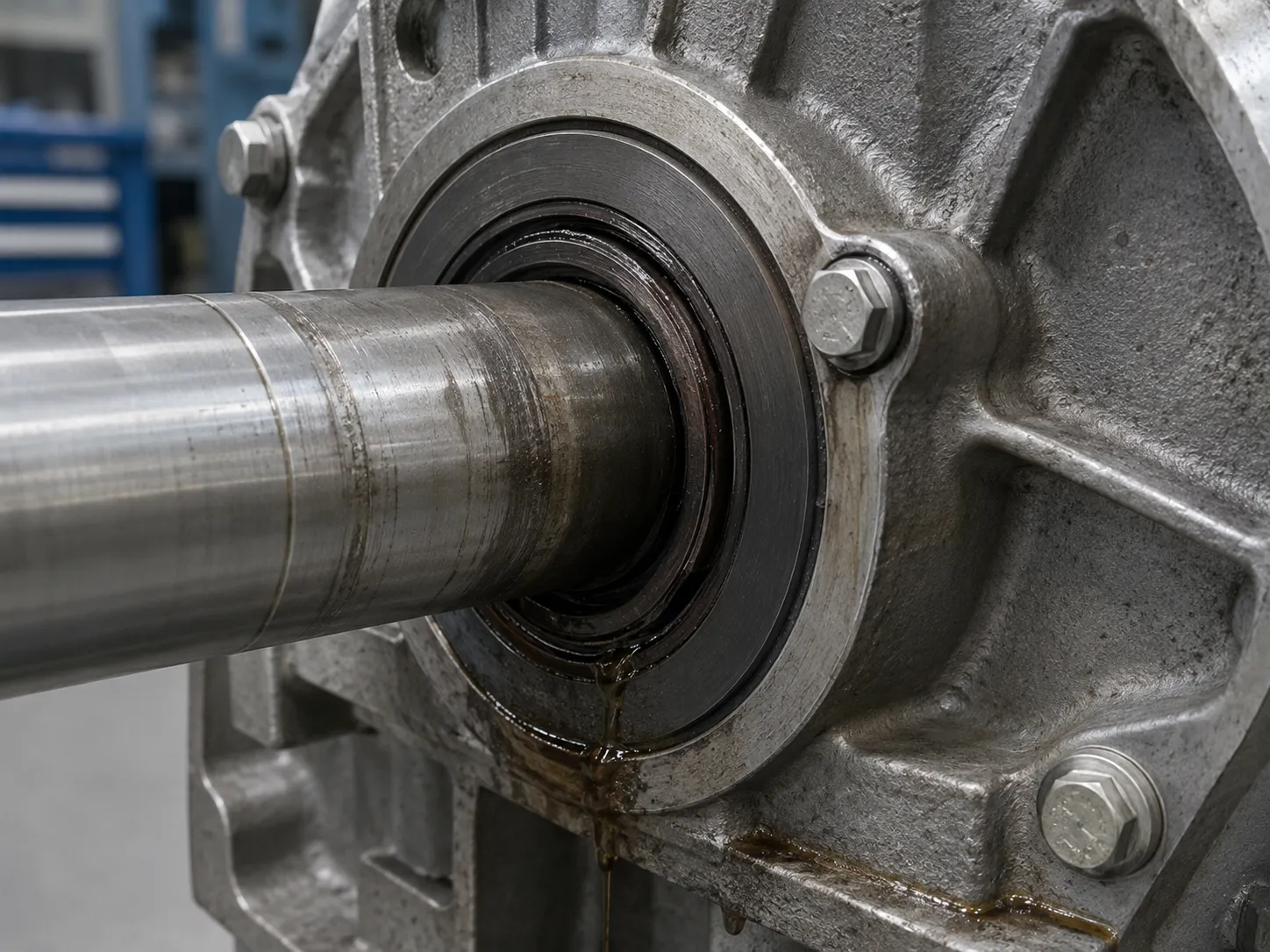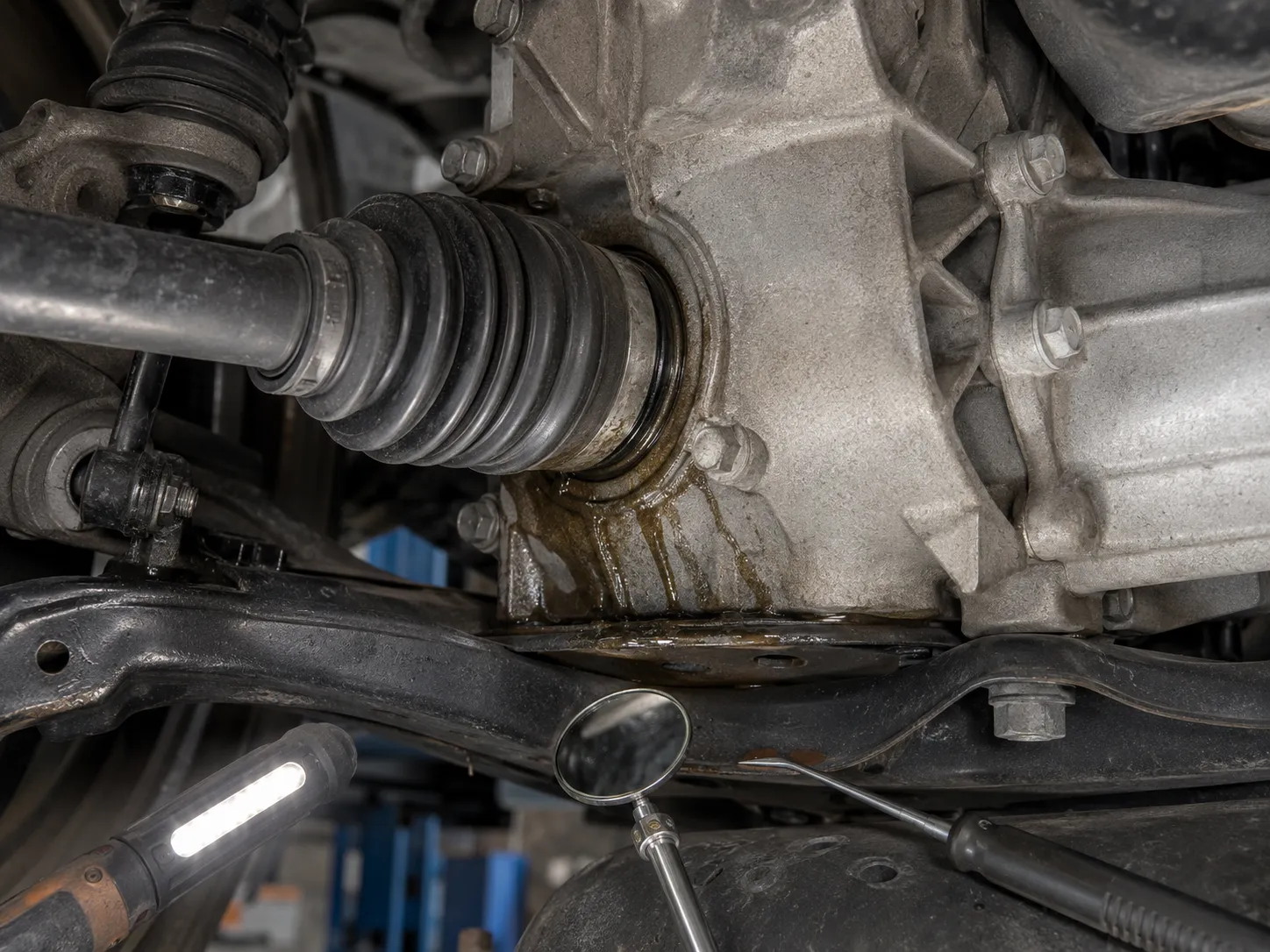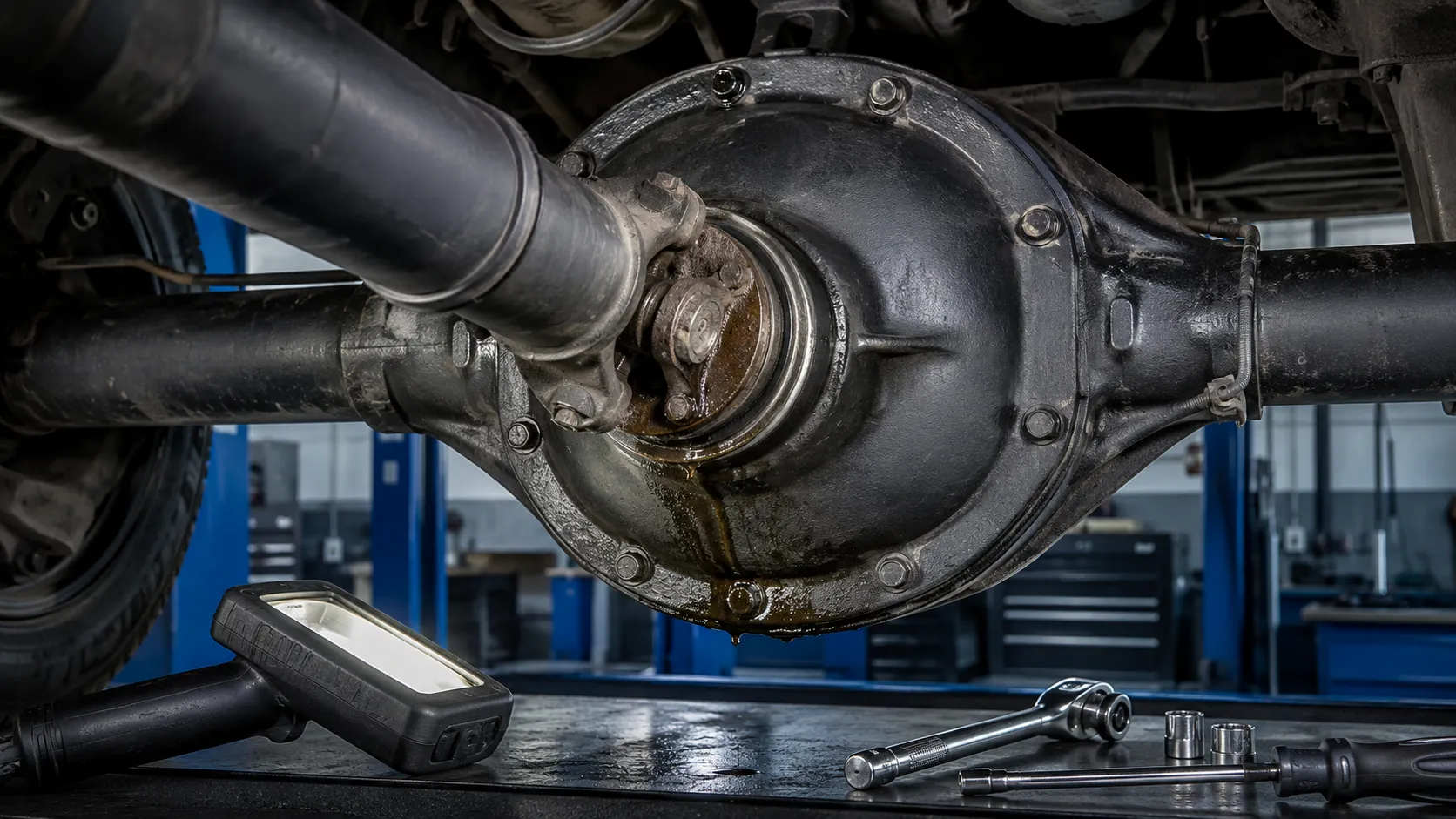
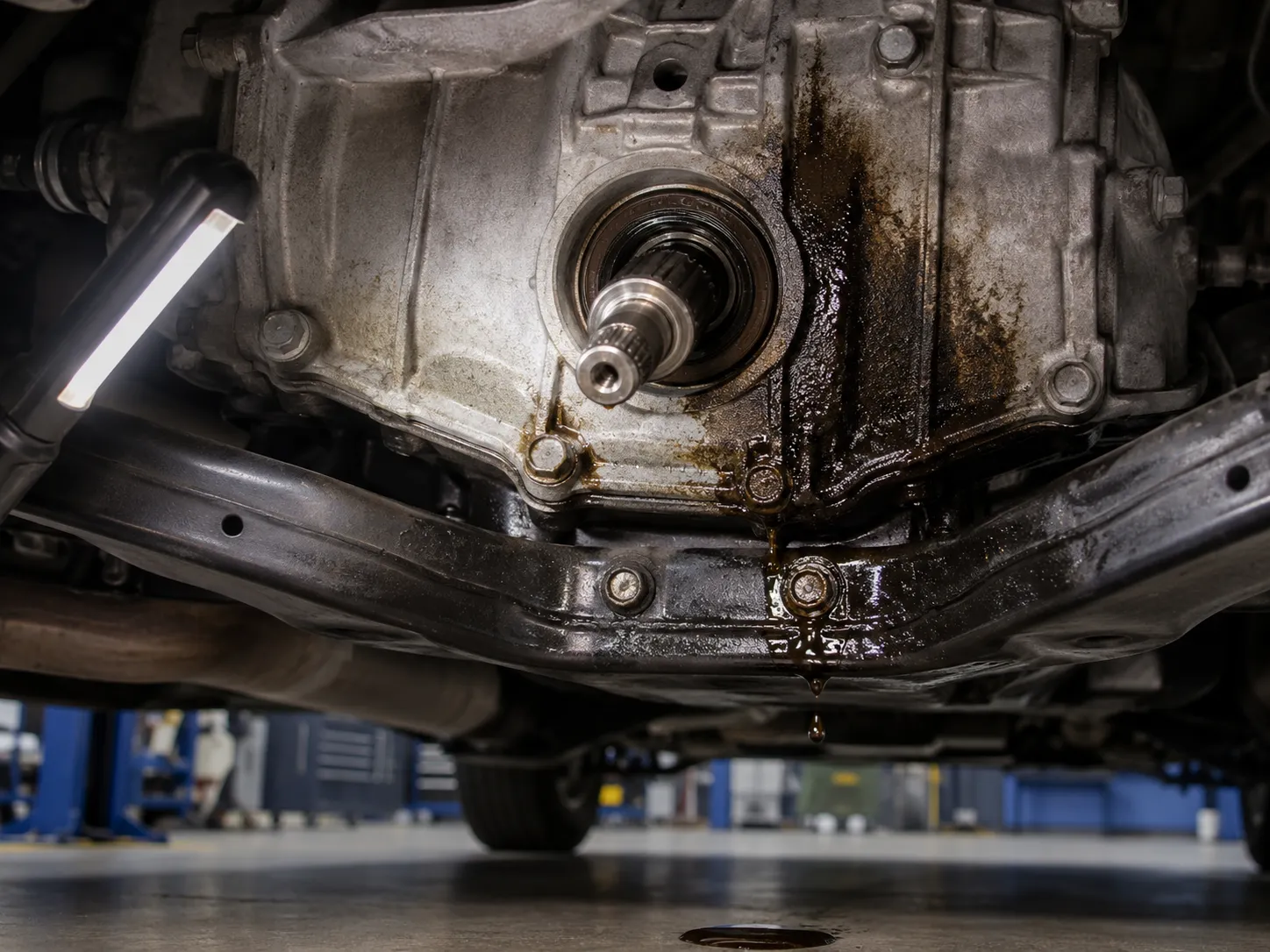
A leaking oil seal does not always mean a vehicle must be stopped immediately. A small seep around an older seal may allow limited driving while the issue is inspected and scheduled for repair.
However, an oil seal leak should never be ignored. The risk depends on where the seal is located, what fluid is leaking, how quickly the fluid level is dropping, and whether the leak is reaching belts, brakes, clutches, electrical components, or hot exhaust parts.
A leaking crankshaft seal, camshaft seal, transmission seal, axle seal, differential seal, or other rotating-shaft seal can become more serious when the fluid loss increases. Low engine oil, low transmission fluid, or low gear oil can affect lubrication, cooling, hydraulic operation, and component life.
The safest approach is to identify the source of the leak, monitor the fluid level correctly, and repair the seal before a small leak develops into mechanical damage or an unexpected roadside problem.
Is It Safe to Drive with a Leaking Oil Seal?
It depends on the severity and location of the leak.
A light oil seep may not require immediate towing if:
The fluid level remains within the correct range
There is no warning light
The vehicle shifts and drives normally
There is no smoke or burning smell
The leak is not reaching belts, brakes, clutches, or hot exhaust components
The vehicle is only being driven a short distance for inspection or repair
Even in this situation, the leak should be treated as a repair priority rather than normal maintenance.
Driving becomes unsafe when the leak is heavy, the fluid level is dropping quickly, the vehicle develops warning signs, or the leak affects a critical system.
A leaking oil seal should be checked promptly because the same visible symptom can have very different consequences. A small seep from an outer gearbox seal is not the same as a heavy rear main seal leak contaminating a clutch, or a transmission output seal leak causing fluid loss near the drivetrain.
When Should You Stop Driving?
Stop driving and arrange professional inspection or towing when any of the following signs appear:
A red oil pressure warning light comes on
The engine temperature warning light appears
Oil or transmission fluid is dripping heavily
A large puddle forms under the vehicle
The fluid level drops below the recommended range
Smoke comes from the engine bay or underbody
A strong burning oil smell is present
The engine becomes noisy, rough, or overheated
The transmission slips, delays engagement, or shifts abnormally
Oil reaches belts, pulleys, clutch components, brakes, or hot exhaust parts
The leak source cannot be identified
The vehicle loses drive, steering response, or braking performance
The seal leak follows a recent repair or installation
Do not assume that topping up fluid alone solves the problem. A severe leak can worsen quickly, and the cause may involve more than the oil seal itself.
For example, excessive crankcase pressure, shaft wear, damaged bearings, blocked breathers, incorrect seal installation, or a worn housing bore can cause a replacement seal to leak again.
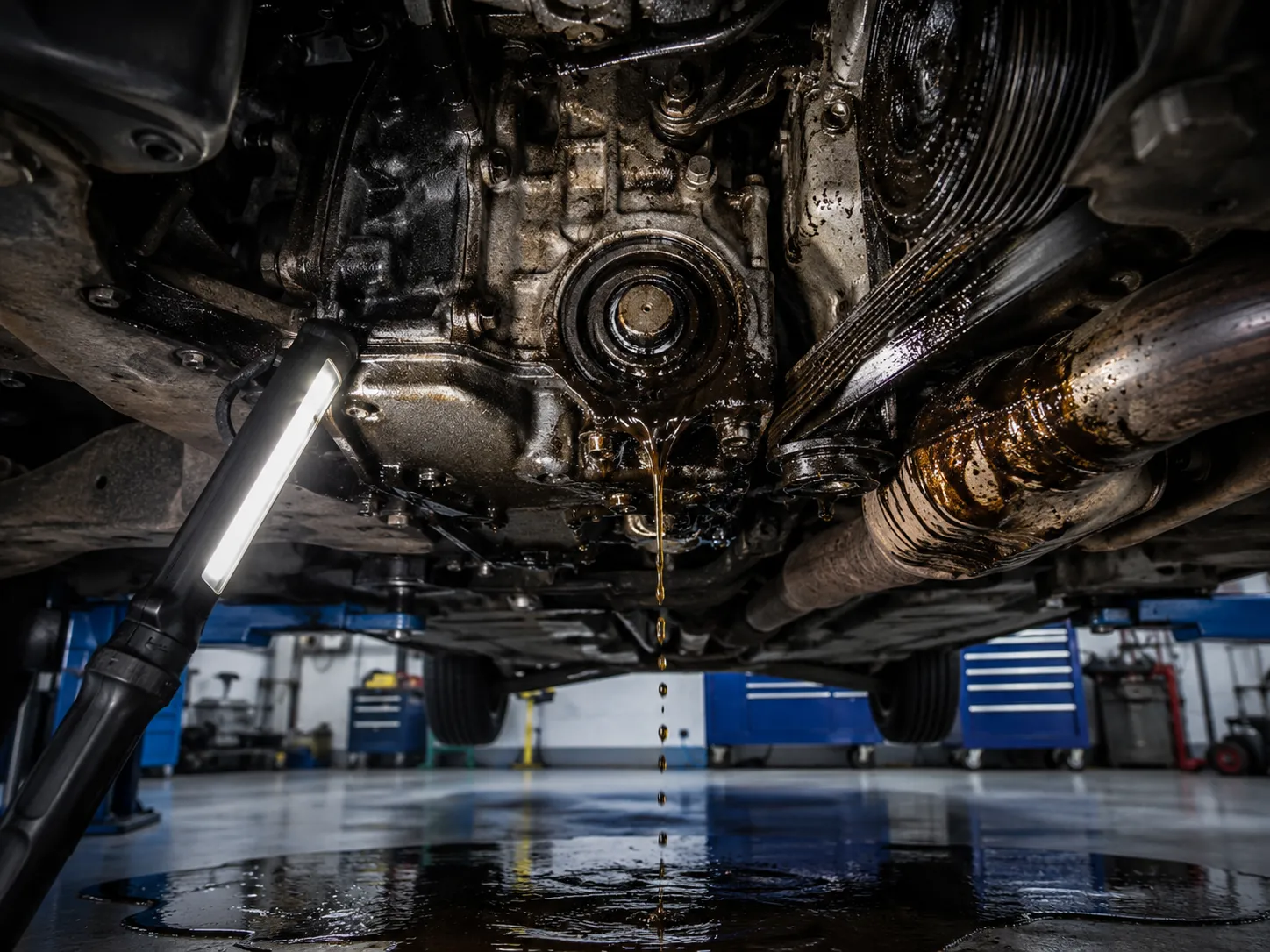
Why a Leaking Oil Seal Can Become Serious
An oil seal is designed to retain lubricant around a rotating shaft. When it fails, fluid can escape from the engine, transmission, gearbox, differential, pump, wheel hub, or another rotating assembly.
The risk is not limited to the cost of replacing the seal.
Loss of Lubrication
Oil and transmission fluid help lubricate, cool, and protect internal components.
When the fluid level drops too low, metal parts may operate with insufficient lubrication. This can increase friction, heat, and wear.
Possible results include:
Engine damage
Bearing wear
Transmission slipping
Gearbox overheating
Differential wear
Pump damage
Internal clutch damage
Reduced component life
A small leak may take time to cause a low fluid level. A large leak can reduce the fluid level much more quickly.
Contamination of Nearby Parts
Oil does not always fall directly to the ground. It can spread across nearby components while the vehicle is moving.
Depending on the seal location, leaked oil may reach:
Drive belts
Timing belt covers
Pulleys
Electrical connectors
Exhaust components
Clutch assemblies
Brake components
Suspension parts
Underbody panels
Tires or wheel areas
Oil contamination can make repair work more complicated. A leaking rear main seal, for example, may contaminate a manual-transmission clutch. A front crankshaft seal leak may spread oil near pulleys and belt-driven accessories.
Smoke and Burning Smell
When oil reaches hot exhaust components, it may produce smoke or a strong burning smell.
A burning smell does not always mean there is an immediate fire, but it should not be ignored. It indicates that fluid may be contacting a hot surface and requires prompt inspection.
Repeat Leakage and Larger Repair Costs
A leaking seal may be the visible symptom of another issue.
Replacing the seal without checking the shaft, housing, ventilation system, alignment, or pressure condition can lead to repeat failure.
For example:
A grooved shaft can damage a new seal lip
A blocked breather can force oil past a new seal
Excessive shaft runout can cause uneven lip wear
The wrong seal material can harden or swell
Poor installation can cut, fold, or damage the sealing lip
Identifying the root cause early can prevent repeated repairs.
Common Symptoms of a Leaking Oil Seal
The symptoms depend on the seal location and fluid type, but common signs include:
Oil spots or puddles under the vehicle
Wet or oily areas around the engine, transmission, axle, or gearbox
Fluid around the crankshaft pulley or timing cover
Oil between the engine and transmission
Transmission fluid near the axle shaft or driveshaft area
A burning oil smell after driving
Smoke from the engine bay or underbody
Low engine oil or transmission fluid level
Delayed shifting or transmission slipping
Unusual gearbox or drivetrain noise
Oil contamination on belts, pulleys, or clutch components
Dirt buildup around an oily shaft or housing area
Oil color can sometimes provide a clue, but it should not be used as the only method of identification. Fluid appearance can change with age, heat, contamination, and service condition.
The best method is to inspect the actual leak area and confirm the fluid type according to the vehicle or machine specification.
Which Oil Seal Leaks Are Most Common in Vehicles?
Several common automotive seals can leak over time.
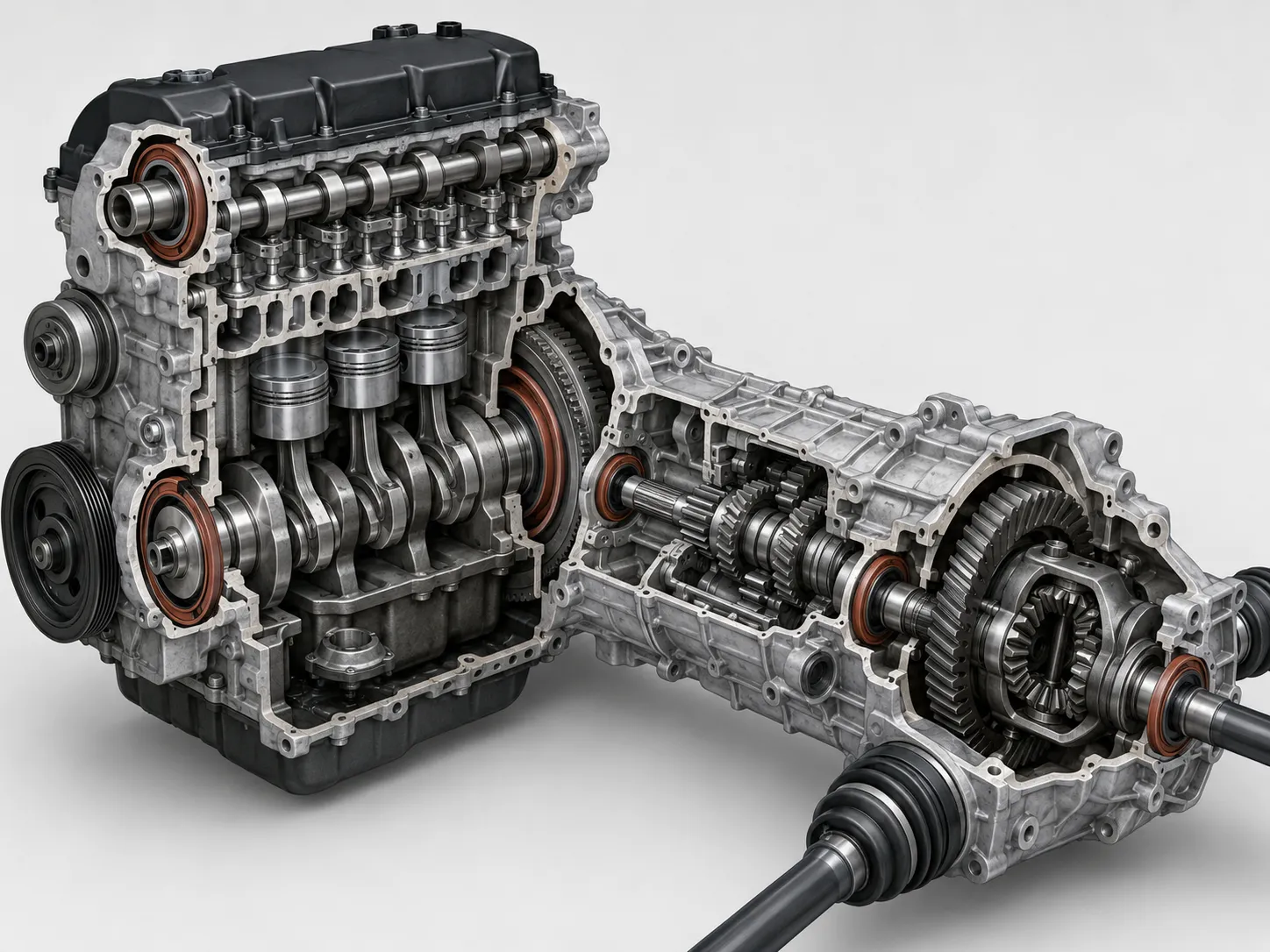
Crankshaft Oil Seal Leak
Crankshaft seals are installed at the front and rear of the engine crankshaft.
A front crankshaft seal leak may leave oil around the crankshaft pulley, harmonic balancer, timing cover, or accessory belt area.
A rear main seal leak may appear between the engine and transmission. On manual-transmission vehicles, it may also contaminate the clutch if the leak becomes severe.
Camshaft Oil Seal Leak
Camshaft seals are usually located near the camshaft ends and timing cover area.
A camshaft seal leak may cause oil around the top or side of the engine, near the timing cover, camshaft pulley, or valve cover area.
Because the area can be close to a timing belt or timing components on some engines, the leak should be inspected before oil contamination spreads.
Transmission Oil Seal Leak
Transmission seals can leak at axle shafts, output shafts, input shafts, selector shafts, extension housings, or torque-converter-related areas.
The seriousness depends on how quickly transmission fluid is lost and whether the transmission begins to slip, shift harshly, delay engagement, or overheat.
A transmission input shaft or front pump seal may require transmission removal, while some axle or output seals may be more accessible.
Axle Seal Leak
An axle seal can leak near the axle shaft, wheel area, differential, or transaxle housing.
If gear oil or transmission fluid reaches brake components, wheel areas, or suspension parts, the issue should be addressed quickly.
Differential Seal Leak
Differential seals may leak at axle shafts, pinion shafts, cover gaskets, or output areas.
Low differential fluid can increase wear on gears and bearings, especially under load or during long-distance driving.
Can You Drive with a Minor Oil Seal Leak?
A minor seep may allow short-term driving, but only when the vehicle remains safe to operate and the fluid level is checked correctly.
A temporary short-distance approach may be reasonable when all of the following are true:
The leak is light rather than actively dripping
The fluid level is correct
The vehicle has no warning lights
There is no smoke or burning smell
There are no shifting, steering, braking, or overheating problems
The leak is not reaching belts, brakes, clutch components, or exhaust parts
Repair is already planned
This does not mean the leak is harmless. It means the immediate risk may be lower.
The vehicle should still be inspected soon because a small leak can become larger after long-distance driving, higher-speed operation, hot weather, towing, heavy loads, or repeated heat cycles.
Can You Drive with a Crankshaft Seal Leak?
A small crankshaft seal leak may allow limited driving if the engine oil level remains correct and there are no warning signs.
However, crankshaft seal leaks should be repaired promptly when:
Oil reaches the accessory belt or pulley area
Oil is visible around the timing cover
The engine oil level drops noticeably
Smoke or burning smell is present
The oil pressure warning light appears
The leak is coming from the rear main seal area
The vehicle has a manual transmission and clutch contamination is possible
A front crankshaft seal leak can spread oil around pulleys and belts. A rear main seal leak may require more labor because the transmission often needs to be removed for access.
Can You Drive with a Transmission Oil Seal Leak?
A minor transmission seal seep may allow limited driving if the fluid level is correct and the transmission operates normally.
However, transmission fluid loss should be taken seriously because automatic transmissions, CVTs, and dual-clutch systems can be sensitive to fluid level and fluid specification.
Stop driving or seek immediate inspection when:
The transmission slips
Gear engagement is delayed
Shifts become harsh or erratic
A transmission warning light appears
Fluid is dripping heavily
The vehicle loses drive
A burning smell develops
The fluid level cannot be maintained correctly
Do not add an unknown fluid or use the wrong transmission fluid as a temporary solution. Transmission fluid specifications vary by vehicle and transmission type.
Can You Drive with an Axle or Differential Seal Leak?
An axle or differential seal leak may appear less urgent than an engine oil leak, but it can still cause expensive damage if gear oil or transmission fluid becomes too low.
Short-term driving may be possible when the leak is light and fluid level remains correct. However, repair should not be delayed when:
Fluid reaches brake components
Fluid is visible near the wheel or tire area
The differential or transmission becomes noisy
The leak worsens under load
The vehicle is used for towing, off-road driving, or long-distance travel
A large amount of fluid is lost
Axle and differential leaks are especially important to address on vehicles that operate under heavy loads, high temperatures, or dirty outdoor conditions.
How to Check a Leaking Oil Seal Safely
Do not work under a vehicle unless it is supported correctly with approved lifting equipment.
A basic inspection can include the following steps.
1. Park on a Level Surface
Park on level ground, allow the engine or machine to cool where necessary, and check for visible dripping or fluid accumulation.
Use a clean piece of cardboard under the vehicle overnight if the leak source is unclear. This can help identify the general location and amount of leakage.
2. Check the Correct Fluid Level
Check engine oil, transmission fluid, differential fluid, or other relevant lubricant according to the vehicle or equipment manufacturer’s procedure.
Different systems have different checking methods. Some transmissions require a specific temperature, engine-running condition, or service procedure.
Do not overfill the system. Excess fluid can create pressure problems and may worsen leakage.
3. Inspect the Leak Area
Look for fresh fluid around:
Crankshaft pulley and timing cover areas
Camshaft or valve cover areas
Engine-to-transmission connection
Axle and inner CV joint areas
Driveshaft and output shaft areas
Differential housing and pinion area
Transmission pan and cooler line areas
Gearbox input and output areas
A clean area is easier to diagnose than an old oil-covered surface.
4. Confirm the Actual Leak Source
Oil can travel along housings, covers, bolts, wiring, and underbody panels before it reaches the ground.
Do not assume the lowest wet area is the original leak source.
For accurate diagnosis, the area may need to be cleaned and reinspected after a short operating period. In some cases, a professional technician may use dye-based leak detection or other diagnostic methods.
What Should Be Checked Before Replacing the Oil Seal?
Replacing the visible seal is important, but the surrounding system should also be checked.
Before installing a replacement oil seal, inspect:
Shaft surface for grooves, scratches, rust, or pitting
Shaft runout or movement
Bearing condition
Housing bore condition
Breather or ventilation system
Fluid level and fluid condition
Correct seal size
Correct seal material
Lip design and dust-lip requirement
Installation direction
Shaft lead-in edge
Previous repair quality
Nearby belts, clutches, or brake components for contamination
A new seal can fail quickly when installed over a damaged shaft surface or in a system with excessive internal pressure.
For more detail on common failure causes, see the guide: What Causes an Oil Seal to Leak? Common Failure Reasons and Material Factors.
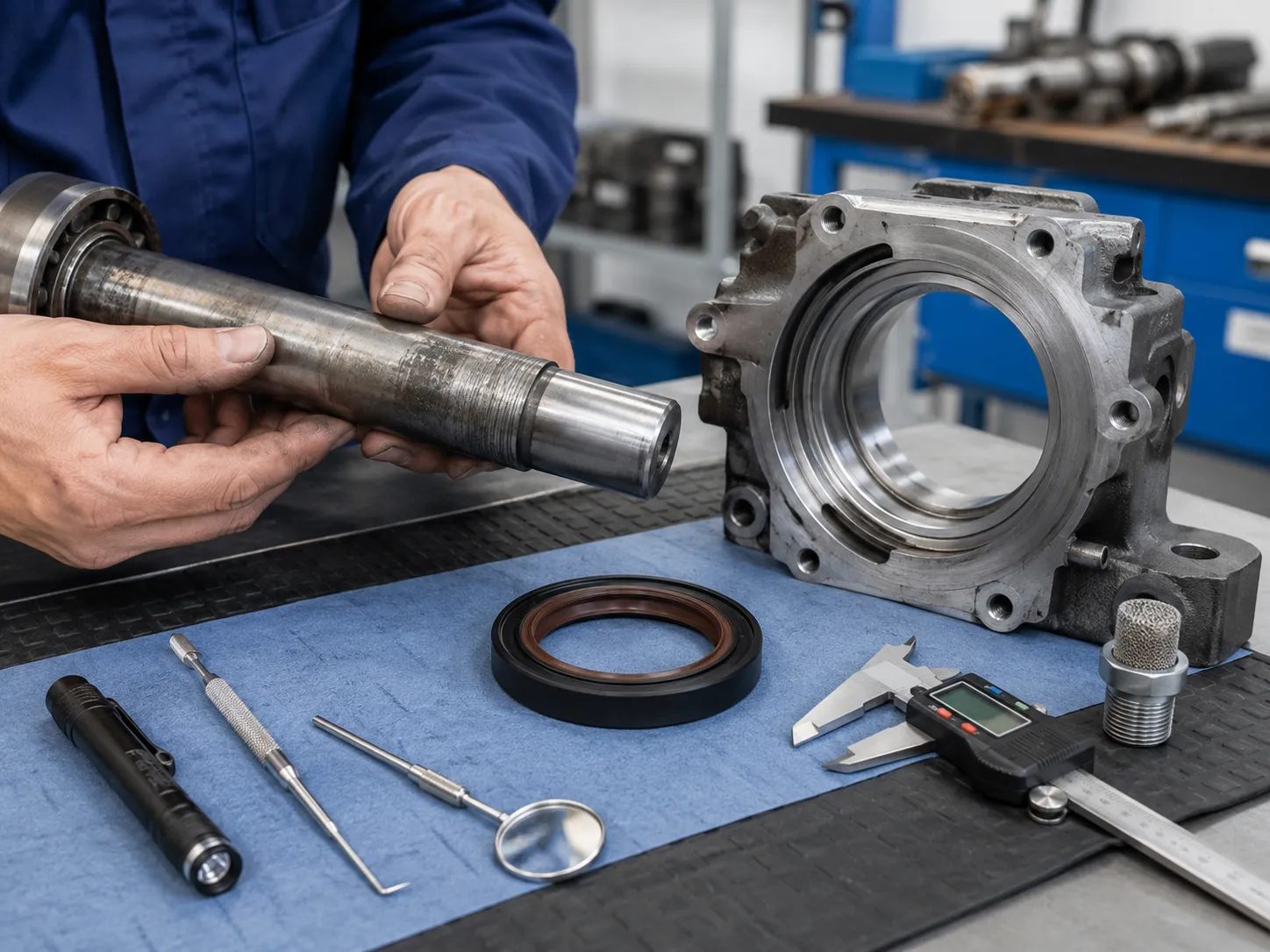
How to Prevent a New Oil Seal from Leaking Again
The most reliable repair solves both the leak and the cause of the leak.
Key prevention steps include:
Use the correct seal size: ID, OD, and width
Choose the right material for the fluid and temperature
Confirm the correct lip design
Inspect the shaft surface before installation
Repair or sleeve a grooved shaft when necessary
Check for bearing wear and shaft movement
Clean the housing bore thoroughly
Inspect breathers and ventilation systems
Follow the correct installation direction
Protect the lip from splines, threads, and sharp shaft edges
Use an appropriate installation tool
Avoid excessive sealant
Refill with the correct fluid specification
Confirm the system is not overfilled
A seal should not be treated as an isolated part. It is part of a complete sealing system involving the shaft, housing, lubricant, pressure condition, and operating environment.
When Should an Oil Seal Be Replaced?
A leaking oil seal should be replaced when the leak source has been confirmed and the seal no longer retains fluid reliably.
Replacement should be arranged quickly when:
Fluid is dripping rather than lightly seeping
The fluid level falls between checks
Oil reaches hot exhaust components
Oil contaminates belts, clutches, brakes, or electrical parts
The seal is hardened, cracked, or visibly damaged
The shaft area is heavily contaminated
The vehicle develops warning lights or performance symptoms
A related repair already provides access to the seal
The machine or vehicle is used in heavy-duty service
In some cases, replacing the seal during related repair work can reduce future labor cost. For example, a rear main seal may be inspected during clutch or transmission service, while certain axle seals may be replaced during axle or drivetrain work.
Conclusion
A leaking oil seal is not always an immediate emergency, but it should never be ignored.
A small seep may allow limited short-distance driving when fluid levels remain correct and the vehicle has no warning lights, smoke, burning smell, shifting problems, or safety-related symptoms.
Driving should stop when the leak is heavy, fluid levels drop quickly, warning lights appear, smoke develops, the transmission begins to slip, or leaked oil reaches belts, brakes, clutch components, or hot exhaust parts.
The right repair is not only replacing the seal. It also includes checking the shaft surface, housing bore, ventilation system, fluid condition, material selection, seal design, and installation method.
For replacement seal selection, SealVendor can support standard crankshaft, camshaft, transmission, axle, and industrial oil seal options, as well as material matching, sample-based identification, OEM-reference support, and drawing-based custom requirements.