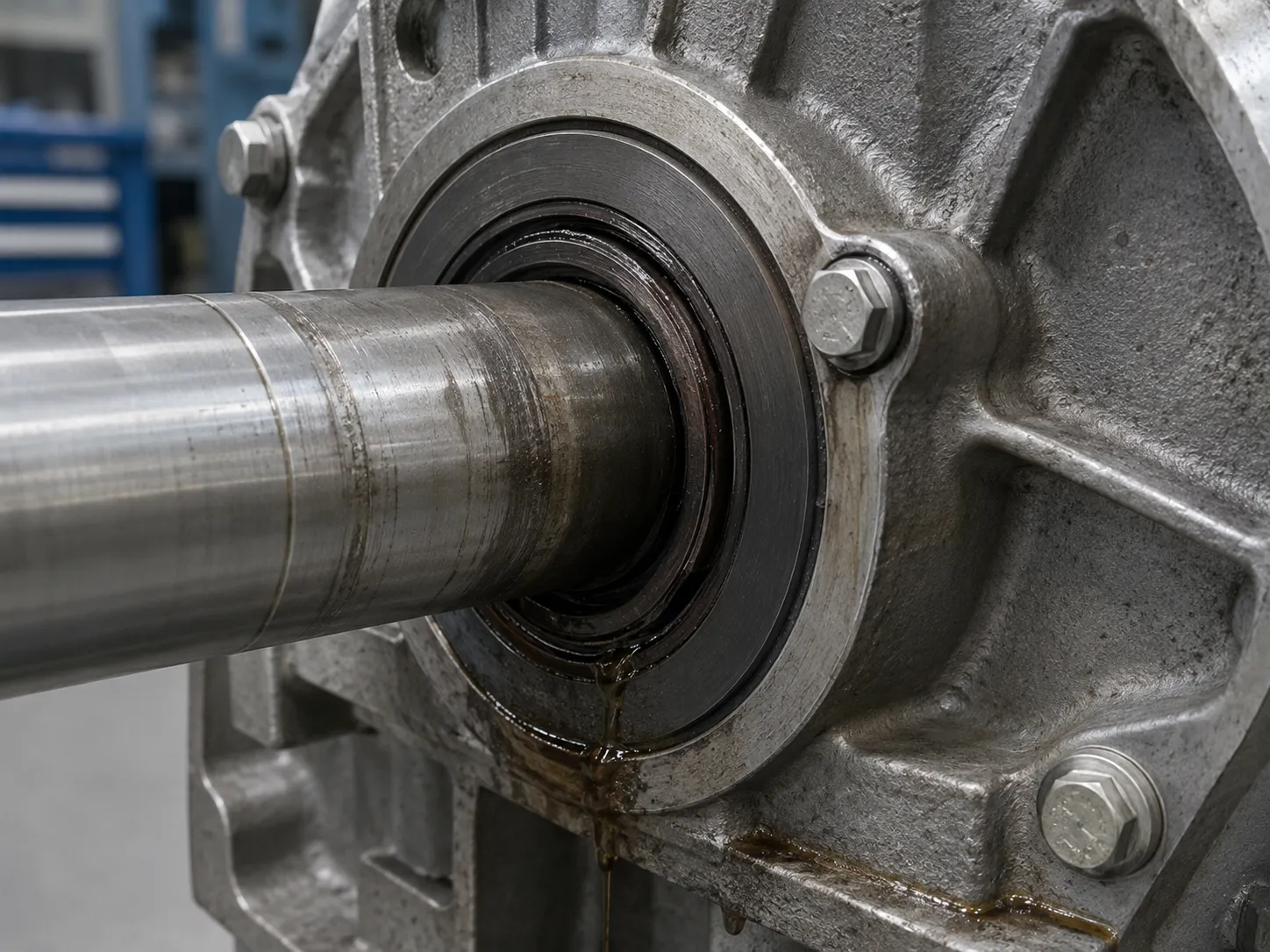
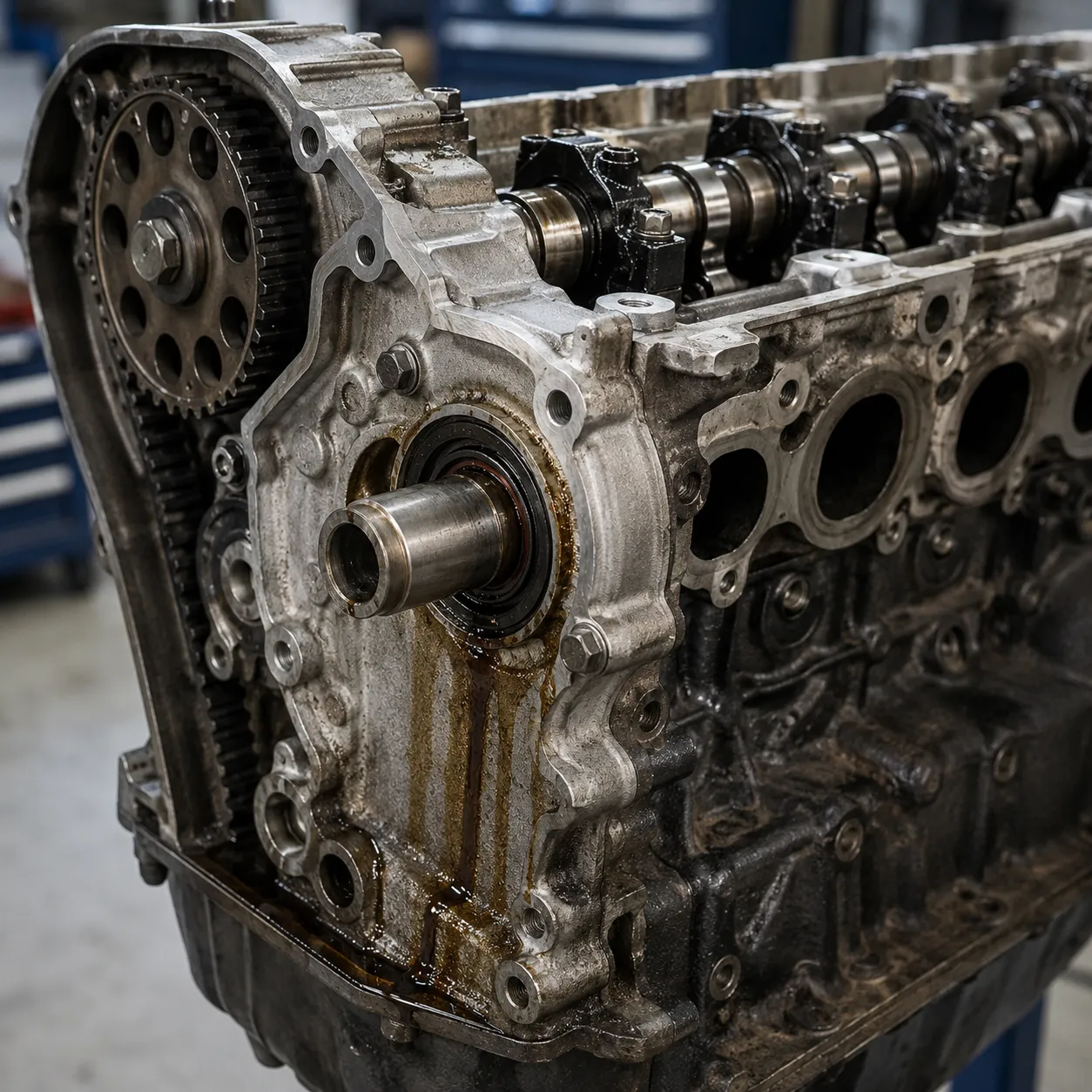
A camshaft seal leak may begin as a light oil seep near the upper or front area of the engine, but it can become more serious if it is left untreated. On many engines, the camshaft seal is located near the timing cover or at the end of the cylinder head, where it helps retain engine oil while the camshaft rotates.
When this seal becomes worn, hardened, damaged, or incorrectly installed, oil can escape from the camshaft area. The leak may leave oil stains around the timing cover, valve cover, cylinder head, or nearby engine components. In some cases, leaking oil may reach belts, hot exhaust parts, or other components that should remain clean and dry.
This guide explains the common symptoms of a camshaft seal leak, what causes the seal to fail, how serious the problem can be, and when replacement is recommended.
What Is a Camshaft Seal?
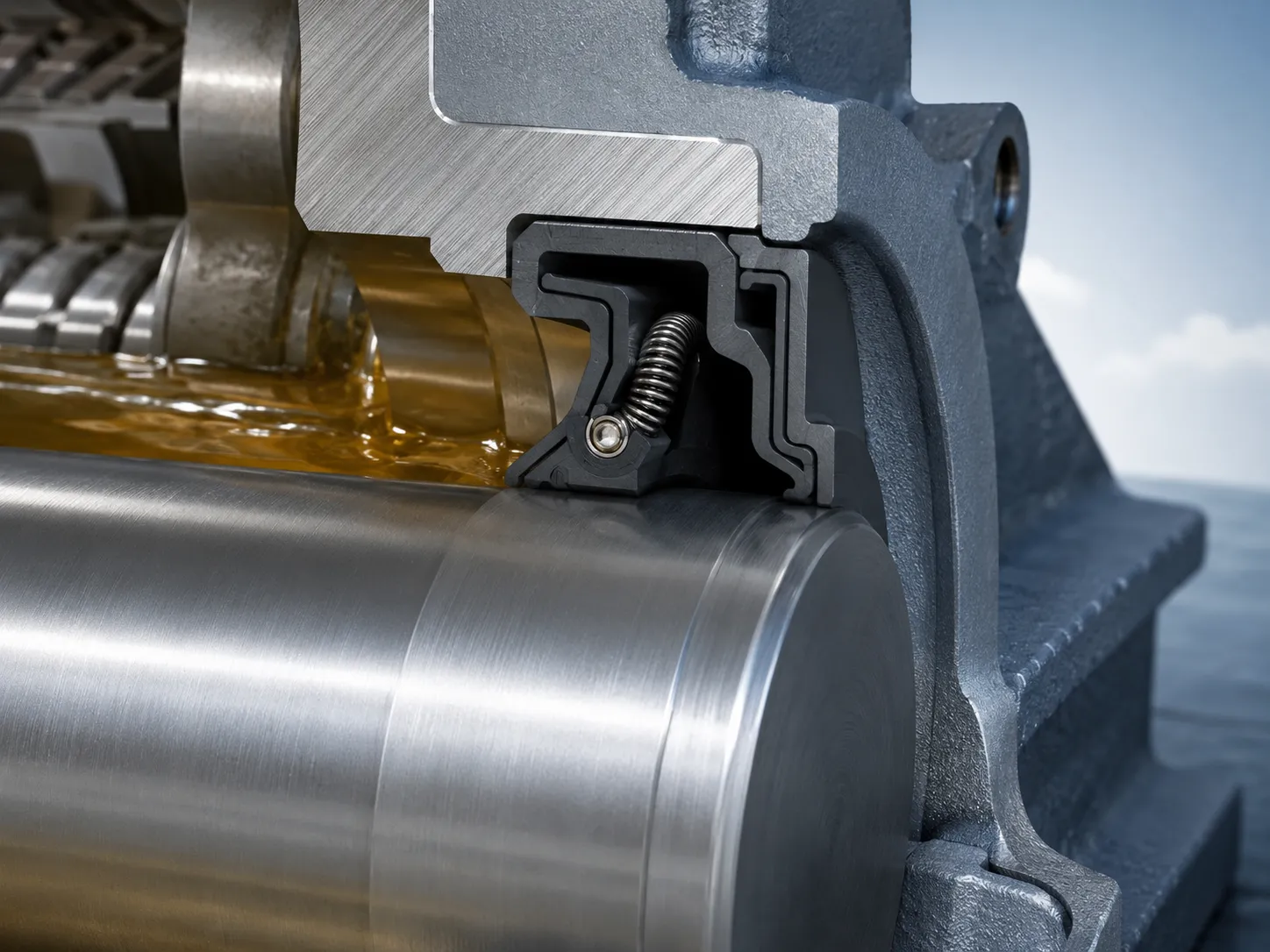
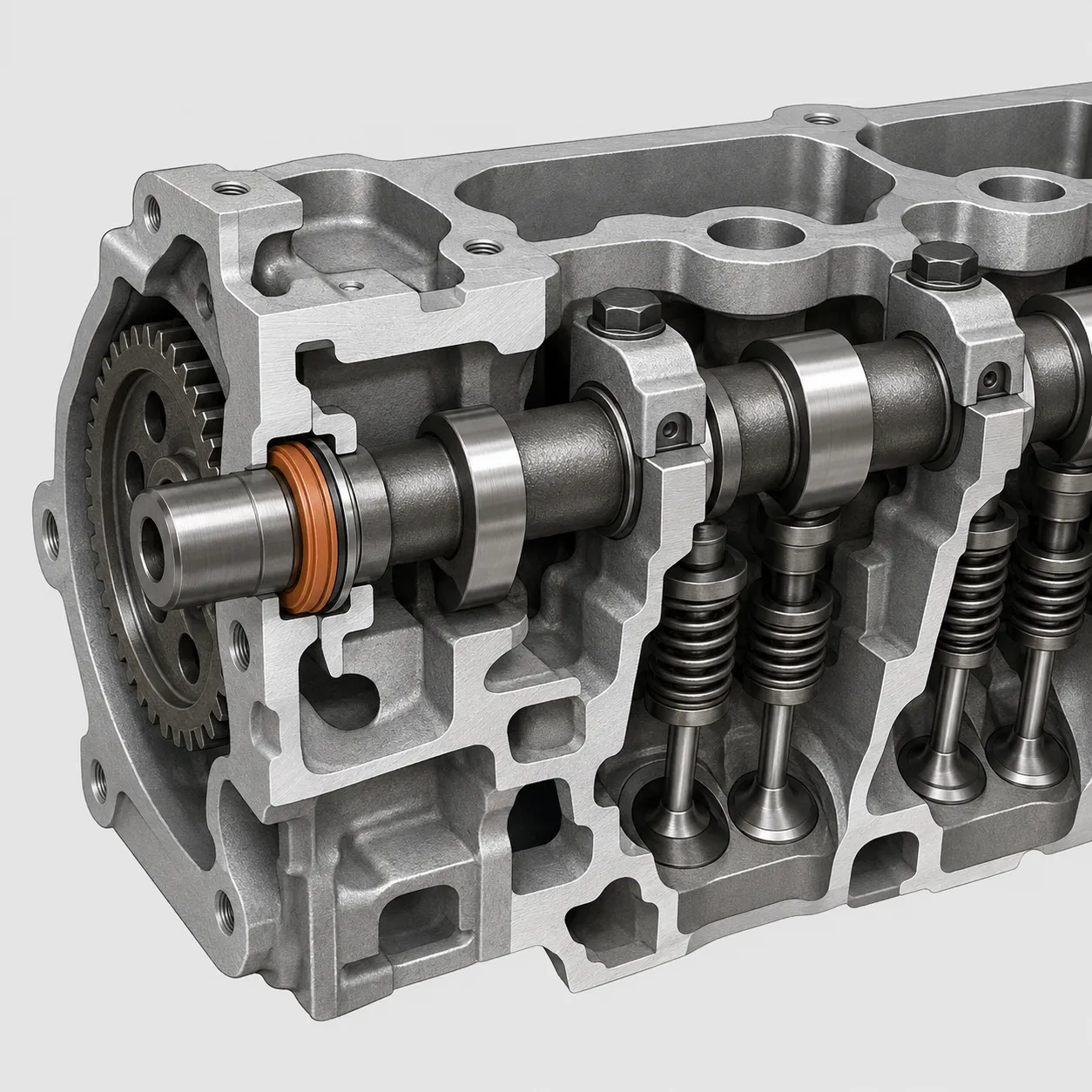
A camshaft seal is a rotary oil seal installed around the camshaft where it passes through the cylinder head or timing cover area. Its purpose is to keep engine oil inside the engine while allowing the camshaft to rotate smoothly.
The camshaft controls the opening and closing of engine valves. Depending on the engine design, there may be one camshaft seal or multiple camshaft seals. Dual overhead camshaft engines, for example, may use separate seals for the intake and exhaust camshafts.
Camshaft seals are commonly made from materials such as NBR, ACM, FKM, or PTFE, depending on the required temperature resistance, oil compatibility, shaft speed, and operating conditions.
Although the seal is small, it plays an important role in preventing oil leakage around the upper engine and timing system areas.
Common Symptoms of a Camshaft Seal Leak
1. Oil Around the Timing Cover or Camshaft Area
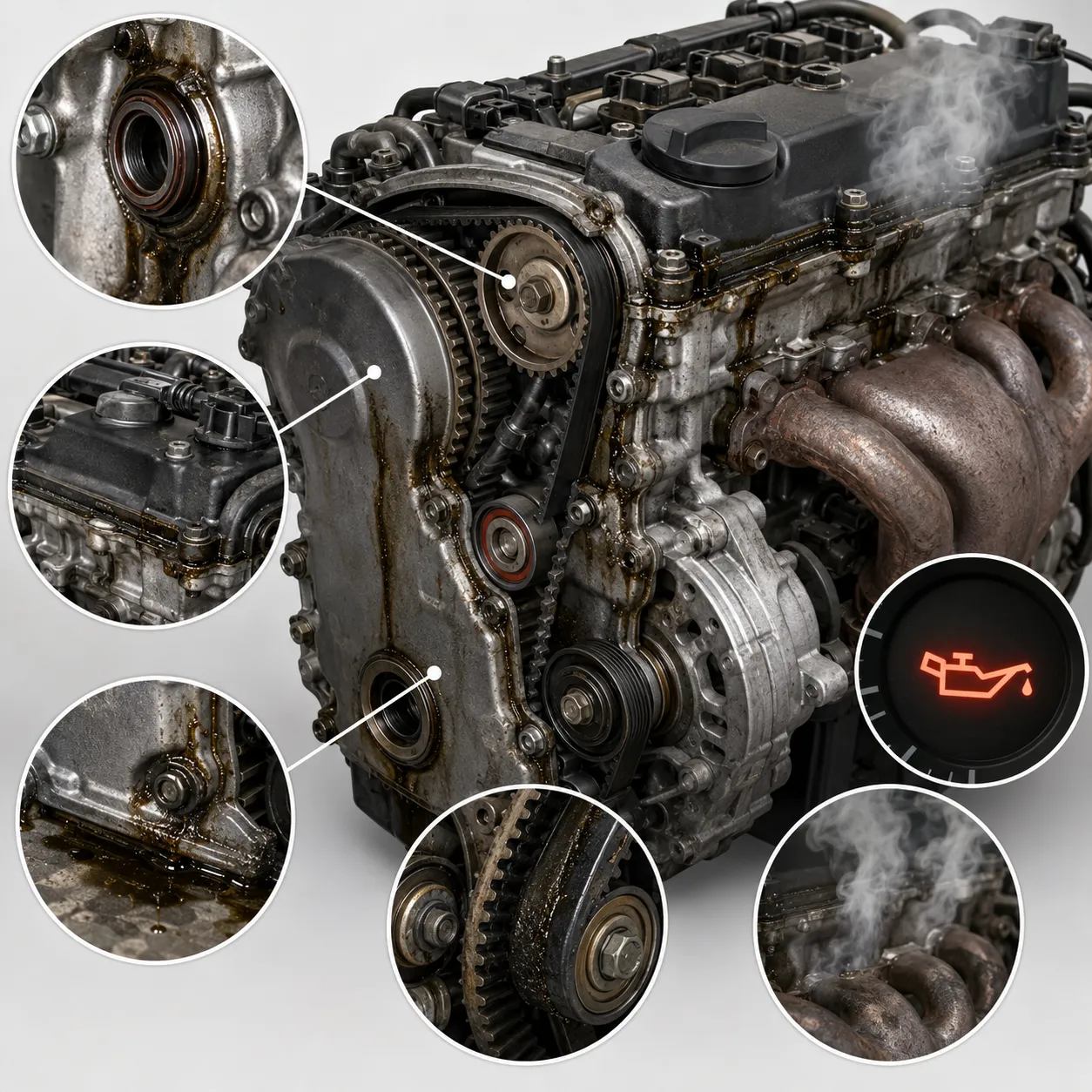
One of the most common signs of a camshaft seal leak is visible oil around the timing cover, cylinder head, camshaft end area, or upper front part of the engine.
The exact location depends on the engine design. On some engines, the leak may appear behind the timing cover. On others, oil may collect near the camshaft end cap, valve cover area, or the front of the cylinder head.
Oil around these areas does not always confirm a camshaft seal leak, because valve cover gaskets, timing cover gaskets, and other nearby seals can also leak. The area should be cleaned and inspected carefully to identify the true source.
2. Oil Seepage Near the Valve Cover
A camshaft seal leak may be mistaken for a valve cover gasket leak because both can cause oil to appear near the top of the engine.
In many cases, the valve cover gasket is the more likely source of oil near the cylinder head. However, if the valve cover gasket is dry and oil is coming from the camshaft end or timing cover side, the camshaft seal should be inspected.
A proper diagnosis is important because replacing the valve cover gasket will not solve the problem if the actual leak is coming from the camshaft seal.
3. Burning Oil Smell or Light Smoke
Leaked engine oil can reach hot surfaces and create a burning oil smell. This may happen when oil runs down the engine and comes into contact with exhaust components or other heated parts.
In some cases, light smoke may be visible from the engine bay after driving. This does not always indicate a severe leak, but it should not be ignored. Oil on hot components can create odor, smoke, and a potential fire risk if the leak becomes heavy.
4. Oil on Timing Belt Components
On engines that use a timing belt, a leaking camshaft seal can allow oil to reach the timing belt, pulleys, or tensioner area. Oil contamination can weaken rubber belt material, reduce belt life, and affect the reliability of the timing system.
A timing belt should remain clean and dry. If oil is found inside the timing cover, the source should be identified and repaired before replacing the belt. Installing a new timing belt without correcting the camshaft seal leak may lead to repeat contamination.
Engines with timing chains do not have the same belt contamination risk, but oil leakage around the timing cover should still be inspected and repaired if it becomes significant.
5. Low Engine Oil Level
A small camshaft seal leak may not reduce the engine oil level quickly. However, if the leak continues over time, the engine may gradually lose oil between service intervals.
Low engine oil can increase friction, heat, and wear inside the engine. If the oil level drops faster than normal and there are visible oil traces around the camshaft or timing cover area, the camshaft seal may be part of the problem.
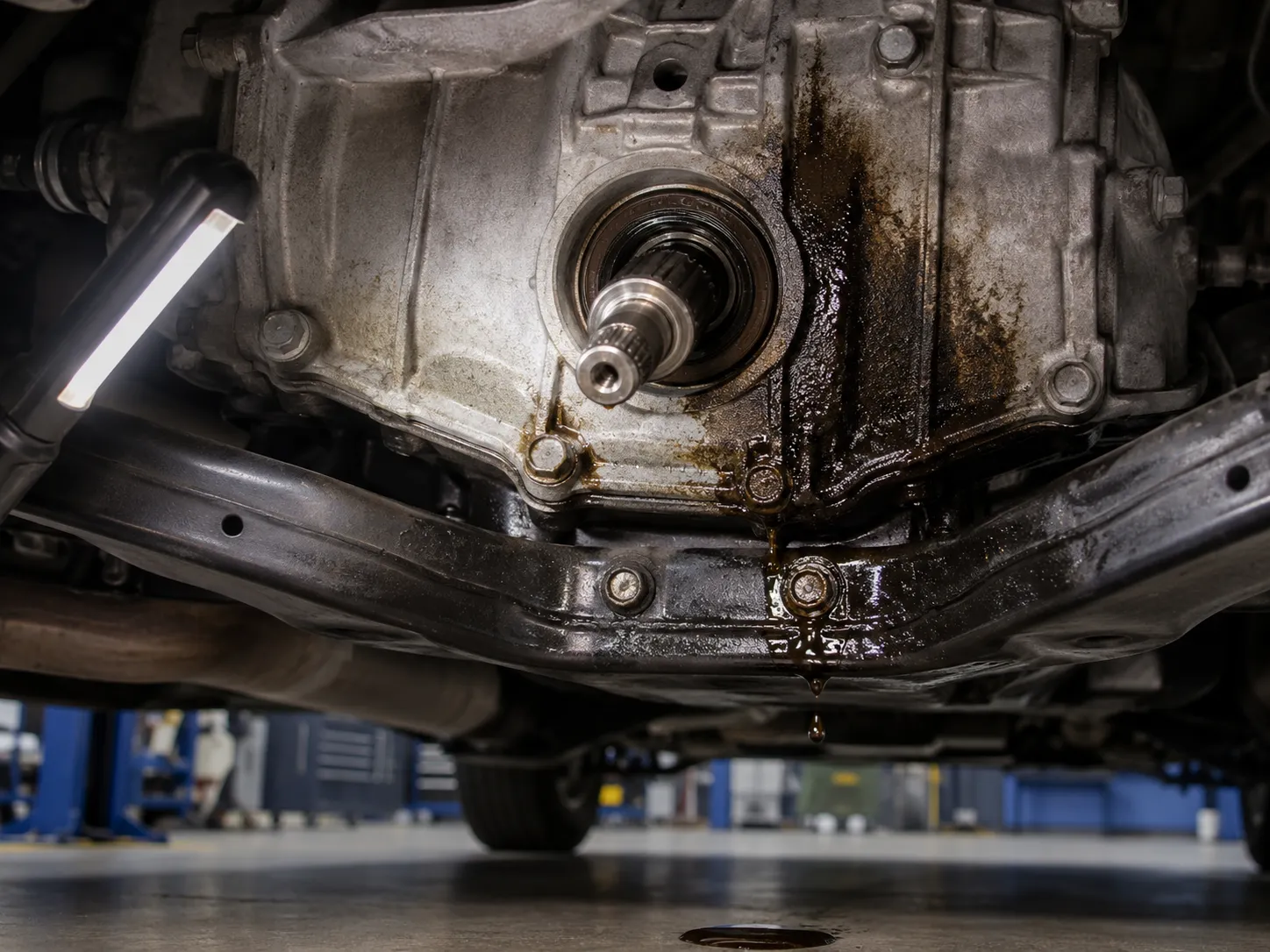
6. Oil Stains Under the Vehicle
Oil stains under a parked vehicle can come from many sources. A camshaft seal leak may eventually cause oil to travel down the engine and drip onto lower components or the ground.
The location of the oil spot does not always identify the original leak source. Oil can move along the engine block, brackets, covers, and transmission housing before it drips. This is why visual inspection from the top and side of the engine is usually necessary.
Camshaft Seal Leak vs Valve Cover Gasket Leak
A camshaft seal leak and a valve cover gasket leak can look similar because both are located near the upper part of the engine.
A valve cover gasket leak usually causes oil around the edge of the valve cover, especially along the top or side of the cylinder head. Oil may appear evenly around the gasket line.
A camshaft seal leak is more likely to appear at the end of the camshaft, near the timing cover, or around the camshaft opening in the cylinder head. It may create a concentrated oil stain near the front or rear end of the camshaft.
Because these components are close together, it is common for oil from one leak to spread into the area of another. Cleaning the engine and checking the leak after a short drive can make diagnosis more accurate.
What Causes a Camshaft Seal to Leak?
Aging and Heat Exposure
Camshaft seals operate in a hot engine environment and remain in contact with engine oil for long periods. Over time, the sealing lip can harden, shrink, crack, or lose flexibility.
Once the sealing lip no longer maintains proper contact with the camshaft surface, oil can begin to seep past the seal.
Camshaft Surface Wear
The camshaft surface where the seal contacts the shaft must remain smooth. Grooves, scratches, corrosion, or rough areas can create a path for oil to leak.
If the camshaft surface is damaged, replacing the seal alone may not fully solve the problem. The shaft condition should be checked before installing a new seal.
Excessive Crankcase Pressure
High crankcase pressure can force oil past seals throughout the engine, including camshaft seals. A restricted PCV valve, blocked breather hose, or crankcase ventilation issue may contribute to repeated oil leaks.
When a camshaft seal leaks again shortly after replacement, crankcase pressure should be considered as a possible cause.
Incorrect Seal Size or Profile
A camshaft seal must match the shaft diameter, housing bore, seal width, and installation depth. Even a small size difference can affect fitment and sealing performance.
The seal profile also matters. Depending on the application, the replacement may require a single-lip, double-lip, spring-loaded, or dust-lip design.
Unsuitable Seal Material
The seal material should match the engine oil, operating temperature, shaft speed, and service environment.
NBR is widely used for standard oil sealing applications. ACM is common in automotive environments requiring good resistance to heat and lubricating oil. FKM offers stronger high-temperature and oil resistance for more demanding conditions. PTFE may be selected for special applications involving higher speed, lower friction, or particular installation requirements.
Improper Installation
Poor installation can damage a new camshaft seal before the engine is even started. The sealing lip may be cut, folded, scratched, or installed unevenly. Installing the seal at the wrong depth can also cause leakage.
The seal should be pressed evenly into the housing using the correct installation tool. The camshaft surface and seal bore should be clean, and sharp edges should be protected during installation.
Is a Camshaft Seal Leak Serious?
A small camshaft seal seep may not cause immediate engine damage, but it should still be monitored and diagnosed. Oil leaks usually become worse over time as the seal continues to harden or wear.
The leak becomes more serious when oil reaches timing belt components, hot exhaust parts, electrical connectors, or other nearby components. It is also more urgent if the engine oil level is dropping quickly.
For engines with timing belts, oil contamination can create an additional maintenance risk. A damaged or weakened timing belt may lead to serious engine damage if it slips or fails.
The safest approach is to inspect a suspected camshaft seal leak early and repair it before oil contamination spreads to other parts of the engine.
When Should a Camshaft Seal Be Replaced?
A camshaft seal should be replaced when oil leakage is confirmed at the seal location. Replacement is also recommended when the seal is removed during related maintenance, such as timing belt replacement, timing cover service, camshaft repair, cylinder head work, or valve train repair.
Replacing the seal during related work can reduce future labor costs because the timing cover or nearby components may already be removed.
A camshaft seal should also be replaced if it is visibly hardened, cracked, distorted, or damaged during disassembly. Reusing an old seal after removal is generally not recommended.
Before installation, confirm the correct seal size, material, profile, and installation direction.
Camshaft Seal Replacement Tips
Before replacing a camshaft seal, clean the surrounding area and confirm that the oil is not coming from another component. Common nearby leak sources include the valve cover gasket, timing cover gasket, cylinder head plug, camshaft end cap, and oil control valve area.
When selecting a replacement camshaft seal, check the following details:
Camshaft diameter
Housing bore diameter
Seal width
OEM part number
Engine model and production year
Camshaft position
Material requirement
Lip design
Dust lip requirement
Installation direction
Operating temperature
Engine oil compatibility
During installation, apply the correct assembly lubricant if required by the seal design. Avoid damaging the sealing lip, spring, or outer diameter. The seal should be installed squarely and pressed to the correct depth.
After installation, inspect the area while the engine is running and check again after a short road test. If oil leakage continues, inspect the camshaft surface, crankcase ventilation system, and nearby gaskets or seals.
Choosing the Right Camshaft Seal Material
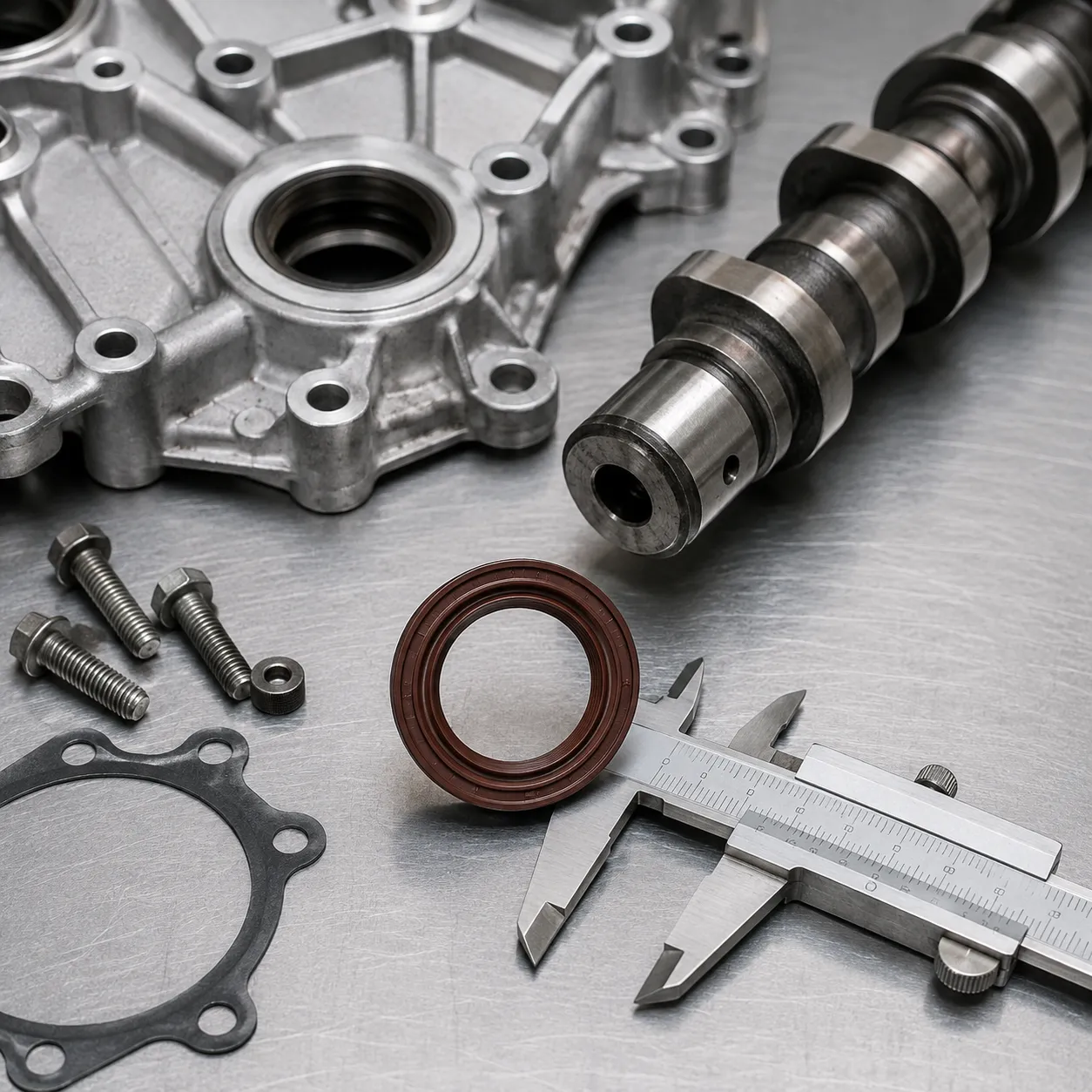
The right material depends on the working environment rather than price alone.
NBR is suitable for many standard engine oil applications and offers good cost performance.
ACM is commonly used in automotive sealing applications because of its resistance to heat and lubricating oils.
FKM provides stronger resistance to high temperatures, engine oils, and aggressive fluids. It is often selected for more demanding conditions.
PTFE may be used for special applications that require low friction, high-speed performance, or advanced sealing characteristics. PTFE seals may also have specific installation requirements, so the manufacturer's guidance should be followed.
When matching a replacement seal, confirm the material against the engine temperature, oil type, shaft surface condition, and operating requirements.
Conclusion
A camshaft seal leak can cause oil around the timing cover, camshaft end area, or valve cover region. Common warning signs include visible oil seepage, burning oil smell, oil on timing components, low engine oil level, and oil stains under the vehicle.
The leak may be caused by aging rubber, camshaft surface wear, excessive crankcase pressure, incorrect seal selection, unsuitable material, or poor installation.
A minor seep should be inspected before it becomes worse. A heavier leak should be repaired promptly, especially if oil is reaching the timing belt area, hot exhaust components, or causing the engine oil level to drop.
For replacement seal selection, SealVendor can support standard camshaft oil seals, material matching, sample-based identification, drawing-based customization, and OEM reference support for automotive and industrial applications.