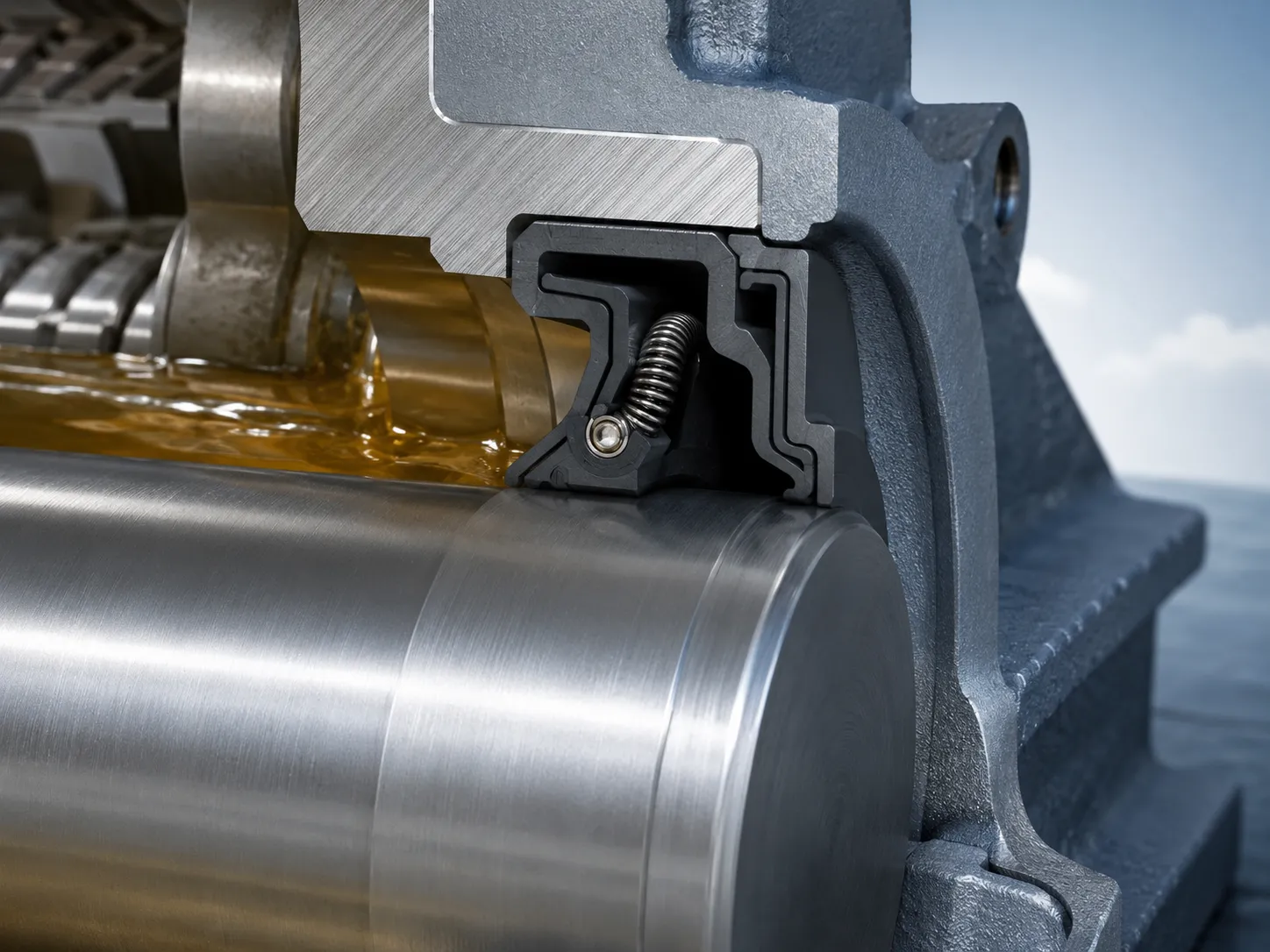
Installing an oil seal in the wrong direction is one of the most common causes of repeat leakage after repair.
A rotary oil seal may look symmetrical from the outside, especially after it has been removed from a housing. However, the two sides often have different functions.
One side is designed to retain oil, grease, or lubricant inside the housing. The other side may include a dust lip, a smoother outer face, a metal case surface, or a structure intended to face the outside environment.
For most standard spring-loaded rotary oil seals, the primary sealing lip should face the lubricant side. In practical terms, this usually means the side with the visible garter spring faces toward the oil, grease, gearbox, engine, transmission, bearing, or differential housing.
However, this rule is not universal.
Some seals are installed primarily to exclude dirt rather than retain oil. PTFE seals, directional seals, pressure seals, grease seals, wiper-style seals, double-media seals, and special OEM designs may have different installation requirements.
The safest approach is to identify the seal function first, confirm the original orientation before removal, and check the manufacturer drawing or equipment service procedure when the application is unclear.
Quick Answer: Which Way Should an Oil Seal Face?
For a standard spring-loaded rotary oil seal used to retain oil or lubricant:
The main sealing lip and garter spring usually face the lubricant side.
For example:
A crankshaft seal usually faces the engine oil side.
A transmission seal usually faces the transmission fluid side.
A differential pinion seal usually faces the gear oil side.
An axle seal usually faces the transaxle, differential, or axle-housing lubricant side.
A gearbox seal usually faces the bearing and lubricant side.
A pump or motor shaft seal usually faces the fluid or lubrication side it is intended to retain.
The outside-facing side may include an auxiliary dust lip, a flatter surface, visible case features, or a simpler outer face.
But do not install a seal only by looking for a spring.
Some seals do not use a visible spring. Others have multiple lips, special PTFE designs, directional pumping features, pressure-support structures, or application-specific installation requirements.
The correct question is not only:
Which side has the spring?
The more important question is:
Which side is supposed to retain the fluid, and which side is exposed to contamination or air?
What Does Oil Seal Direction Mean?
Oil seal direction refers to which side of the seal faces the lubricant, pressure side, bearing side, gearbox interior, engine interior, or other protected fluid area.
It also determines which side faces the outside environment, dust, water, air, road dirt, mud, or other contamination.
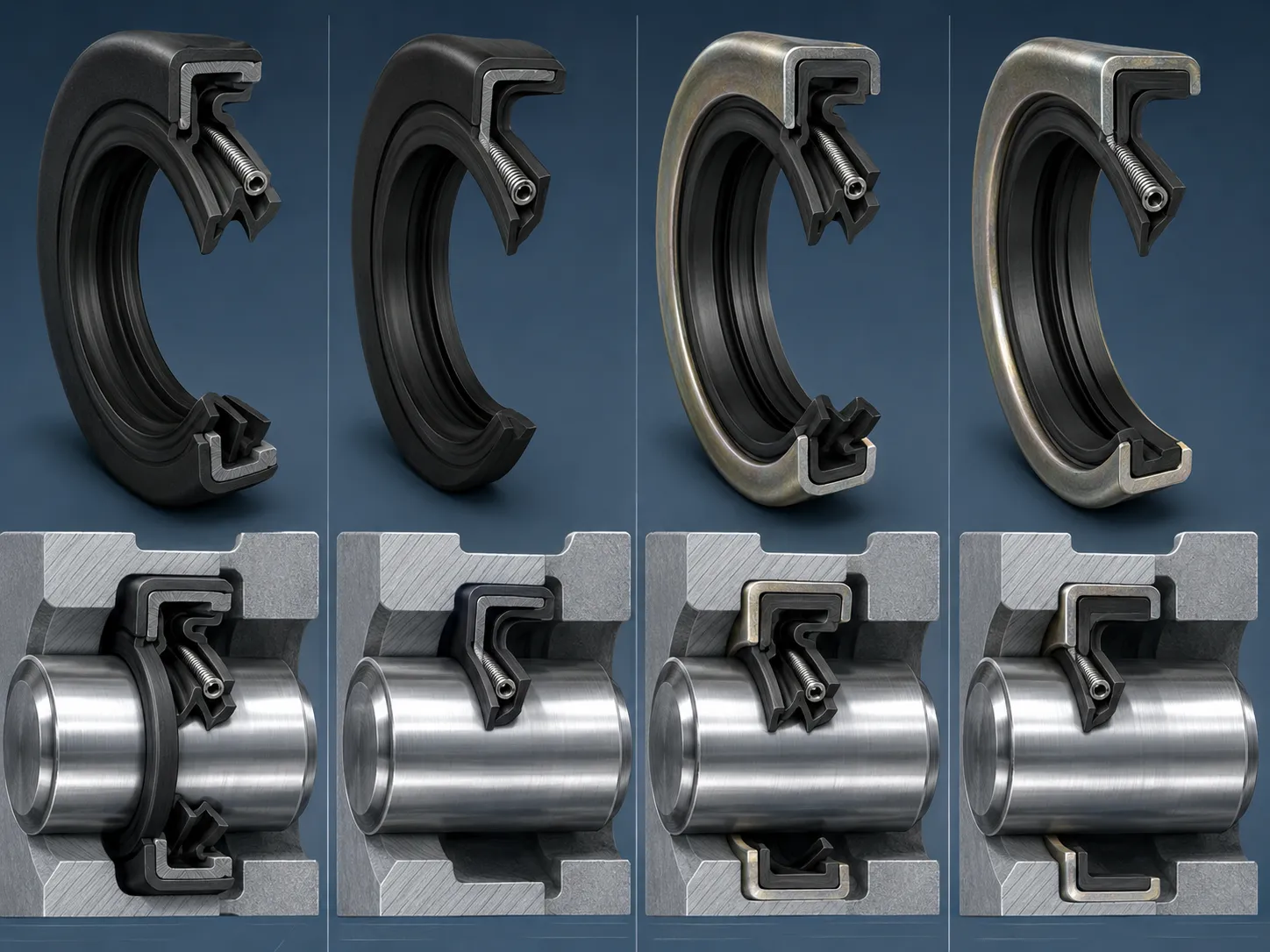
A typical radial oil seal has several important features:
Main sealing lip
Garter spring
Auxiliary dust lip, on some designs
Metal reinforcement or metal case
Rubber-covered outer diameter, on some designs
Contact edge around the shaft
Air-side surface
Fluid-side surface
The main lip is the part that retains oil or lubricant around the rotating shaft.
In many conventional oil seal designs, the spring supports the main sealing lip and helps maintain lip contact with the shaft.
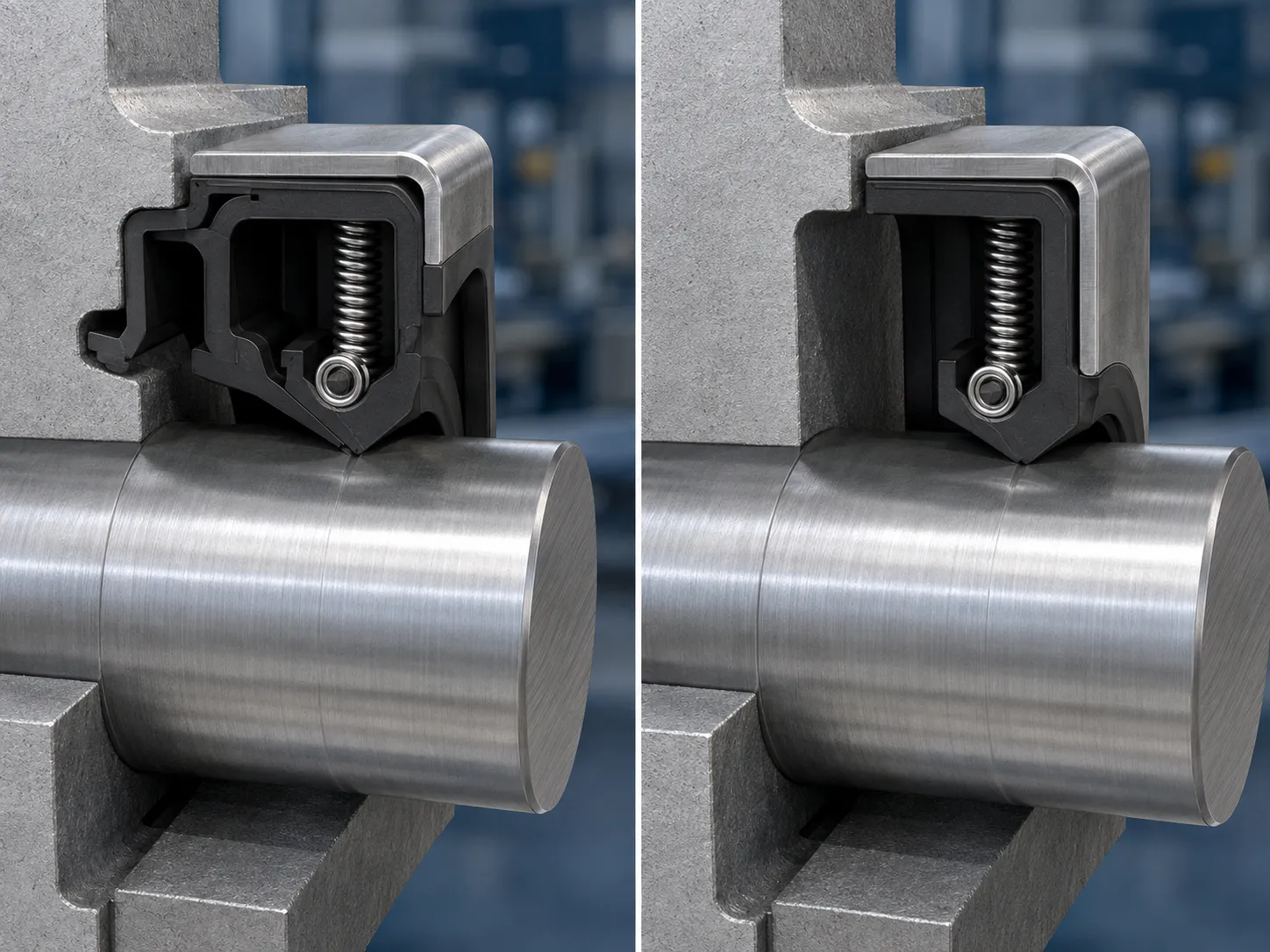
The auxiliary lip, when present, usually faces the outside environment. Its job is to reduce the entry of dust, dirt, moisture, and debris.
This is why a common double-lip seal often has:
Main lip and spring toward the oil side
Dust lip toward the air side
The auxiliary lip should not be treated as a second full oil-pressure seal.
Its primary role is contamination exclusion.
How to Tell Which Side of an Oil Seal Faces the Oil
The easiest way to identify oil seal direction is to inspect the seal before installation.
Look for the Garter Spring
For most standard spring-loaded rotary oil seals, the side with the garter spring is the lubricant side.
The spring sits around the main sealing lip and helps maintain contact force against the rotating shaft.
In a standard oil-retention application:
Spring side faces the oil or lubricant.
Opposite side faces outward toward air, dust, or contamination.
This is often the quickest visual check.
However, the spring may be hidden by the seal structure, protected by an internal lip, or absent in certain grease, PTFE, or special-purpose seals.
Identify the Main Sealing Lip
The main sealing lip is usually the more substantial lip and is often supported by a spring.
It is designed to control the fluid being retained.
The main lip normally faces the protected fluid area.
For example:
Toward engine oil inside an engine
Toward transmission fluid inside a transmission
Toward gear oil inside a differential
Toward lubricant inside a gearbox
Toward the bearing cavity in a rotating assembly
Identify the Dust Lip
A dust lip is usually located on the air side of the seal.
It may be smaller, thinner, and positioned outward from the main lip.
Its function is usually to help reduce contamination entry.
A dust lip may face:
Road dirt
Dust
Mud
Water splash
Outdoor air
Abrasive debris
Wheel-end contamination
Machine-side contamination
A dust lip is useful in exposed environments, but it does not determine pressure capability or replace a dedicated pressure seal.
Check the Original Seal Before Removal
The old seal can provide useful information, even if it has failed.
Before removing it:
Take clear photos from both sides.
Mark the housing side and outside side.
Note which side faces the lubricant.
Check whether the spring is visible on the inward side.
Check whether a dust lip faces outward.
Compare the old seal with the replacement seal.
Record any visible markings, part numbers, arrows, or directional symbols.
Do not rely only on memory after the seal has been removed.
Many oil seals look very similar once they are placed on a workbench.
Check the Supplier Drawing or Manufacturer Instruction
For non-standard seals, custom seals, PTFE seals, high-speed seals, pressure seals, double-media seals, or OEM replacement parts, a supplier drawing is more reliable than visual guessing.
Confirm:
Fluid side
Air side
Main lip direction
Dust-lip direction
Pressure direction
Shaft rotation direction, where relevant
Installation depth
Use of installation sleeves or guides
Shaft surface requirements
Lubrication instructions
Any special marking or orientation requirement
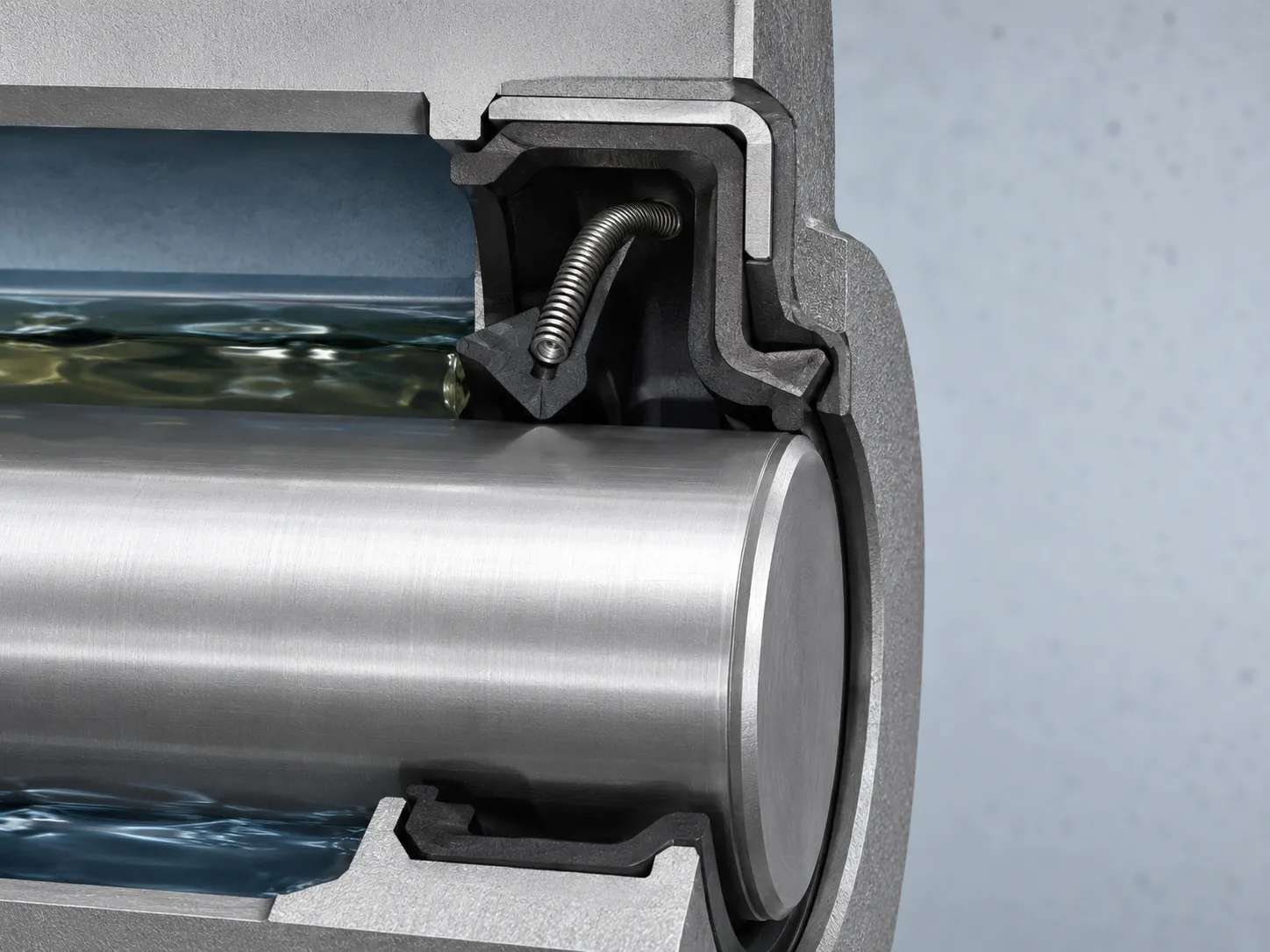
Technical comparison illustration showing how to identify the lubricant side and air side of a standard double-lip rotary oil seal by locating the garter spring, main lip, and auxiliary dust lip.
Standard Oil Seal Installation Rule
For a normal oil-retention application, the main sealing lip should face the fluid being retained.
In most standard spring-loaded seals, this means:
Application | Usual Direction |
|---|---|
Engine crankshaft seal | Spring and main lip toward engine oil |
Camshaft seal | Spring and main lip toward engine oil |
Transmission input or output seal | Spring and main lip toward transmission fluid |
Axle or transaxle seal | Spring and main lip toward transmission or gear oil |
Differential pinion seal | Spring and main lip toward gear oil inside the differential |
Differential axle shaft seal | Spring and main lip toward differential lubricant |
Gearbox shaft seal | Spring and main lip toward gearbox oil or bearing lubricant |
Pump shaft seal | Main sealing lip toward the fluid or lubricated side being retained |
Electric motor bearing seal | Main lip toward bearing grease or lubricated bearing cavity |
The common principle is:
The main lip faces the side where fluid retention is required.
The outside-facing side is often the side exposed to dirt, moisture, dust, or ambient air.
This standard direction is used because the main lip is designed to control lubricant at the shaft contact point.
Oil Seal Installation Direction by Application
Crankshaft Oil Seal Direction
Crankshaft seals are normally installed with the main lip and spring facing the engine oil side.
For a front crankshaft seal, this often means the spring side faces inward toward the engine block, timing cover cavity, or oil-containing side of the engine.
For a rear main seal, the main lip and spring generally face toward the crankcase oil side, while the outer side faces toward the flywheel, flexplate, clutch, or transmission area.
Before installation, inspect:
Crankshaft sealing surface
Wear grooves
Rust or pitting
Oil slinger or flange condition
Seal housing condition
Installation depth
Timing cover or rear cover alignment
Original seal orientation
A front or rear crankshaft seal may leak again if it is installed at the wrong depth or if the new lip contacts an existing wear groove.
Camshaft Oil Seal Direction
Camshaft seals generally face the engine oil side.
The main lip and spring normally face inward toward the camshaft-bearing area, cylinder head, or oil-filled timing-side area.
The outward side often faces the timing cover, cam pulley, cam gear, or external engine area.
Because some camshaft seals are located near timing belts or timing components, correct installation is important.
Oil reaching a timing belt, cam pulley, or belt-driven component can create additional maintenance concerns.
Transmission Oil Seal Direction
Transmission seals are usually installed with the main lip facing the transmission fluid side.
Examples include:
Input shaft seals
Output shaft seals
Extension housing seals
Selector shaft seals
Axle seals
Front pump seals
Torque-converter-related seals
Transfer case output seals
For a transmission output or axle seal, the spring side often faces inward toward the transmission or transaxle fluid.
For an input or front pump seal, the correct direction should be confirmed against the vehicle service procedure because the housing structure, torque converter, pump, clutch, or bellhousing layout can vary.
Axle Seal Direction
On many front-wheel-drive vehicles, the axle seal is installed where the inner CV axle enters the transaxle.
The main sealing lip and spring generally face inward toward the transmission fluid.
The dust lip or outside face usually faces toward the inner CV joint and outside environment.
On rear axle and wheel-end systems, the axle seal direction depends on the specific axle design.
A rear axle shaft seal often faces the differential gear oil side, while the outside area faces the wheel-end or brake side.
Always check the original orientation and service procedure because wheel-end seal designs can vary significantly.
Differential Pinion Seal Direction
A differential pinion seal usually faces the gear oil inside the differential housing.
The main lip and spring generally face inward toward the differential lubricant.
The outer side faces the driveshaft flange, pinion yoke, or external drivetrain area.
Pinion seal replacement should not be treated as a simple universal oil seal repair.
Depending on the axle design, the repair may involve driveshaft removal, flange or yoke position checks, rotational resistance checks, torque procedures, and bearing-preload considerations.
The correct service procedure should be followed for the specific differential.
Gearbox and Industrial Equipment Seal Direction
For many industrial gearboxes, pumps, motors, reducers, mixers, and bearing housings, the main lip normally faces the lubricant side.
For example:
Gearbox output seal: main lip toward gearbox oil
Bearing housing seal: main lip toward bearing lubricant
Pump shaft seal: main lip toward the fluid or oil being retained
Motor seal: main lip toward lubricated bearing cavity
Reducer shaft seal: main lip toward internal gear oil
However, some industrial equipment uses seals primarily to exclude contamination rather than fully retain oil.
In those cases, the lip may be installed toward the outside environment.
The sealing purpose must be confirmed before installation.
When the Standard Installation Rule Does Not Apply
The usual “spring side toward oil” rule works for many standard rotary oil seals, but it is not universal.
Contamination-Exclusion Applications
Some seals are installed mainly to keep dirt, water, dust, mud, or debris out of a bearing cavity or protected area.
In those cases, the lip may face outward toward the contamination source.
This arrangement may allow slight lubricant weeping while improving contamination exclusion.
Examples may include:
Bearing protection
External dust exclusion
Certain agricultural or outdoor applications
Grease-retention systems
Equipment exposed to abrasive dirt
Specialized rotating equipment
The application must be evaluated carefully because an outward-facing lip may not retain oil in the same way as a standard inward-facing oil seal.
Grease Seals and Non-Spring Seals
Some grease seals do not use a garter spring.
Others may use a lighter lip design, scraper lip, or specialized exclusion profile.
Without a visible spring, the installation direction must be confirmed through:
Seal profile
Product drawing
Supplier instruction
Original seal orientation
Equipment manual
Markings on the seal
Application function
Do not assume that every oil seal has the same spring-side visual clue.
PTFE Oil Seals
PTFE oil seals often have a different construction from standard elastomer spring-loaded seals.
They may use:
PTFE sealing lips
Installation sleeves
Special shaft surface requirements
Different lip geometry
Directional pumping features
Low-friction lip designs
Metal cases
Multiple sealing lips
Special installation procedures
Some PTFE seals should not be lubricated in the same way as conventional elastomer seals. Others require a specific installation sleeve to prevent lip damage.
Always follow the PTFE seal manufacturer’s installation instruction.
Do not assume that a PTFE seal should be installed using the same method as a standard NBR, ACM, or FKM spring-loaded oil seal.
Directional or Helical Lip Seals
Some rotary seals use directional lip features or helical pumping structures.
Their performance may depend on shaft rotation direction.
These seals may be marked for:
Clockwise rotation
Counterclockwise rotation
Bidirectional rotation
Shaft-side orientation
Fluid-side orientation
A directional seal installed for the wrong shaft rotation can move fluid in the wrong direction or reduce sealing performance.
Check all rotation markings and technical drawings before installation.
Pressure Seals and Special Rotary Seals
A standard radial oil seal is usually designed for low-pressure lubricant retention.
Applications with internal pressure may require:
Pressure-capable radial seals
Backup support
Special lip geometry
PTFE rotary seals
Mechanical face seals
Cassette seals
Double-seal arrangements
Ventilation improvements
Custom seal solutions
The lip direction alone cannot solve an incorrect pressure condition.
If pressure is present, confirm the correct seal type before installation.
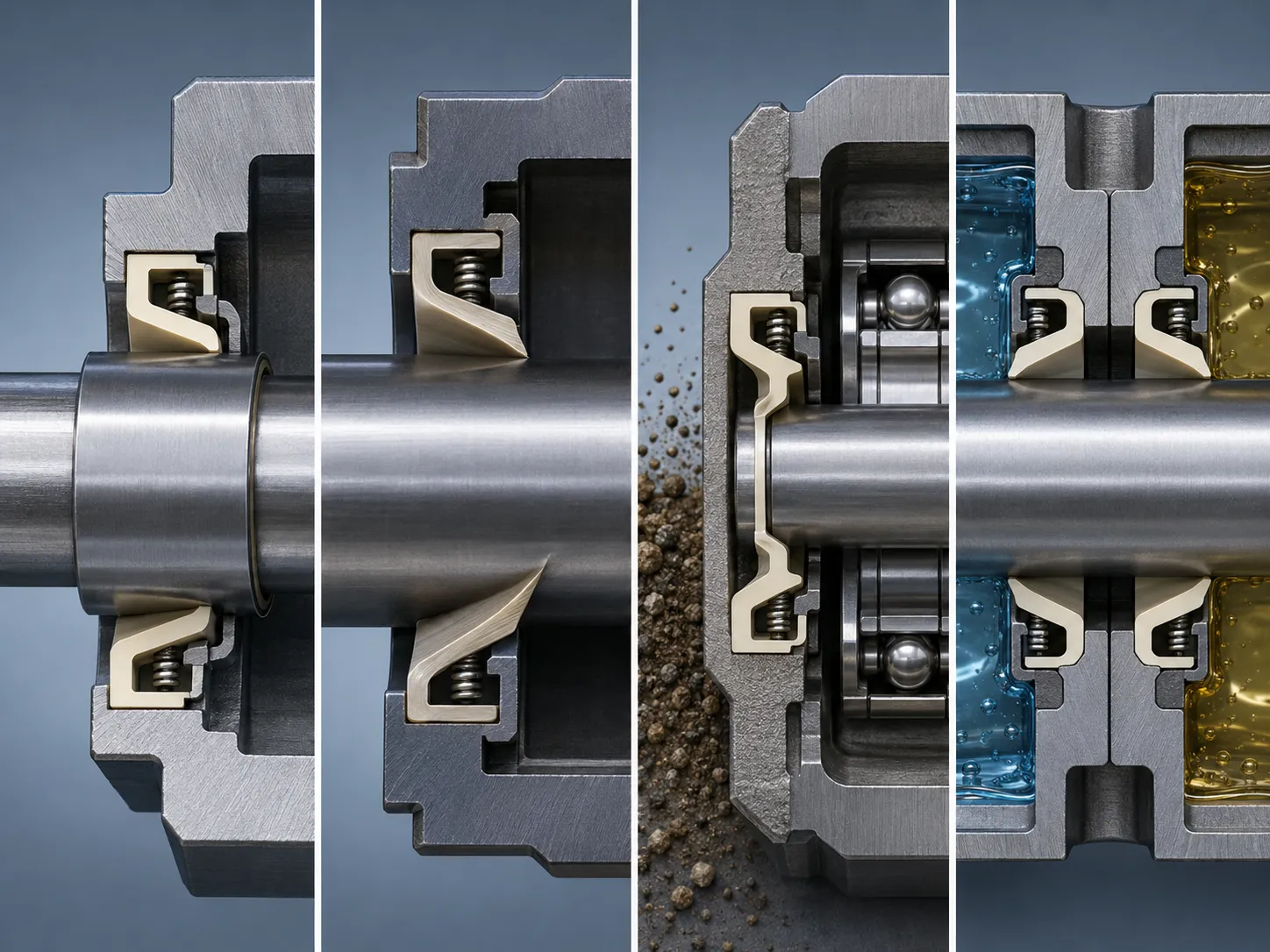
Double-Media or Dual-Seal Applications
Some systems need to separate two fluids, retain lubricant while excluding water, or manage pressure from both sides.
These applications may use:
Two seals facing opposite directions
Back-to-back seal arrangements
Face-to-face seal arrangements
Multiple lip structures
Spacer rings
Drain cavities
External exclusion seals
Mechanical seals
In these systems, each seal may face a different direction based on the fluid or contamination it is intended to control.
Do not install both seals in the same direction without reviewing the system design.
What Happens If an Oil Seal Is Installed Backward?
A backward oil seal may fit into the housing and appear correct at first.
However, it may not control lubricant or contamination as intended.
Possible results include:
Oil leakage
Grease leakage
Fluid migration
Contamination entering the housing
Dust reaching the main lip
Water ingress
Premature bearing wear
Shaft corrosion
Increased seal wear
Transmission fluid loss
Gear oil loss
Repeat repair
Belt or clutch contamination
Brake contamination near wheel-end applications
Damage to nearby rotating components
A reversed seal may also cause the dust lip to face the wrong direction.
This can reduce contamination protection and expose the primary lip to dirt or moisture.
In some cases, the seal may leak immediately.
In other cases, it may fail gradually after heat cycles, shaft rotation, pressure changes, or contamination exposure.
What to Check Before Installing a New Oil Seal
Before pressing a new seal into the housing, inspect the complete sealing area.
Check the Old Seal Orientation
Before removing the old seal:
Photograph both sides.
Mark the fluid side.
Mark the outside side.
Note spring position.
Note dust-lip position.
Compare with the replacement seal.
This simple step can prevent a costly direction mistake.
Check the Shaft Surface
Inspect the shaft for:
Wear grooves
Rust
Corrosion
Pitting
Scratches
Sharp edges
Splines
Threads
Keyways
Burrs
Excessive runout
Misalignment
Bearing-related movement
A new seal may leak even when installed in the correct direction if the shaft surface is damaged.
Check the Housing Bore
Inspect the seal bore for:
Dirt
Oil residue
Corrosion
Scratches
Burrs
Out-of-round condition
Loose seal fit
Damaged retaining features
Old sealant
Cracks
Surface damage
A damaged housing bore can cause leakage around the outside diameter of the seal.
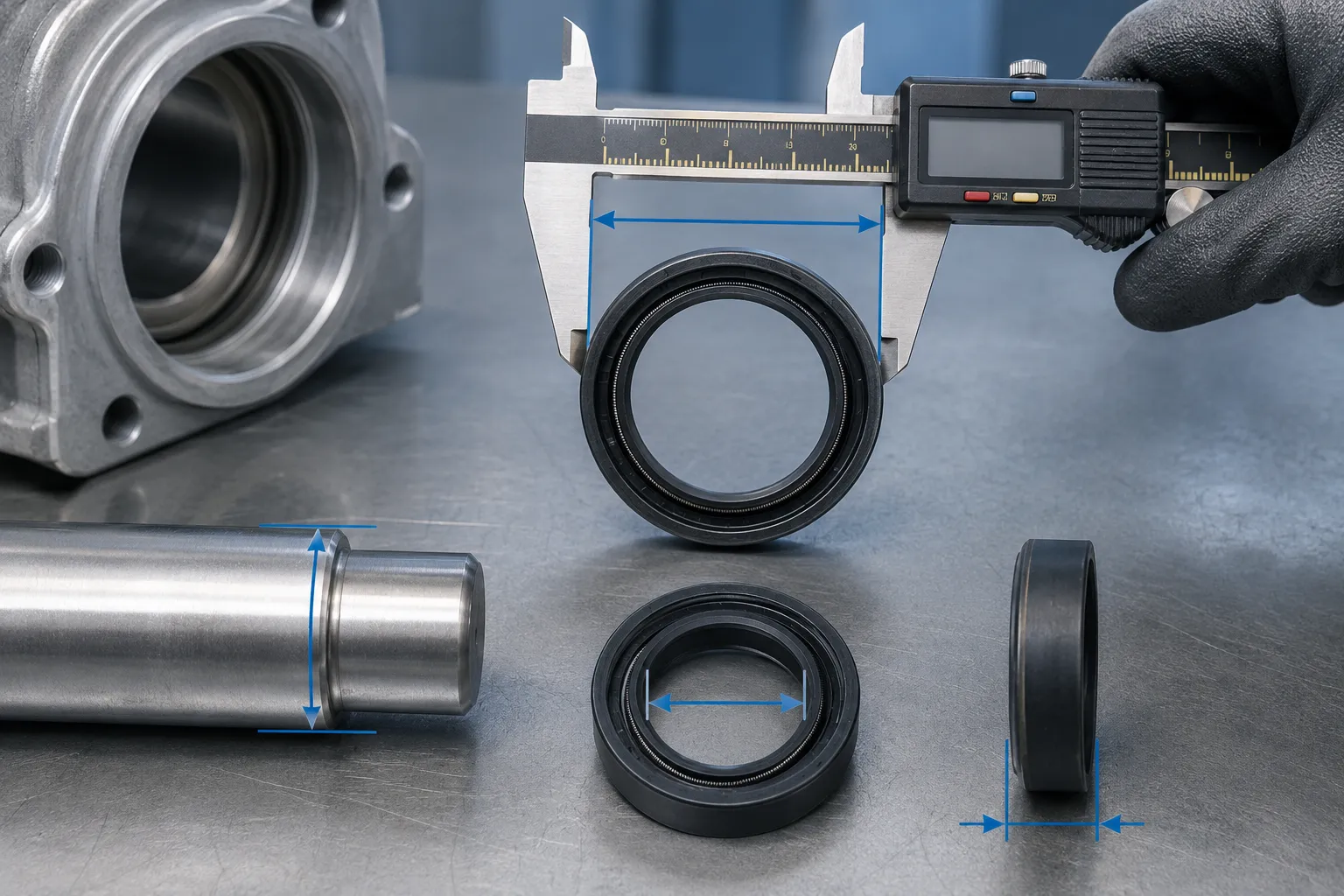
Confirm the Correct Replacement Seal
Confirm:
Inner diameter
Outer diameter
Width
Seal type
Main lip and dust-lip arrangement
Material
Spring type
Outer diameter construction
Fluid compatibility
Temperature requirement
Pressure condition
Shaft speed
Rotation direction, where relevant
Installation depth
OEM reference or supplier drawing
A seal may have the correct dimensions but still be unsuitable because of the wrong material, lip structure, pressure rating, or installation depth.
How to Install an Oil Seal Correctly
The exact procedure depends on the equipment, but the following process is suitable for many standard rotary oil seals.
1. Confirm the Leak Source
Before replacing a seal, make sure the leak is actually coming from the seal.
Fluid can travel along housings, covers, bolts, shafts, wiring, underbody panels, and machine surfaces before it becomes visible.
A wet area near a seal does not always mean the seal is the source.
2. Identify the Fluid Side and Air Side
Confirm which side retains lubricant and which side faces contamination or open air.
Check:
Old seal orientation
Garter spring position
Main lip direction
Dust-lip direction
Product drawing
OEM service manual
Seal markings
Supplier instructions
For a standard oil-retention seal, the main lip normally faces the lubricant.
3. Remove the Old Seal Carefully
Remove the old seal without damaging:
Housing bore
Shaft surface
Bearing seat
Seal groove
Adjacent components
Aluminum housing
Retaining surfaces
Avoid aggressive prying against machined surfaces.
Do not scratch the bore or shaft while removing the old seal.
4. Clean the Shaft and Housing
Clean the shaft, housing bore, seal recess, and nearby components.
Remove:
Dirt
Old sealant
Metal fragments
Rust
Oil sludge
Hardened residue
Abrasive contamination
Burrs
A clean surface helps the seal install squarely and reduces the risk of lip damage.
5. Protect the Seal Lip During Installation
The sealing lip can be damaged by:
Splines
Threads
Keyways
Sharp shaft edges
Burrs
Grooves
Rough lead-in surfaces
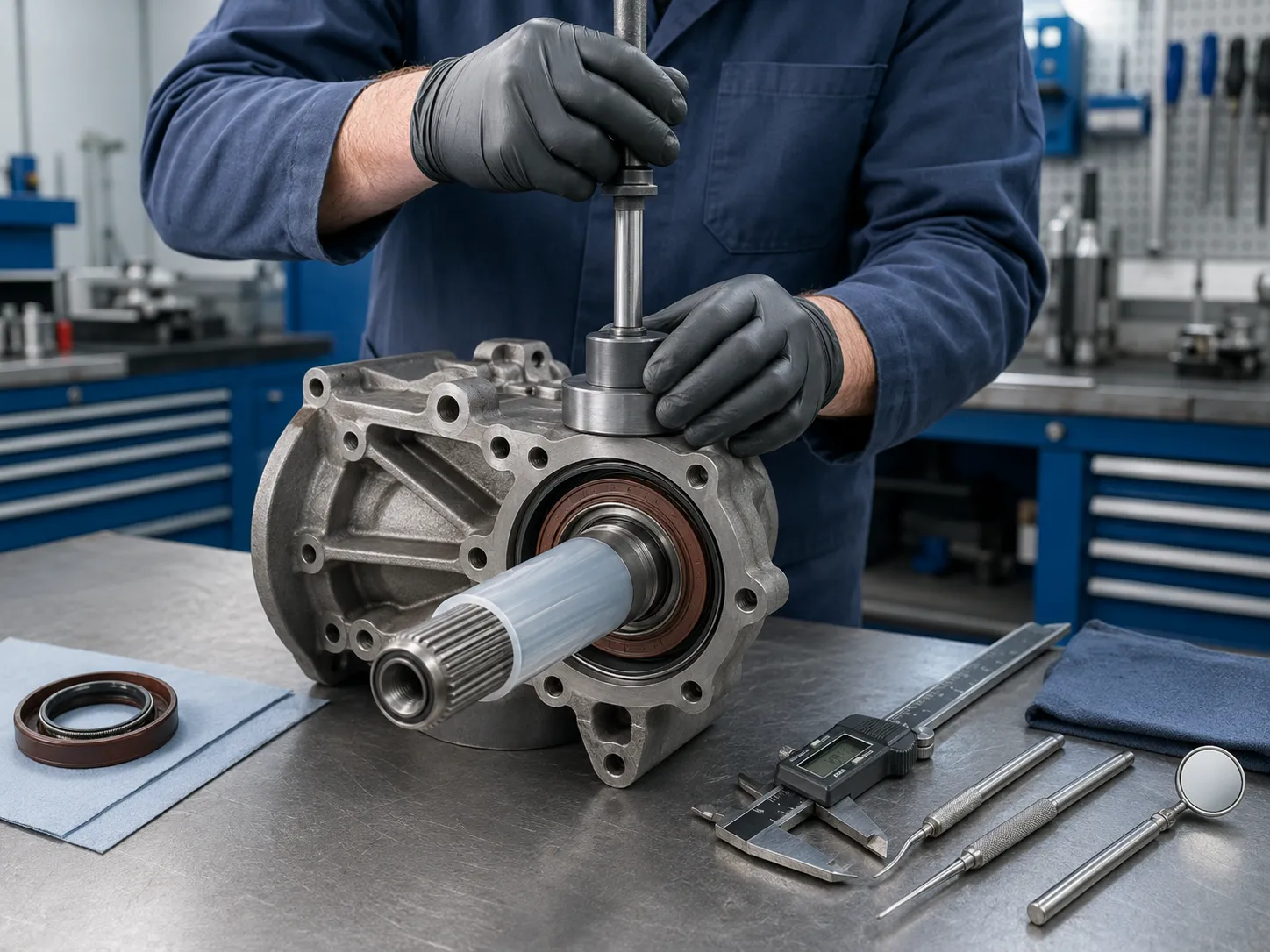
Use an installation sleeve, tape, guide cone, or suitable protective method where needed.
Do not drag the sealing lip directly over sharp features.
6. Lubricate Only as Required
For many standard elastomer oil seals, a light film of compatible lubricant on the sealing lip can help prevent dry running during initial startup.
However, installation requirements vary by seal material and design.
PTFE seals, special coated seals, and certain high-performance seals may have specific lubrication or dry-installation instructions.
Follow the product-specific recommendation rather than applying the same method to every seal.
7. Press the Seal in Squarely
Install the seal with an appropriate driver or installation tool that supports the outer case evenly.
The seal should enter the housing:
Squarely
Evenly
At the correct depth
Without bending the case
Without deforming the lip
Without damaging the spring
Without excessive force
Without striking the lip area
Do not strike the seal directly with a hammer.
Avoid pressing on the inner lip or spring area.
8. Confirm Installation Depth
Some seals must be installed flush with the housing face.
Others must be recessed to a specific depth.
A seal installed too deep or too shallow may:
Contact a worn shaft groove
Miss the correct sealing surface
Interfere with another component
Reduce housing retention
Expose the lip to contamination
Create improper lip position
Check the original depth, drawing, or service procedure before installation.
9. Reassemble and Check After Operation
After reassembly:
Refill the correct lubricant.
Confirm fluid level.
Check breather or vent condition.
Rotate the shaft by hand where appropriate.
Check for interference.
Run the machine or vehicle carefully.
Inspect for fresh leakage.
Recheck after a short operating period.
A correct installation should include a post-repair leak check.
Common Oil Seal Installation Mistakes
Installing the Seal Backward
This is the most obvious direction-related mistake.
The main lip may face away from the lubricant, while the dust lip or outside face points toward the oil.
The seal may fit physically but fail to retain fluid correctly.
Forgetting to Check the Original Orientation
Once the old seal has been removed, it can be difficult to remember which side faced inward.
Always photograph and mark the old seal before removal.
Installing the Seal at the Wrong Depth
A seal installed too deep may run on a worn shaft groove.
A seal installed too shallow may not contact the intended sealing surface.
Correct depth matters as much as correct direction.
Damaging the Lip on Splines or Threads
A new seal may leak immediately if the lip is cut or rolled during shaft installation.
Protect the lip when passing it over splines, keyways, threads, or sharp shaft edges.
Using the Wrong Installation Tool
A driver that presses on the lip, spring, or inner edge can damage the seal.
Use a tool that supports the seal outer case evenly.
Reusing an Old Seal
Oil seals are generally not designed for reuse after removal.
The lip, spring, outer diameter, and case may already be damaged or distorted.
Ignoring Shaft Wear
A new seal cannot repair a grooved, rusted, pitted, or damaged shaft.
Inspect the contact surface before installation.
A shaft repair sleeve, shaft replacement, or different lip position may be required.
Ignoring Bearing Movement
Worn bearings can allow shaft movement that damages a new lip.
If the shaft has excessive play, vibration, or runout, the seal may fail again even when installed correctly.
Ignoring Breather or Pressure Problems
A blocked breather can raise internal pressure and force lubricant past a good seal.
Check vents, breathers, and pressure conditions before replacing a seal.
Using Excessive Sealant
Too much sealant can enter the housing, contaminate the lip area, interfere with seating, or create installation problems.
Use sealant only where the seal design or service procedure requires it.
When Should You Ask for Technical Confirmation?
Technical confirmation is especially important when:
The old seal is missing.
The seal has no visible spring.
The seal is PTFE-based.
The seal has directional markings.
The application has high shaft speed.
The application has internal pressure.
The seal separates two fluids.
The application has severe dust, mud, water, or chemical exposure.
The seal is installed in a heavy-duty wheel end.
The seal is part of a hydraulic pump or motor.
The equipment has repeated seal failure.
The shaft has wear grooves.
The housing is damaged.
The part number is unclear.
The seal is custom or non-standard.
The repair affects a pinion bearing preload or drivetrain setup.
Useful information for confirmation includes:
Old seal photo from both sides
Seal markings
Shaft diameter
Housing bore diameter
Seal width
Application description
Fluid type
Temperature
Pressure
Shaft speed
Rotation direction
Shaft condition
Housing condition
OEM reference
Equipment model
Technical drawing
Conclusion
For most standard spring-loaded oil seals, the main sealing lip and garter spring should face the lubricant side.
This usually means the spring side faces toward the engine oil, transmission fluid, gear oil, gearbox lubricant, bearing grease, or protected fluid cavity.
The auxiliary dust lip usually faces outward toward dirt, dust, water, and contamination.
However, oil seal direction is not always universal.
PTFE seals, grease seals, directional seals, pressure seals, double-media systems, contamination-exclusion seals, and OEM-specific designs may require a different orientation.
The safest installation method is to identify the seal function, photograph the old seal before removal, inspect the spring and lip arrangement, confirm the fluid side, check the supplier drawing or service procedure, and install the seal at the correct depth with the lip protected from sharp edges.
For oil seal selection and installation confirmation, SealVendor can support TC, SC, TB, SB, FKM, NBR, ACM, PTFE, sample-based identification, OEM-reference checks, seal-profile review, and drawing-based custom requirements.