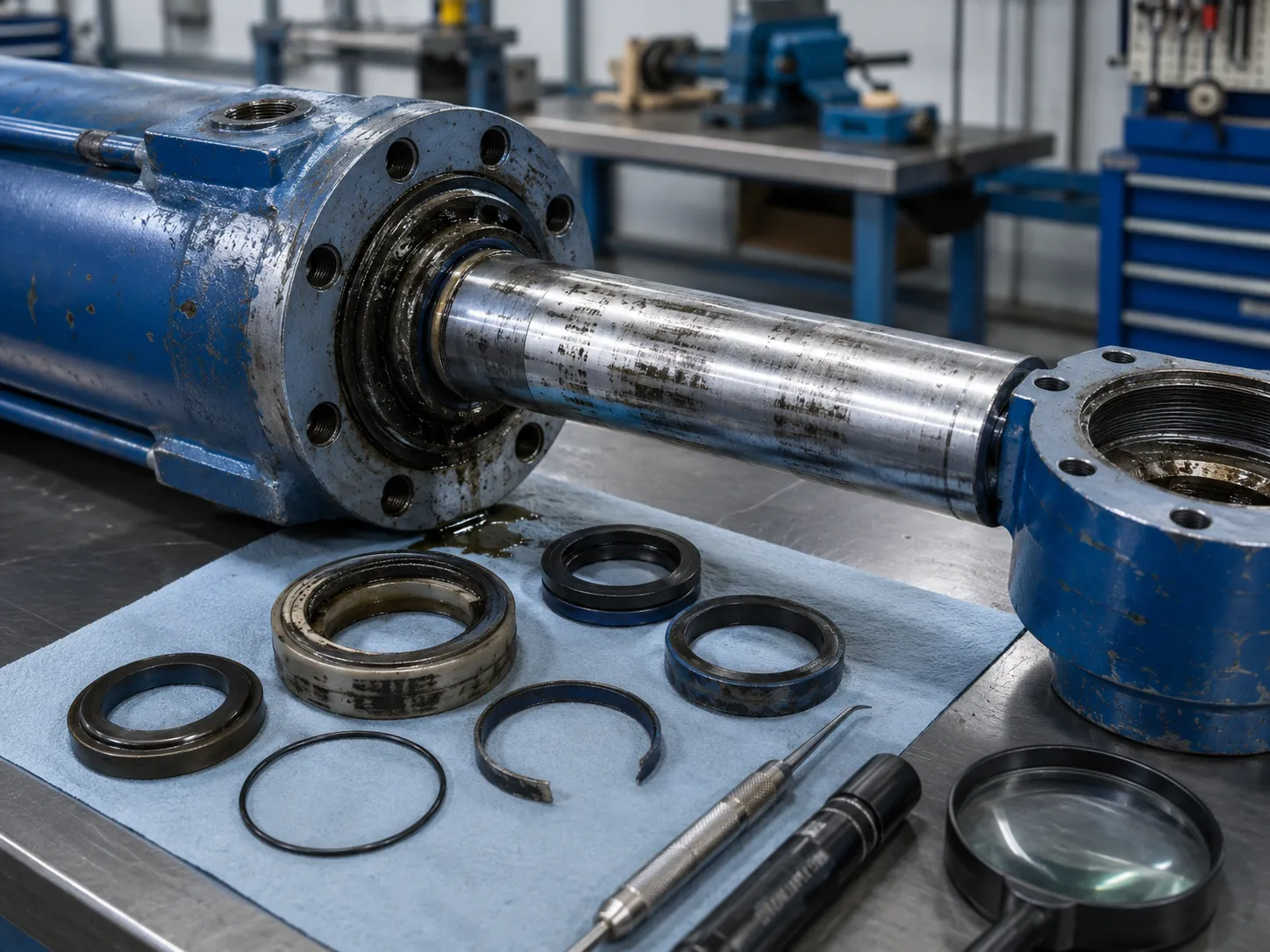
Hydraulic seal failure is often blamed on a damaged seal alone. In reality, the seal is frequently the first visible part to fail rather than the original cause of the problem.
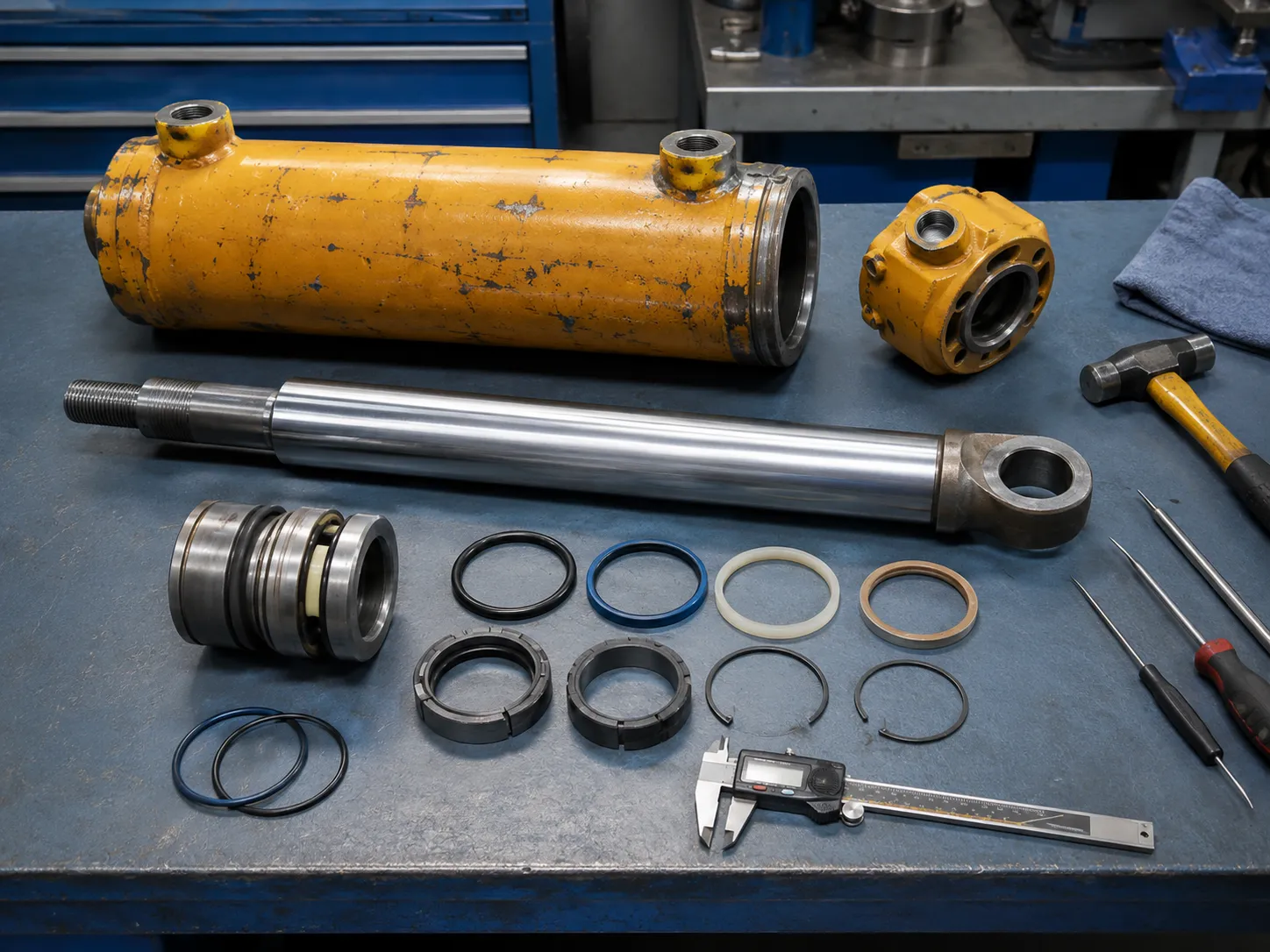
A hydraulic cylinder depends on several components working together: the piston rod, cylinder bore, piston, gland, rod seal, piston seal, wiper, guide rings, hydraulic fluid, pressure system, and mounting arrangement. When one of these parts is worn, contaminated, misaligned, overheated, or incorrectly assembled, the seals may begin to leak or wear prematurely.
A leaking rod seal is one common sign of failure, but not every hydraulic seal problem creates visible fluid outside the cylinder. Internal leakage across a piston seal can reduce holding force, cause cylinder drift, lower efficiency, or create slow and uneven movement without leaving a visible puddle.
This guide explains why hydraulic seals fail, how to identify common wear patterns, and what should be checked before replacing a hydraulic cylinder seal kit.
What Are Hydraulic Seals and How Do They Fail?
Hydraulic seals are used in hydraulic cylinders and related fluid-power equipment to control pressurized hydraulic fluid.
A hydraulic cylinder commonly uses several different sealing and guiding components:
Rod seal
Piston seal
Wiper or scraper seal
Buffer seal
Static seal
O-ring
Backup ring
Guide ring or wear ring
Cylinder gland seal
Piston wear band
Each component has a different function.
A rod seal helps prevent hydraulic fluid from leaking out along the piston rod.
A piston seal helps prevent pressurized fluid from bypassing across the piston inside the cylinder.
A wiper helps remove dust, dirt, water, and debris from the rod before contamination enters the cylinder.
Guide rings and wear rings help guide the rod and piston, reduce metal-to-metal contact, and support the cylinder under side loads.
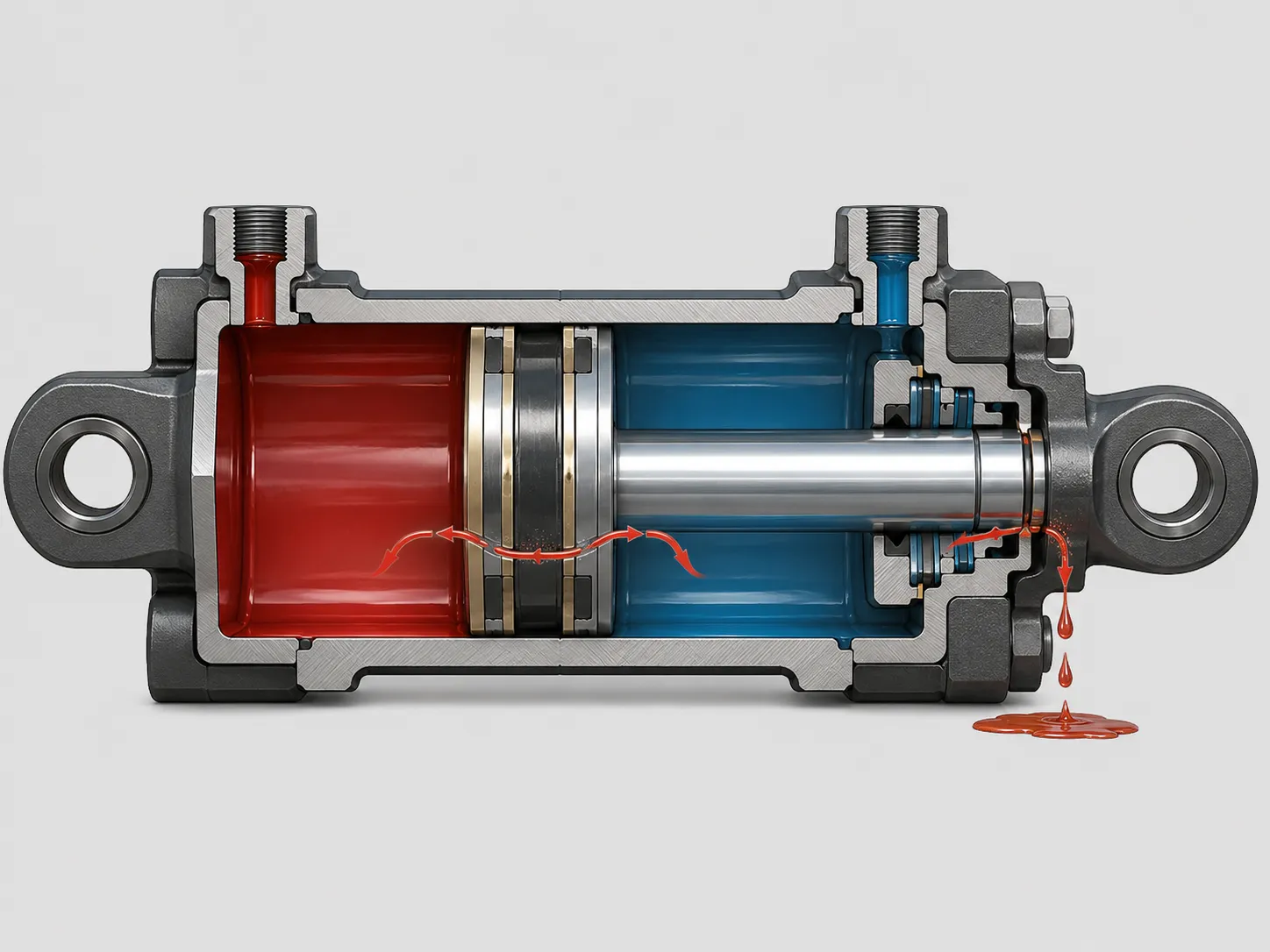
Hydraulic seals can fail in two main ways:
External Leakage
External leakage occurs when hydraulic fluid escapes from the cylinder to the outside environment.
Common examples include:
Oil leaking around the piston rod
Fluid around the gland area
Leakage from cylinder ports
Oil escaping from static O-ring locations
Fluid collecting on the cylinder body or machine frame
External leakage is usually easier to see, but it can still be difficult to diagnose because fluid may travel along the cylinder, hose, machine arm, or frame before dripping.
Internal Leakage
Internal leakage occurs when hydraulic fluid bypasses a seal inside the cylinder.
For example, fluid may leak across the piston seal from one side of the piston to the other. This can reduce cylinder force, cause slow movement, create uneven motion, or allow the cylinder to drift under load.
Internal leakage may not leave visible oil outside the cylinder.
A hydraulic cylinder can appear clean from the outside but still have reduced performance because the piston seal, cylinder bore, piston wear ring, or internal sealing arrangement is worn or damaged.
Common Causes of Hydraulic Seal Failure
1. Contaminated Hydraulic Fluid
Contamination is one of the most common causes of hydraulic seal failure.
Dirt, metal particles, sand, water, rust, fibers, damaged filter material, and other debris can circulate through the hydraulic system. These particles may scratch the piston rod, score the cylinder bore, damage the sealing lip, and accelerate wear on seals and guide rings.
Contamination can enter the system through:
Damaged or worn wiper seals
Dirty hydraulic fluid
Poor filtration
Contaminated reservoir breather systems
Improper repair procedures
Open hydraulic lines during maintenance
Dirty replacement parts
Water ingress
Damaged hoses or fittings
Internal wear from pumps, valves, or bearings
A small particle can create a scratch in the rod or bore. Once the surface is damaged, the seal may continue to wear even after replacement.
Signs of contamination-related failure may include:
Scored piston rods
Scratched cylinder bores
Torn sealing lips
Fine lines or grooves on seals
Dirty hydraulic fluid
Metallic particles in the fluid
Repeated seal failure
Worn or damaged wipers
Replacing seals without correcting contamination can lead to another failure soon after repair.
2. Damaged Piston Rod or Cylinder Bore
Hydraulic seals rely on smooth and correctly finished contact surfaces.
The piston rod must provide a suitable surface for the rod seal and wiper. The cylinder bore must provide a suitable surface for piston seals and guide rings.
Common surface damage includes:
Rod scoring
Rust or corrosion
Pitting
Chrome damage
Scratches from debris
Dents or impact damage
Rough machining marks
Wear grooves
Cylinder bore scoring
Burrs or sharp edges
A rough surface can cut or wear the seal lip. A surface that is excessively smooth may also create lubrication problems in some seal systems.
A damaged piston rod may repeatedly destroy rod seals and wipers. A scored cylinder bore may quickly wear piston seals and allow internal bypass.
Before installing a new seal kit, inspect the full rod stroke area rather than checking only the visible end of the rod.
3. Side Loading, Misalignment, and Excessive Rod Movement
Hydraulic seals are designed to operate with a properly guided piston rod and piston.
When a cylinder is exposed to side loading, bent mounting points, poor alignment, worn pins, worn bushings, loose bearings, or excessive lateral movement, the rod and piston can move unevenly inside the cylinder.
This can create concentrated load on one side of the seal.
Possible results include:
Uneven seal wear
Rod seal extrusion
Wiper damage
Guide-ring wear
Piston seal damage
Increased friction
Rod scoring
Cylinder bore wear
External leakage
Internal bypass
Side loading is common in heavy-duty machinery, construction equipment, agricultural equipment, lifting systems, presses, articulated machinery, and cylinders with worn pivots or mounting hardware.
A new seal kit may not last if the rod, piston, gland, guide rings, pins, mounts, or external machine alignment problems are not corrected.
4. Excessive Pressure, Pressure Spikes, and Seal Extrusion
Hydraulic seals must withstand normal operating pressure, but sudden pressure spikes or excessive clearance gaps can force seal material into the space between metal components.
This is commonly known as extrusion.
Repeated extrusion can remove small pieces of material from the seal edge. This wear pattern is sometimes called nibbling.
Extrusion risk can increase when:
System pressure is too high
Pressure spikes occur repeatedly
The seal material is too soft for the application
The clearance gap is too large
Backup rings are missing or damaged
The cylinder bore is worn
The piston or gland is not properly supported
The wrong seal profile is used
The cylinder is exposed to shock loading
Signs of extrusion may include:
Torn edges on the seal
Small pieces missing from the seal
Feathered or chewed seal lips
Material pushed into a clearance gap
Repeated failure on the pressure side of the seal
Leakage after high-load operation
A pressure-related failure should not be solved by simply installing the same seal again. The pressure condition, hardware clearance, backup-ring requirement, and seal profile should be reviewed.
5. High Temperature and Heat Aging
High temperature can shorten hydraulic seal life.
Heat may come from normal operating conditions, sustained high pressure, friction, poor cooling, fluid degradation, incorrect viscosity, restricted flow, excessive cycle speed, or nearby heat sources.
When a seal operates beyond the suitable temperature range, the material may:
Harden
Crack
Shrink
Lose elasticity
Soften
Swell
Deform
Lose sealing force
Wear more quickly
Heat-related failure may be more likely in:
Heavy-duty mobile equipment
High-cycle industrial machinery
Presses
Injection molding equipment
Mining equipment
Construction equipment
High-pressure hydraulic systems
Machinery operating near engines or heat sources
The hydraulic fluid itself should also be checked. Fluid that is overheated, degraded, oxidized, contaminated, or incorrect for the system can accelerate seal wear.
6. Incompatible Hydraulic Fluid or Incorrect Material Selection
Hydraulic seal material must be compatible with the actual hydraulic fluid and operating environment.
A material that performs well with one fluid may swell, soften, shrink, harden, crack, or lose strength when exposed to another fluid, additive package, temperature range, or chemical environment.
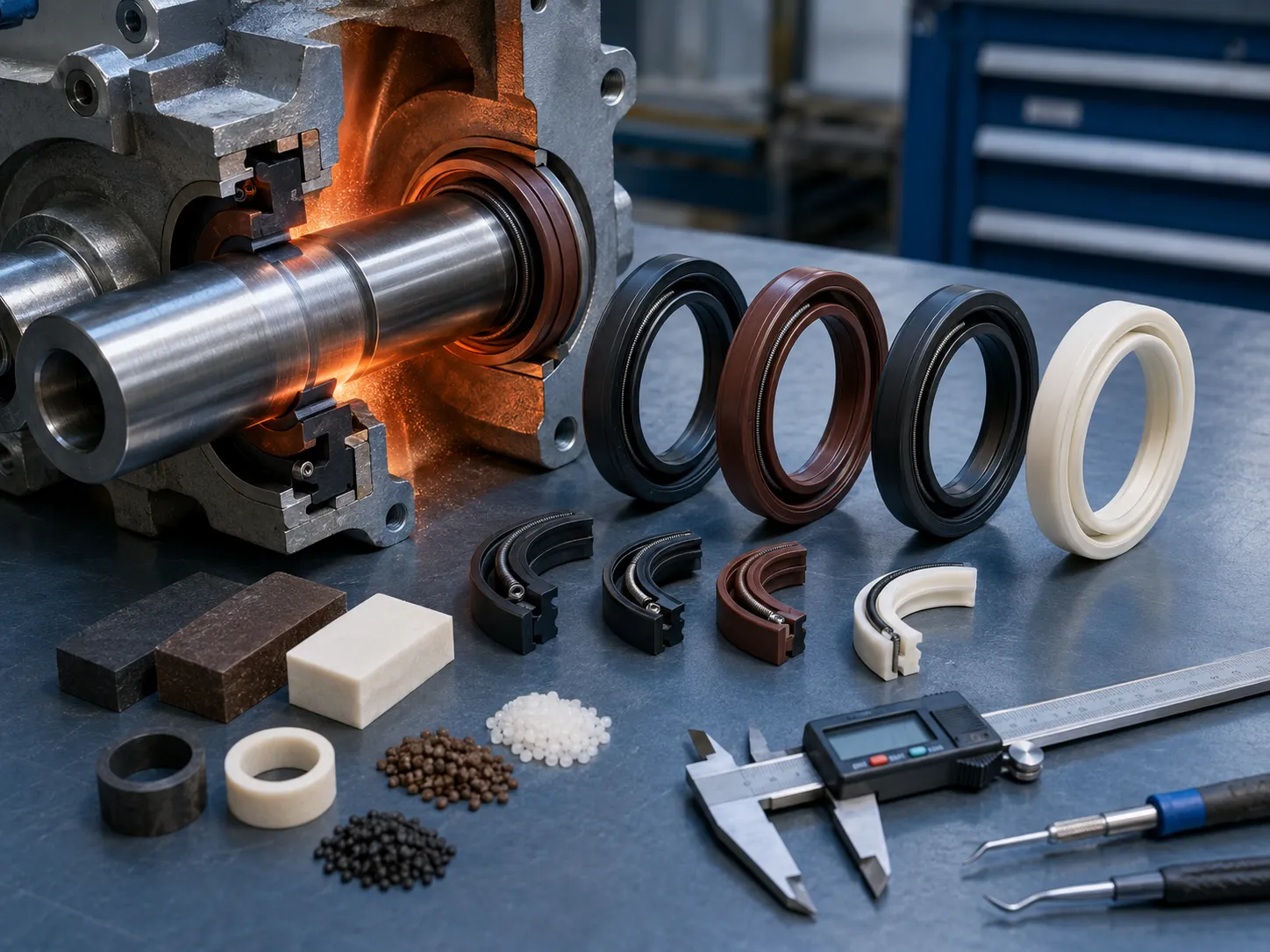
Common hydraulic sealing materials include:
NBR
HNBR
FKM
PU
PTFE
POM
Fabric-reinforced rubber
Thermoplastic elastomers
Other engineered polymer materials
The correct material depends on:
Hydraulic fluid type
Mineral oil or synthetic fluid
Water-glycol fluid
Phosphate ester fluid
Biodegradable hydraulic fluid
Operating temperature
Pressure level
Speed
Cylinder design
Cold-start conditions
Chemical exposure
Contamination risk
For example, a seal material suitable for standard mineral hydraulic oil may not be suitable for high-temperature synthetic fluid or a special fire-resistant fluid.
Material selection should be based on the complete application rather than only on price or a general “high temperature” label.
7. Improper Seal Installation
A hydraulic seal can be damaged before the cylinder is returned to service.
Installation problems may include:
Twisting the seal
Cutting the sealing lip
Pinching the seal
Stretching the seal too far
Installing the seal backward
Damaging the seal on threads, ports, edges, or grooves
Installing the wrong seal in the wrong groove
Using sharp tools without protection
Failing to lubricate components when required
Using excessive or incompatible grease
Installing seals into dirty grooves
Forcing a seal into place
Damaging backup rings
Installing the piston or gland without a proper guide sleeve
A seal may look acceptable after assembly but fail quickly during the first few cycles.
Correct installation tools, clean components, chamfered edges, protected threads, correct lubrication, and accurate groove identification are important for hydraulic seal life.
8. Worn or Damaged Wipers
The wiper is one of the first protective barriers in a hydraulic cylinder.
Its job is to remove dust, dirt, water, mud, and debris from the piston rod as the rod retracts into the cylinder.
When the wiper is damaged, worn, hardened, loose, or incorrectly installed, contamination can enter the gland area and cylinder.
A damaged wiper can lead to:
Rod seal wear
Cylinder bore scoring
Contaminated hydraulic fluid
Corrosion near the gland
Increased internal wear
Shortened piston seal life
Repeat seal-kit failures
A wiper should not be treated as an optional accessory. In exposed applications, such as construction, agriculture, mining, forestry, marine equipment, waste handling, and mobile machinery, wiper condition is especially important.
9. Poor Surface Finish or Incorrect Hardware Dimensions
Seal performance depends on more than the seal itself.
The rod diameter, bore diameter, groove dimensions, extrusion gap, chamfer, surface finish, and installation space all affect sealing performance.
Common hardware-related problems include:
Incorrect groove dimensions
Excessive extrusion gap
Sharp groove edges
Damaged gland bore
Oversized cylinder bore
Worn piston
Incorrect seal compression
Poor surface finish
Inadequate lead-in chamfer
Misaligned gland
Incorrect rod diameter
Improper seal depth
A seal may fail even when it is made from the correct material if it is installed in a groove that does not match the seal design.
For replacement work, compare the new seal kit with the original components and confirm that the gland, piston, and cylinder hardware remain within usable condition.
10. Poor Maintenance and Delayed Repair
Hydraulic systems often show warning signs before a major failure.
A light rod-seal seep, damaged wiper, dirty fluid, scored rod, slow cylinder movement, or irregular drift should be inspected before it develops into a larger repair.
Ignoring early warning signs can allow contamination and surface damage to spread through the system.
Poor maintenance practices may include:
Running with dirty hydraulic fluid
Ignoring damaged wipers
Delaying rod repair
Reusing damaged seals
Operating with incorrect fluid
Skipping filter replacement
Ignoring abnormal heat
Ignoring cylinder drift
Continuing operation after external leakage becomes active
Installing a seal kit without inspecting the rod and bore
Using a cylinder with excessive side loading
A hydraulic seal kit is not always the complete repair. The rod, bore, piston, gland, guide rings, wiper, and hydraulic fluid condition may all need attention.
Common Hydraulic Seal Wear Signs
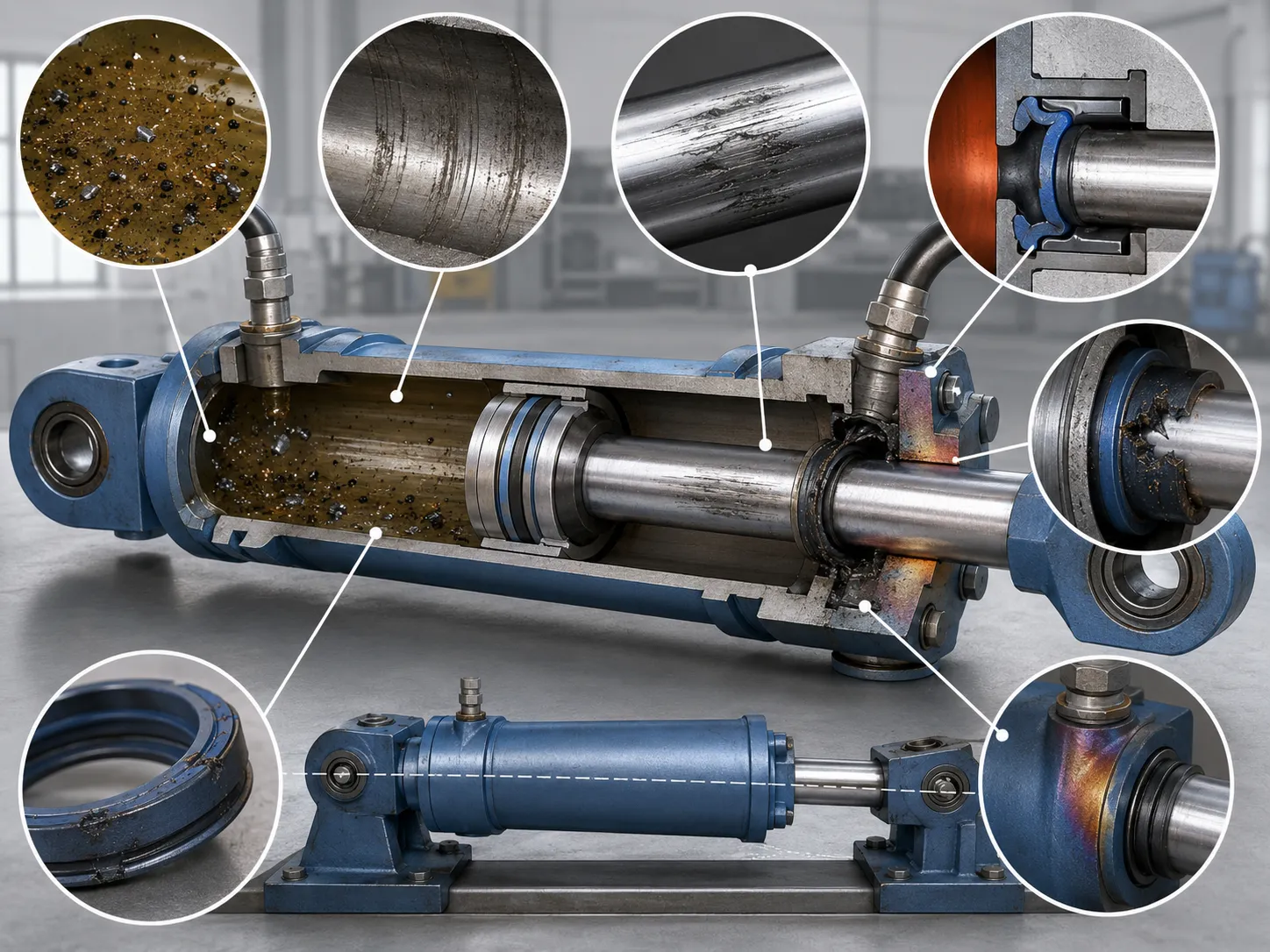
Hydraulic seal failure does not always look the same.
The visible wear pattern can provide clues about the underlying cause.
External Fluid Leakage Around the Rod
Fluid around the piston rod or gland area often points to a rod seal, buffer seal, wiper, gland, or rod-surface problem.
Possible causes include:
Worn rod seal
Damaged rod surface
Rod corrosion
Side loading
High pressure
Incorrect seal material
Improper installation
Damaged gland
Contamination under the sealing lip
A small oil film may not always indicate immediate failure. However, repeated dripping, fluid accumulation, or contamination around the rod should be inspected.
Cylinder Drift or Loss of Holding Force
A cylinder that slowly moves under load may have internal leakage across the piston seal.
However, cylinder drift can also be caused by valve leakage, control problems, or other hydraulic circuit issues.
Possible signs include:
Boom or lift arm drifting down
Press losing holding force
Cylinder retracting or extending slowly under load
Reduced ability to maintain position
Increased cycle time
Lower available force
A proper diagnosis should confirm whether the issue is inside the cylinder or elsewhere in the hydraulic circuit.
Slow, Weak, or Uneven Cylinder Movement
Slow or inconsistent movement can indicate internal leakage, damaged seals, contamination, air in the system, restricted flow, fluid problems, or valve issues.
Possible symptoms include:
Jerky cylinder movement
Cylinder hesitation
Reduced lifting force
Uneven extension or retraction
Delayed response
Increased heat
Reduced production speed
Hydraulic seal failure may be one cause, but it should not be assumed without checking the complete system.
Scoring on the Rod or Cylinder Bore
Scratches, lines, grooves, or visible damage on the rod or bore are important warning signs.
A damaged rod can destroy a new rod seal during the first operating cycles. A scored bore can wear piston seals and guide rings rapidly.
Common causes include:
Dirt or abrasive contamination
Damaged wiper
Corrosion
Side loading
Bent rod
Poor maintenance
Metal particles in fluid
Previous repair damage
Damaged Wiper or Dirt at the Gland Area
A damaged wiper may allow contamination to enter the cylinder.
Signs include:
Cracked or missing wiper material
Dirt trapped around the rod
Mud around the gland
Rust on the retracting rod area
Water trapped near the seal housing
Scratches beginning near the rod entry point
The wiper, rod seal, and rod surface should be inspected together.
Torn, Extruded, or Hardened Seals
When a cylinder is disassembled, the physical condition of the old seals can help identify the cause of failure.
Common signs include:
Seal Condition | Possible Cause |
|---|---|
Torn or cut lip | Installation damage, sharp edges, contamination, rod damage |
Extruded edge | High pressure, excessive clearance, missing backup ring |
Hardened material | Excessive heat, aging, fluid incompatibility |
Swollen material | Fluid incompatibility, chemical exposure |
Cracked surface | Heat aging, ozone exposure, material deterioration |
Uneven wear | Side loading, misalignment, bent rod, guide-ring wear |
Fine scratches | Contamination, rough rod or bore surface |
Flattened profile | Compression set, poor material choice, long-term heat exposure |
The failed seal should be examined before it is discarded. Its condition may show whether the main issue is pressure, contamination, temperature, fluid compatibility, installation, or mechanical damage.
How to Diagnose Hydraulic Seal Failure
Hydraulic systems operate under high pressure. Before inspection or disassembly, follow the equipment manufacturer’s safety procedure, isolate the system, release stored pressure correctly, and support loads securely.
A practical diagnosis should focus on both the seal and the surrounding hardware.
Step 1: Identify Whether the Problem Is External or Internal
Check whether hydraulic fluid is visible outside the cylinder.
If external leakage is present, identify whether it comes from:
Rod seal area
Gland seal
Port fitting
Hose connection
Static O-ring
Weld seam
Cylinder head
Valve or manifold connection
If there is no visible leakage but the cylinder drifts, loses force, or moves unevenly, check for possible internal bypass or circuit-related issues.
Step 2: Clean the Cylinder and Observe Fresh Leakage
Old oil and dirt can make leak diagnosis difficult.
Clean the rod, gland, cylinder body, ports, hoses, and surrounding structure. Operate the equipment carefully and inspect for fresh fluid.
Fresh leakage is more useful than old oily dirt when identifying the true source.
Step 3: Inspect the Piston Rod Through Its Full Stroke Area
Check the rod for:
Scratches
Pitting
Chrome peeling
Corrosion
Dents
Weld spatter
Dirt buildup
Wear bands
Bent rod condition
Damage near the rod end
Inspect the full usable stroke area, not only the part visible when the cylinder is fully retracted.
A damaged rod can quickly destroy a new seal.
Step 4: Inspect the Wiper and Gland Area
Check whether the wiper is damaged, loose, hardened, cracked, or missing.
Look for dirt, water, rust, or debris around the gland area.
A damaged wiper may be the first sign that contamination has entered the cylinder.
Step 5: Check for Side Loading and Worn Guide Components
Inspect cylinder mounts, pins, bushings, linkage points, rod-end bearings, and external alignment.
Look for:
Loose pins
Oval mounting holes
Excessive linkage movement
Bent brackets
Uneven wear marks
Rod movement under load
Repeated seal failure on one side of the cylinder
Also inspect guide rings and wear bands during disassembly. Worn guide components can allow the rod or piston to contact metal surfaces and overload the seals.
Step 6: Review Fluid Condition, Filtration, and Temperature
Check hydraulic fluid for:
Dirt
Water
Metallic particles
Foam
Burnt odor
Darkened appearance
Incorrect viscosity
Incorrect fluid type
Also review filter condition, reservoir cleanliness, breather condition, and operating temperature.
A seal failure caused by contaminated or degraded fluid may return unless the fluid and filtration problem are corrected.
Step 7: Inspect the Failed Seal and Confirm the Replacement Specification
Before ordering a replacement seal kit, inspect the removed seals and confirm:
Rod diameter
Cylinder bore diameter
Seal groove dimensions
Piston and gland dimensions
Seal profile
Seal material
Backup-ring requirement
Wiper type
Buffer seal requirement
Guide-ring condition
Hydraulic fluid type
Operating temperature
Maximum operating pressure
Application environment
A seal kit should be selected for the actual cylinder design and service condition, not only by cylinder model or approximate dimensions.
How to Prevent Hydraulic Seal Failure
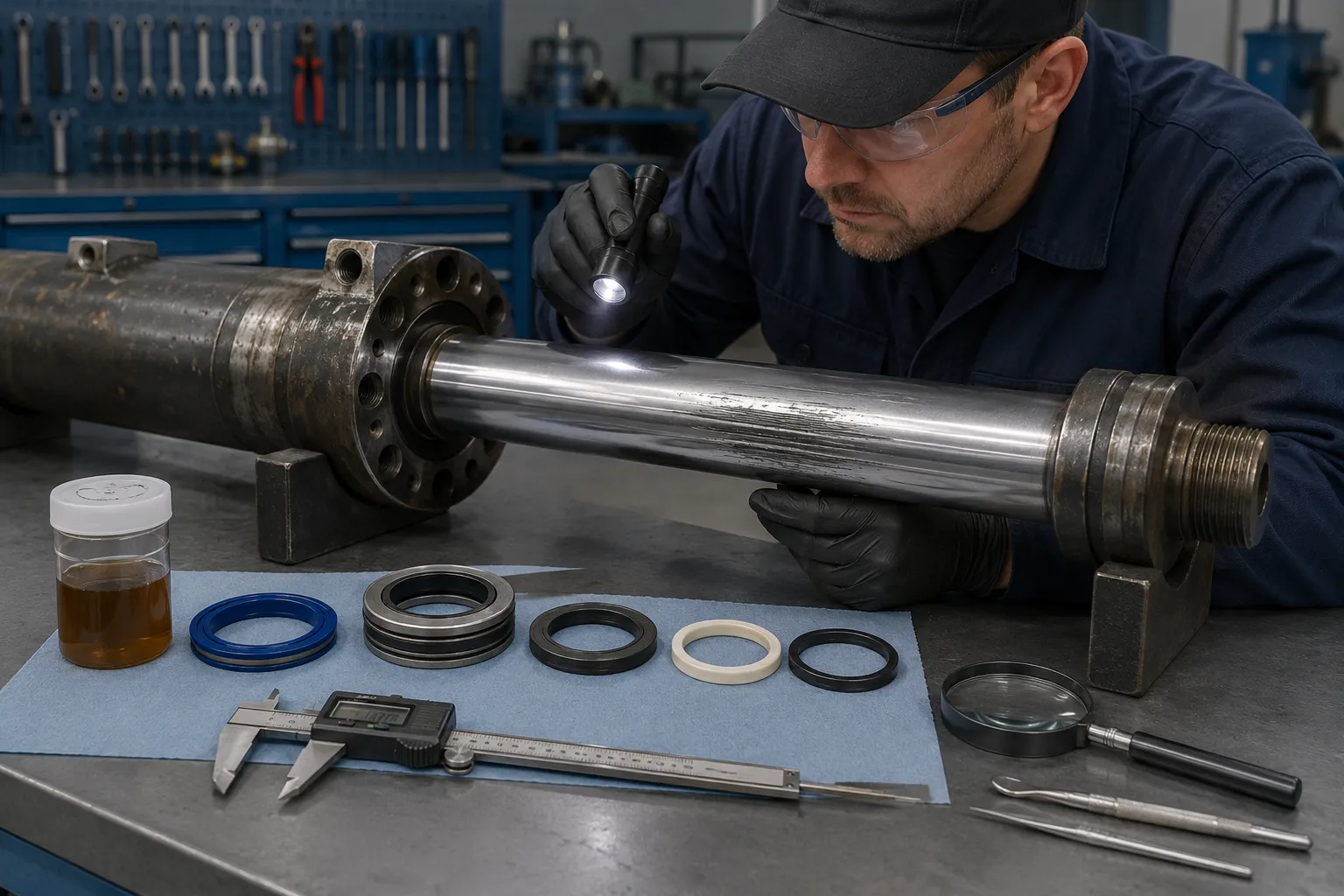
The best prevention strategy addresses the full hydraulic cylinder system.
Keep Hydraulic Fluid Clean
Use the correct filtration and maintenance practices for the equipment.
Keep reservoirs clean, protect open hydraulic lines during service, replace damaged breathers, and avoid introducing dirt during maintenance.
Clean fluid helps protect seals, rods, bores, pumps, valves, and other hydraulic components.
Replace Damaged Wipers Early
A damaged wiper can allow contamination to enter before the rod seal visibly fails.
Inspect wipers regularly, especially on outdoor, mobile, dirty, wet, dusty, or high-cycle equipment.
Inspect Piston Rods Before Installing New Seals
Check the rod for corrosion, grooves, scratches, peeling chrome, and impact damage.
A new rod seal should not be installed over a severely damaged sealing surface without repairing or replacing the rod.
Check Guide Rings, Wear Bands, and Mounting Condition
Guide rings and wear bands help prevent side loading and metal-to-metal contact.
Replace worn guide components when necessary and inspect pins, bushings, rod ends, brackets, and mounting points for movement or misalignment.
Select the Correct Seal Material and Profile
Match the seal material and design to:
Hydraulic fluid
Operating temperature
Pressure
Speed
Cylinder type
Application environment
Contamination risk
Required service life
Rod and bore condition
A standard NBR or polyurethane seal may be suitable for many mineral-oil hydraulic systems. More demanding applications may require HNBR, FKM, PTFE, reinforced materials, special wipers, buffer seals, or anti-extrusion support.
Control Pressure Spikes and Excessive Heat
Review the hydraulic system when seals show extrusion, hardening, repeated damage, or pressure-side failure.
Possible areas to inspect include:
Relief valve setting
Pressure spikes
Shock loads
Cylinder sizing
Load condition
Flow restriction
Fluid temperature
Cooling system
Backup-ring requirement
Hardware clearances
A seal replacement alone will not correct a system that regularly exceeds the cylinder’s intended operating condition.
Use Correct Installation Procedures
Before installation:
Clean all components thoroughly
Remove sharp edges and burrs
Confirm correct seal orientation
Protect seals from threads and ports
Use suitable installation tools
Lubricate seals and mating surfaces when required
Avoid twisting or overstretching seals
Confirm groove cleanliness
Install backup rings and guide rings in the correct position
After reassembly:
Confirm correct fluid level
Bleed air according to the equipment procedure where required
Check for smooth operation
Inspect for fresh leakage after initial cycling
Recheck after a short operating period
When Should Hydraulic Seals Be Replaced?
Hydraulic seals should be replaced when leakage, internal bypass, visible seal wear, rod damage, contamination, or loss of cylinder performance has been confirmed.
Replacement should be arranged promptly when:
External leakage becomes active or continuous
Fluid is dripping from the rod seal area
Cylinder drift affects safety or machine accuracy
The cylinder loses holding force
The rod is visibly damaged
The wiper is missing or severely worn
Hydraulic fluid is contaminated
Seal fragments are found in the system
The cylinder operates unevenly or overheats
A related cylinder repair already requires disassembly
The equipment is used in safety-critical lifting, holding, steering, or load-control work
A seal kit replacement may be sufficient for a cylinder with clean fluid, undamaged hardware, and normal alignment.
However, rod repair, bore repair, guide-ring replacement, wiper replacement, gland repair, or broader hydraulic system maintenance may be required when the root cause is mechanical or contamination-related.
How to Choose the Right Hydraulic Seal Kit
Before ordering a hydraulic seal kit, confirm more than the cylinder diameter.
Useful information includes:
Cylinder manufacturer and model
Bore diameter
Rod diameter
Stroke length
Piston design
Gland design
Existing seal sample
Seal kit part number
Hydraulic fluid type
Operating temperature
Maximum pressure
Machine application
Cylinder mounting arrangement
Exposure to dust, mud, water, chemicals, or heat
Rod condition
Bore condition
Whether buffer seals, backup rings, or special wipers are required
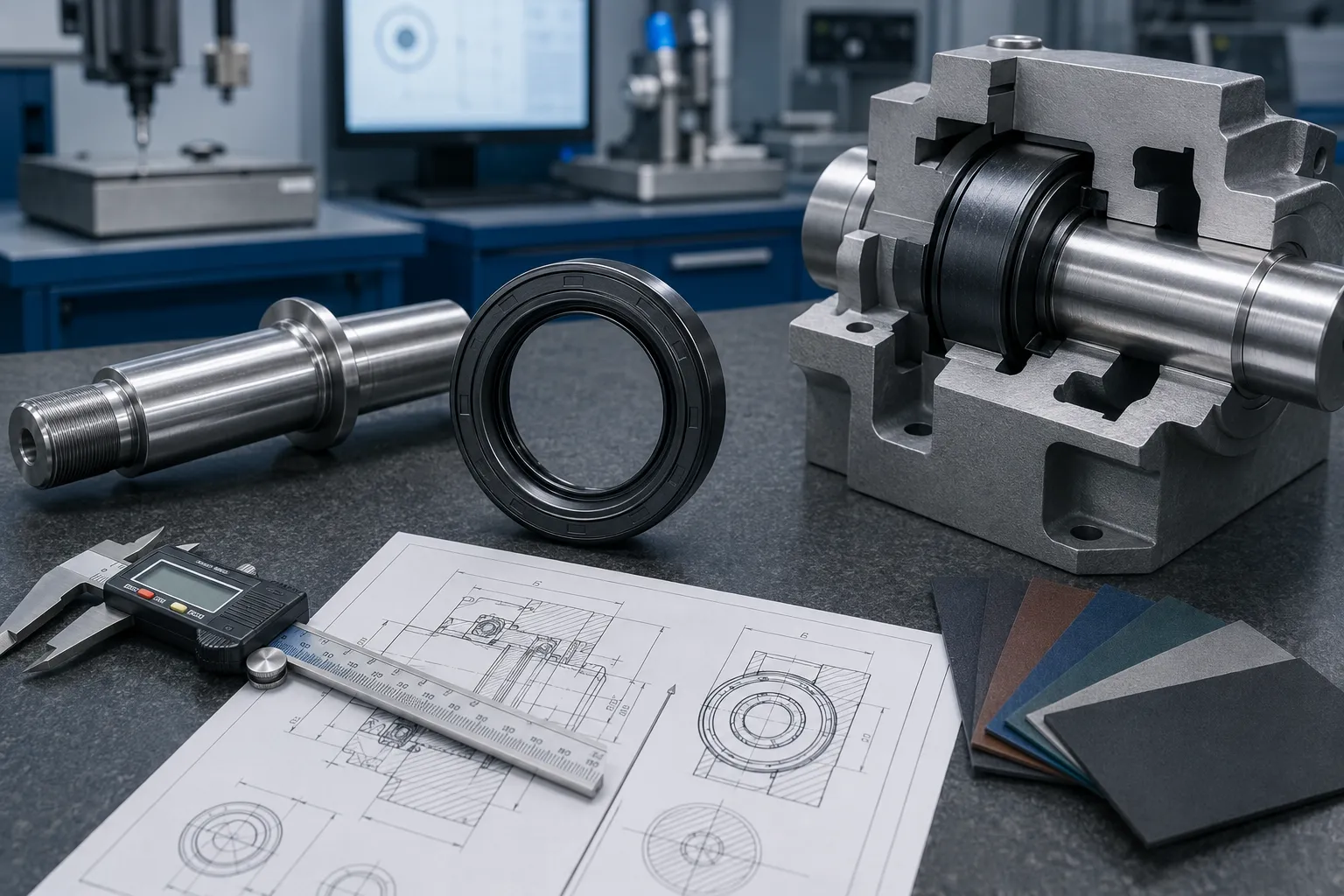
For non-standard cylinders, a seal sample, gland drawing, piston drawing, or full dimensional measurement may be required.
Two cylinders with similar bore and rod dimensions can still use different seal profiles, groove designs, materials, and installation arrangements.
Conclusion
Hydraulic seals fail for many reasons, including contamination, damaged rods or bores, side loading, pressure spikes, excessive heat, fluid incompatibility, poor installation, worn wipers, incorrect hardware dimensions, and delayed maintenance.
Visible external leakage is one warning sign, but internal leakage can also reduce holding force, create cylinder drift, and cause weak or uneven movement without producing a visible puddle.
The most reliable repair is not simply replacing the seal kit. It involves identifying the root cause, checking the rod and cylinder bore, inspecting guide rings and wipers, reviewing hydraulic fluid condition, confirming pressure and alignment, and selecting the correct replacement seal profile and material.
For hydraulic seal selection, SealVendor can support rod seals, piston seals, wipers, buffer seals, guide rings, hydraulic seal kits, material matching, sample-based identification, OEM-reference checks, and drawing-based custom sealing requirements.