A transmission oil seal leak can look simple from the outside, but the repair cost can vary widely. Some seals are located near axle shafts, output shafts, selector shafts, or transmission pans and may be relatively accessible. Others, such as an input shaft seal or front pump seal, may require transmission removal before replacement.
For this reason, the seal itself is often one of the least expensive parts of the repair. Labor time, transmission fluid, related gaskets, drivetrain access, and the condition of nearby components usually have a much greater effect on the final cost.
This guide explains the typical cost factors behind transmission oil seal replacement, the difference between common seal locations, and how to choose the correct replacement seal before repair work begins.
What Is a Transmission Oil Seal?
A transmission oil seal is a rotary or static sealing component that helps retain transmission fluid inside the transmission while allowing shafts, axles, or other components to move or rotate.
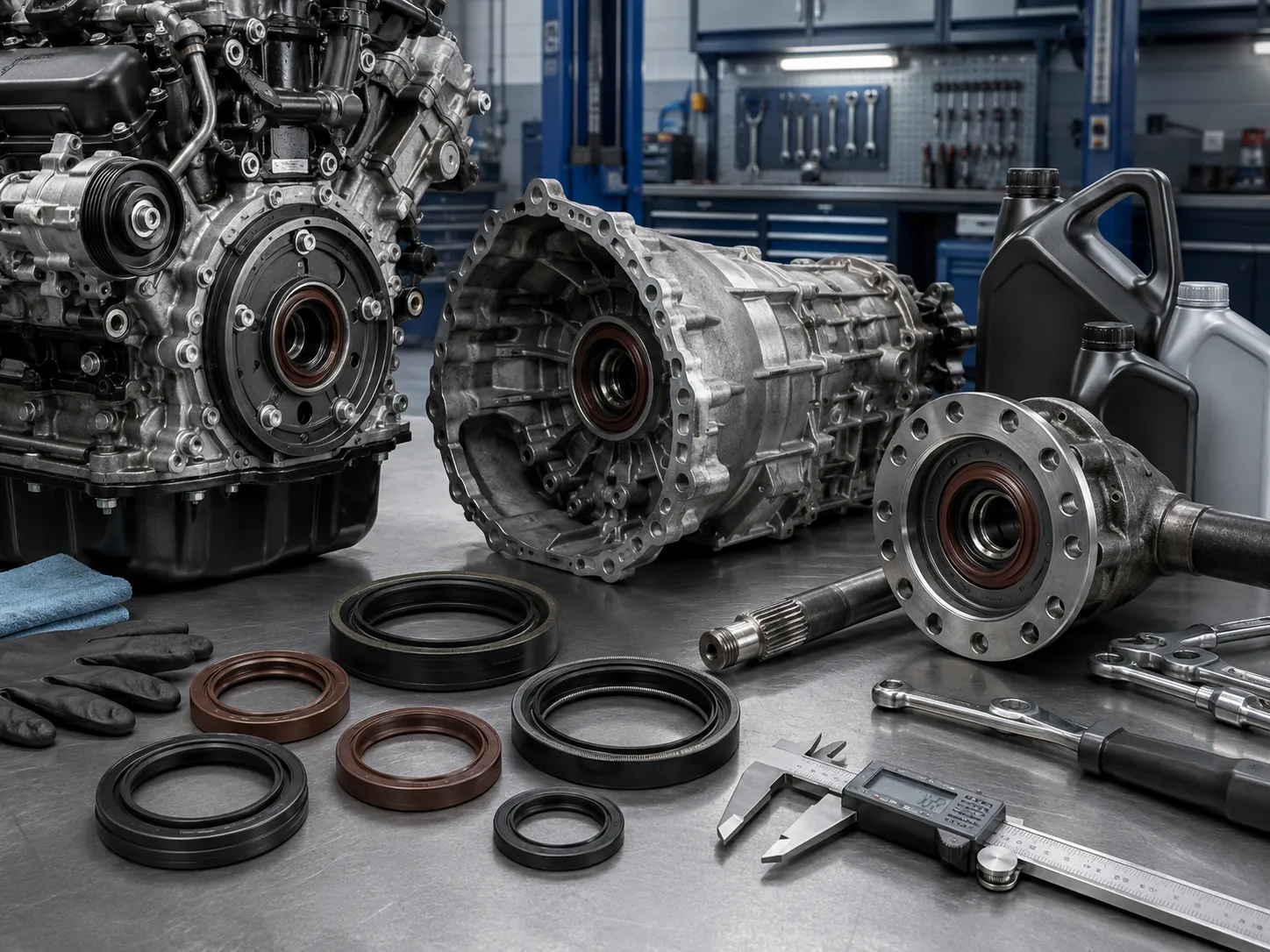
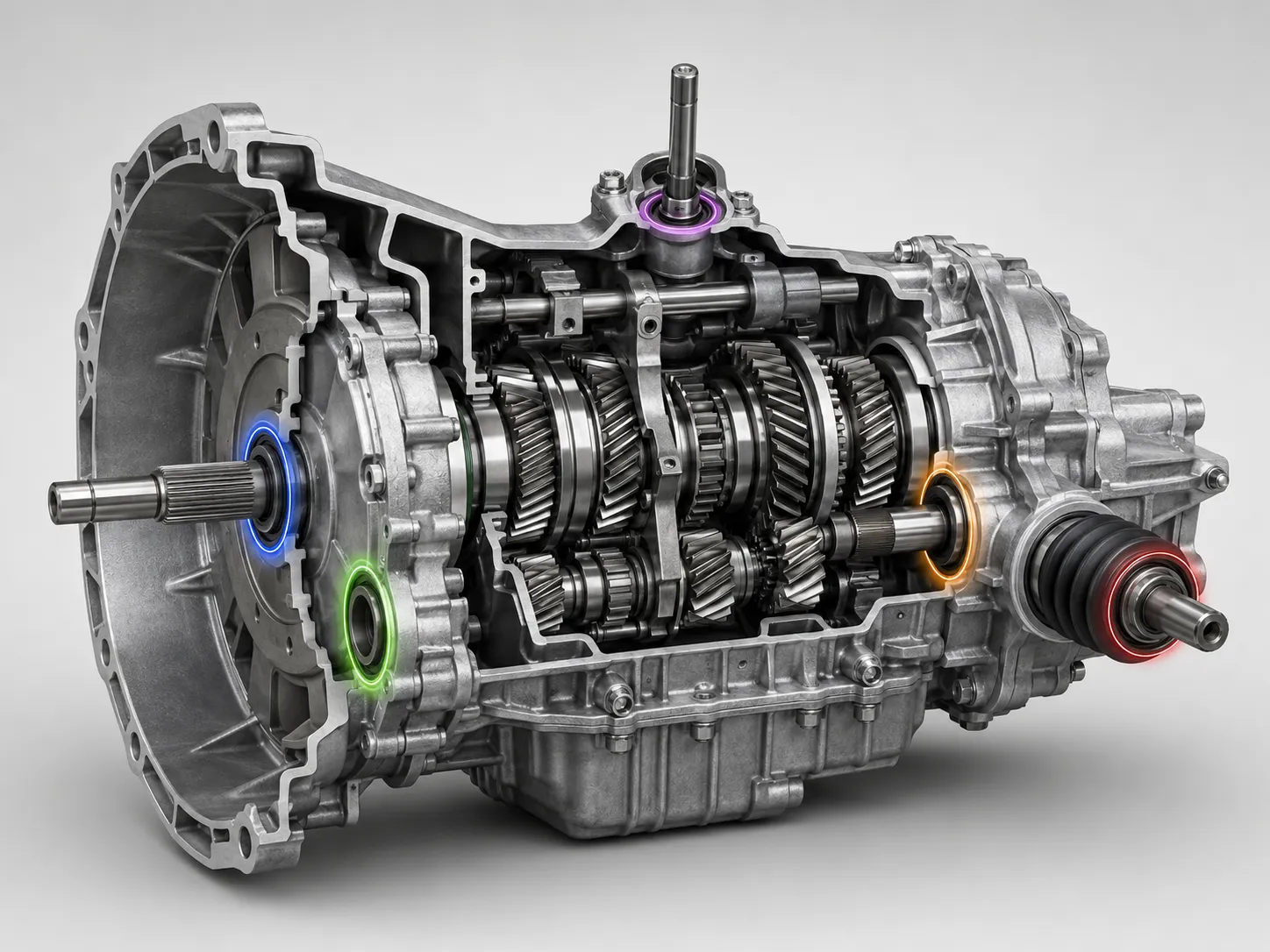
Depending on the transmission design, a vehicle may use several different seals, including:
Input shaft seal
Front pump seal
Output shaft seal
Axle seal
Driveshaft seal
Selector shaft seal
Torque converter seal
Transmission pan gasket or sealing gasket
Extension housing seal
Transfer case output seal on four-wheel-drive vehicles
These seals are important because transmission fluid supports lubrication, cooling, hydraulic pressure, and gear operation. When fluid leaks from a worn or damaged seal, the transmission may lose fluid over time and eventually develop shifting problems, overheating, or internal wear.
Typical Transmission Oil Seal Replacement Cost
Transmission oil seal replacement cost depends mainly on seal location and access difficulty.
For a relatively accessible external seal, such as some axle, output shaft, or selector shaft seals, the total repair cost may often fall in the range of approximately $150 to $600.
For a transmission pan gasket or pan sealing repair, the total cost may often be around $200 to $500, depending on the vehicle, fluid type, filter service, and labor rate.
For a transmission input shaft seal, front pump seal, or torque converter seal, the total repair cost may often be much higher—commonly $700 to $2,000 or more—because the transmission may need to be removed to reach the seal.
These are broad guide ranges, not fixed prices. Actual cost depends on the vehicle, transmission type, location, labor rate, parts availability, fluid requirements, and whether other repairs are needed.
Seal or Repair Type | Typical Access Level | Typical Parts Cost | Broad Total Repair Range |
|---|---|---|---|
Axle seal or output shaft seal | Often moderate | Usually low | Approx. $150–$600 |
Selector shaft seal | Often moderate | Usually low | Approx. $150–$500 |
Transmission pan gasket | Usually accessible from below | Low to moderate | Approx. $200–$500 |
Input shaft seal or front pump seal | High labor requirement | Usually low to moderate | Approx. $700–$2,000+ |
Torque converter seal | High labor requirement | Usually low to moderate | Approx. $700–$2,000+ |
Transfer case output seal | Varies by drivetrain | Low to moderate | Approx. $200–$800+ |
The replacement seal may cost far less than the labor needed to access it. This is especially true when the transmission must be removed.
Why Labor Costs Matter More Than Seal Cost
A transmission oil seal is often a low-cost component. However, the labor required to access it can be substantial.
For example, an axle seal may be reached after removing the wheel, brake components, axle assembly, or related suspension parts. A transmission pan gasket may require draining fluid, removing the pan, replacing the filter if required, and refilling the transmission with the correct fluid.
By contrast, an input shaft seal, front pump seal, or torque converter seal may require removal of the transmission. On some vehicles, this may also involve removing driveshafts, crossmembers, exhaust components, transfer case parts, transmission mounts, electrical connections, cooling lines, and other drivetrain components.
The same replacement seal can therefore have very different repair costs depending on where it is installed.
Common Transmission Seal Types and Their Replacement Cost Factors
Input Shaft Seal or Front Pump Seal
The input shaft seal is located near the front of the transmission, where the transmission connects to the engine. In many automatic transmissions, this area is associated with the front pump and torque converter.
This seal may be difficult to access because the transmission typically needs to be removed before repair. For this reason, the labor cost can be high even though the seal itself is inexpensive.
Replacement may also include:
Transmission removal and installation
Torque converter inspection
Front pump inspection
Transmission fluid replacement
Transmission filter service
Cooling line inspection
Flexplate or flywheel inspection
Transmission mount inspection
Output Shaft Seal
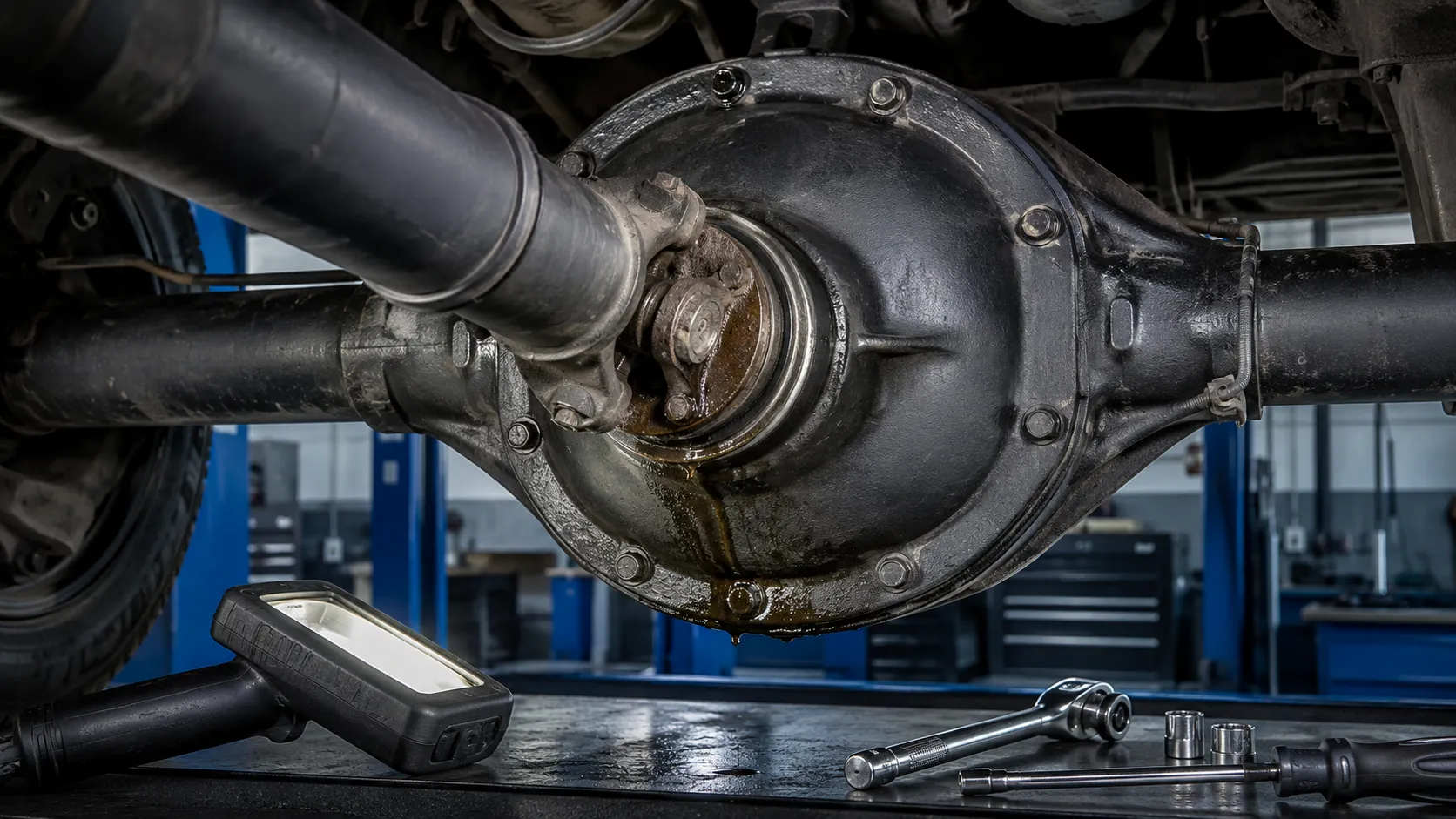
An output shaft seal is generally located near the rear or side of the transmission where power is transferred to the driveshaft, axle, or transfer case.
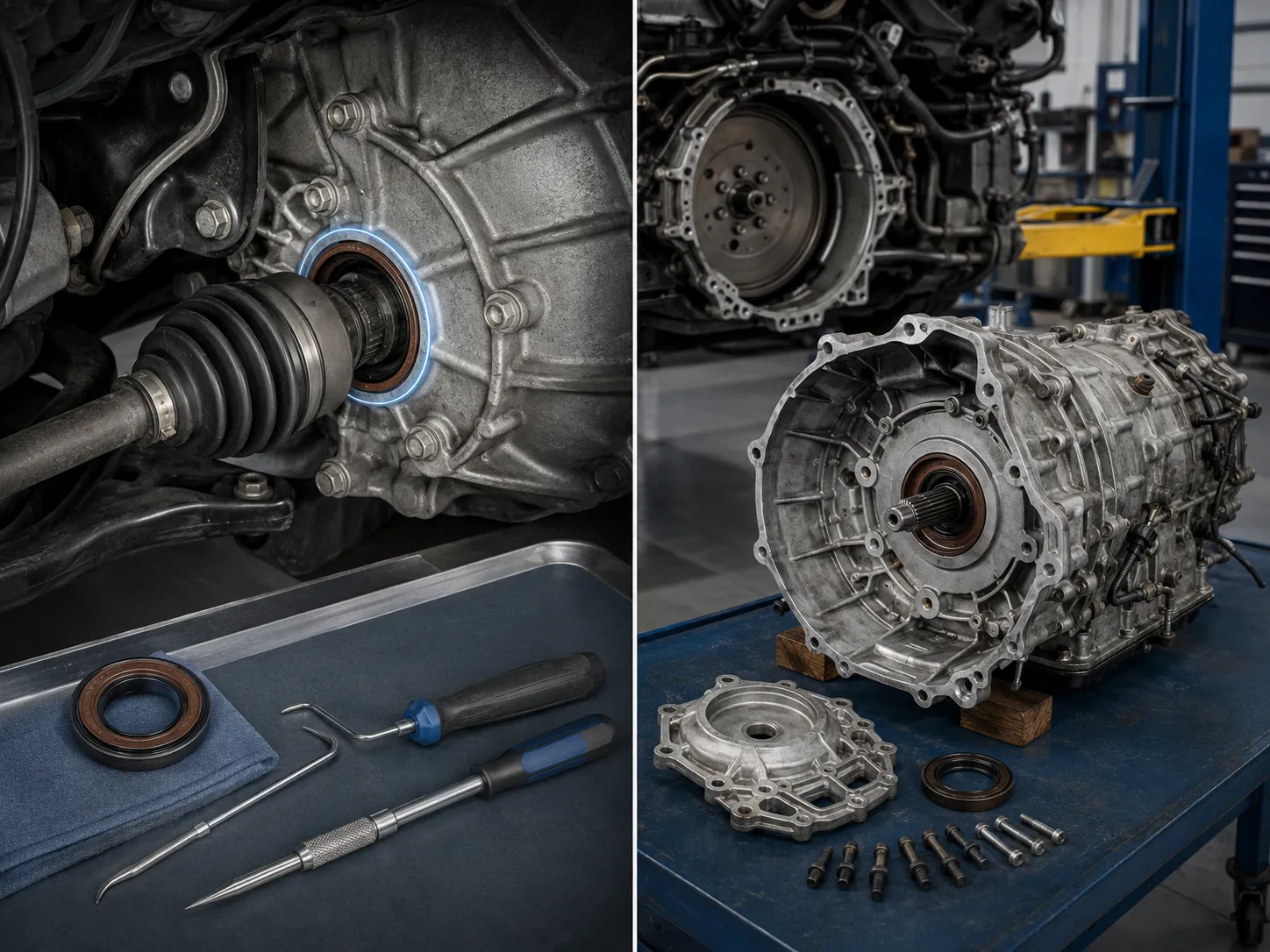
On some rear-wheel-drive vehicles, the output shaft seal may be accessible after removing the driveshaft. On front-wheel-drive vehicles, related axle seal work may require removing the axle shaft and related suspension or steering components.
The cost is usually lower than an input shaft seal replacement, but it still depends on drivetrain layout and access.
Axle Seal
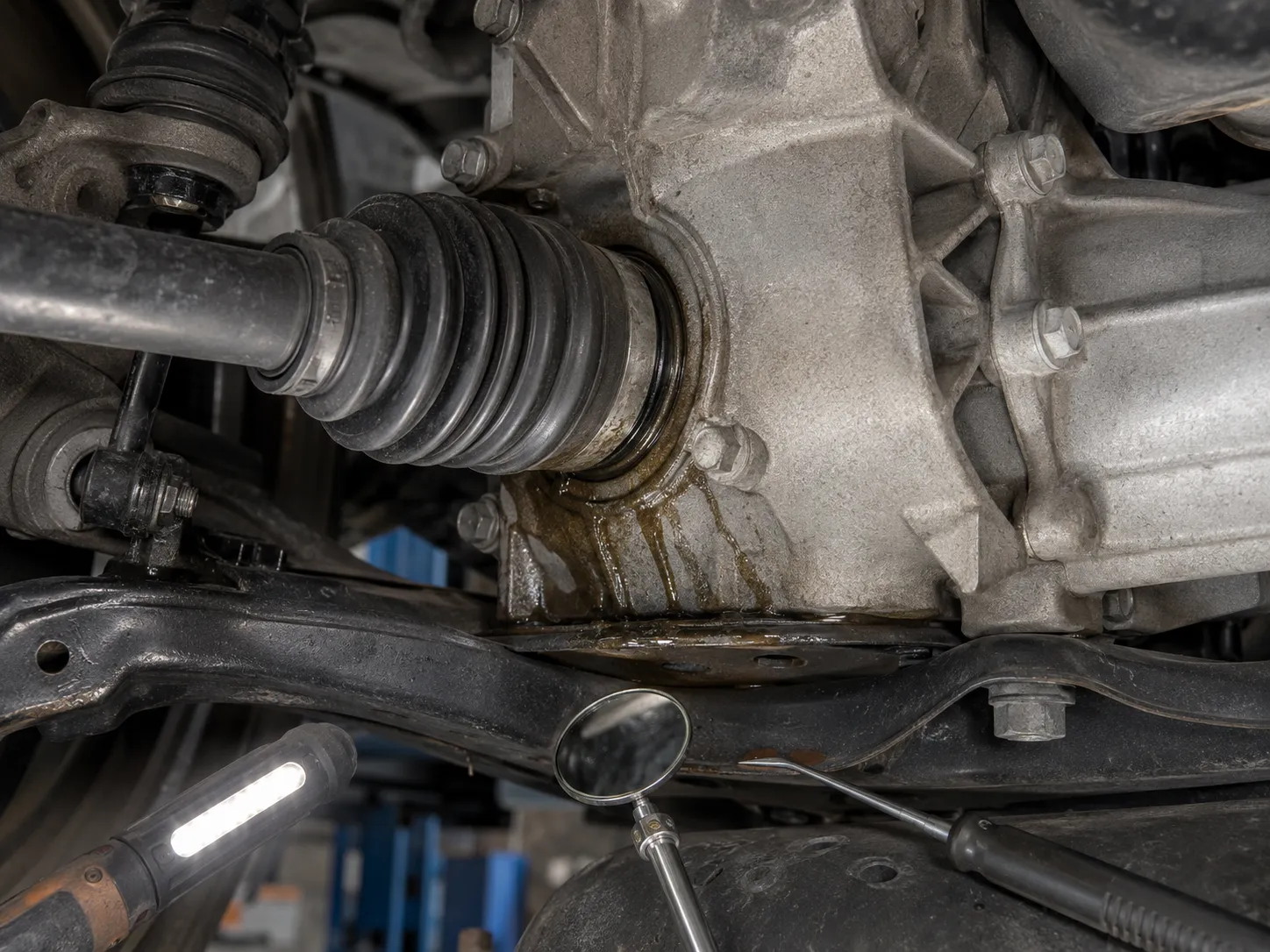
Axle seals are commonly used where axle shafts enter the transmission or transaxle housing. A damaged axle seal may cause transmission fluid to leak near the inner CV joint or axle connection.
Repair cost can vary depending on whether the axle must be removed, whether the axle is worn, and whether the transmission fluid needs to be replaced or topped up.
If the axle shaft surface is damaged, grooved, or corroded, replacing the seal alone may not prevent another leak.
Selector Shaft Seal
The selector shaft seal is installed where the shift linkage enters the transmission housing. It can leak due to aging, shaft movement, wear, or damage around the selector shaft.
This repair may be less labor-intensive than input or output seal replacement, but access can still vary by vehicle. In some cases, shift linkage parts or brackets may need to be removed.
Transmission Pan Gasket
A leaking transmission pan gasket is not always technically an oil seal, but it is one of the most common transmission fluid leak sources.
The repair may require draining the fluid, removing the transmission pan, cleaning the sealing surface, installing a new gasket, replacing the filter if applicable, and refilling the transmission with the correct fluid.
The final cost can increase if the pan is damaged, bolts are stripped, the transmission filter needs replacement, or the vehicle uses a specialized transmission fluid.
What Affects Transmission Oil Seal Replacement Cost?
Leak Location
The location of the leak is often the biggest cost factor.
An external seal that can be reached from underneath the vehicle may require much less labor than a seal located between the engine and transmission.
Before approving repairs, confirm whether the leak is from an axle seal, output seal, input seal, pan gasket, selector shaft seal, cooler line connection, or another transmission component.
Vehicle Make, Model, and Drivetrain Layout
Transmission design varies significantly between vehicles.
A compact front-wheel-drive vehicle, rear-wheel-drive truck, all-wheel-drive SUV, four-wheel-drive pickup, hybrid vehicle, or performance car may all require different repair procedures.
Vehicles with limited working space, transverse engines, transfer cases, complex subframes, or all-wheel-drive systems may require more labor to access the transmission seal.
Manual, Automatic, CVT, or Dual-Clutch Transmission
Different transmission types use different seals, fluid systems, housings, and repair procedures.
Automatic transmissions may involve torque converter seals, front pump seals, valve body areas, cooling lines, and hydraulic pressure systems. Manual transmissions may use input shaft, output shaft, and selector shaft seals. CVT and dual-clutch transmissions may have more specialized parts and fluid requirements.
The correct seal should always be matched to the specific transmission type and application.
Labor Rate and Repair Location
Labor rates vary by country, region, repair shop type, dealership pricing, and vehicle complexity.
A labor-intensive repair can cost much more in an area with higher shop rates. This is why quotes for the same seal replacement may differ significantly between repair shops.
Transmission Fluid and Filter Service
Transmission fluid is often lost during seal replacement. Some repairs require only a small top-up, while others may require a partial fluid service or a full refill.
The cost can increase when the vehicle requires:
OEM-specified transmission fluid
High-performance or specialized fluid
CVT fluid
Dual-clutch transmission fluid
Transmission filter replacement
Transmission pan gasket replacement
Fluid cooler line service
Using the wrong fluid can affect transmission performance, so the recommended fluid specification should always be confirmed.
Shaft or Housing Damage
A replacement seal may continue leaking if the sealing surface is worn, grooved, scratched, corroded, or out of round.
The shaft, axle stub, output flange, or housing bore should be inspected before installation. If the sealing surface is damaged, additional repair may be needed.
Possible solutions may include a repair sleeve, shaft replacement, housing repair, or correction of misalignment.
Related Parts and Repairs
The final repair cost can increase if nearby components are worn, damaged, or already removed during access work.
Common related items include:
Transmission fluid
Transmission filter
Transmission pan gasket
Axle shaft
CV joint boot
Driveshaft components
Torque converter
Clutch components
Flywheel or flexplate
Transmission mount
Transfer case seals
Cooler lines
Shift linkage components
It is not necessary to replace every nearby part automatically. However, replacing worn or oil-contaminated parts during the same repair may reduce future labor costs.
Transmission Oil Seal Leak Symptoms
A transmission oil seal leak may cause several warning signs:
Red, reddish-brown, or dark fluid under the vehicle
Wet fluid around axle shafts, driveshafts, or transmission housing areas
Transmission fluid level dropping over time
Burning fluid smell
Delayed engagement when shifting into gear
Slipping or rough shifting
Whining, humming, or unusual transmission noise
Fluid on underbody components or near the exhaust system
Not every transmission fluid leak comes from a seal. Pan gaskets, cooler lines, drain plugs, sensor seals, fill plugs, electrical connectors, and case seams can also leak.
Cleaning the area and identifying the exact source is important before ordering a replacement seal.
Is It Safe to Drive With a Transmission Oil Seal Leak?
A minor transmission fluid seep may not require immediate emergency repair, but it should be monitored closely. Transmission fluid level should be checked according to the vehicle manufacturer’s procedure.
A heavier leak should be repaired as soon as possible. Low transmission fluid can affect lubrication, hydraulic pressure, cooling, and gear engagement. Continued driving with low fluid can lead to slipping, overheating, internal clutch damage, or transmission failure.
Driving should be avoided when:
Fluid is dripping heavily
The transmission fluid level is low
The transmission slips or delays engagement
A warning light appears
Burning smell or smoke is present
The vehicle has difficulty shifting
Fluid is reaching hot exhaust components
When Should a Transmission Oil Seal Be Replaced?
A transmission oil seal should be replaced when the leak source has been confirmed and the seal is no longer able to retain fluid properly.
Replacement is also recommended if the seal is damaged during transmission service, axle removal, driveshaft work, clutch replacement, torque converter service, transfer case repair, or transmission rebuild work.
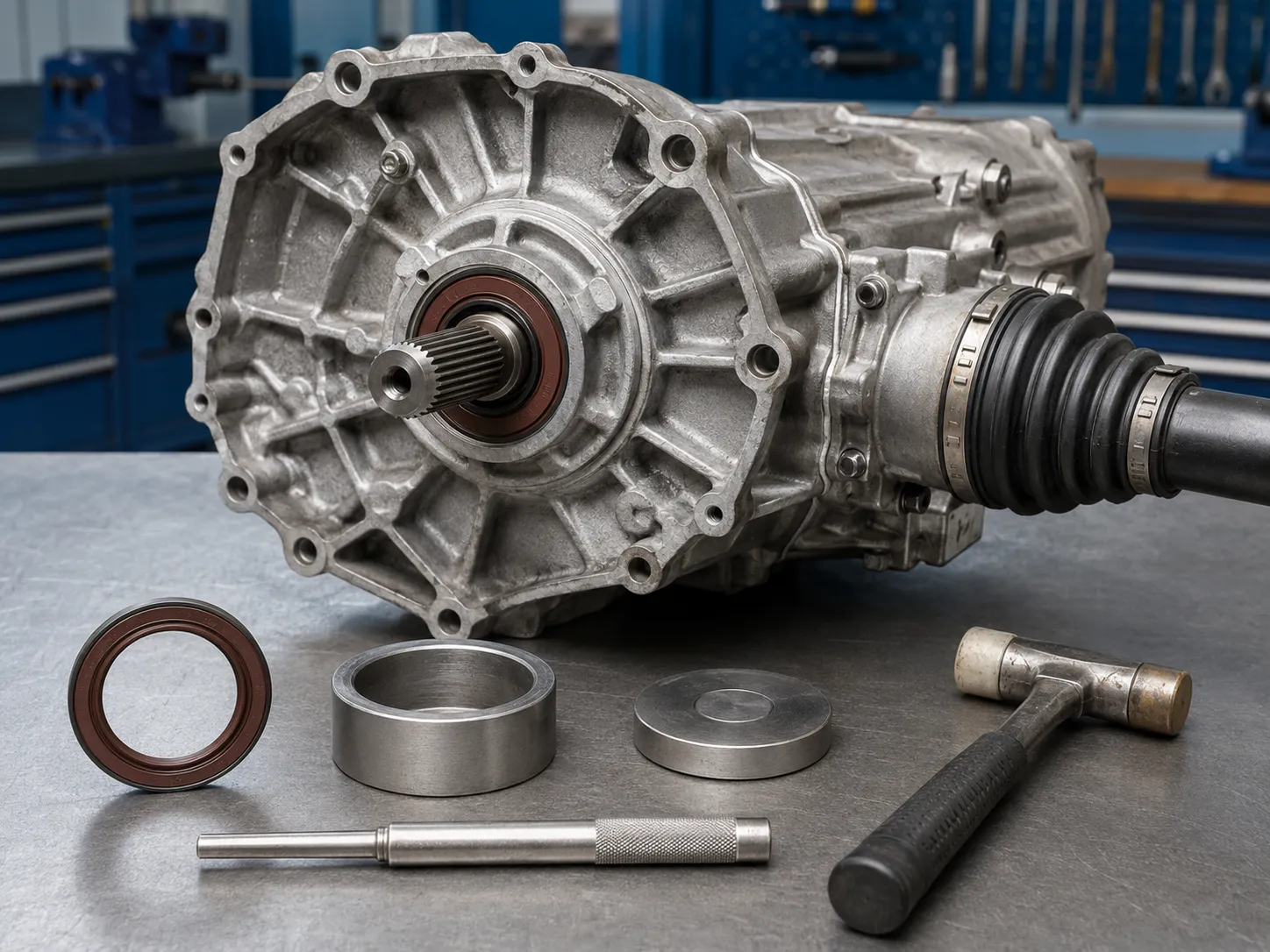
Before installation, inspect the shaft and housing surface. A new seal should not be installed over a damaged shaft surface without correcting the underlying issue.
How to Choose the Right Replacement Transmission Seal
Before ordering a replacement transmission oil seal, confirm the following details:
Exact seal position
Vehicle make, model, and production year
Transmission type
Transmission code, if available
OEM part number
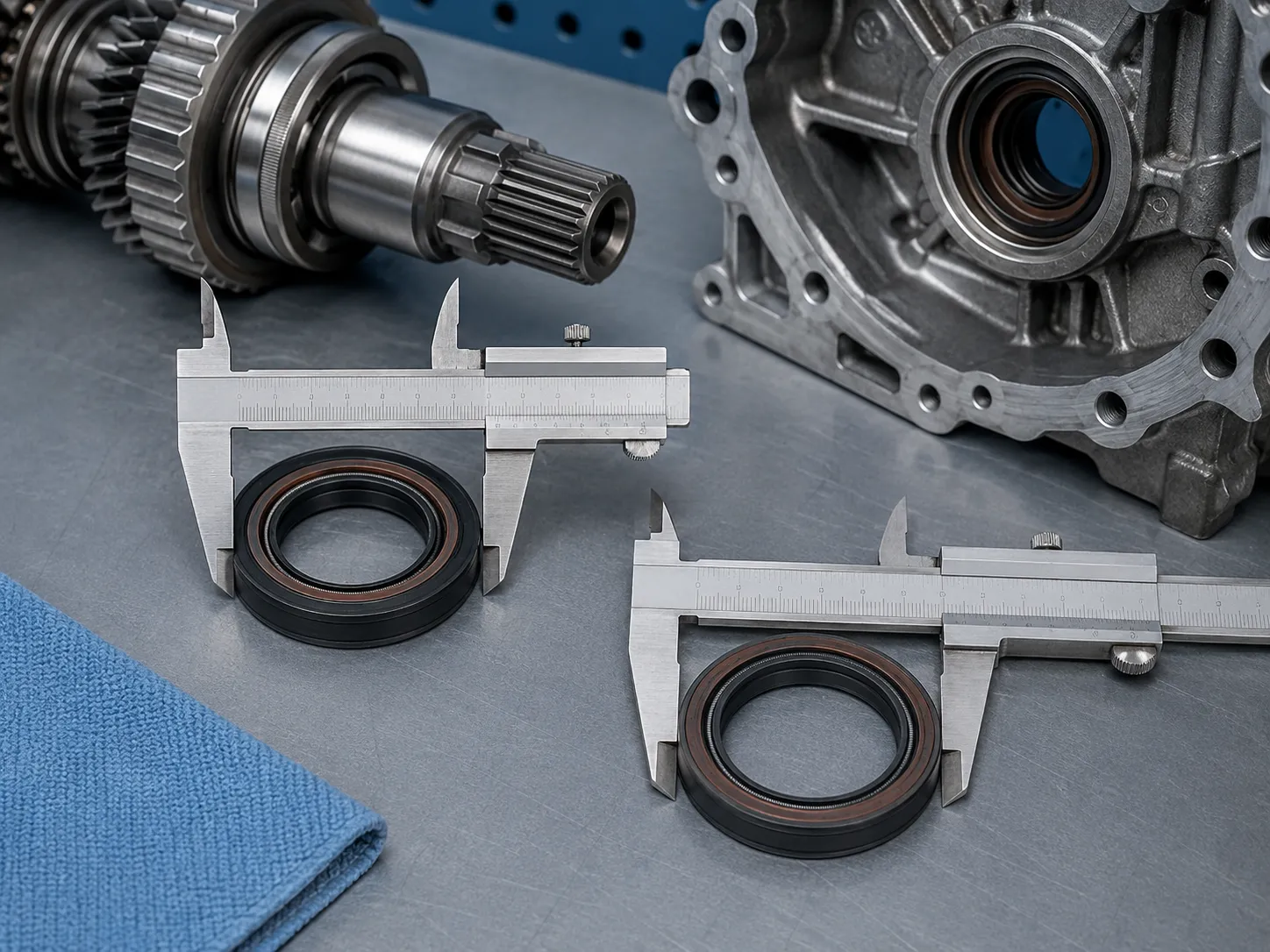
Shaft diameter
Housing bore diameter
Seal width
Lip design
Spring-loaded lip requirement
Dust lip requirement
Material requirement
Transmission fluid type
Shaft surface condition
Installation direction
Common transmission seal materials include NBR, ACM, FKM, and PTFE.
NBR is commonly used for standard oil and transmission fluid sealing applications.
ACM is widely used in automotive environments because of its resistance to heat and lubricating fluids.
FKM offers stronger resistance to high temperatures and demanding fluid conditions.
PTFE may be used for special low-friction, high-speed, or advanced transmission sealing applications. Some PTFE seals require specific installation procedures and should be handled carefully.
The correct material depends on operating temperature, transmission fluid type, shaft speed, pressure conditions, and application requirements.
How to Get an Accurate Transmission Seal Replacement Quote
Before approving repair work, ask the repair shop to confirm the exact leak source and provide a detailed estimate.
A useful quote should show:
Diagnostic charge, if applicable
Labor hours
Replacement seal cost
Transmission fluid cost
Filter or gasket cost
Related parts
Taxes and shop supplies
Whether transmission removal is required
Whether the estimate includes inspection of shaft and housing surfaces
Warranty terms for labor and parts
Providing the vehicle identification number, transmission code, photos of the leak area, and details about the symptoms can help the shop identify the correct seal and quote the repair more accurately.
Conclusion
Transmission oil seal replacement cost depends mainly on the seal location and the labor required to access it. External seals, such as some axle, output shaft, or selector shaft seals, are often less expensive to replace than input shaft, front pump, or torque converter seals that may require transmission removal.
The seal itself is usually only a small part of the total repair bill. Labor, transmission fluid, drivetrain layout, related components, and shaft condition usually have the greatest effect on cost.
Before replacing a transmission oil seal, confirm the leak source, choose the correct seal type and material, inspect the shaft surface, and review whether related service should be completed at the same time.
For replacement seal selection, SealVendor can support standard transmission oil seals, material matching, sample-based identification, drawing-based customization, and OEM reference support for automotive and industrial applications.