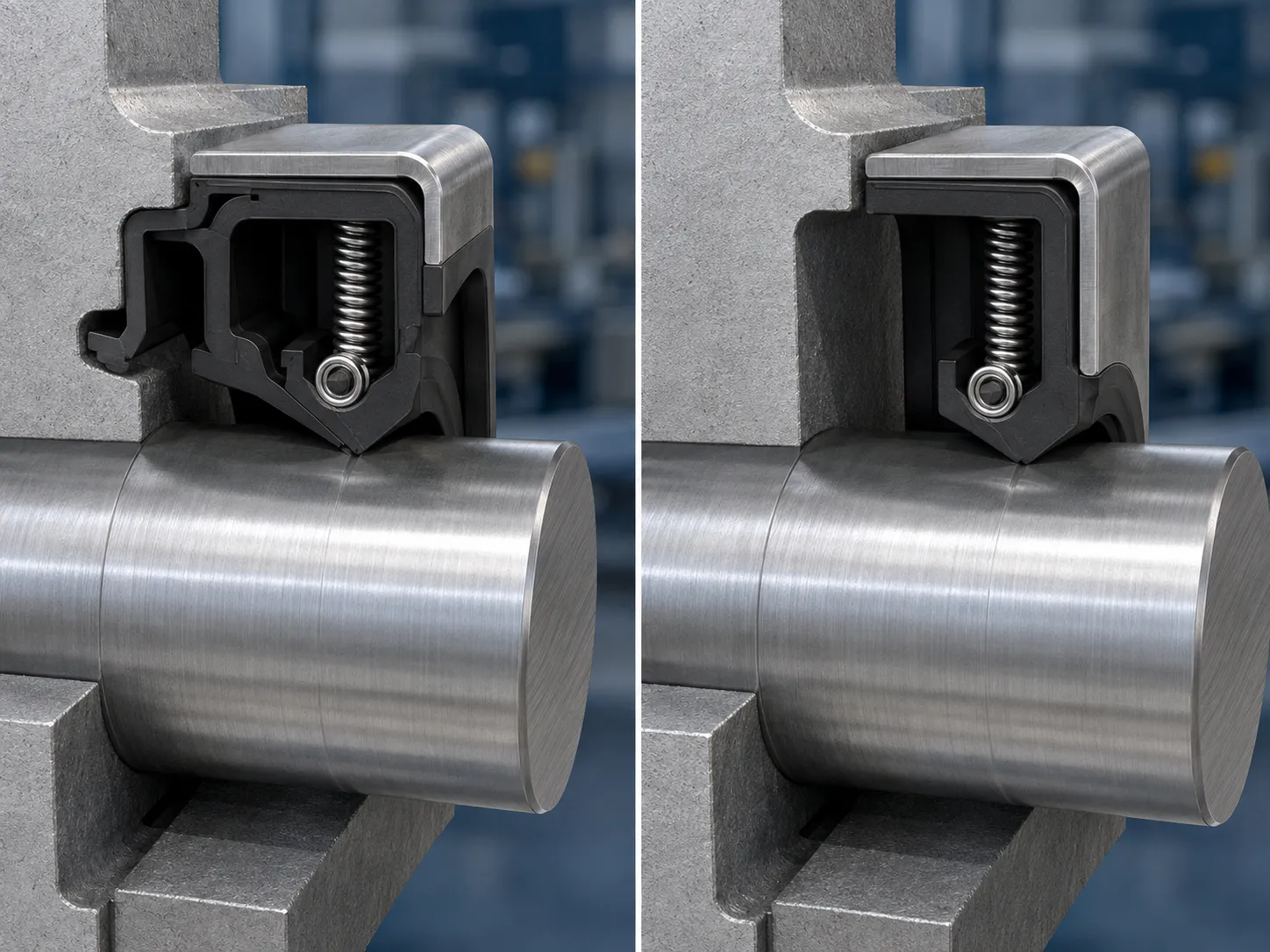
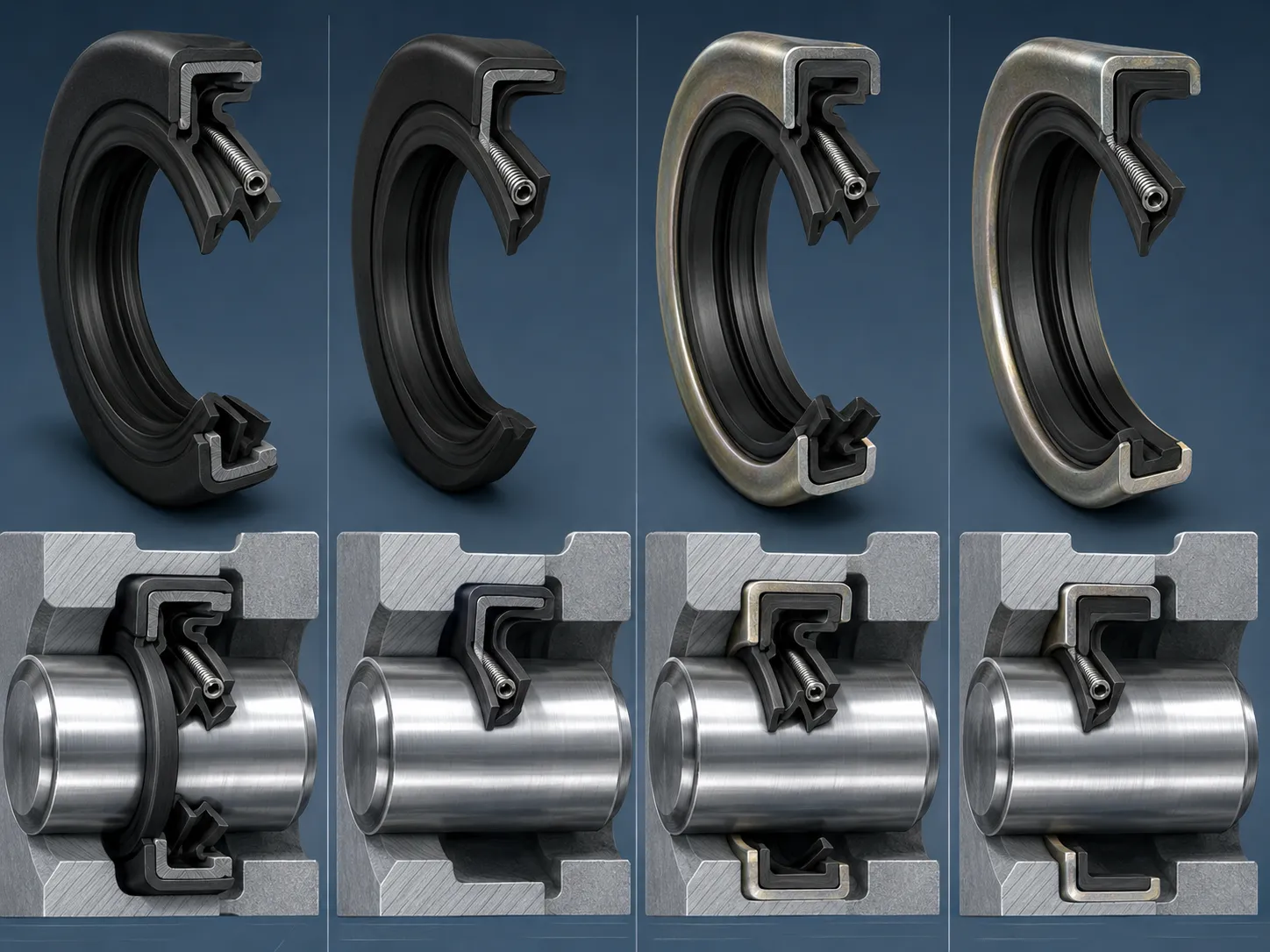
Oil seals may look similar from the outside, but their structure can be very different.
A seal with the same ID, OD, and width may use a different lip arrangement, outer diameter design, spring configuration, material, or contamination-protection feature. These differences can affect installation, fitment, fluid retention, dust resistance, shaft wear, and service life.
TC, SC, TB, and SB are among the most commonly used oil seal type codes in automotive, agricultural, industrial, and machinery applications.
In many catalogs, these codes are used to describe whether the seal has a single main lip or an additional dust lip, as well as whether the outside diameter is rubber-covered or metal-cased.
However, type codes are not always identical across every manufacturer, market, or catalog. A code should be treated as a useful starting point, not a complete technical specification.
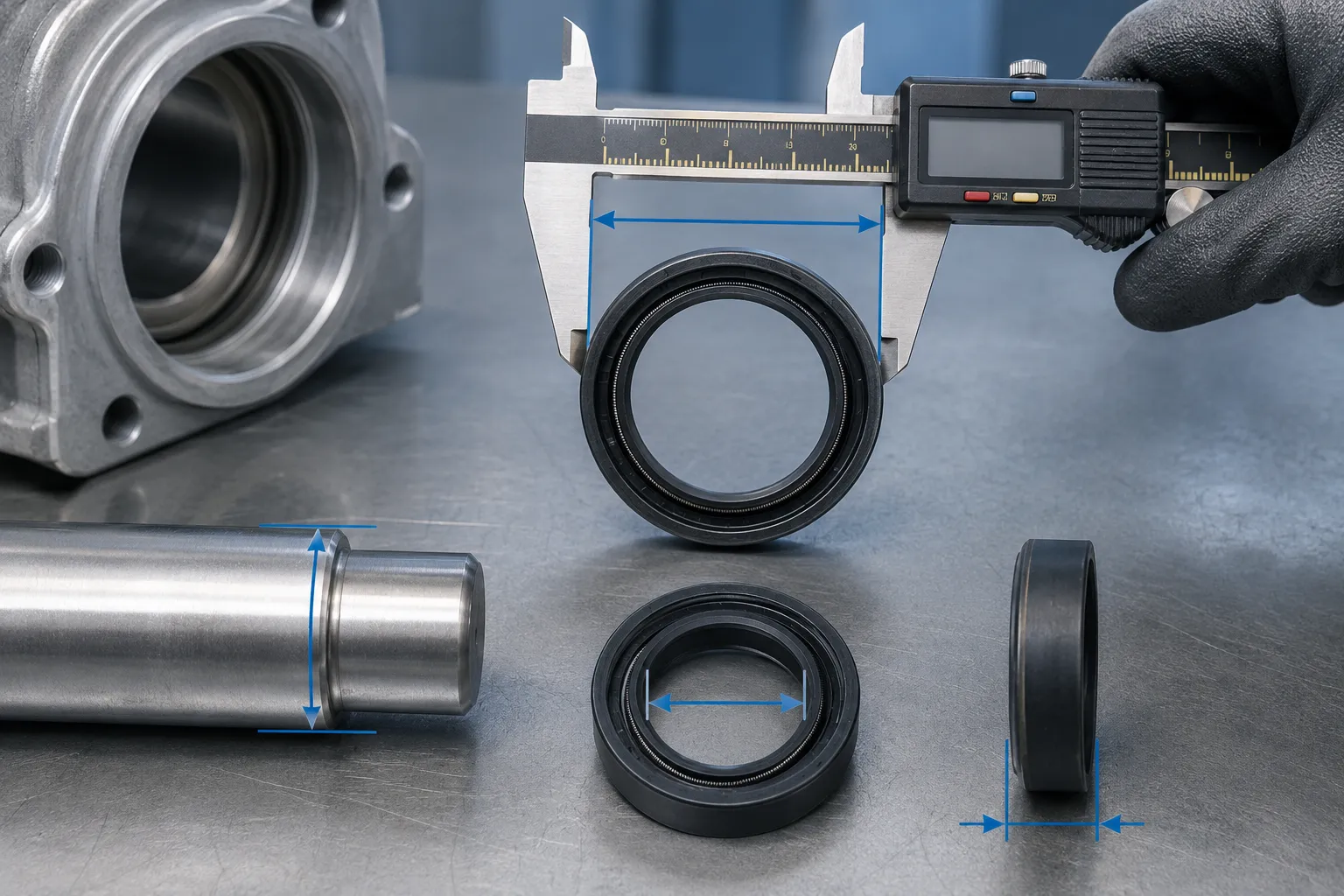
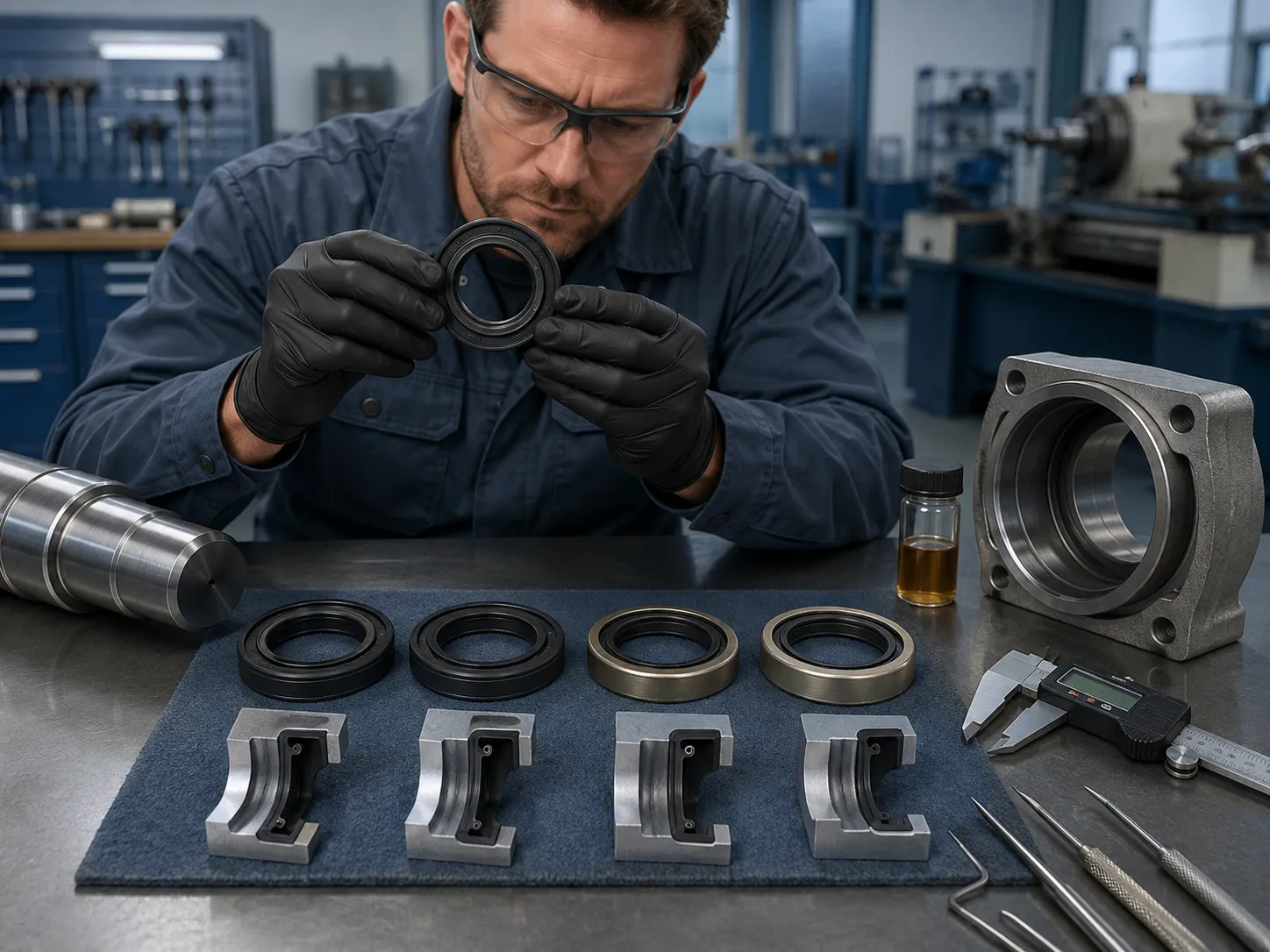
Before ordering an oil seal, confirm the actual seal cross-section, ID, OD, width, material, lip structure, shaft condition, housing bore, fluid type, temperature, and operating environment.
This guide explains the common meaning of TC, SC, TB, and SB oil seals and how to choose the right type for common applications.
What Do TC, SC, TB, and SB Oil Seal Types Mean?
TC, SC, TB, and SB are common market designations for radial shaft oil seals.
They are usually used to describe two main features:
The number and function of sealing lips
The construction of the outside diameter
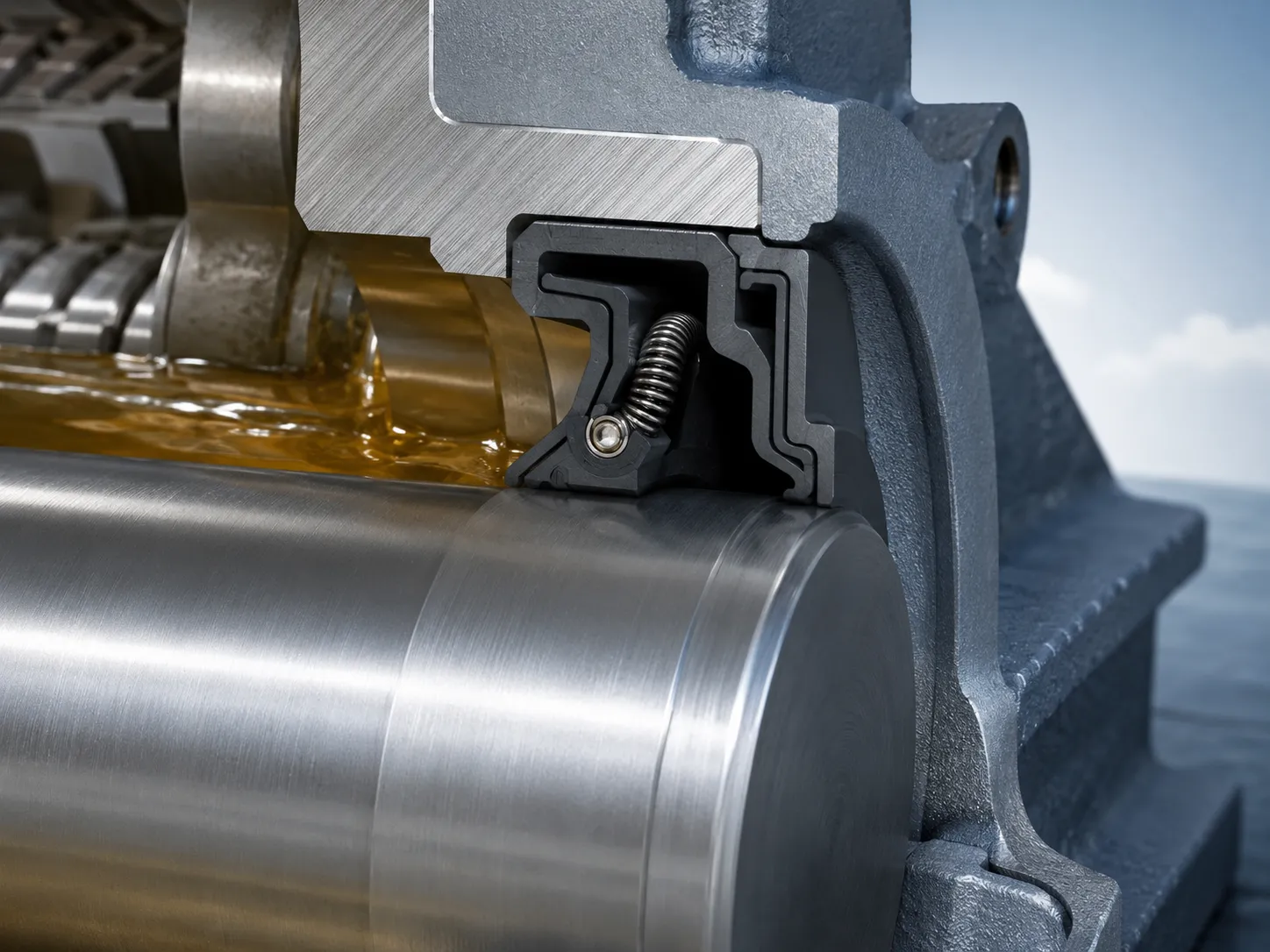
The main sealing lip retains oil, grease, or lubricant inside the housing.
An auxiliary lip, often called a dust lip or exclusion lip, helps reduce the entry of dirt, dust, moisture, and other contaminants from the outside environment.
The outer diameter may be covered with rubber or built with an exposed metal case.
In a widely used naming convention:
Oil Seal Type | Common Structure | Typical Outside Diameter | Typical Lip Arrangement |
|---|---|---|---|
SC | Spring-loaded single-lip oil seal | Rubber-covered OD | One main sealing lip |
TC | Spring-loaded double-lip oil seal | Rubber-covered OD | One main sealing lip plus one auxiliary dust lip |
SB | Spring-loaded single-lip oil seal | Metal-cased OD | One main sealing lip |
TB | Spring-loaded double-lip oil seal | Metal-cased OD | One main sealing lip plus one auxiliary dust lip |
These descriptions are common in many replacement-seal markets, but they should always be verified against the supplier drawing or cross-section.
For example, two products described as TC may have different lip geometry, spring design, rubber compounds, outer-diameter construction, or pressure capability.
The letters alone do not confirm material, temperature range, rotation direction, shaft speed limit, or suitability for a specific machine.
TC, SC, TB, and SB Oil Seal Comparison
Type | Main Lip | Auxiliary Dust Lip | OD Design | Typical Use | Main Advantage |
SC | Yes | No | Rubber-covered | Cleaner enclosed systems | Simple and cost-effective |
TC | Yes | Yes | Rubber-covered | Dusty, wet, or exposed systems | Added contamination protection |
SB | Yes | No | Metal-cased | Stable and well-machined housings | Rigid outer case and tight housing fit |
TB | Yes | Yes | Metal-cased | More exposed systems with stable housings | Rigid case plus dust-lip protection |
The main difference between SC and TC is usually the presence of the auxiliary dust lip.
The main difference between SB and TB is also usually the lip arrangement, while both commonly use a metal outer case.
The difference between SC and SB, or TC and TB, is mainly the outer diameter construction.
A rubber-covered outer diameter can help seal against minor housing-bore imperfections. A metal-cased seal can provide a rigid fit when the housing bore is correctly machined and in good condition.
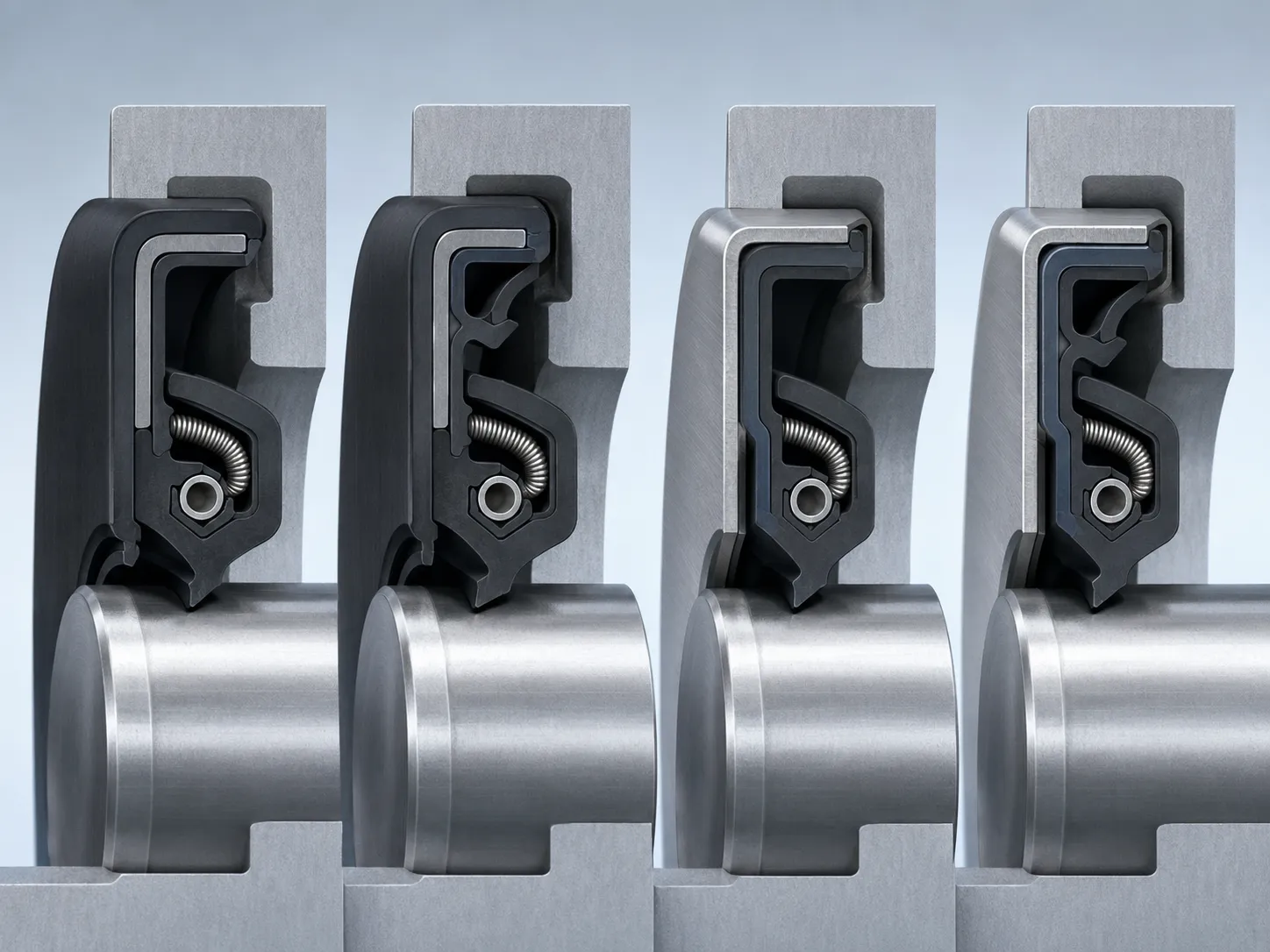
SC Oil Seal: Single Lip with Rubber-Covered Outer Diameter
An SC oil seal is commonly used for standard lubricant-retention applications.
It usually has:
One primary sealing lip
A garter spring around the main lip
A rubber-covered outer diameter
A metal reinforcement inside the seal body
No separate external dust lip
The main lip contacts the rotating shaft and helps retain oil or lubricant inside the housing.
The rubber-covered outside diameter helps create a static seal between the oil seal and the housing bore.
Common SC Oil Seal Applications
SC oil seals are often used in:
Enclosed gearboxes
Electric motors
Pumps
General industrial machinery
Light-duty agricultural equipment
Clean drivetrain systems
Small reducers
Lubricated bearing housings
Protected engine and transmission locations
Equipment with limited dust or water exposure
SC seals are often a practical choice when the application is relatively clean and the main requirement is lubricant retention.
Advantages of SC Oil Seals
Common advantages include:
Simple structure
Lower cost than more complex double-lip designs
Good general-purpose sealing performance
Rubber OD can accommodate minor housing-bore imperfections
Suitable for many standard oil and grease applications
Commonly available in many metric and inch sizes
Easy to use in enclosed machinery and protected applications
SC Oil Seal Limitations
An SC seal may not be the best choice when the shaft area is exposed to:
Dust
Mud
Water splash
Sand
Metal particles
Outdoor contamination
Abrasive debris
Frequent washdown
Severe off-road conditions
Without an auxiliary dust lip or external exclusion system, contamination can reach the main sealing area more easily.
For applications with more severe external contamination, a TC seal, a heavier-duty seal type, a cassette seal, a V-ring, or another protection method may be more appropriate.
TC Oil Seal: Double Lip with Rubber-Covered Outer Diameter
A TC oil seal is one of the most widely used general-purpose double-lip oil seal types.
It usually has:
One spring-loaded primary sealing lip
One auxiliary dust lip
A rubber-covered outer diameter
Internal metal reinforcement
A garter spring around the main sealing lip
The primary lip retains oil or lubricant inside the housing.
The auxiliary lip helps reduce dirt, dust, water splash, and debris from reaching the main lip and shaft contact area.
The auxiliary lip should not be treated as a second full pressure-sealing lip. Its main role is contamination exclusion rather than primary fluid retention.
Common TC Oil Seal Applications
TC oil seals are commonly used in:
Automotive engines
Transmissions
Axle assemblies
Agricultural machinery
Construction equipment
Pumps
Gearboxes
Industrial motors
Outdoor machinery
General machinery exposed to moderate dust or moisture
Wheel-end and drivetrain-related systems
Equipment with road dirt or splash exposure
TC seals are often selected when the application needs both lubricant retention and basic protection from outside contamination.
Advantages of TC Oil Seals
Common advantages include:
Better protection against dust and dirt than a single-lip seal
Rubber OD can help seal against minor housing-bore imperfections
Widely available standard sizes
Suitable for many automotive and industrial applications
Useful for applications with moderate contamination exposure
Good balance between cost, sealing performance, and protection
TC Oil Seal Limitations
A TC seal is not automatically the best option for every application.
The auxiliary lip can add friction and may increase heat in some operating conditions.
A TC seal should not be selected only because it has two lips.
It may not solve problems caused by:
Deep shaft wear grooves
Excessive pressure
High shaft runout
Severe shaft misalignment
Worn bearings
Blocked breathers
High-speed operation beyond the seal design
Extreme mud or slurry exposure
Damaged housing bores
Incorrect installation
Wrong seal material
For more detail on the difference between these two common rubber-covered types, see: TC Oil Seal vs SC Oil Seal: Structure, Lip Design, and Application Differences.
SB Oil Seal: Single Lip with Metal Outer Diameter
An SB oil seal is commonly used as a single-lip metal-cased design.
It usually has:
One primary sealing lip
A garter spring around the main lip
A metal outer case
No separate auxiliary dust lip
The metal outer diameter provides a rigid fit in the housing bore.
This type of construction is often used where the housing bore is accurately machined and can provide the correct press fit.
Common SB Oil Seal Applications
SB oil seals may be used in:
Metal gearbox housings
Industrial bearing housings
Pumps
Motors
Machinery with stable bore dimensions
Standard rotating shaft applications
Factory-installed equipment
Equipment with well-controlled housing tolerances
Protected mechanical assemblies
Applications where a rigid outer case is preferred
Advantages of SB Oil Seals
Common advantages include:
Rigid metal case
Strong press-fit retention in a suitable housing bore
Suitable for stable, accurately machined housings
Simple single-lip structure
Good for many clean or protected lubricant-retention applications
Often used where a metal-case construction is required by the original design
SB Oil Seal Limitations
A metal-cased seal is less forgiving of a damaged housing bore than a rubber-covered seal.
Potential issues include:
Reduced static sealing if the bore is scratched or irregular
Risk of housing damage during installation
Corrosion concerns in wet or aggressive environments
Less tolerance for housing-bore imperfections
No auxiliary dust lip in the typical single-lip design
Need for correct press fit and installation alignment
If the housing bore is worn, pitted, split, or damaged, a rubber-covered OD design may provide better static sealing in some applications.
The original seal design and housing condition should be checked before changing from a metal-cased seal to a rubber-covered alternative.
TB Oil Seal: Double Lip with Metal Outer Diameter
A TB oil seal is commonly used as a metal-cased double-lip design.
It usually has:
One spring-loaded primary sealing lip
One auxiliary dust lip
A metal outer case
A rigid outside diameter
Internal reinforcement for a stable housing fit
The main lip retains lubricant. The auxiliary lip helps reduce contamination reaching the main sealing area.
Common TB Oil Seal Applications
TB oil seals may be used in:
Industrial gearboxes
Pumps
Motors
Heavy-duty machinery
Agricultural equipment
Commercial vehicle components
Industrial bearing housings
Equipment with metal housings and controlled bore tolerances
Machinery exposed to moderate dust or contamination
Applications requiring a metal-case replacement seal with an auxiliary lip
Advantages of TB Oil Seals
Common advantages include:
Rigid metal outer case
Main sealing lip plus contamination-exclusion lip
Suitable for stable and accurately machined housing bores
Better outside contamination protection than a comparable single-lip metal-case seal
Useful in many industrial and heavy-duty applications
Can provide a robust choice where the original equipment uses a metal-cased double-lip seal
TB Oil Seal Limitations
TB seals should not be selected automatically for every dirty environment.
A metal case and auxiliary dust lip do not eliminate the need to check:
Housing bore condition
Shaft condition
Shaft runout
Bearing movement
Pressure level
Breather condition
Lubricant type
Temperature
Installation method
External contamination severity
For severe mud, water immersion, abrasive dust, high-pressure washdown, or wheel-end exposure, a standard TB seal may not provide enough protection by itself.
A cassette seal, mechanical face seal, V-ring, labyrinth arrangement, or application-specific heavy-duty seal may be required.
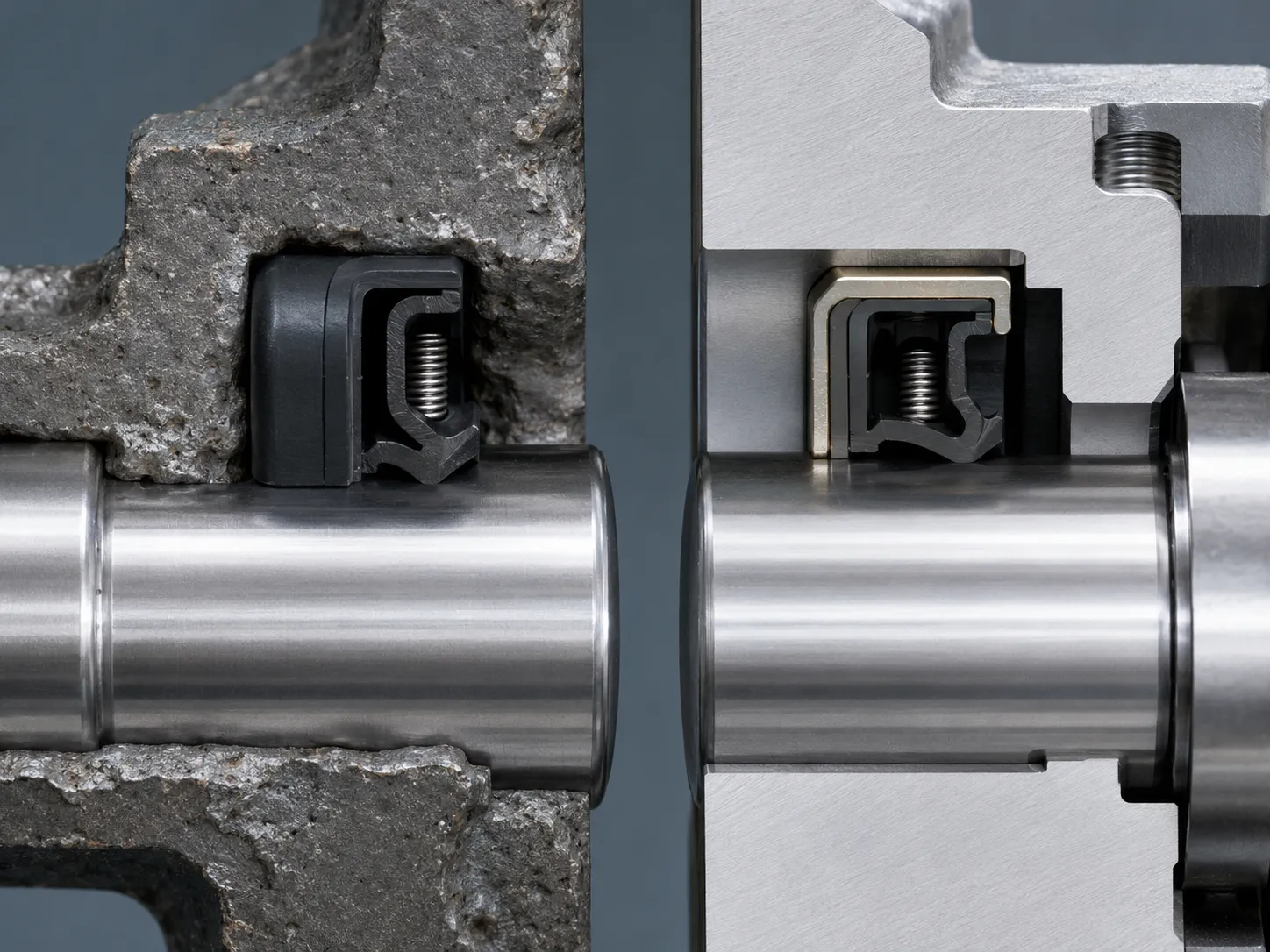
Rubber-Covered OD vs Metal-Cased OD
The outer diameter design affects how the seal fits into the housing bore.
This is one of the most important differences between TC and TB, or SC and SB.
Rubber-Covered Outer Diameter
Rubber-covered OD seals are common in TC and SC designs.
They are often useful when:
The housing bore has minor surface imperfections
The housing material expands more than steel
The housing is split
The bore surface is not perfectly smooth
Better static sealing between seal and housing is needed
The equipment has a cast housing
A softer outer surface is preferred during installation
A rubber-covered OD can help fill small irregularities in the housing bore.
However, it still requires the correct seal size, bore condition, and installation method.
Metal-Cased Outer Diameter
Metal-cased seals are common in TB and SB designs.
They are often useful when:
The housing bore is accurately machined
A rigid press fit is needed
The original seal uses a metal case
The assembly requires a stable, centered installation
The housing material and bore tolerance are suitable
The equipment design calls for a metal outer case
Metal-cased seals can provide strong retention, but they depend more on correct housing-bore condition.
A damaged bore, corrosion, out-of-round housing, or incorrect installation can create static leakage around the outside diameter.
Main Lip vs Auxiliary Dust Lip
The main sealing lip is the primary fluid-retention element.
It normally faces the lubricant side of the assembly and contacts the shaft with controlled force, often supported by a garter spring.
The auxiliary lip is located on the air side of the seal.
Its main functions may include:
Reducing dust entry
Reducing moisture entry
Limiting dirt reaching the main lip
Protecting the shaft contact area
Helping reduce abrasion at the main sealing lip
Supporting performance in moderately contaminated environments
The auxiliary lip does not replace a dedicated pressure seal.
It also does not make a standard oil seal suitable for every harsh environment.
A double-lip seal may be useful for moderate contamination, but severe operating conditions may require an additional exclusion system or a more specialized seal design.
Common Applications by Oil Seal Type
Automotive Engines
Typical oil seal needs may include crankshaft seals, camshaft seals, balance shaft seals, and oil pump seals.
Common considerations include:
Engine oil temperature
Shaft speed
Oil additives
Timing-belt or timing-chain proximity
Space limitation
Oil splash
Dust exposure
Shaft condition
Original equipment seal design
SC or TC designs may be used in many automotive applications, depending on the original seal structure and exposure level.
Material selection may include NBR, ACM, FKM, PTFE, or another compound depending on temperature and fluid requirements.
Transmissions and Gearboxes
Transmission and gearbox seals may be exposed to:
Hot lubricants
Automatic transmission fluid
Gear oil
Pressure variation
Shaft speed
Limited installation space
Internal heat
Drivetrain vibration
SC, TC, SB, or TB structures may be used depending on housing design and contamination exposure.
The correct seal should also match the lubricant type, temperature, pressure condition, and original lip structure.
Axles and Differential Systems
Axle and differential seals often operate in environments with:
Road dirt
Water splash
Mud
Gear oil
Shaft movement
Wheel-end contamination
Heavy loads
Temperature variation
TC or TB designs may be used when an auxiliary dust lip is needed.
However, some axle and wheel-end applications require more than a standard double-lip seal. Heavy-duty wheel seals, cassette seals, or other specialized designs may be necessary.
Pumps and Electric Motors
Pumps and motors may require seals that match:
Shaft speed
Lubricant type
Housing tolerance
Bearing arrangement
Fluid pressure
Heat
Chemical exposure
Shaft finish
SC and SB types can be suitable for cleaner and more protected installations.
TC and TB types may be considered when outside contamination protection is needed.
High-speed, chemical, or high-temperature pump applications may require PTFE-based or specialized rotary seals rather than standard TC, SC, TB, or SB designs.
Agricultural and Construction Equipment
Agricultural and construction machinery often combines oil retention requirements with exposure to:
Dust
Mud
Water
Vibration
Heavy loads
Shaft movement
Temperature changes
Abrasive contamination
TC and TB seals may offer more protection than single-lip alternatives, but the overall system must still be evaluated.
A damaged shaft, worn bearing, blocked breather, or severe contamination condition can cause failure even when the correct double-lip seal is installed.
General Industrial Machinery
General industrial applications may include:
Conveyors
Mixers
Reducers
Fans
Pumps
Blowers
Motors
Gearboxes
Material-handling equipment
Process machinery
SC or SB types may be suitable for protected, clean environments.
TC or TB types may be used when moderate contamination protection is needed.
The correct type depends on housing design, shaft condition, lubricant, speed, temperature, and maintenance requirements.
Oil Seal Type and Material Are Different Decisions
TC, SC, TB, and SB describe structural features.
They do not fully identify the sealing material.
The same basic seal type may be available in different materials, including:
NBR
ACM
FKM
Silicone
PTFE
HNBR
Other application-specific elastomers or polymers
For example, two TC seals may have the same dimensions and both include a dust lip, but one may use NBR for a moderate-temperature mineral-oil application while another uses FKM for a hotter or more chemically demanding environment.
The type code alone does not confirm:
Heat resistance
Fluid compatibility
Shaft-speed suitability
Pressure capability
Low-temperature flexibility
Chemical resistance
Abrasion resistance
Spring material
Directional pumping feature
Heavy-duty application suitability
For high-temperature applications, see: Best Oil Seal Materials for High-Temperature Applications: FKM, ACM, PTFE, and Silicone.
When Standard TC, SC, TB, or SB Types May Not Be Enough
Standard radial lip seals are suitable for many applications, but they have limits.
A more specialized seal may be required when the application involves:
High internal pressure
High shaft speed
High continuous temperature
Extreme temperature peaks
Aggressive chemicals
Fuel exposure
Dry-running risk
Severe shaft wear
Large shaft runout
Significant misalignment
Heavy mud or abrasive contamination
Water immersion
High-pressure washdown
Large shaft diameter
Heavy-duty wheel-end service
Limited installation space
Non-standard dimensions
Special housing geometry
Possible alternatives may include:
PTFE rotary seals
Pressure-capable radial seals
Cassette seals
Heavy-duty wheel seals
V-rings
Mechanical face seals
Labyrinth systems
Custom oil seals
Shaft repair sleeves used with a repositioned sealing lip
A standard TC seal should not be used as a universal solution for every contaminated or demanding application.
How to Choose the Right Oil Seal Type
Before selecting TC, SC, TB, or SB, confirm the following information.
1. Confirm the Dimensions
Check:
Shaft diameter, or ID
Housing bore diameter, or OD
Seal width
Installation depth
Existing lip contact position
Shaft step or shoulder location
Space for the replacement seal
A seal that fits the shaft and bore dimensionally may still be wrong if the lip contacts a worn groove or the seal width does not match the housing depth.
2. Check the Housing Bore Condition
Inspect whether the housing bore is:
Smooth
Round
Clean
Undamaged
Corrosion-free
Free from deep scratches
Suitable for a metal-case press fit
Suitable for a rubber-covered outer diameter
A rubber-covered OD may be more forgiving in a housing with minor imperfections.
A metal-cased seal may be suitable when the housing bore is accurately machined and undamaged.
3. Check the Shaft Surface
Inspect the shaft for:
Wear grooves
Rust
Corrosion
Pitting
Scratches
Sharp edges
Splines
Threads
Excessive runout
Misalignment
Bearing-related movement
A new seal can fail quickly when installed on a damaged shaft.
4. Confirm Contamination Exposure
Ask whether the application is exposed to:
Indoor dust
Outdoor dust
Sand
Mud
Water splash
Washdown
Metal particles
Agricultural debris
Road dirt
Chemical contamination
A clean enclosed gearbox may only require a single-lip type.
An exposed axle or outdoor machine may benefit from a double-lip design or a more specialized exclusion system.
5. Confirm Fluid, Temperature, and Speed
Check:
Fluid type
Lubricant additives
Operating temperature
Temperature peaks
Shaft speed
Pressure condition
Rotation direction where relevant
Expected service life
These factors influence material selection and may also determine whether a standard elastomer seal is suitable.
6. Confirm the Original Seal Structure
Where possible, use:
Original seal sample
Product photo from both sides
OEM part number
Equipment model
Technical drawing
Supplier cross-reference
Existing seal markings
Do not rely only on the code printed on an old seal.
The visible code may be incomplete, worn, supplier-specific, or unrelated to the original material and design details.
Common Mistakes When Choosing Oil Seal Types
Choosing Only by ID, OD, and Width
Dimensions are essential, but they do not confirm:
Lip configuration
Outer diameter construction
Material
Pressure capability
Dust-lip requirement
Shaft contact position
Spring arrangement
Installation direction
A seal can fit physically but still leak because the type is wrong.
Assuming TC Is Always Better Than SC
A TC seal may offer better contamination protection, but it is not automatically better for every application.
The additional lip can add friction, heat, and complexity.
For a clean enclosed system, an SC seal may be the correct and simpler choice.
Replacing a Metal-Case Seal with Rubber OD Without Checking the Bore
A rubber-covered OD may seal better in some damaged or cast housings, but changing the outer-diameter design without checking fitment can create installation or retention problems.
The original seal structure should be reviewed first.
Assuming a Double Lip Is a Pressure Seal
A dust lip helps reduce contamination entry.
It is not the same as a seal designed for elevated internal pressure.
Pressure, shaft speed, fluid, hardware clearance, and seal profile must be evaluated separately.
Ignoring Shaft Damage
Replacing the seal without inspecting the shaft can lead to repeat leakage.
A worn groove, corrosion, pitting, or sharp shaft edge may damage a new lip immediately.
Ignoring Breather and Bearing Problems
A blocked breather can increase internal pressure and force lubricant past a good seal.
Worn bearings can create shaft movement that damages the lip.
A new TC, SC, TB, or SB seal cannot solve these underlying issues by itself.
Oil Seal Installation Notes
Correct installation is as important as correct seal selection.
Before installation:
Confirm the correct installation direction
Clean the shaft and housing bore
Remove burrs and sharp edges
Inspect the shaft sealing surface
Check lip condition before installation
Use a suitable installation tool
Protect the lip from splines, threads, keyways, and sharp edges
Install the seal squarely
Avoid striking the seal directly with a hammer
Avoid excessive sealant
Confirm the correct installation depth
Lubricate the lip when required by the application
Check fluid level after assembly
Inspect for fresh leakage after initial operation
The main sealing lip usually faces the lubricant side.
The auxiliary dust lip usually faces the outside environment.
Always confirm orientation against the actual seal design and equipment service procedure before installation.
Conclusion
TC, SC, TB, and SB are common oil seal types used to describe lip arrangement and outer diameter construction.
SC is commonly used for a single-lip, rubber-covered oil seal.
TC is commonly used for a rubber-covered seal with a primary sealing lip and an auxiliary dust lip.
SB is commonly used for a single-lip, metal-cased seal.
TB is commonly used for a metal-cased seal with a primary lip and an auxiliary dust lip.
The correct type depends on more than the letters in the code.
Before ordering, confirm the ID, OD, width, shaft condition, housing bore condition, lubricant, temperature, contamination exposure, lip design, material, pressure condition, and original seal structure.
A single-lip seal may be suitable for a clean enclosed system. A double-lip seal may provide better protection in moderately dusty or wet conditions. A metal-cased seal may work well in a stable, accurately machined housing, while a rubber-covered OD may provide better static sealing in certain cast or imperfect bores.
For oil seal selection, SealVendor can support TC, SC, TB, SB, FKM, NBR, ACM, PTFE, standard rotary seals, sample-based identification, OEM-reference checks, and drawing-based custom requirements.