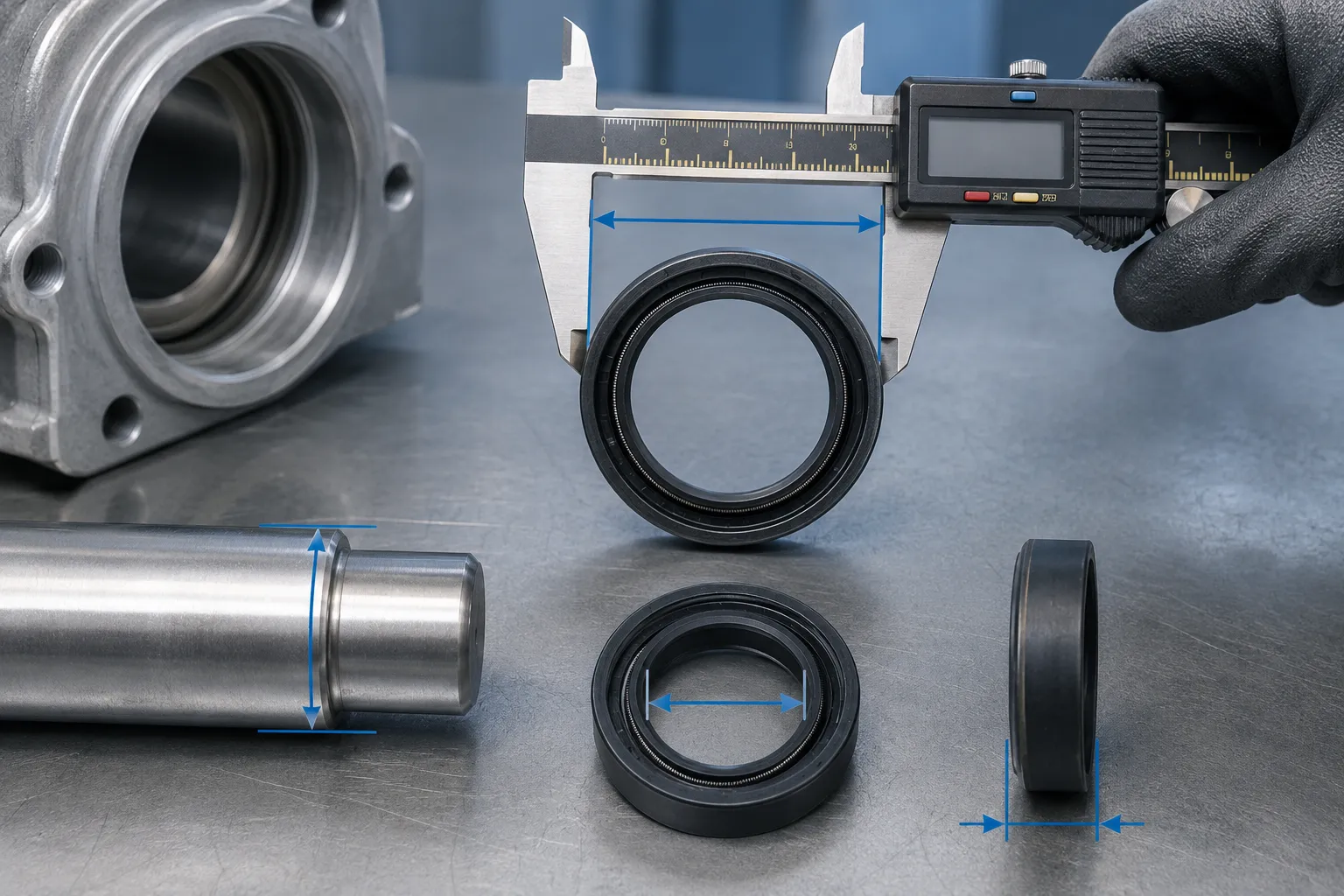
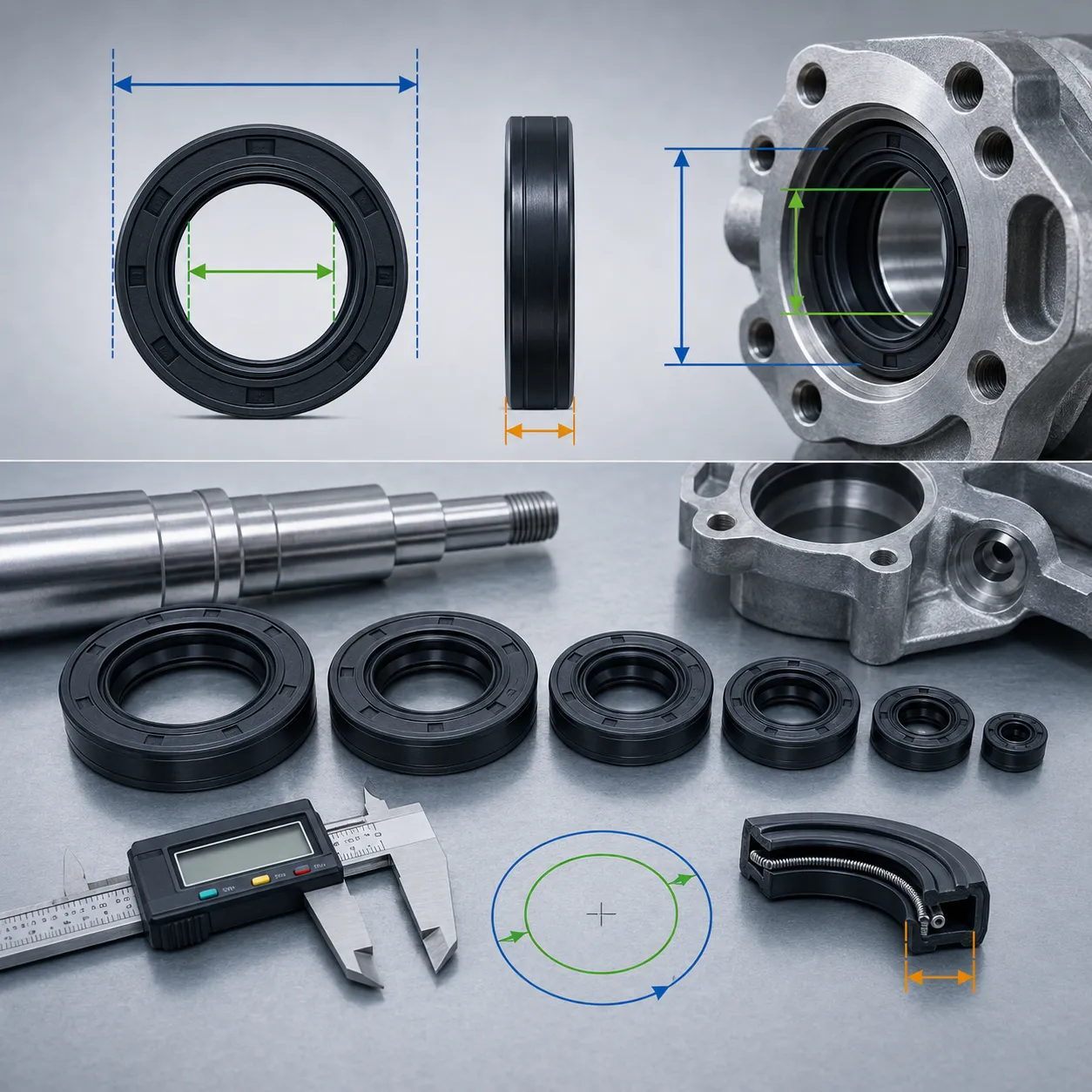
An oil seal size chart is a useful starting point when replacing a worn, damaged, or leaking rotary oil seal. Most standard oil seals are identified by three dimensions:
Inner diameter, or ID
Outer diameter, or OD
Width
These dimensions are usually written in the format:
ID × OD × Width
For example, an oil seal marked 35 × 52 × 7 mm is generally designed for a 35 mm shaft, a 52 mm housing bore, and a 7 mm installation width.
However, an oil seal size chart should not be used as the only selection method. Two seals can share the same ID, OD, and width while having different lip designs, materials, outer diameter structures, pressure capabilities, or application requirements.
This guide explains how to read oil seal size charts correctly, what the three dimensions mean, how to verify measurements, and what details to check before ordering a replacement.
What Does an Oil Seal Size Chart Show?
An oil seal size chart usually lists standard or commonly available oil seal dimensions.
The most common format is:
ID | OD | Width | Standard Size Format |
|---|---|---|---|
20 mm | 35 mm | 7 mm | 20 × 35 × 7 |
25 mm | 47 mm | 7 mm | 25 × 47 × 7 |
30 mm | 47 mm | 7 mm | 30 × 47 × 7 |
35 mm | 52 mm | 7 mm | 35 × 52 × 7 |
40 mm | 62 mm | 10 mm | 40 × 62 × 10 |
45 mm | 62 mm | 8 mm | 45 × 62 × 8 |
50 mm | 72 mm | 10 mm | 50 × 72 × 10 |
60 mm | 80 mm | 10 mm | 60 × 80 × 10 |
These examples show how common oil seal dimensions are written. They are useful references, but they are not a universal catalog of every available oil seal size.
Standard sizes vary by application, manufacturer, seal design, and industry. A complete selection still requires checking the shaft, housing, width, material, lip structure, and working conditions.
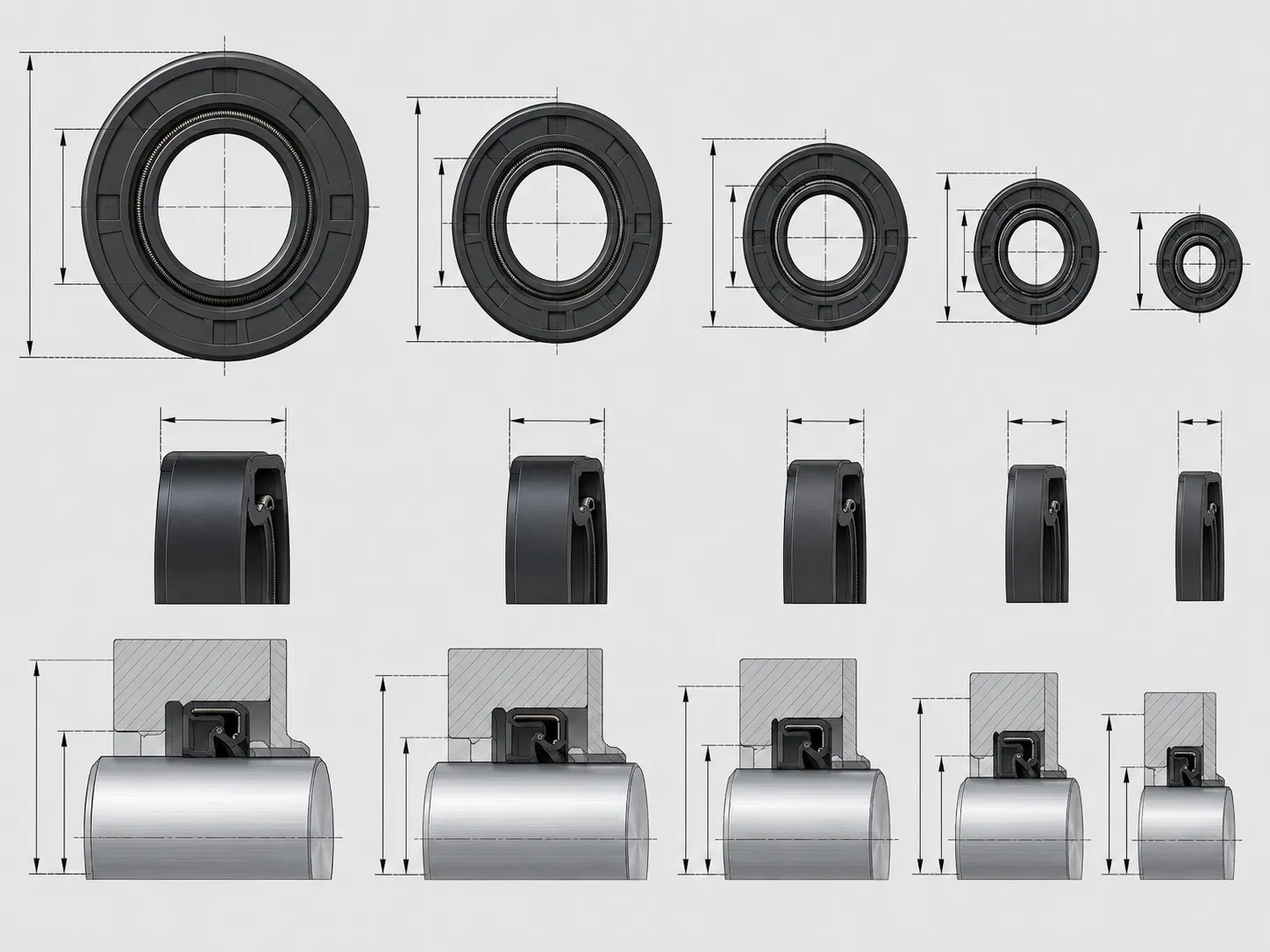
How to Read Oil Seal Size: ID × OD × Width
The format ID × OD × Width is widely used for rotary oil seals.
For example:
35 × 52 × 7 mm
This means:
Dimension | Value | Meaning |
ID | 35 mm | Nominal shaft diameter |
OD | 52 mm | Housing bore diameter |
Width | 7 mm | Seal thickness along the shaft axis |
Inner Diameter: ID
The inner diameter, or ID, usually refers to the nominal shaft diameter where the main sealing lip runs.
For a 35 × 52 × 7 oil seal, the 35 mm dimension is intended for a 35 mm shaft.
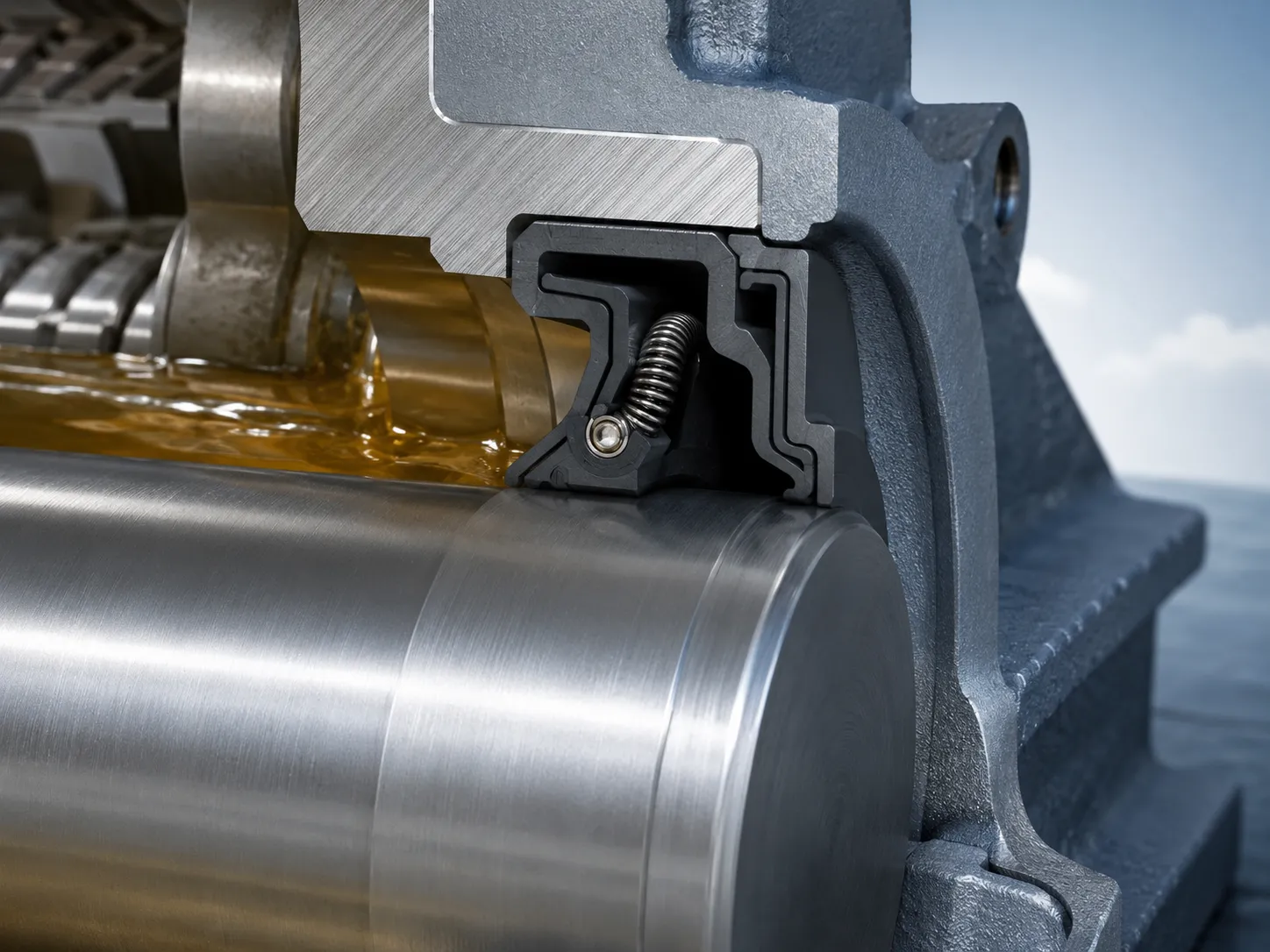
The visible opening of a new seal lip may look smaller than the shaft diameter. This is normal because the sealing lip is designed to create controlled interference against the rotating shaft.
When identifying an unknown seal, measure the shaft at the actual sealing surface rather than measuring only the free opening of the old seal lip.
Outer Diameter: OD
The outer diameter, or OD, refers to the housing bore diameter where the seal is installed.
For a 35 × 52 × 7 oil seal, the 52 mm dimension is intended for a 52 mm housing bore.
The outer diameter is important because it creates the static seal between the oil seal and the housing. If the seal OD is too small, it may move in the bore or leak around the outside diameter. If it is too large, installation may damage the seal case or the housing.
Width
Width refers to the thickness of the seal along the shaft axis.
For a 35 × 52 × 7 oil seal, the width is 7 mm.
A matching width helps ensure that the seal sits correctly in the housing and that the sealing lip contacts the intended area of the shaft.
A seal with the right ID and OD may still be unsuitable if it is too wide, too narrow, or places the lip on a worn groove in the shaft.
Common Oil Seal Size Chart Examples
The following chart provides common examples of metric oil seal sizes often used in automotive, industrial, agricultural, gearbox, pump, and machinery applications.
ID × OD × Width (mm) | Typical Use Area | Notes |
12 × 28 × 7 | Small shafts and compact equipment | Verify shaft and housing type |
15 × 30 × 7 | Small pumps, motors, and machinery | Common compact seal size |
17 × 35 × 7 | Light industrial and mechanical applications | Check lip design |
20 × 35 × 7 | Pumps, gearboxes, small rotating shafts | Often available in multiple materials |
22 × 35 × 7 | Compact machinery and transmission areas | Confirm actual housing bore |
25 × 40 × 7 | Motors, pumps, and general machinery | Material depends on lubricant |
25 × 47 × 7 | Automotive and industrial applications | Common replacement size |
28 × 47 × 7 | Rotating shafts and gearbox applications | Check shaft surface condition |
30 × 47 × 7 | General oil retention applications | Often supplied in TC or SC styles |
30 × 52 × 7 | Automotive and industrial rotating equipment | Verify lip arrangement |
35 × 52 × 7 | Common engine, gearbox, and machinery size | Widely used but not application-specific |
35 × 62 × 10 | Larger shafts and industrial equipment | Check housing depth |
40 × 55 × 7 | Gearboxes, pumps, and drivetrain components | Confirm material and fluid type |
40 × 62 × 10 | Automotive and industrial applications | Often used where a wider seal is required |
45 × 62 × 8 | Shaft sealing in machinery and gear systems | Check shaft location and lip position |
45 × 65 × 10 | Larger rotating equipment | Verify pressure and speed requirements |
50 × 72 × 10 | Gearboxes, axles, and industrial equipment | Check for dust lip requirement |
55 × 72 × 8 | Machinery and drivetrain applications | Confirm exact outer diameter design |
60 × 80 × 10 | Larger gearbox and equipment shafts | Inspect housing condition |
65 × 85 × 10 | Heavy-duty industrial equipment | May require higher-performance material |
This chart is intended as a reading reference, not as a final purchasing list. The same size can be made in different types, including TC, SC, TB, SB, cassette, and PTFE designs.
Metric Oil Seal Sizes vs Inch Oil Seal Sizes
Most modern oil seals are listed in millimeters, especially in automotive, industrial, agricultural, and general machinery applications.
However, some older equipment, North American machinery, pumps, agricultural equipment, and industrial systems may use inch-based dimensions.
For example, an oil seal may be listed in inches rather than millimeters. In these cases, do not assume that a nearby metric size is interchangeable.
A seal that is close in size may still have an incorrect shaft fit or housing fit.
Before ordering, confirm:
Whether the measurement unit is millimeters or inches
Shaft diameter
Housing bore diameter
Seal width
Original part number
Existing seal markings
Application and machine model
When converting inch measurements to millimeters, use precise measurements and do not round casually. A small difference can affect fitment and sealing performance.
How to Use an Oil Seal Size Chart Correctly
An oil seal size chart is most useful when you already know the basic application dimensions.
Use the chart in this order:
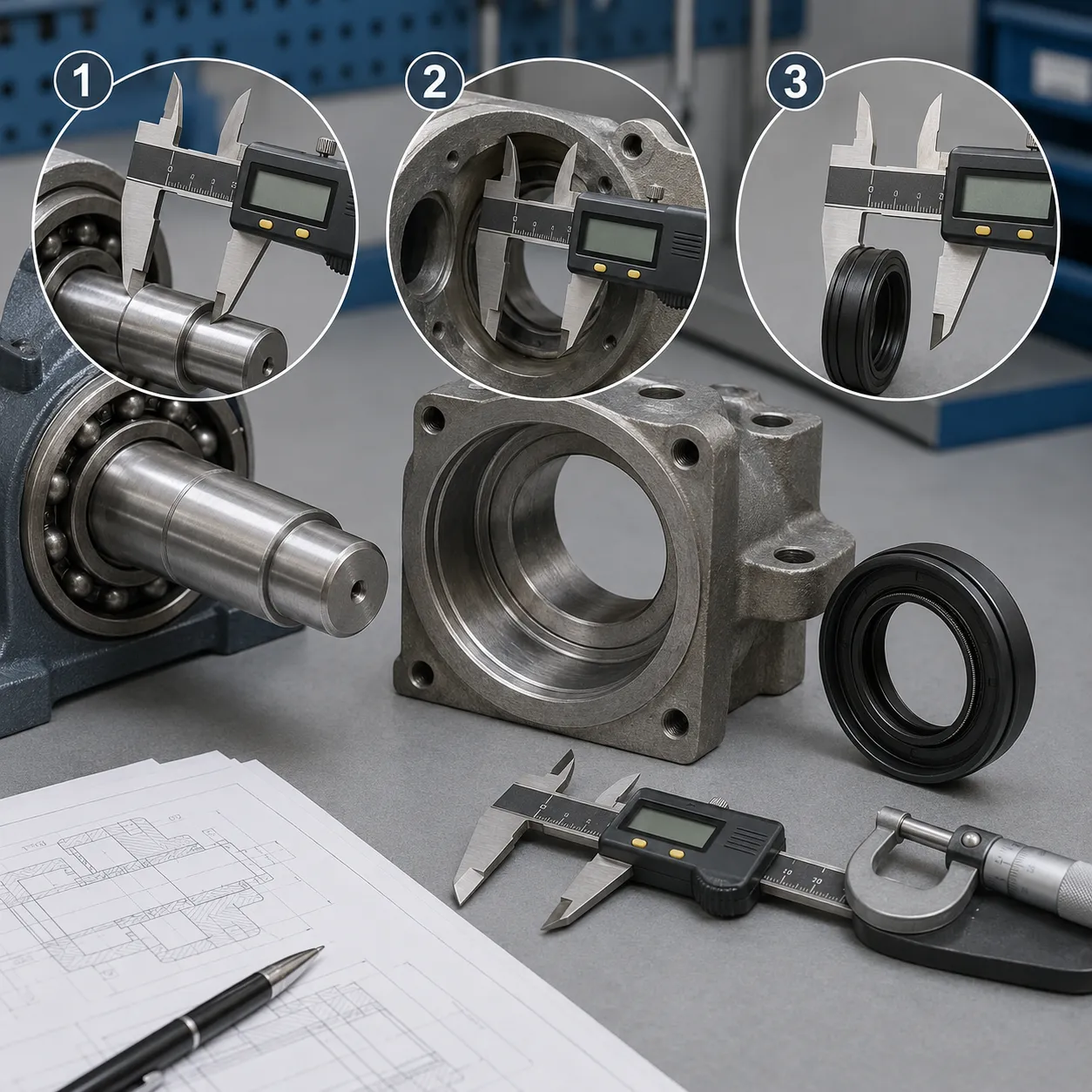
Step 1: Find the Shaft Diameter
Measure the shaft where the main oil seal lip contacts the surface.
This measurement usually identifies the ID.
For example, if the shaft measures 35 mm, look for seals with a 35 mm ID.
Before measuring, inspect the shaft for wear grooves, scratches, rust, or corrosion. A damaged shaft can cause a new seal to leak even when the size is correct.
Step 2: Measure the Housing Bore
Measure the internal bore where the oil seal outer diameter will be installed.
If the housing bore measures 52 mm, look for seals with a 52 mm OD.
The bore should be clean and free from old sealant, rust, burrs, or damage before measurement.
Step 3: Confirm the Installation Width
Measure the available housing depth and compare it with the original seal width.
If the installation space is 7 mm wide, a 7 mm seal may be appropriate. However, a different width may sometimes be possible if there is sufficient clearance and the sealing lip remains in the correct position.
Step 4: Confirm the Seal Type
After identifying ID, OD, and width, check whether the replacement should be TC, SC, TB, SB, cassette, PTFE, or another design.
For example:
A clean indoor gearbox may use a single-lip SC-type seal.
An exposed agricultural shaft may need a TC-type seal with an auxiliary dust lip.
A high-speed or high-temperature application may require a PTFE-based design.
A wheel hub or heavily contaminated environment may require a cassette seal.
Step 5: Confirm Material and Working Conditions
The final step is to match the seal material with the application.
Check:
Fluid type
Maximum operating temperature
Minimum startup temperature
Shaft speed
Pressure condition
Shaft surface condition
Exposure to dust, water, fuel, chemicals, or mud
Required service life
A size chart helps identify dimensions, but it cannot confirm whether NBR, FKM, ACM, PTFE, or another material is correct for the job.
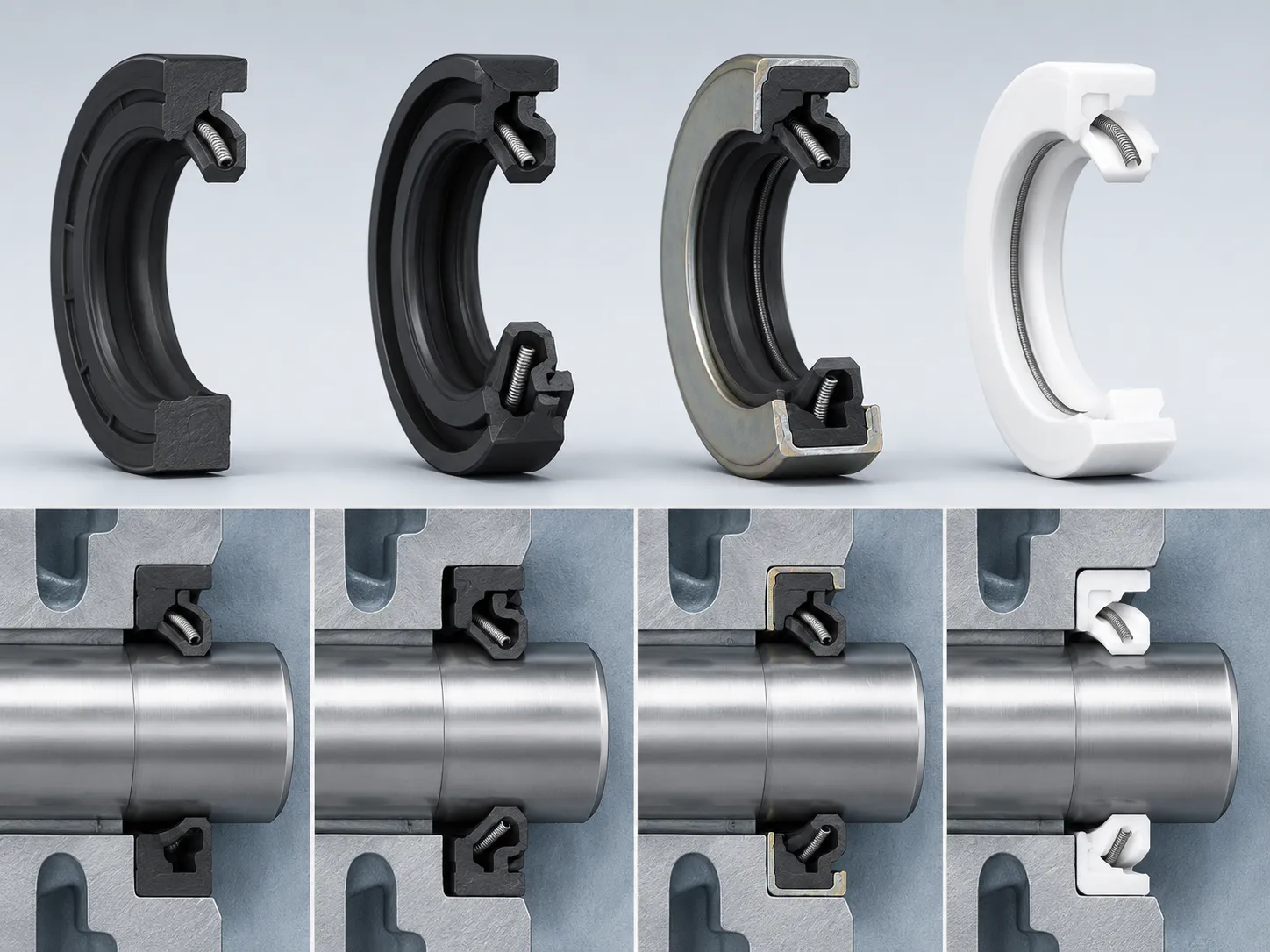
Why the Same Oil Seal Size Can Have Different Types
A 35 × 52 × 7 mm oil seal is not always the same product.
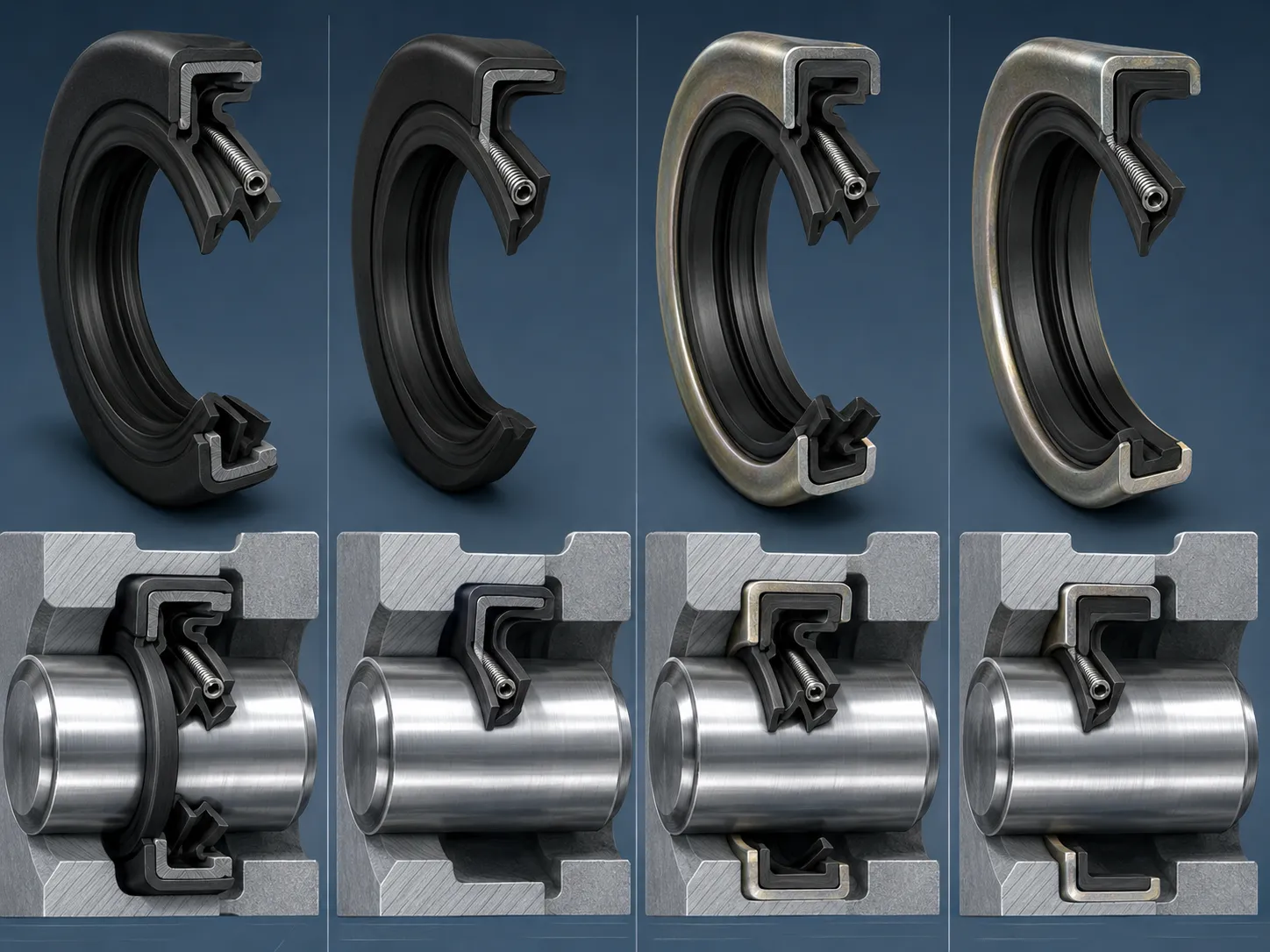
The same dimensions can be supplied with different structures, such as:
Seal Type | Typical Structure | Common Use |
SC | Primary sealing lip, rubber-covered OD | Cleaner, protected applications |
TC | Primary sealing lip plus dust lip, rubber-covered OD | Dusty, wet, or exposed environments |
SB | Single lip with metal outer diameter | Certain industrial or original equipment designs |
TB | Double-lip design with metal outer diameter | Applications needing added contamination protection |
PTFE | Specialized low-friction sealing lip | High-speed, high-temperature, or demanding applications |
Cassette seal | Multi-part heavy-duty sealing assembly | Hubs, axles, agricultural and off-road machinery |
This is why size alone should never be treated as the complete specification.
Before choosing a replacement, compare the original seal profile, outer diameter design, lip arrangement, material, and installation depth.
What to Do When the Original Oil Seal Has No Markings
Old oil seals may have worn, incomplete, or unreadable markings.
When no part number or size is visible, collect the following details:
Shaft diameter
Housing bore diameter
Available width
Photo of both sides of the old seal
Photo of the installation position
Machine, engine, gearbox, pump, or motor model
Fluid type
Operating temperature
Original seal type, if recognizable
Whether the application is exposed to dust or water
Whether the original seal has one lip or two lips
Whether the outer diameter is rubber-covered or metal-covered
If possible, keep the original sample. Even a damaged seal can help confirm the lip profile, spring arrangement, outer diameter design, and installation direction.
Common Mistakes When Reading an Oil Seal Size Chart
Assuming the First Number Is Always the Seal Opening
The first number is generally the nominal shaft diameter, not the visible free opening of the lip.
The lip may appear smaller before installation because it is designed to contact the shaft under controlled tension.
Selecting by Size Only
A seal with the correct ID, OD, and width may still be wrong if the material, lip design, pressure rating, or outer diameter structure does not match the application.
Ignoring Shaft Wear
A shaft with a deep groove may cause repeat leakage even when the new oil seal is the correct size.
Mixing Inch and Metric Sizes
A nearby metric size may look similar to an inch-based seal, but it may not fit correctly.
Always confirm the actual unit and measure precisely.
Using a Different Width Without Checking Clearance
A wider seal may interfere with nearby bearings, retaining rings, gears, pulleys, or housing shoulders.
A narrower seal may place the lip in the wrong position or reduce support in the housing.
Replacing a TC Seal With an SC Seal in a Dirty Environment
An SC seal may physically fit, but it may not provide enough contamination protection for outdoor, agricultural, construction, or dirty industrial applications.
Oil Seal Size Chart Checklist Before Ordering
Before ordering a replacement oil seal, confirm the following:
ID: shaft diameter
OD: housing bore diameter
Width: available installation thickness
Seal type: TC, SC, TB, SB, cassette, PTFE, or other
Outer diameter structure: rubber-covered or metal-covered
Main lip and dust lip configuration
Material: NBR, FKM, ACM, PTFE, or other
Fluid type
Operating temperature
Shaft speed
Pressure condition
Shaft surface condition
Housing bore condition
Installation direction
Original OEM part number or sample
Machine or vehicle application
The more complete the information, the lower the chance of incorrect fitment or repeat leakage.
When Should You Request a Custom Oil Seal?
A standard size chart may not cover every application.
A custom oil seal may be needed when:
The ID, OD, or width is non-standard
The shaft has an unusual step or sealing position
The housing depth is limited
A special lip design is required
The application operates under unusual pressure
The fluid requires a special material
The temperature range is outside standard material capability
The seal must operate in corrosive, dirty, or high-speed conditions
An OEM seal is unavailable or discontinued
A drawing or sample must be reproduced
For custom sealing projects, a technical drawing, original sample, shaft measurement, housing measurement, fluid information, and working conditions are more useful than a size chart alone.
Conclusion
An oil seal size chart is a useful tool for reading and comparing common seal dimensions.
Most oil seals are identified by ID × OD × Width. For example, a 35 × 52 × 7 mm oil seal is generally intended for a 35 mm shaft, a 52 mm housing bore, and a 7 mm width.
However, dimensions are only the starting point. A correct replacement must also match the seal type, lip structure, material, pressure condition, shaft surface, housing design, fluid, temperature, and operating environment.
Before ordering, measure the shaft and housing carefully, confirm the width, compare the original seal structure, and use the size chart as a reference rather than the final decision.
For oil seal size identification, SealVendor can support standard size matching, TC and SC type confirmation, material selection, sample-based identification, OEM reference checks, and drawing-based custom oil seal solutions.