
🟢 Introduction
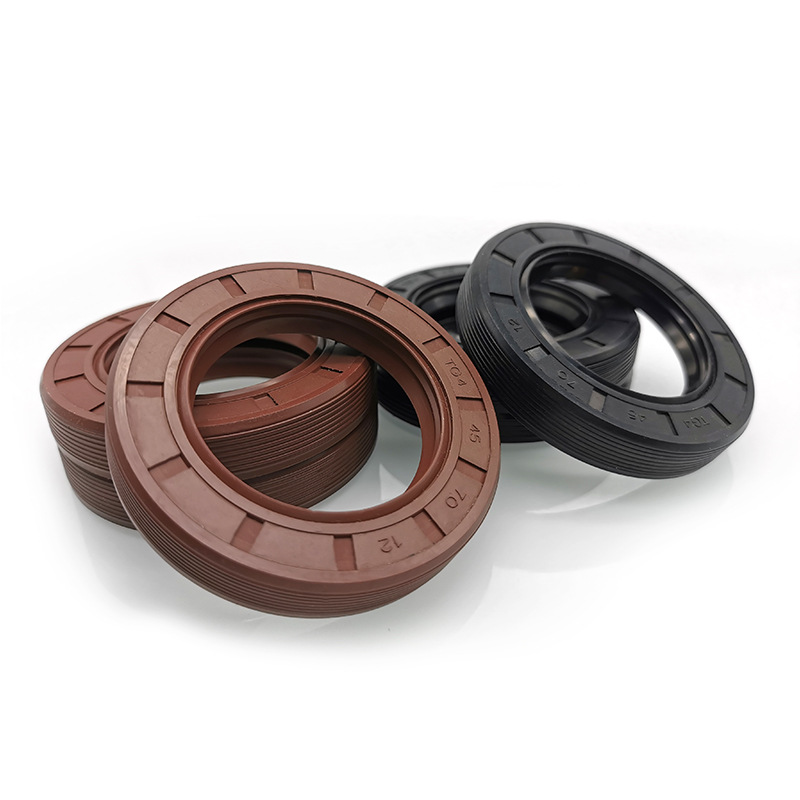
An oil seal is a key mechanical component used to prevent lubricant leakage and block contaminants such as dust, dirt, and moisture from entering rotating equipment.
It is widely used in automotive systems, hydraulic equipment, industrial machinery, and many other engineering applications where reliable sealing performance is required.
Understanding oil seals helps you choose the right type, material, and size for your application, ensuring longer equipment life and stable operation.
🟢 1. What Is an Oil Seal?
An oil seal is a sealing device installed between stationary and moving parts, typically around a rotating shaft.
Its main functions are:
Prevent oil or lubricant leakage
Block external contaminants
Maintain internal pressure balance
Reduce wear on mechanical components
Oil seals are essential in systems where lubrication must be retained while allowing rotation.
🟢 2. How Does an Oil Seal Work?
An oil seal works by creating a tight contact between its sealing lip and the rotating shaft.
The sealing lip is usually made of elastomer material and is reinforced with a metal case and spring to maintain constant pressure.
This structure ensures:
Continuous sealing contact
Resistance to pressure and friction
Long service life under dynamic conditions
🟢 3. Types of Oil Seals
Different applications require different oil seal structures:
Single Lip Oil Seal – general purpose sealing
Double Lip Oil Seal – improved dust protection
TC Type Oil Seal – most commonly used industrial standard
Skeleton Oil Seal – metal-reinforced structure for durability
Customized Oil Seals – designed for special working conditions
🟢 4. Oil Seal Materials
Material selection is critical for performance:
NBR (Nitrile Rubber) – good oil resistance, widely used
FKM (Viton®) – high temperature and chemical resistance
EPDM – excellent water and weather resistance
Silicone – suitable for extreme temperature flexibility
PTFE (Teflon) – high chemical resistance and low friction
🟢 5. Applications of Oil Seals
Oil seals are widely used in:
Automotive engines and gearboxes
Hydraulic systems
Industrial machinery
Agricultural equipment
Pumps and compressors
🟢 6. How to Choose the Right Oil Seal
To select the correct oil seal, you should consider:
Shaft diameter (ID / OD)
Working temperature
Pressure conditions
Medium type (oil, water, grease, etc.)
Rotation speed
If you are unsure, you can contact us with your application details for technical support.
🟢 7. Custom Oil Seal Solutions
We provide custom oil seal manufacturing based on:
Drawings
Samples
Technical requirements
We support non-standard sizes, special materials, and application-specific designs.
🟢 FAQ
Q1: What is the main function of an oil seal?
An oil seal prevents lubricant leakage and blocks contaminants from entering mechanical systems.
Q2: What materials are commonly used for oil seals?
NBR, FKM, EPDM, silicone, and PTFE are commonly used depending on working conditions.
Q3: Can oil seals be customized?
Yes, we provide OEM and custom oil seal solutions based on drawings or samples.
Q4: How do I choose the right oil seal?
You should consider size, material, temperature, pressure, and application type.
Q5: Do you support bulk orders?
Yes, we support both small batch and bulk industrial orders.