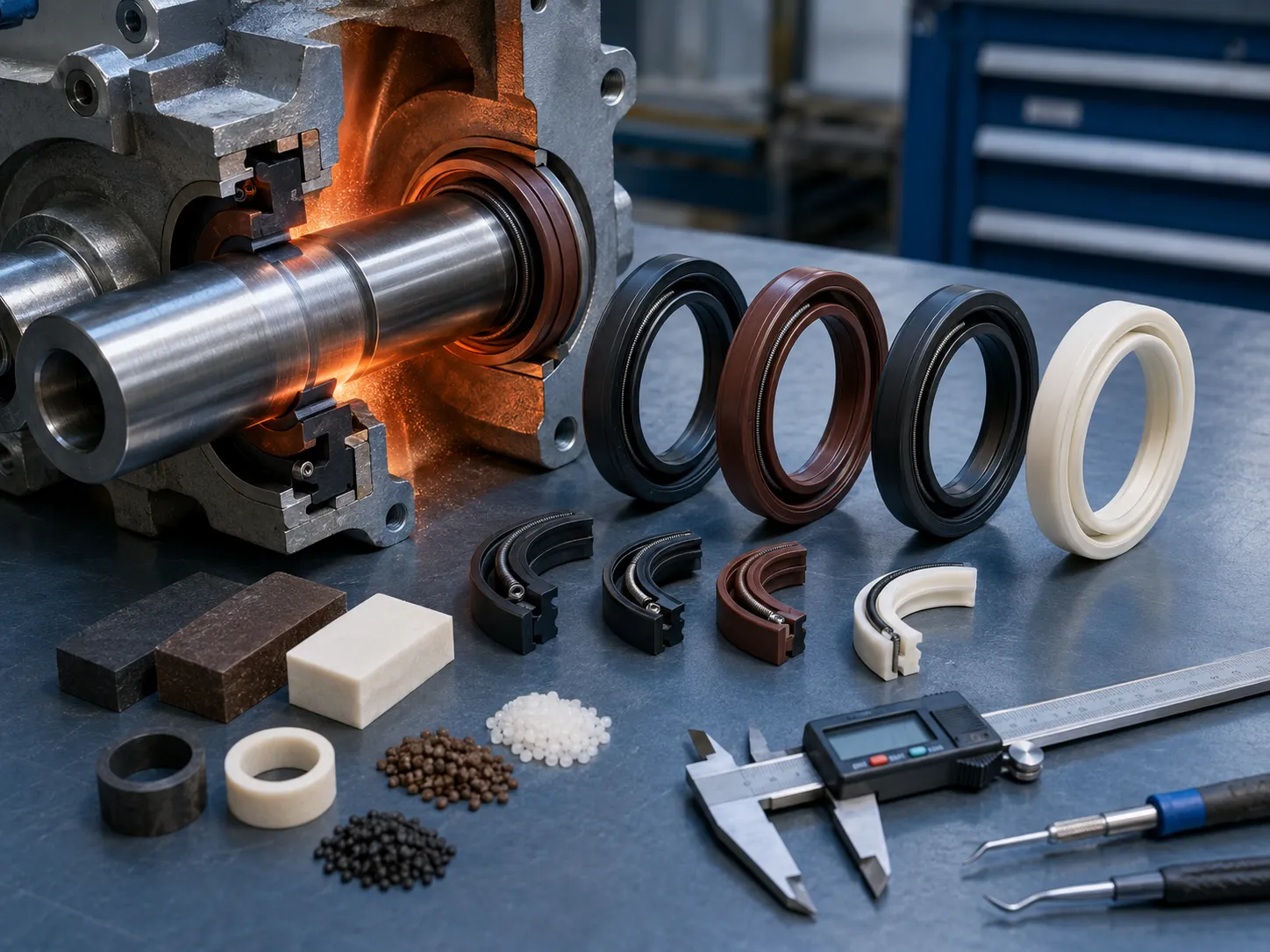
NBR and FKM are two of the most widely used elastomer materials for rotary oil seals. Both can provide reliable sealing performance when selected correctly, but they are designed for different operating conditions.
NBR is often chosen for standard oil sealing applications because it offers good oil resistance, practical mechanical properties, and cost-effective performance. FKM is usually selected when higher temperatures, more demanding oils, fuels, or harsh chemical conditions are involved.
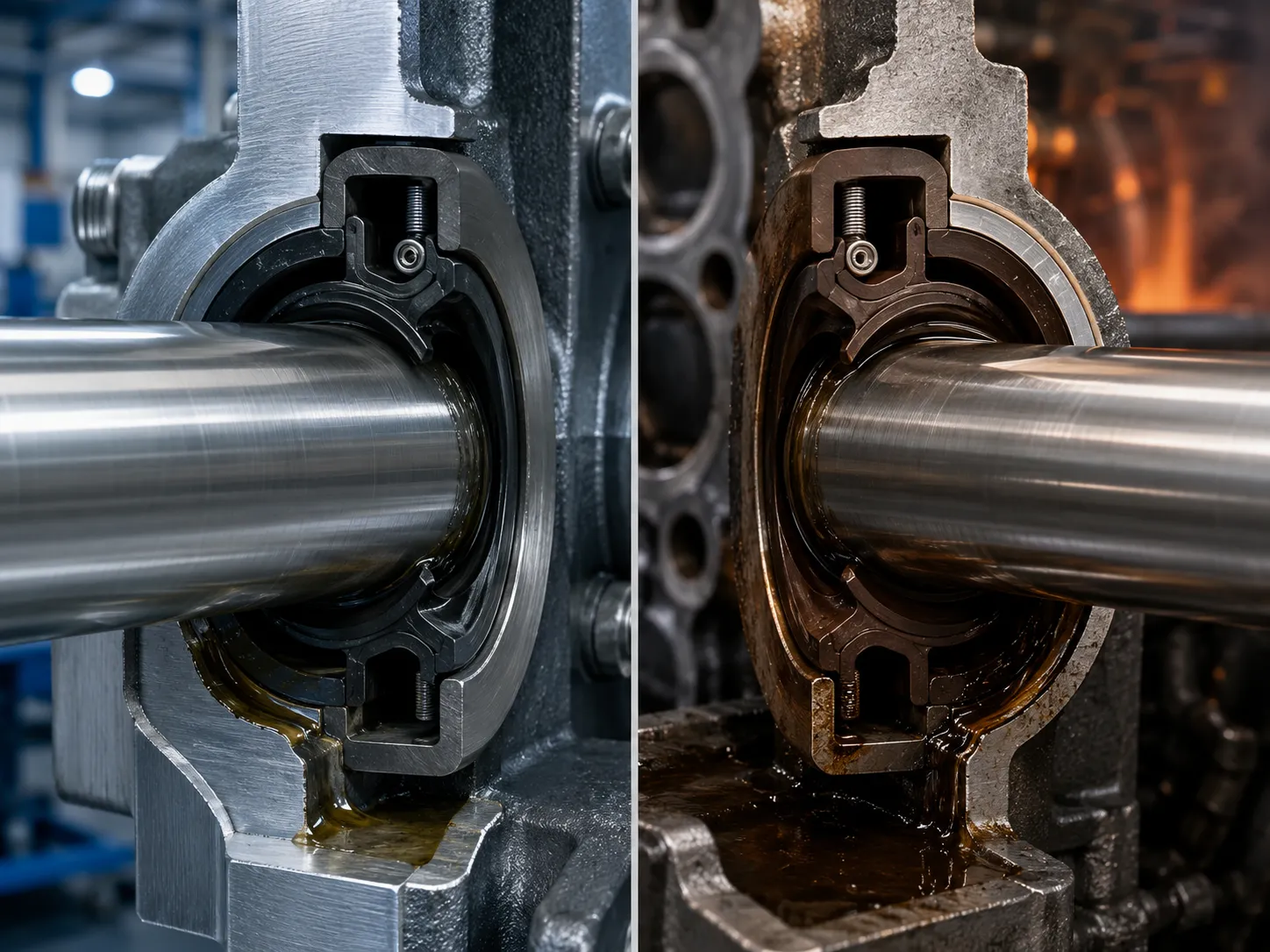
The right choice is not simply “NBR for low cost” and “FKM for better quality.” A seal material must match the actual fluid, operating temperature, shaft speed, pressure, environment, and service life requirement. Using FKM where NBR is fully suitable may add unnecessary cost. Using NBR where FKM is required may lead to hardening, swelling, leakage, or early seal failure.
This guide explains the main differences between NBR and FKM oil seals, their temperature ranges, typical applications, and the key factors to consider before choosing a material.
What Are NBR and FKM Oil Seals?
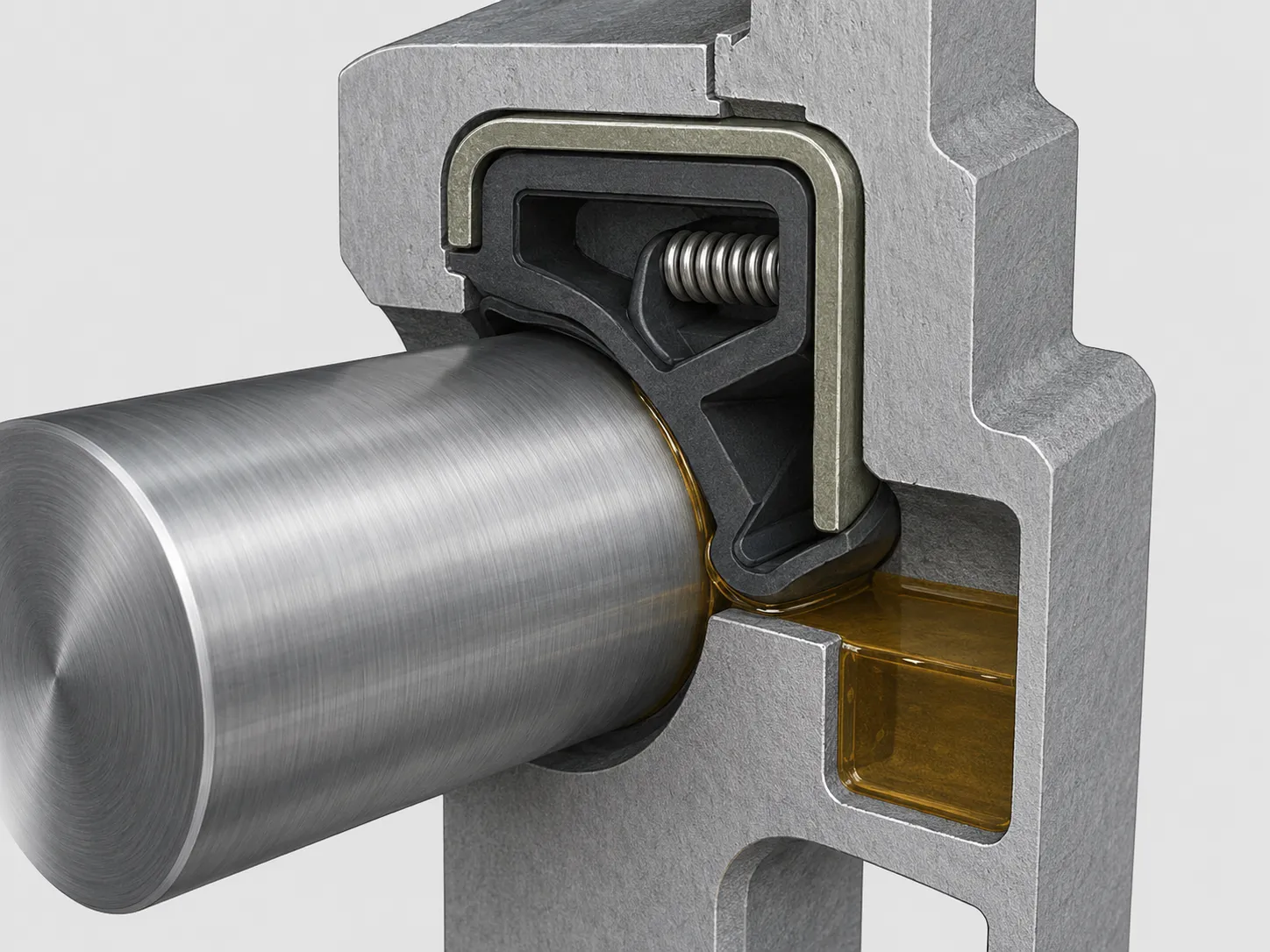
An oil seal, also called a rotary shaft seal or radial shaft seal, is designed to retain oil, grease, or lubricant inside a housing while allowing a shaft to rotate.
The main sealing lip is usually made from an elastomer material. This material must remain flexible enough to maintain contact with the shaft while resisting heat, oil, friction, pressure changes, and contamination.
What Is NBR?
NBR stands for nitrile butadiene rubber. It is one of the most commonly used materials for standard oil seals, O-rings, gaskets, and industrial rubber components.
NBR is widely used because it offers good resistance to many mineral oils, lubricants, greases, and petroleum-based fluids. It also provides good mechanical strength and practical sealing performance in moderate-temperature applications.
For many general-purpose oil seal applications, NBR is a reliable and cost-effective choice.
What Is FKM?
FKM is a fluorocarbon elastomer commonly selected for higher-temperature and more chemically demanding sealing applications.
Compared with standard NBR, FKM generally provides stronger resistance to heat, engine oils, transmission fluids, fuels, synthetic lubricants, and many aggressive chemical environments.
FKM is often used in automotive engines, transmissions, turbocharged systems, high-temperature gearboxes, pumps, industrial machinery, and other applications where standard NBR may harden or lose performance too quickly.
NBR vs FKM Oil Seals: Quick Comparison
Property | NBR Oil Seal | FKM Oil Seal |
|---|---|---|
General cost level | Usually lower | Usually higher |
Typical continuous temperature range | Approx. -30°C to +100°C | Approx. -20°C to +200°C |
Resistance to standard mineral oils | Good | Excellent |
Resistance to high temperatures | Moderate | Excellent |
Resistance to fuels and aggressive fluids | Limited to moderate, depending on fluid | Generally stronger |
Low-temperature flexibility | Often better than standard FKM | Can be more limited in standard grades |
Resistance to aging at high heat | Moderate | Strong |
Typical applications | Standard engines, gearboxes, pumps, general machinery | High-temperature engines, transmissions, industrial systems, demanding fluids |
Best use case | Normal operating conditions with compatible lubricants | High heat, aggressive oil exposure, long service intervals, demanding environments |
The figures in this table are general guidelines. Actual performance depends on the compound formulation, seal design, shaft finish, pressure, lubrication, and working conditions.
Temperature Range: NBR vs FKM
Temperature is one of the biggest differences between NBR and FKM.
NBR Temperature Range
For many standard oil seal applications, NBR is commonly used in moderate operating conditions. A typical continuous temperature range is often around:
Approx. -30°C to +100°C
NBR can work well in many normal engine, gearbox, pump, agricultural machinery, and industrial equipment applications when the fluid and temperature remain within its suitable range.
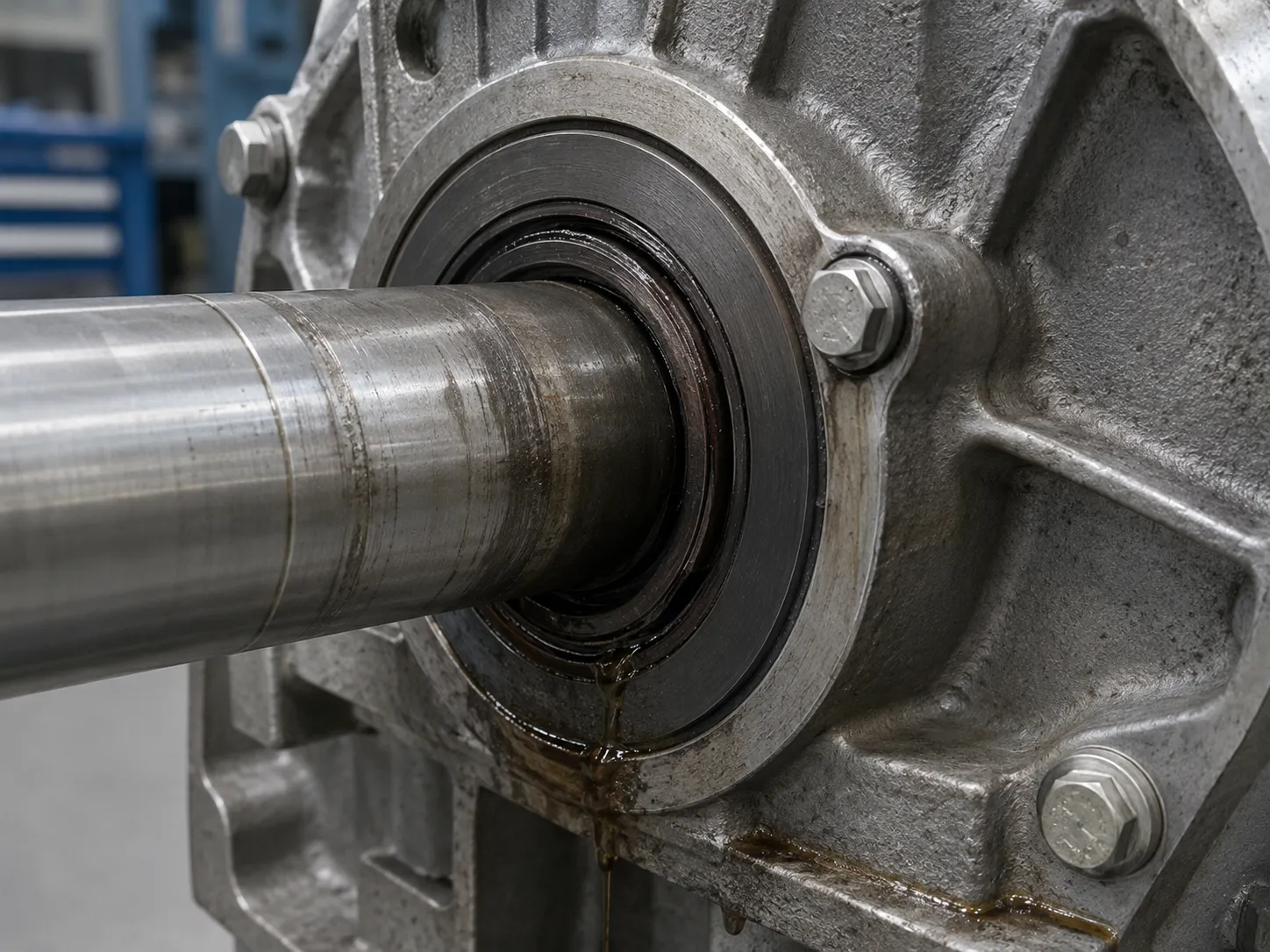
However, prolonged exposure to excessive heat can cause NBR to harden, shrink, crack, or lose flexibility. Once the sealing lip becomes hard, it may no longer maintain stable contact with the shaft.
NBR may be suitable when:
Operating temperatures remain moderate
Standard lubricating oils are used
Heat exposure is limited
Cost control is important
The equipment does not operate continuously at high temperature
FKM Temperature Range
FKM is generally selected for higher-temperature environments. A typical continuous temperature range for many standard FKM oil seal compounds is often around:
Approx. -20°C to +200°C
FKM can retain sealing performance at temperatures where standard NBR may begin to harden or lose elasticity.
This makes FKM useful for applications such as:
High-temperature automotive engines
Turbocharged engine systems
Transmission and drivetrain components
Industrial gearboxes with sustained heat
High-speed rotating equipment
Equipment exposed to synthetic oils or aggressive additives
Long-service applications where heat aging is a concern
However, higher temperature resistance does not mean FKM is automatically the best choice for every seal. Standard FKM can have weaker low-temperature flexibility than NBR, and it may not be the best material for very cold conditions unless a low-temperature FKM compound is selected.
Oil and Fluid Resistance
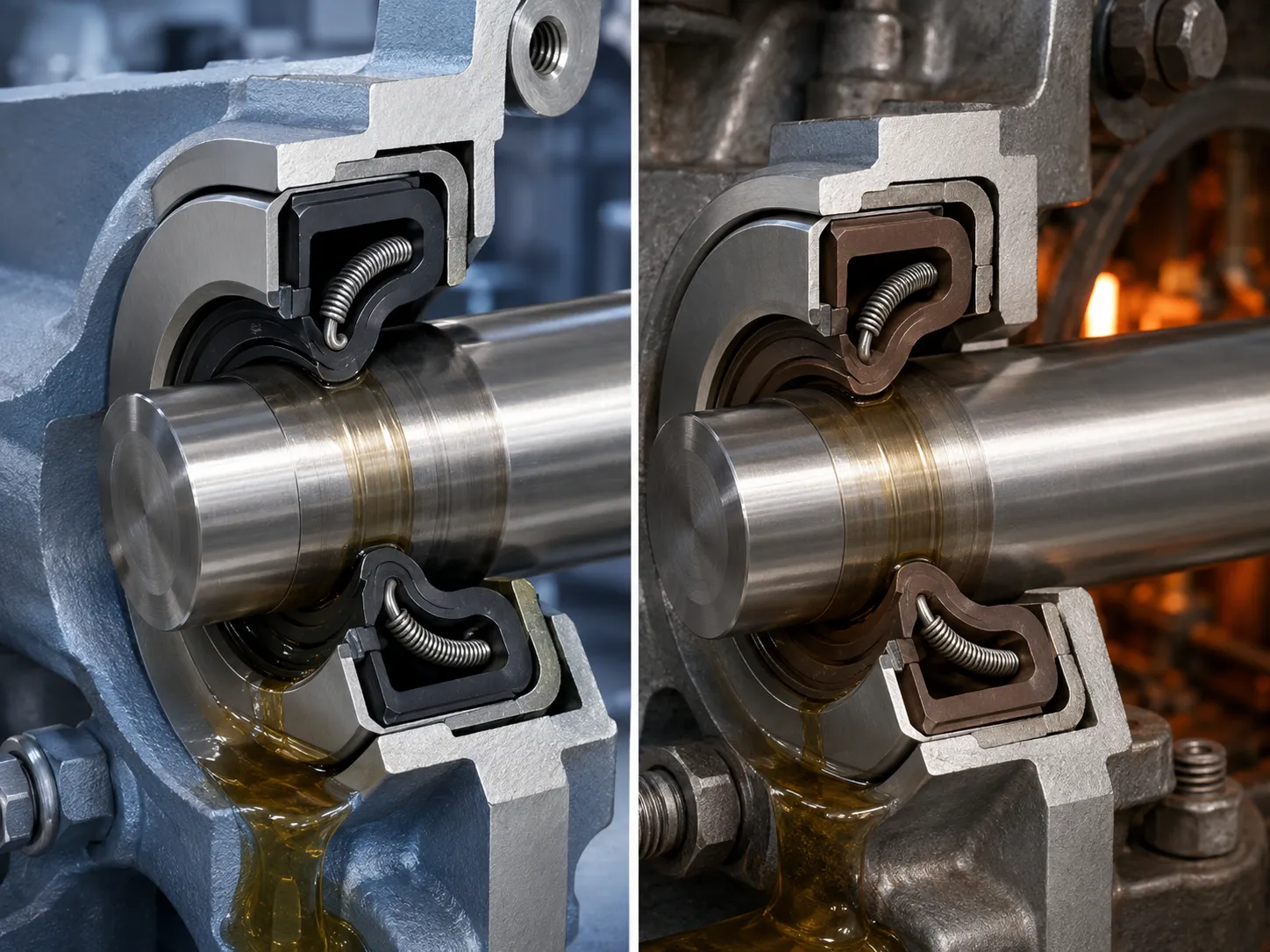
The fluid inside the system is just as important as temperature.
A seal material may appear suitable based on temperature alone but still fail if it is exposed to an incompatible oil, fuel, additive package, solvent, or chemical.
NBR Oil Resistance
NBR is widely used because it performs well with many standard mineral oils, petroleum-based lubricants, greases, and hydraulic oils.
It is commonly suitable for:
Standard engine oils
Gear oils
Mineral hydraulic oils
Lubricating greases
General industrial oils
Conventional automotive sealing applications
However, NBR may not be suitable for every fuel, solvent, synthetic lubricant, chemical additive package, or high-temperature fluid environment.
At higher temperatures, fluid compatibility becomes more important. A material that performs well at room temperature may swell, harden, or degrade more quickly when exposed to the same fluid under sustained heat.
FKM Oil and Chemical Resistance
FKM generally offers stronger resistance to high-temperature oils, fuels, synthetic lubricants, and many demanding fluid environments.
It is often selected for applications involving:
High-temperature engine oil
Automatic transmission fluid
Synthetic lubricants
Fuel exposure
High-performance automotive systems
Chemical processing equipment
Industrial pumps and compressors
Aggressive oil additives
Extended service intervals
FKM is especially useful when a seal must maintain performance under both heat and fluid exposure. This combination is one reason FKM is frequently used in demanding automotive and industrial applications.
Even with FKM, material selection should not be based only on the label. Different FKM formulations can have different chemical resistance, low-temperature behavior, hardness, and long-term aging performance.
Low-Temperature Performance and Flexibility
Higher heat resistance does not always mean better cold performance.
NBR often maintains flexibility well in moderate cold conditions. This can make it suitable for equipment that operates in normal outdoor, warehouse, agricultural, and general industrial environments.
Standard FKM compounds may become less flexible at lower temperatures than NBR. In very cold environments, this can affect the ability of the sealing lip to maintain contact with the shaft.
For low-temperature applications, check:
Minimum startup temperature
Ambient temperature during storage and operation
Shaft speed during cold starts
Fluid viscosity at low temperature
Whether the equipment operates outdoors
Whether a low-temperature FKM compound is required
Whether HNBR, silicone, or another specialized material may be more suitable
Material selection should always consider both the highest and lowest real operating temperatures.
Mechanical Performance, Shaft Speed, and Wear
NBR and FKM are not selected based on temperature alone. Shaft speed, lip load, friction, vibration, pressure, and shaft surface condition all affect seal life.
NBR offers practical mechanical properties for many standard oil seal applications. It can provide good performance in normal rotating equipment when the shaft surface is smooth, lubrication is adequate, and temperature remains moderate.
FKM is often preferred in demanding high-temperature conditions because it can resist heat aging more effectively. However, FKM is not automatically superior for every wear condition or shaft speed.
The best material depends on the complete operating condition, including:
Shaft speed
Surface finish
Shaft hardness
Shaft runout
Misalignment
Pressure level
Lubrication quality
Fluid type
Operating temperature
Contamination level
Required service life
A high-quality FKM seal can still fail early if it is installed on a grooved shaft, exposed to excessive pressure, or used with poor alignment. An NBR seal can perform reliably for a long time when operating conditions remain within its limits.
Common NBR Oil Seal Applications
NBR oil seals are commonly used in general-purpose applications where temperatures are moderate and fluids are compatible.
Typical NBR applications include:
Standard automotive engines
Conventional gearboxes
Agricultural machinery
Hydraulic pumps
Electric motors
Industrial gear reducers
General machinery
Low-to-moderate temperature oil systems
Axle seals
Wheel hub seals
Standard transmission components
Pumps and compressors
NBR may be the right choice when the application does not require high-temperature resistance, aggressive fluid compatibility, or extended operation under severe conditions.
For many standard replacement seals, NBR provides a good balance between performance and cost.
Common FKM Oil Seal Applications
FKM oil seals are commonly selected for hotter, more chemically demanding, or higher-performance applications.
Typical FKM applications include:
High-temperature automotive engines
Turbocharged engines
Performance vehicles
Heavy-duty transmission systems
Industrial gearboxes with sustained heat
High-speed rotating shafts
Oil pumps and compressors
Chemical processing equipment
Equipment using synthetic lubricants
Fuel-exposed sealing areas
High-temperature hydraulic and lubrication systems
Industrial machinery with extended service intervals
FKM is often a better option when seal failure could lead to costly downtime, oil contamination, repeat maintenance, or damage to nearby components.
When Is NBR Enough?
NBR is often enough when the application uses standard lubricants and operates within a moderate temperature range.
NBR may be a practical choice when:
Temperature remains below the material’s recommended operating limit
The system uses standard mineral oil or compatible lubricant
The shaft speed is moderate
The application is not exposed to aggressive chemicals
The machine does not operate continuously under severe heat
The seal is used in a general industrial or replacement application
Cost control is an important factor
Choosing NBR in a suitable application is not a compromise. It is often the correct engineering choice.
When Should You Choose FKM?
FKM should be considered when the operating environment is more demanding.
FKM may be the better option when:
Operating temperatures are consistently high
The seal is close to exhaust, turbocharger, or hot engine areas
The system uses synthetic oils or aggressive additives
The seal is exposed to fuel or chemical vapors
The equipment runs for long periods under heat
The application requires stronger heat-aging resistance
The cost of repeat failure is high
The machine operates in a demanding automotive, industrial, or chemical environment
Choosing FKM can help improve long-term sealing performance when heat and fluid resistance are the main concerns.
Can You Replace an NBR Oil Seal With an FKM Oil Seal?
In many cases, an FKM seal can be used as an upgrade from NBR if the dimensions, lip design, housing fit, shaft condition, and installation requirements are correct.
However, replacing NBR with FKM should not be treated as an automatic upgrade.
Before changing materials, check:
Seal dimensions
Seal profile
Lip configuration
Shaft surface condition
Housing bore fit
Fluid compatibility
Operating temperature
Low-temperature requirement
Shaft speed
Installation method
Spring material compatibility
Required pressure capability
For example, FKM may improve high-temperature performance but may not be ideal for very low-temperature startup conditions unless a suitable low-temperature compound is used.
The right material is the one that best matches the full application, not simply the one with the higher price.
Common Mistakes When Choosing Between NBR and FKM
Choosing Only by Price
NBR is usually more cost-effective, but using it in a high-temperature application can cause early failure and higher replacement cost later.
Choosing Only by Maximum Temperature
Temperature is important, but fluid compatibility, shaft speed, pressure, and cold-start conditions also matter.
Ignoring the Actual Fluid
The lubricant may contain additives, synthetic base oils, fuel contamination, or chemical exposure that changes material compatibility.
Replacing the Seal Without Checking the Shaft
A new FKM seal will not solve leakage caused by a grooved, scratched, corroded, or misaligned shaft.
Using the Wrong Seal Design
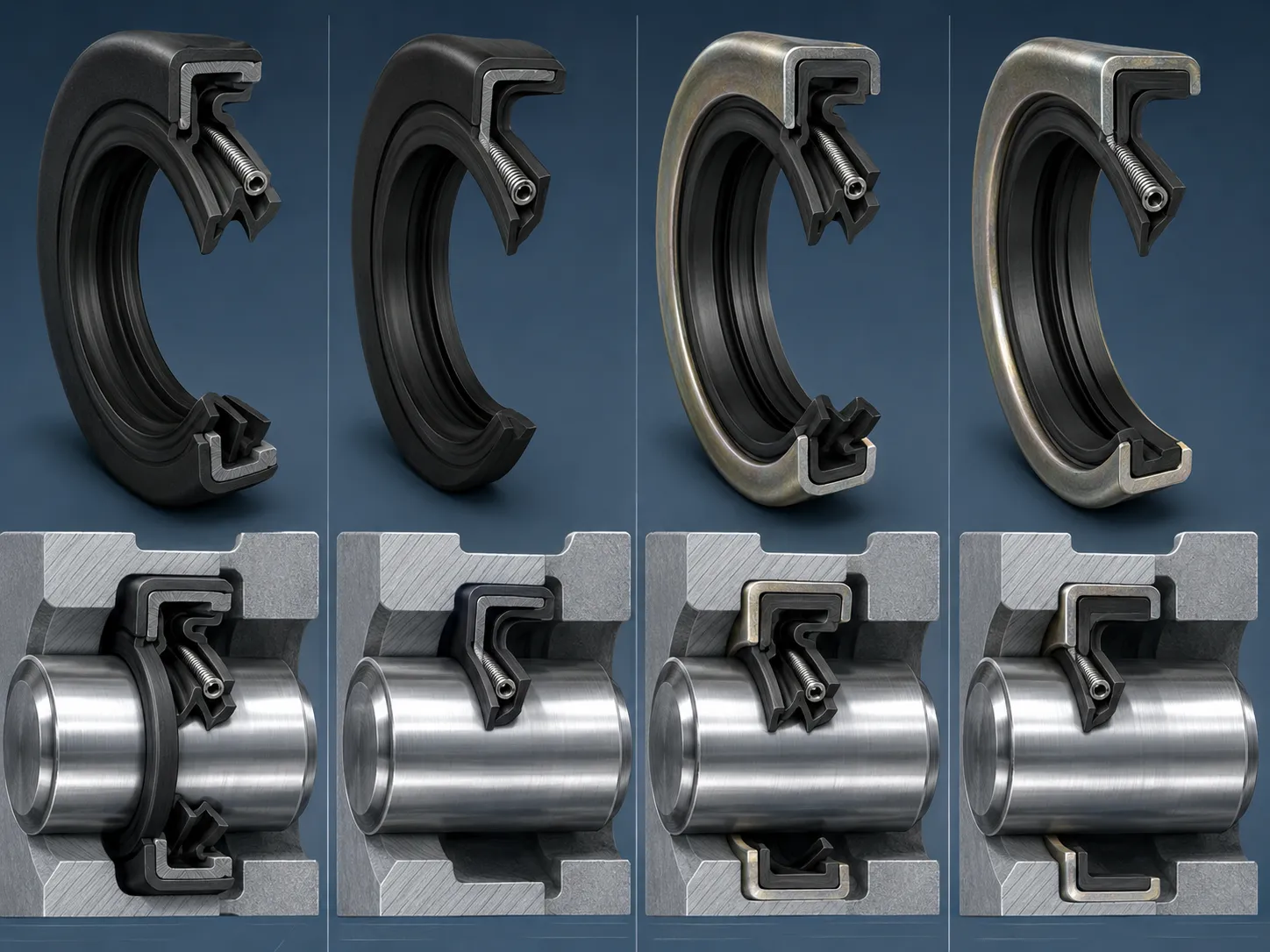
The correct material is only one part of seal selection. The seal must also have the correct inner diameter, outer diameter, width, lip design, spring configuration, and installation direction.
Assuming All FKM Compounds Are the Same
Different FKM compounds can vary in chemical resistance, hardness, low-temperature performance, and temperature capability. Always confirm the actual compound specification when the application is demanding.
How to Choose the Right Oil Seal Material
Before selecting NBR or FKM, collect as much application information as possible.
Key details include:
Shaft diameter
Housing bore diameter
Seal width
Seal position
Fluid type
Fluid additives
Minimum operating temperature
Maximum continuous operating temperature
Shaft speed
Pressure condition
Shaft surface finish
Shaft runout or vibration
Exposure to dust, water, fuel, or chemicals
Required service life
Existing seal material
OEM part number, sample, or drawing
A correct material decision should be based on the entire operating environment.
For standard applications, NBR may provide reliable and economical performance. For high-temperature, high-performance, or chemically demanding environments, FKM may provide better long-term protection against leakage and material degradation.
Conclusion
NBR and FKM oil seals are both widely used, but they serve different operating conditions.
NBR is a practical choice for standard oil sealing applications with moderate temperatures and compatible lubricants. It is commonly used in general machinery, engines, gearboxes, pumps, and industrial equipment where operating conditions are not extreme.
FKM is better suited to high-temperature, high-performance, fuel-exposed, synthetic-oil, or chemically demanding applications. Its higher heat and fluid resistance can help reduce the risk of hardening, cracking, and early leakage in severe service conditions.
The best choice depends on more than temperature. Before selecting an oil seal, confirm the fluid, shaft condition, speed, pressure, low-temperature requirements, seal dimensions, and lip design.
For oil seal material selection, SealVendor can support NBR, FKM, ACM, PTFE, and other material options based on application requirements, existing samples, OEM references, technical drawings, and working conditions.