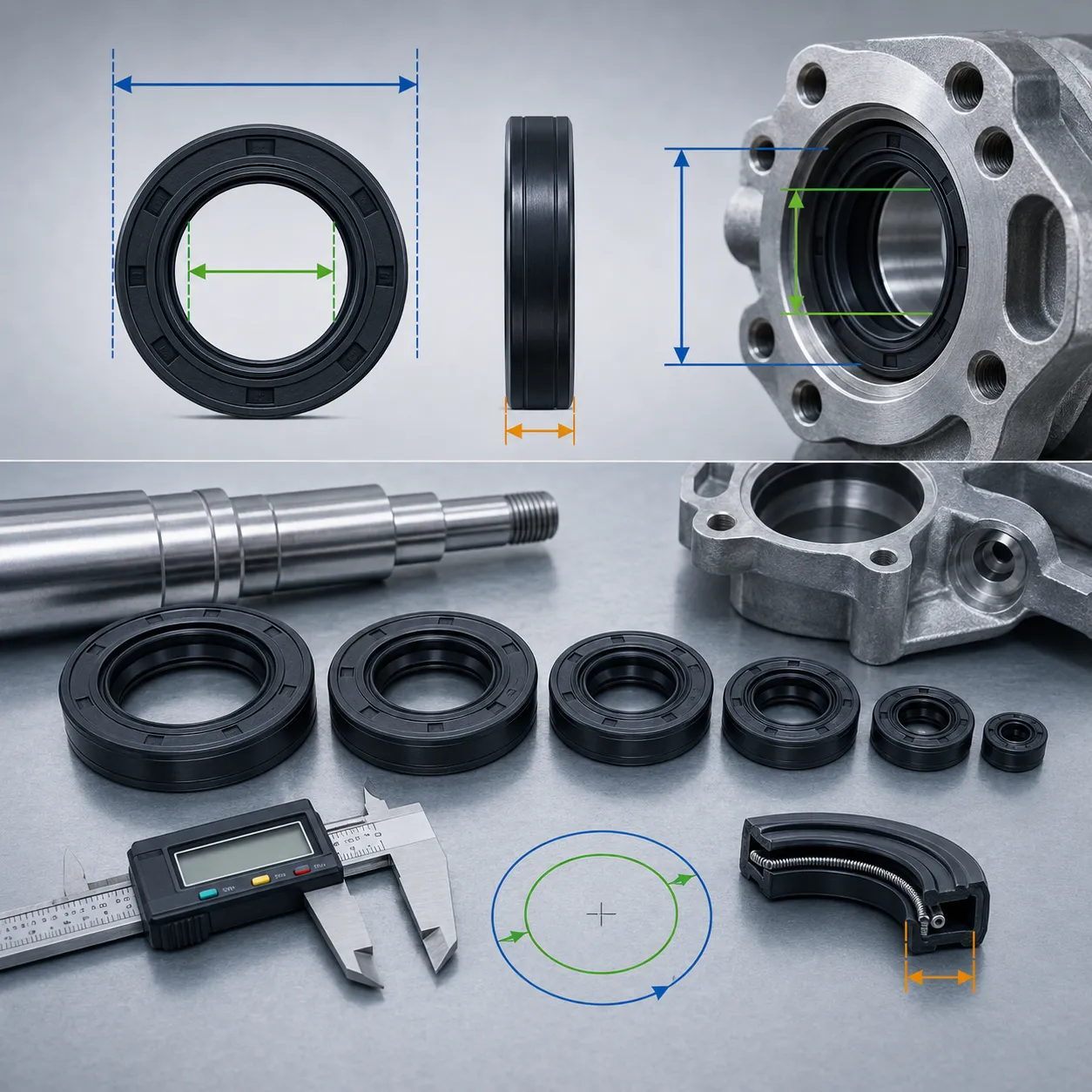
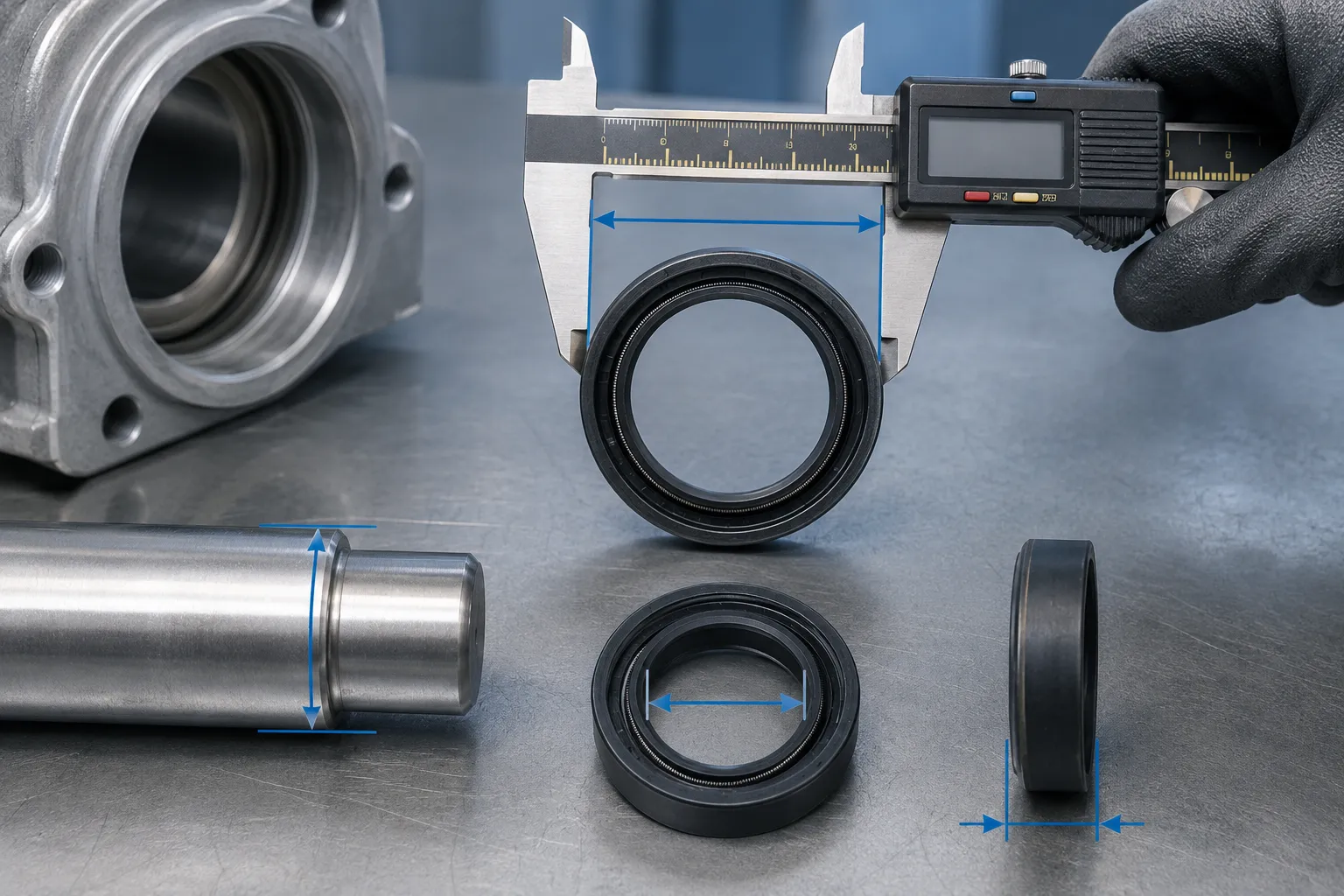
Choosing the right oil seal size is one of the most important steps in preventing repeat leakage. A seal that looks close in size may still fail if the inner diameter does not match the shaft, the outer diameter does not fit the housing bore correctly, or the width is unsuitable for the available installation space.
Most rotary oil seals are identified by three dimensions:
Inner diameter, or ID
Outer diameter, or OD
Width
For example, an oil seal marked 35 × 52 × 7 mm usually refers to a seal designed for a 35 mm shaft, a 52 mm housing bore, and a 7 mm installation width.
However, size alone is not enough. The correct replacement oil seal must also match the shaft condition, housing design, material, lip configuration, fluid type, temperature range, pressure condition, and working environment.
This guide explains how to measure oil seal dimensions correctly, how to read common size markings, and what to check before choosing a replacement seal.
What Do Oil Seal ID, OD, and Width Mean?
Most rotary oil seals are identified using three basic dimensions:
ID × OD × Width
For example:
35 × 52 × 7 mm
This normally means:
ID: 35 mm — nominal shaft diameter
OD: 52 mm — housing bore diameter
Width: 7 mm — seal thickness along the shaft axis
These dimensions are essential because an oil seal must fit both the rotating shaft and the stationary housing correctly.
Inner Diameter: ID
The inner diameter is the nominal shaft size that the oil seal is designed to fit.
For a 35 × 52 × 7 mm oil seal, the 35 mm dimension normally refers to the shaft diameter at the sealing surface.
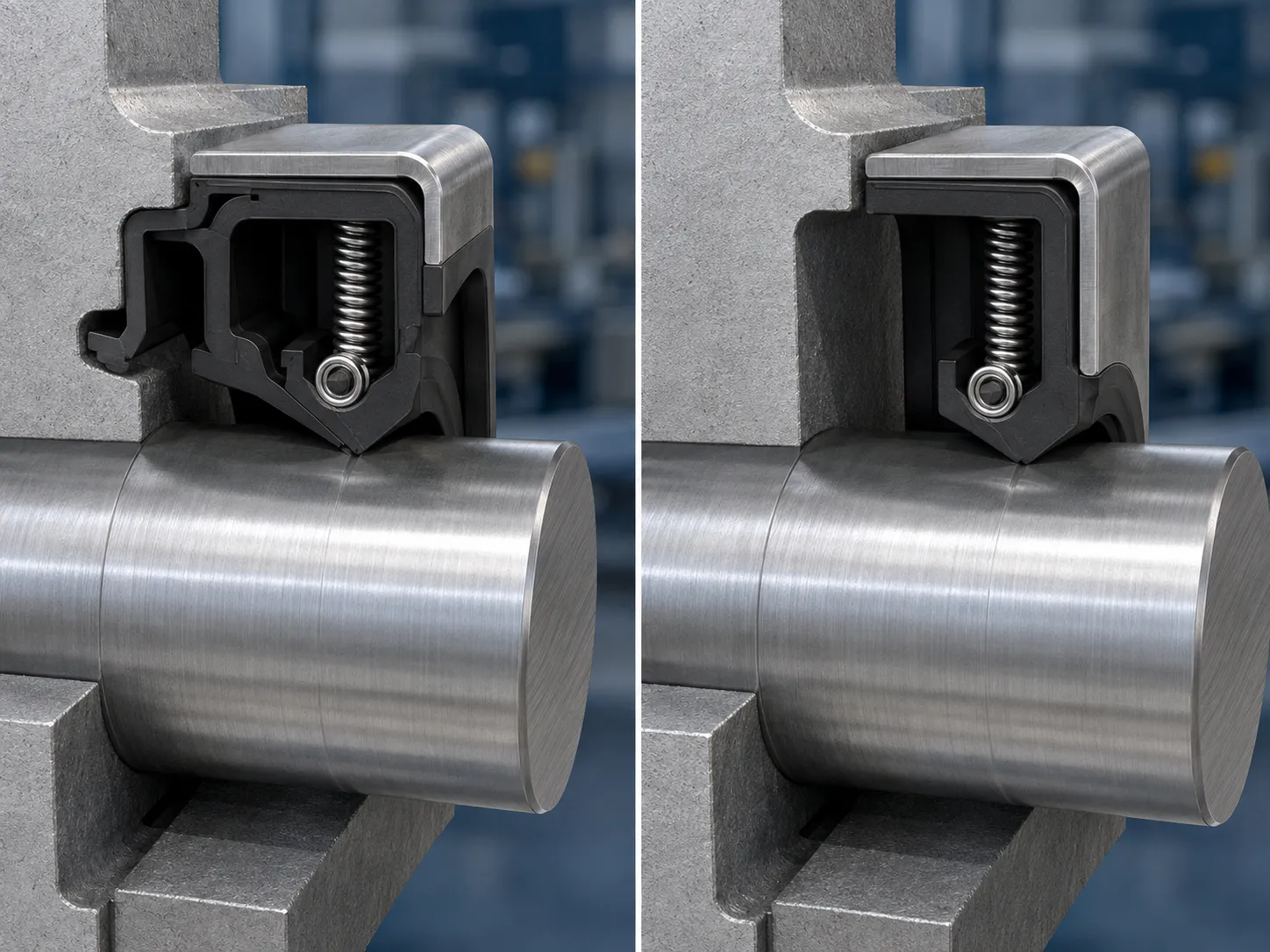
The free opening of the sealing lip may appear slightly smaller than the shaft before installation. This is normal. The lip is designed to apply controlled contact pressure against the shaft once installed.
For this reason, do not rely only on the opening of an old seal lip when identifying the size. The more reliable reference is the actual shaft diameter where the main sealing lip operates.
Outer Diameter: OD
The outer diameter is the seal dimension that fits into the housing bore.
For a 35 × 52 × 7 mm seal, the 52 mm dimension normally refers to the housing bore diameter.
The seal outer diameter must fit securely in the housing. If the OD is too small, the seal may move, rotate in the bore, or leak around its outside diameter. If the OD is too large, installation can be difficult and the seal case or elastomer coating may be damaged.
Width
The width is the thickness of the oil seal measured along the shaft axis.
For a 35 × 52 × 7 mm seal, the width is 7 mm.
Width affects how the seal sits in the housing and where the sealing lip contacts the shaft. A seal with the correct ID and OD may still be unsuitable if it is too wide, too narrow, or places the lip on a worn section of the shaft.
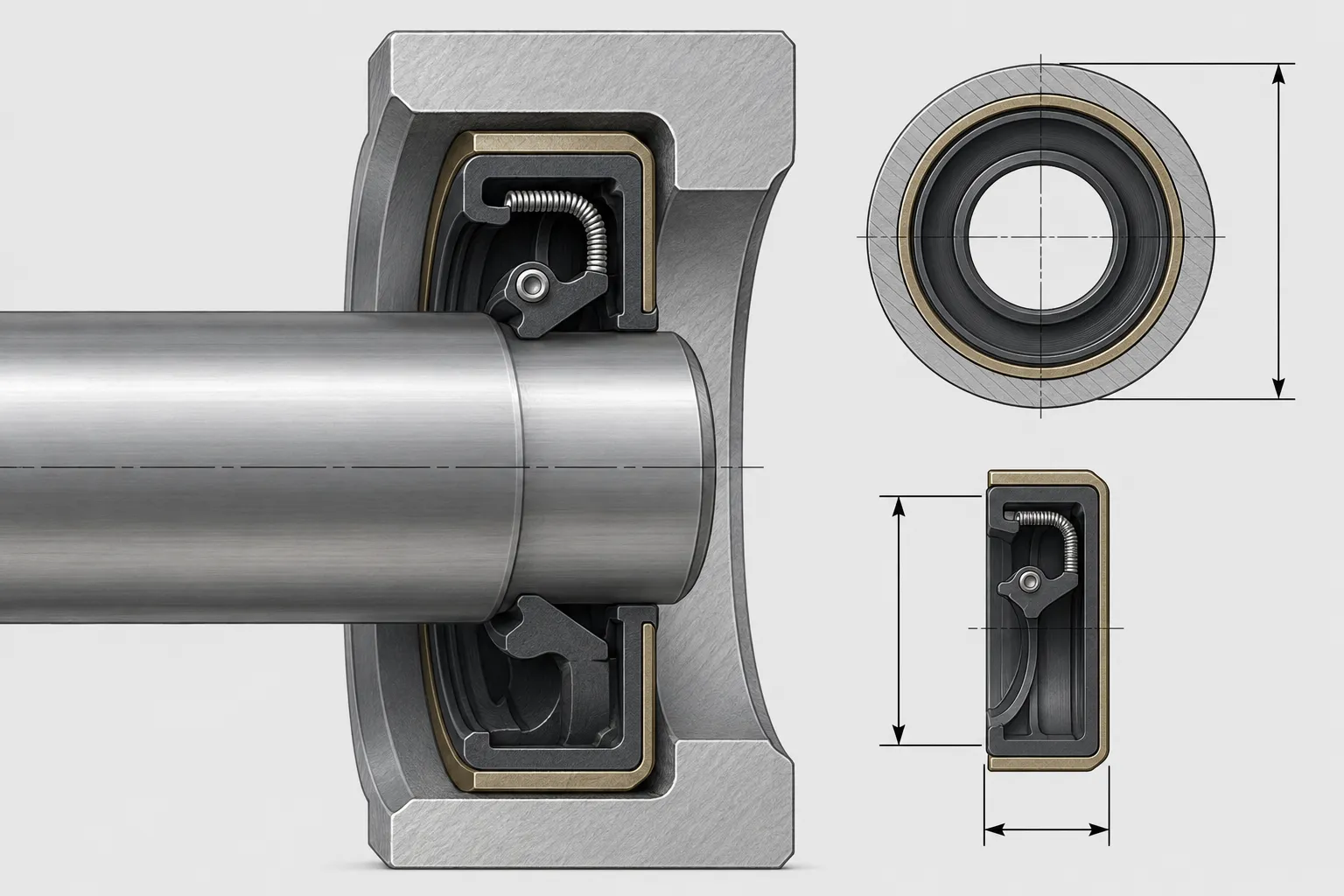
How to Read Oil Seal Size Markings
Many oil seals have size markings printed, molded, or stamped on the visible face.
A common format is:
ID × OD × W
Examples include:
20 × 35 × 7 mm
25 × 47 × 7 mm
35 × 52 × 7 mm
40 × 62 × 10 mm
50 × 72 × 10 mm
The order is usually:
Shaft Diameter × Housing Bore Diameter × Seal Width
Some oil seals may also display:
Material code, such as NBR, FKM, ACM, or PTFE
Seal type, such as TC, SC, TB, or SB
OEM part number
Manufacturer mark
Production batch code
Rotation-direction marking
Installation-direction marking
Markings can be useful, but they may become worn, incomplete, or difficult to read. If the code is unclear, measure the shaft, housing bore, and available installation width directly.
How to Measure an Oil Seal Correctly
The most reliable way to identify an oil seal is to measure the application rather than relying only on the old seal.
Use a quality digital caliper or another suitable precision measuring tool whenever possible.
Step 1: Measure the Shaft Diameter
Measure the shaft where the primary sealing lip contacts its surface.
This is the most important measurement because the sealing lip must match the shaft correctly.
Before measuring, inspect the shaft for:
Wear grooves
Scratches
Corrosion
Pitting
Raised edges
Oil buildup
Dirt or debris
Damage from previous repair work
If the shaft has a visible wear groove, measure both the worn area and an unworn section nearby where possible. A new seal installed on the same damaged surface may still leak.
Do not measure only the free opening of the old seal lip. The lip is intentionally smaller than the nominal shaft size before installation.
Step 2: Measure the Housing Bore Diameter
Measure the internal diameter of the housing bore where the oil seal outer diameter will be installed.
The bore should be cleaned before measurement. Remove rust, dirt, old sealant, burrs, and any remaining material from the previous seal.
The housing bore measurement should normally match the seal OD. For example, a 52 mm housing bore generally requires a 52 mm oil seal outer diameter.
If the bore is worn, oversized, scratched, or damaged, a standard replacement seal may not fit securely. The correct solution may involve housing repair, a different outer-diameter design, or an approved installation method for the specific application.
Step 3: Measure the Available Seal Width
Measure the available installation depth in the housing.
This confirms whether the original width can be used and whether there is enough space for a wider replacement seal or a different lip design.
Width should be checked carefully when:
The housing has an internal shoulder
The shaft has a stepped surface
The original seal is installed flush or recessed
The seal is located close to a bearing or retaining ring
A pulley, gear, hub, or other part sits near the seal
A TC seal may replace an SC seal
The replacement seal has a different lip position
A seal that is too wide may interfere with nearby components. A seal that is too narrow may sit incorrectly or move the sealing lip away from the intended shaft contact area.
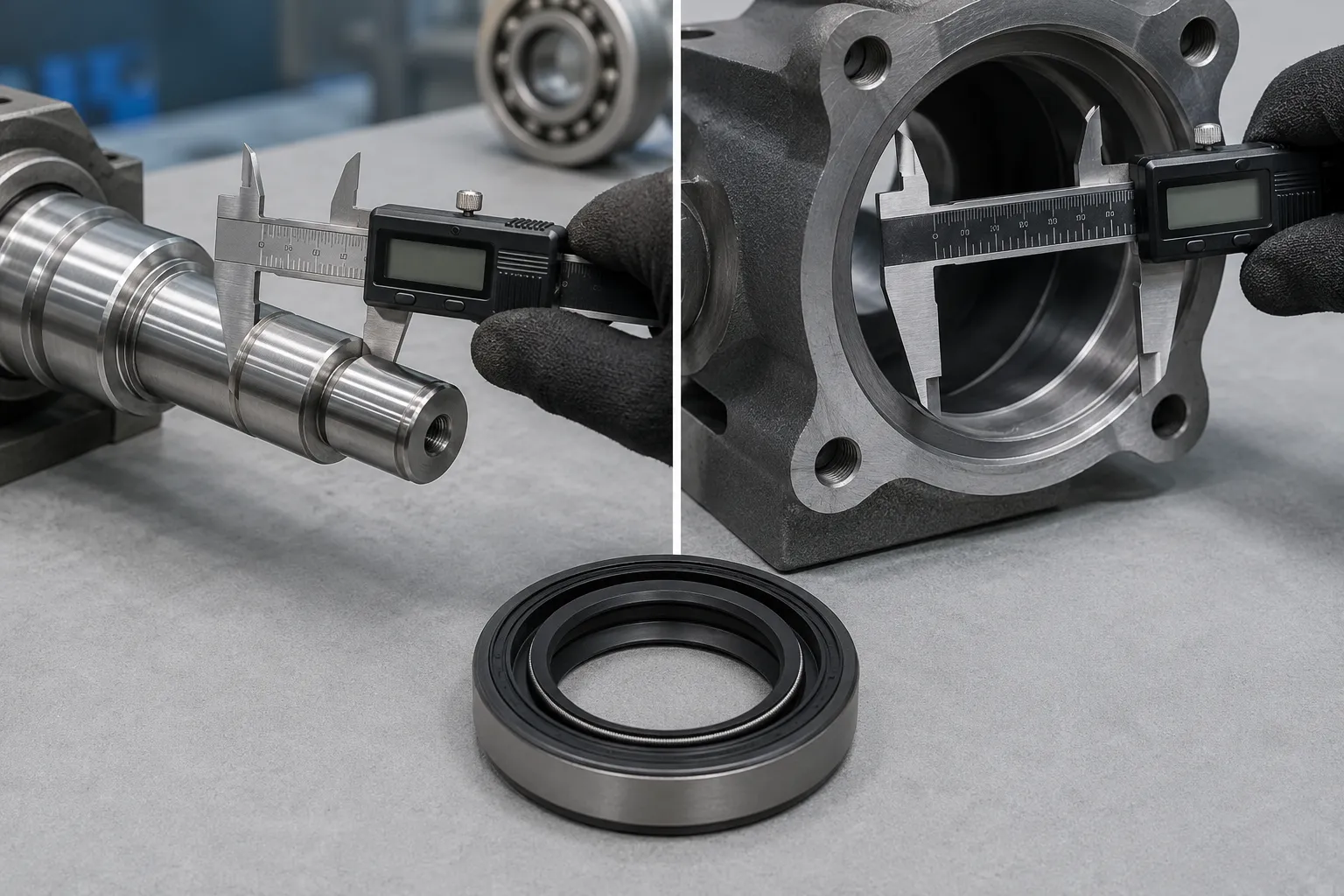
Example: Understanding a 35 × 52 × 7 Oil Seal
A 35 × 52 × 7 mm oil seal is a useful example of how standard dimensions are read.
Dimension | Size | What It Refers To |
|---|---|---|
ID | 35 mm | Nominal shaft diameter |
OD | 52 mm | Housing bore diameter |
Width | 7 mm | Seal thickness along the shaft axis |
The size marking does not automatically tell you:
Whether the seal is TC, SC, TB, SB, or another design
Whether it is made from NBR, FKM, ACM, PTFE, or another material
Whether it has an auxiliary dust lip
Whether it is designed for pressure
Whether it is suitable for clockwise or counterclockwise rotation
Whether it is compatible with the actual oil, fluid, temperature, or shaft speed
The three dimensions are the starting point. The application details complete the selection.
Why Matching ID, OD, and Width Is Not Enough
Two oil seals can have the same dimensions but be designed for very different operating conditions.
For example, two seals may both measure 35 × 52 × 7 mm, but one may be:
NBR with a single primary lip
FKM with an auxiliary dust lip
PTFE with a special sealing edge
A rubber-covered outer diameter seal
A metal outer diameter seal
A pressure-capable seal
A seal intended for a clean indoor application
A seal intended for dusty agricultural machinery
Using the correct size but the wrong design can still cause leakage, lip wear, overheating, material swelling, or short service life.
Before selecting a replacement, confirm the complete specification rather than relying on dimensions alone.
How to Choose the Right Oil Seal Type
After confirming ID, OD, and width, the next step is to choose the correct seal structure.
Common oil seal types include:
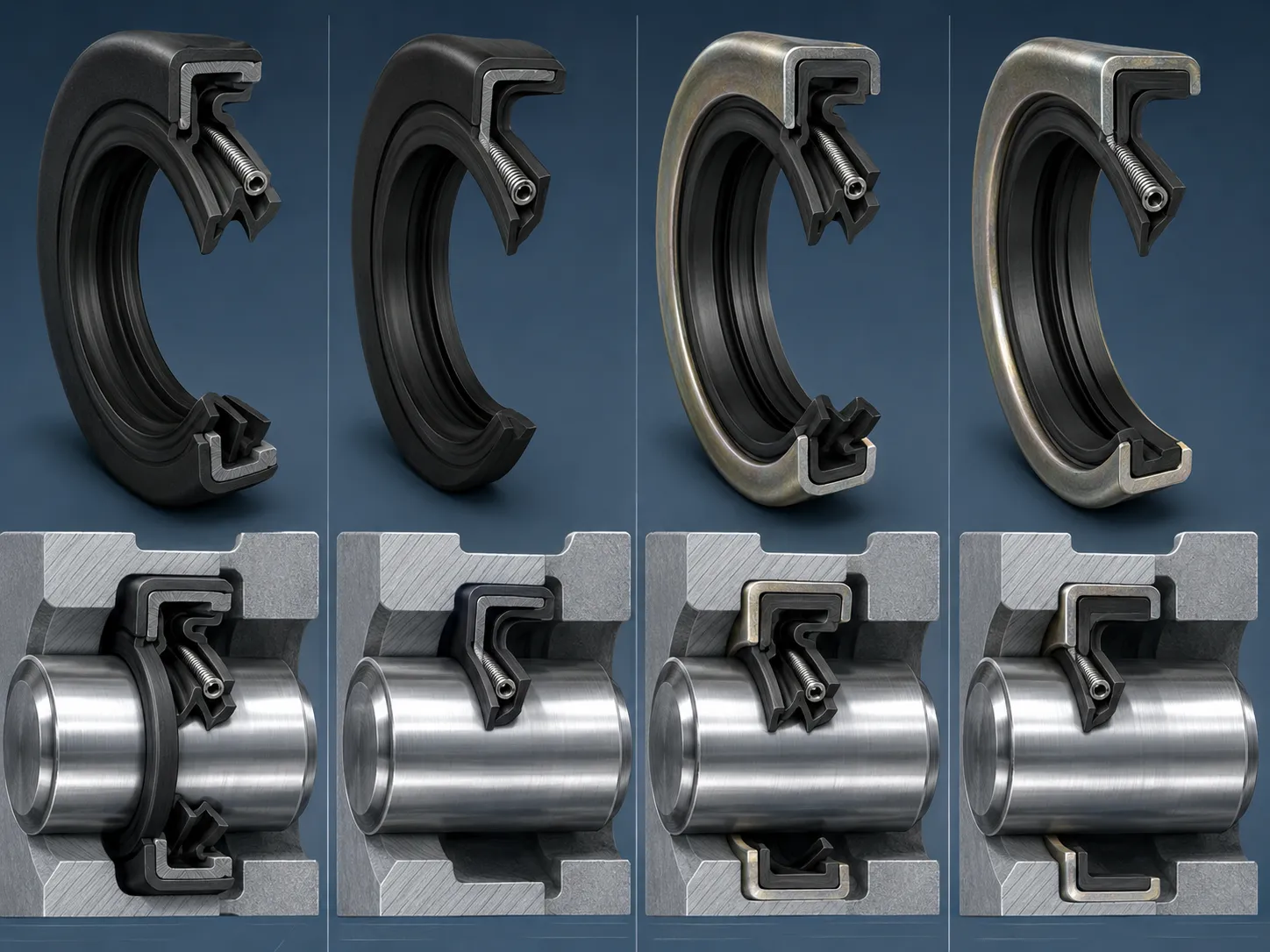
SC oil seal: Commonly a single primary sealing lip with a rubber-covered outer diameter.
TC oil seal: Commonly a primary sealing lip plus an auxiliary dust lip with a rubber-covered outer diameter.
SB oil seal: Often a single-lip design with a metal outer diameter, depending on the manufacturer’s naming system.
TB oil seal: Often a double-lip design with a metal outer diameter, depending on the manufacturer’s naming system.
Cassette seal: A heavier-duty design often used for wheel hubs, agricultural machinery, and exposed environments.
PTFE seal: A specialized low-friction seal often used for high-speed, high-temperature, or demanding applications.
Type codes are widely used, but they are not perfectly universal across every manufacturer or market. Always confirm the actual drawing, lip configuration, outer diameter design, and application requirement before ordering.
Choosing Oil Seal Material by Application
The seal material should match the operating temperature, lubricant, shaft speed, and surrounding environment.
NBR
NBR is commonly used for standard mineral oils, lubricants, greases, and general-purpose sealing applications.
It is often suitable for moderate-temperature engines, gearboxes, pumps, motors, and industrial equipment.
ACM
ACM is commonly used in automotive applications because it provides good resistance to lubricating oils and heat.
It may be suitable for engine and transmission sealing applications where heat and oil exposure are more demanding than standard operating conditions.
FKM
FKM provides stronger resistance to high temperatures, engine oils, fuels, synthetic lubricants, and demanding chemical conditions.
It is often selected for high-temperature engines, transmissions, turbocharged systems, industrial gearboxes, and extended-service applications.
PTFE
PTFE seals may be used for special high-speed, low-friction, high-temperature, or advanced sealing applications.
Some PTFE seals require specific installation methods. The shaft surface, installation direction, and manufacturer guidance should be checked carefully before use.
How Shaft Condition Affects Oil Seal Selection
A correct-size seal can still fail if the shaft surface is damaged.
The shaft contact area should be smooth, clean, and free from major grooves or corrosion.
Common shaft problems include:
Wear grooves caused by an old sealing lip
Scratches caused by tool damage
Rust or corrosion
Pitting
Incorrect surface finish
Excessive shaft runout
Shaft misalignment
Excessive vibration
If the shaft is worn where the old seal lip operated, possible solutions may include:
Installing the replacement seal at a slightly different depth, when the housing allows
Using a repair sleeve
Repairing or replacing the shaft
Selecting a seal with a different lip position
Correcting bearing wear or shaft movement
A new seal should not be expected to compensate for severe shaft damage.
How to Confirm the Correct Oil Seal Before Ordering
Before ordering a replacement oil seal, collect as much application information as possible.
Useful details include:
Shaft diameter
Housing bore diameter
Seal width
Existing seal markings
OEM part number
Vehicle make, model, and engine code
Gearbox, pump, motor, or machine model
Fluid type
Maximum operating temperature
Minimum startup temperature
Shaft speed
Pressure condition
Shaft rotation direction
Shaft surface condition
Exposure to dust, water, mud, chemicals, or fuel
Original seal photo
Original seal sample
Technical drawing, if available
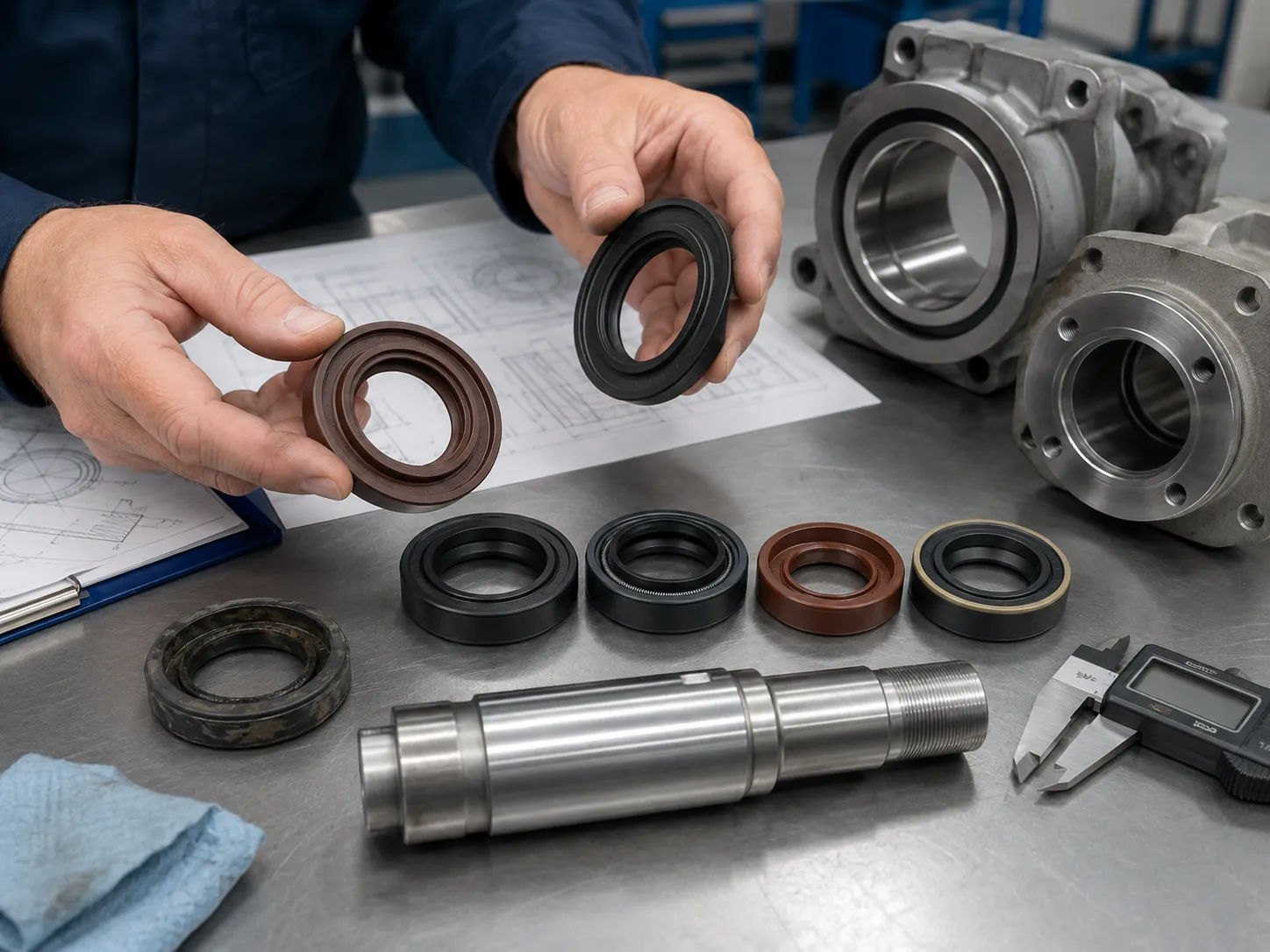
For industrial and non-standard applications, a sample or drawing is often more reliable than dimensions alone.
Common Oil Seal Size Selection Mistakes
Measuring the Old Seal Lip Instead of the Shaft
The free inner opening of an old seal may be smaller than the actual shaft diameter. Measuring only the lip can lead to an incorrect ID selection.
Ignoring Shaft Wear
If the shaft has a groove, a new seal may leak even when the dimensions are correct.
Matching Only the Three Dimensions
ID, OD, and width are essential, but material, lip structure, pressure capability, and installation direction also matter.
Choosing the Wrong Width
A replacement seal may fit the shaft and bore but interfere with nearby components if the width is incorrect.
Using the Wrong Outer Diameter Design
A metal outer diameter seal and a rubber-covered outer diameter seal may behave differently in the same housing. The correct design depends on housing condition and original equipment requirements.
Replacing a TC Seal With an SC Seal Without Checking the Environment
A single-lip SC seal may fit physically, but it may not provide enough contamination protection in a dusty or wet application.
Assuming All Oil Seal Sizes Are Metric
Many modern oil seals use metric dimensions, but some older, agricultural, industrial, or North American applications may use inch-based sizes. Always confirm the unit before ordering.
Installation Tips After Selecting the Correct Size
Correct installation is just as important as correct selection.
Before installation:
Clean the shaft and housing bore
Remove burrs, rust, and old sealant
Check shaft condition
Confirm that the primary lip faces the lubricant side
Confirm that the dust lip faces the contamination side
Use a protective sleeve when installing over splines, threads, or keyways
Apply suitable assembly lubricant when required by the seal design
Follow specific guidance for PTFE seals
During installation:
Press the seal evenly into the housing
Use an installation tool that supports the outer case
Avoid striking the seal directly with a hammer
Do not bend the metal case
Do not damage the garter spring or sealing lip
Install the seal at the correct depth
Do not use excessive sealant
After installation:
Check that the shaft rotates freely
Confirm that the seal sits squarely in the housing
Inspect for leakage after initial operation
Recheck the area after a short service period
When Should You Use an Original Sample or OEM Part Number?
An original sample or OEM part number is especially useful when:
The original seal markings are unclear
The seal is installed in a complex assembly
The application uses a special lip design
The machine has multiple similar seal sizes
The shaft has unusual geometry
The housing depth is limited
A non-standard material may be required
The equipment uses an imported or older machine design
The seal is part of an engine, transmission, hydraulic pump, or gearbox assembly
A clear photo of both sides of the original seal, together with dimensions and application information, can significantly reduce the risk of ordering the wrong replacement.
Conclusion
Choosing the right oil seal size starts with confirming the correct ID, OD, and width.
The ID should match the shaft diameter, the OD should match the housing bore, and the width should fit the available installation space. For example, a 35 × 52 × 7 mm oil seal is generally designed for a 35 mm shaft, a 52 mm housing bore, and a 7 mm seal width.
However, size is only the first step. A correct replacement seal must also match the material, lip design, housing condition, shaft surface, lubricant, temperature, pressure, speed, and operating environment.
Before ordering, measure the application carefully, inspect the shaft and housing, and confirm the original seal type where possible. This helps prevent incorrect fitment, repeat leakage, and unnecessary repair work.
For oil seal selection, SealVendor can support standard sizes, TC and SC oil seal types, material matching, sample-based identification, OEM references, and drawing-based customization for automotive and industrial applications.