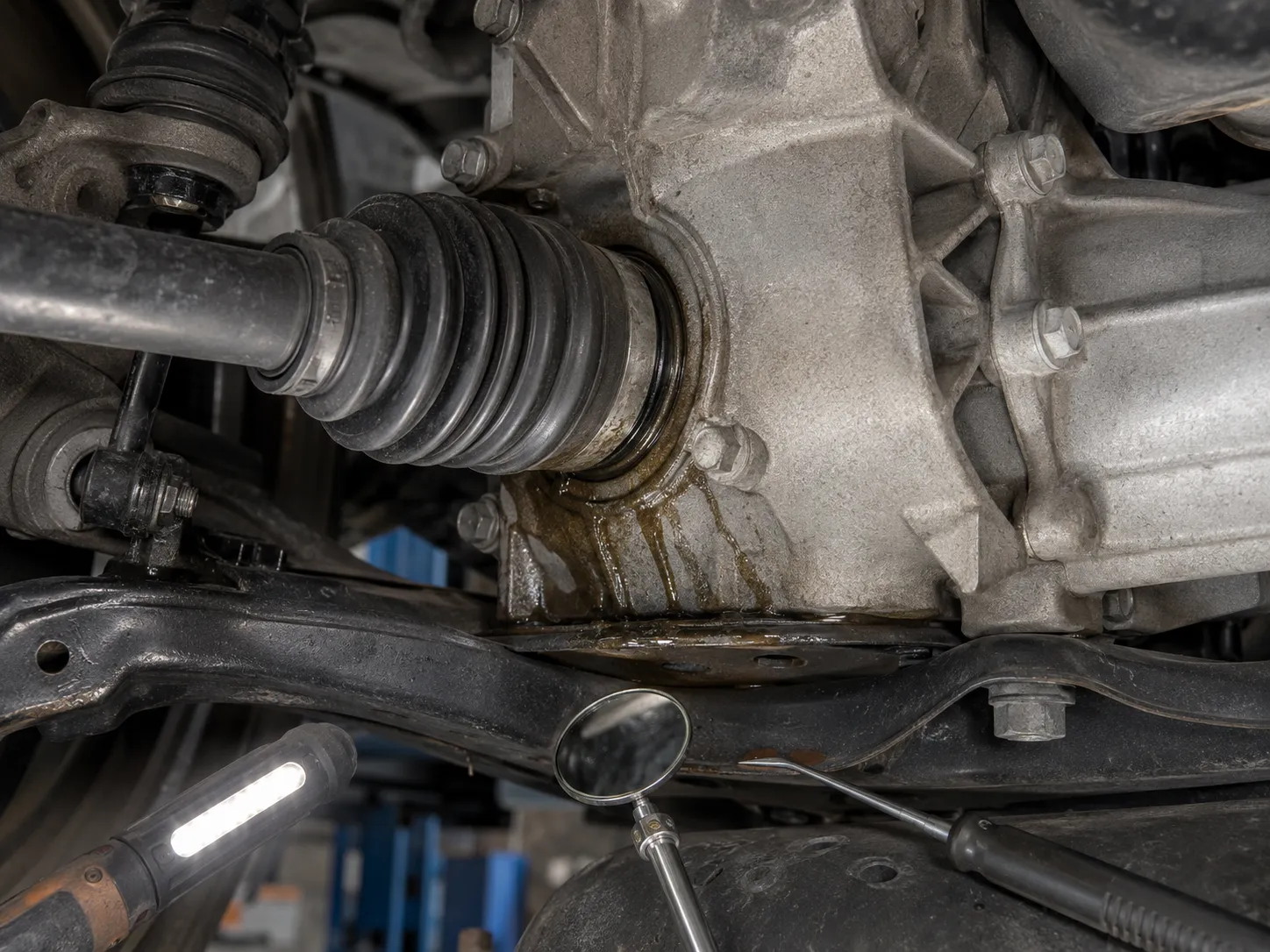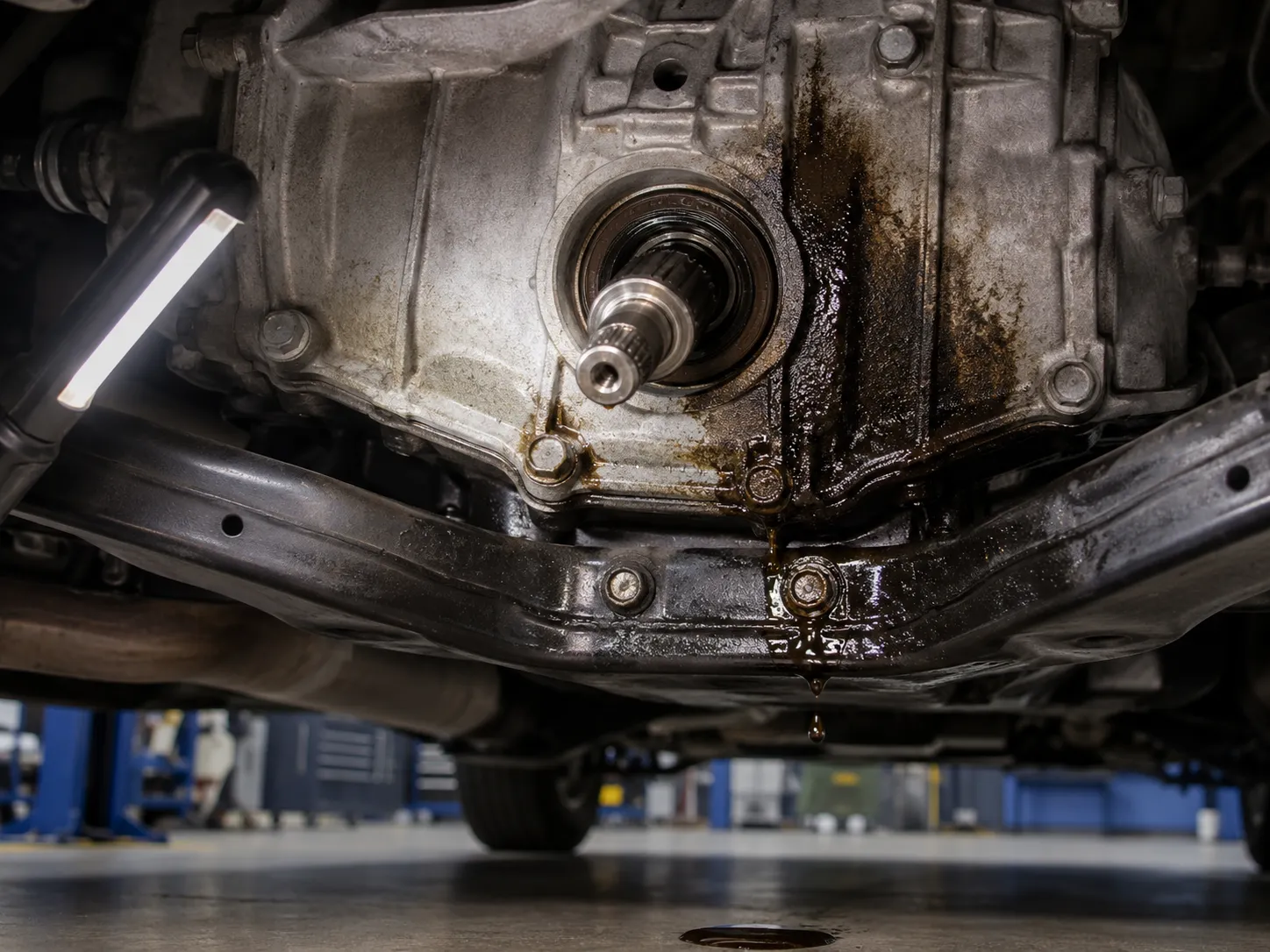
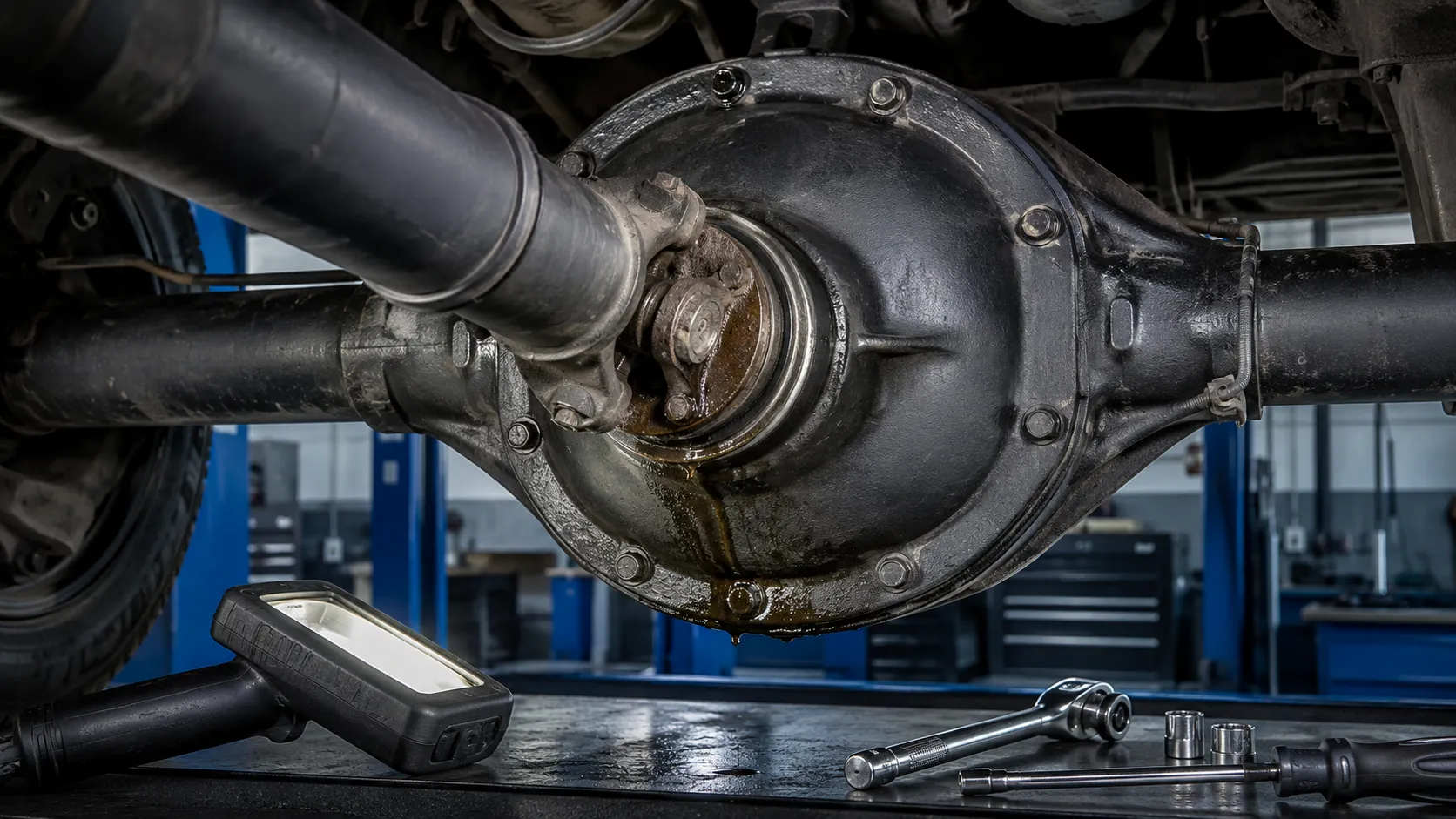
A differential seal leak can begin as a small wet area around the driveshaft, axle housing, or wheel end. Over time, it can develop into a more serious drivetrain problem if gear oil level becomes too low.
The term “differential seal” can refer to several different sealing points. Depending on the vehicle design, the leak may come from a pinion seal near the driveshaft flange, an axle shaft seal near the wheel end, a side seal where an axle enters a front differential, or another rotating-shaft seal in the drivetrain.
These leaks are often confused with a transmission leak, axle seal leak, differential cover gasket leak, or grease from a torn CV boot. The visible fluid may appear in a similar area, but the repair method, fluid specification, and urgency can be very different.
A minor seep does not always require immediate towing. However, an active differential leak should not be ignored. Lost gear oil can reduce lubrication for gears and bearings, increase operating temperature, create drivetrain noise, and eventually lead to expensive internal damage.
This guide explains how to identify a differential seal leak, understand the likely risks, and confirm the correct repair before replacing the seal.
What Is a Differential Seal?
A differential seal is a sealing component used to retain lubricant inside a differential assembly while allowing shafts to rotate.
The differential transfers drive torque through gears and axle shafts. Its internal gears and bearings rely on the correct lubricant level to reduce friction, control heat, and limit wear.
Depending on the vehicle or equipment design, the differential may use several seals, including:
Pinion seal
Axle shaft seal
Differential side seal
Output seal
Input seal
Front differential seal
Rear differential seal
Transfer case output seal
Wheel-end seal
Carrier or side-bearing seal in some assemblies
These seals are installed between rotating and stationary components. Their main purpose is to keep gear oil or drivetrain lubricant inside the housing while reducing the entry of dust, water, and contamination.
Not every differential fluid leak comes from a rotary seal. Other possible leak sources include:
Differential cover gasket
Drain plug
Fill plug
Case seam
Breather or vent fitting
Damaged housing
Sensor or electrical connector seal
Transfer case connection
The exact leak source should always be confirmed before ordering a replacement part.
Common Differential Seal Leak Locations
Pinion Seal Leak
The pinion seal is usually located at the front of a rear differential, where the driveshaft connects to the pinion flange or yoke.
Its job is to retain gear oil around the rotating pinion shaft.
A pinion seal leak may cause:
Gear oil around the driveshaft flange
Wetness near the pinion yoke
Oil on the underside of the differential housing
Gear oil spread along the driveshaft
Drips near the center of the rear axle
Oily dirt buildup around the front input area of the differential
Because the driveshaft rotates, leaked oil can spread away from the original source. A wet driveshaft does not always mean the leak started at the farthest visible oil mark.
Axle Shaft Seal Leak
An axle shaft seal is usually located where an axle shaft enters the differential housing or wheel-end assembly.
On rear-wheel-drive vehicles, trucks, trailers, and solid-axle vehicles, a leaking axle shaft seal may allow gear oil to reach the wheel-end area.
Possible signs include:
Gear oil behind the wheel
Wet brake backing plate
Fluid on the inner wheel surface
Oily dirt around the axle tube
Gear oil smell near the wheel
Oil contamination on brake parts
On front-wheel-drive and all-wheel-drive vehicles, similar side seals may be located where axle shafts enter a transaxle, front differential, or transfer case assembly.
Differential Side Seal Leak
Some front differentials, transfer cases, transaxles, and all-wheel-drive systems use side seals or output seals where axle shafts connect to the housing.
These seals may retain gear oil, transfer case fluid, or another specified drivetrain lubricant.
A side seal leak may appear near:
Inner CV joint area
Front differential housing
Transfer case output
Front axle connection
Lower engine and drivetrain area
Subframe or suspension components
This type of leak can be mistaken for a transmission leak, engine oil leak, or torn inner CV boot.
Differential Cover Gasket Leak
A differential cover gasket is not normally a rotary oil seal, but it is a common source of gear oil leakage.
The cover gasket seals the removable differential cover against the axle housing.
A cover gasket leak may cause:
Wetness around the outer edge of the differential cover
Gear oil collecting around cover bolts
Oil streaks down the axle housing
Fluid on the lower portion of the cover
Gear oil drips after long drives or heavy loads
A cover gasket repair may be simpler than a pinion or axle shaft seal repair, but it still requires clean mating surfaces, correct tightening, and the correct gear oil refill procedure.
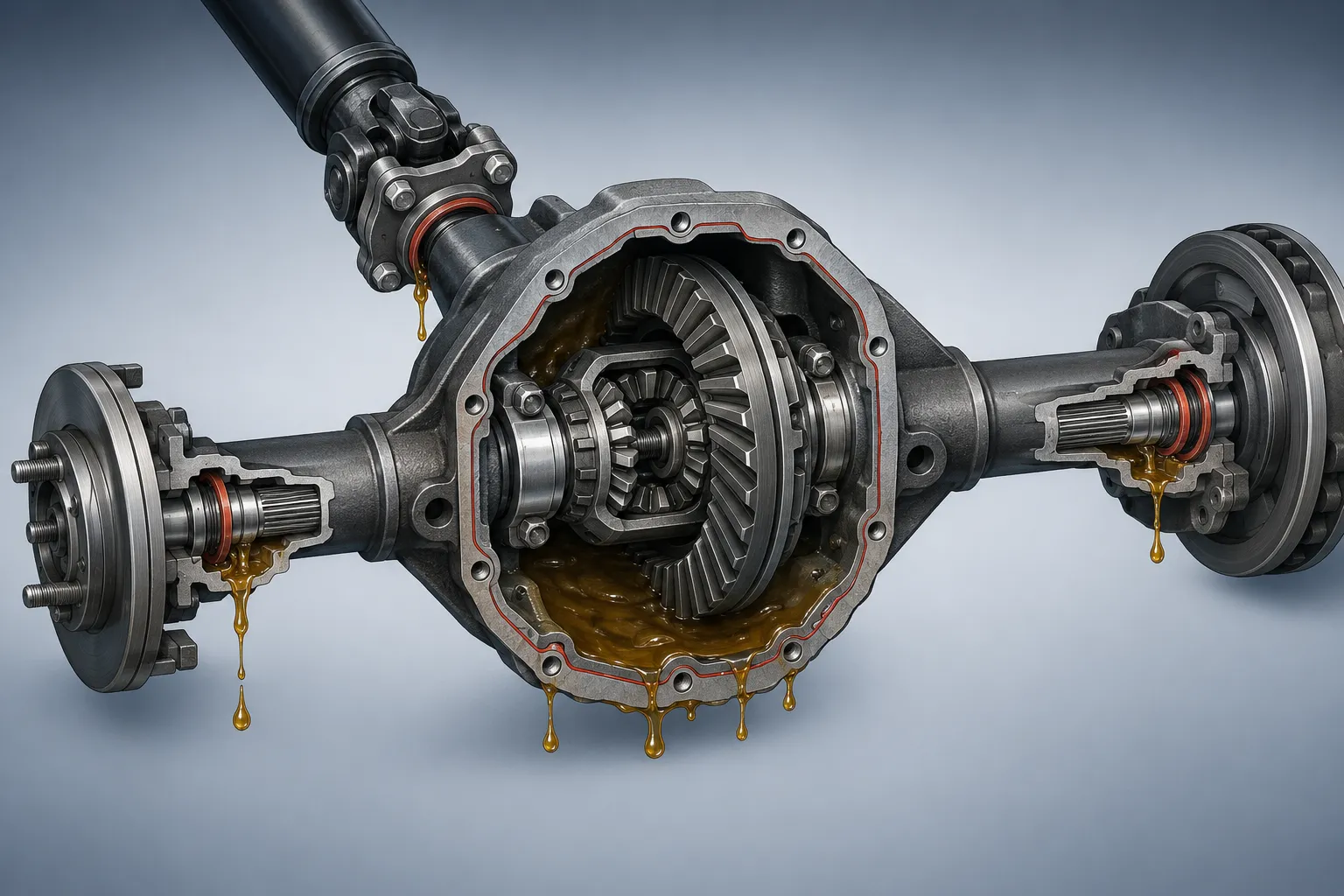
Differential Seal Leak vs Axle Seal Leak
A differential seal leak is a broader term than an axle seal leak.
An axle seal leak usually refers to a seal located around an axle shaft. A differential seal leak may refer to an axle shaft seal, but it can also mean a pinion seal, side seal, output seal, or another seal within the differential assembly.
For example:
A rear axle shaft seal leak may spread gear oil toward the wheel and brake area.
A pinion seal leak may spread gear oil around the driveshaft flange.
A front differential side seal leak may appear near an inner CV axle.
A differential cover gasket leak may create wetness around the cover perimeter.
The repair procedure depends on the actual leak location.
A rear axle shaft seal may require axle shaft removal. A pinion seal may require driveshaft removal and careful reassembly. A differential cover gasket repair may require draining lubricant, cleaning the mating surfaces, replacing the gasket or sealant, and refilling with the correct gear oil.
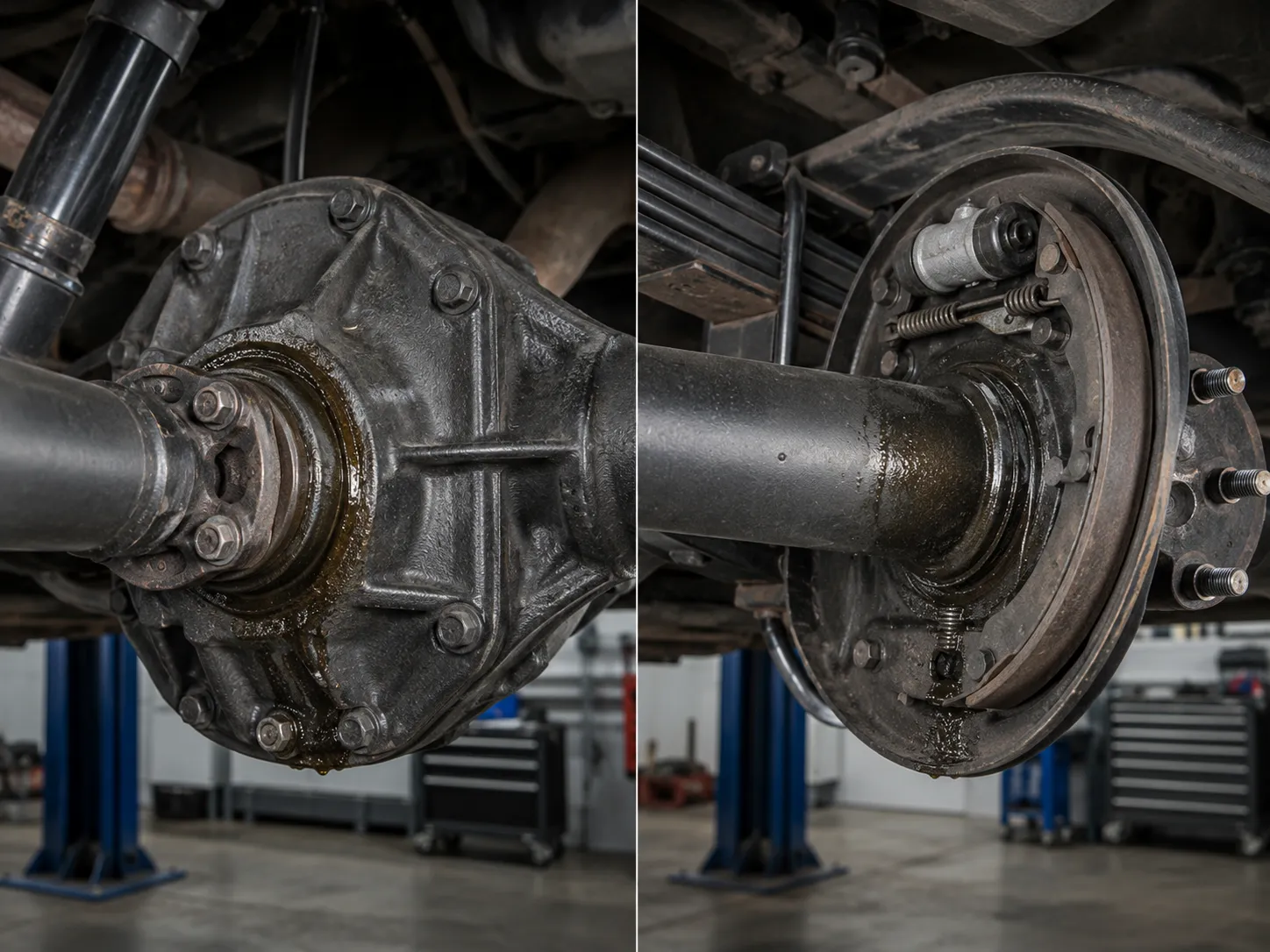
Differential Seal Leak vs CV Boot Leak
A differential seal leak is also commonly confused with a torn CV boot.
These are different problems.
A torn CV boot leaks thick grease from the CV joint. As the axle rotates, grease may be thrown outward around the wheel, suspension, axle, or underbody.
A differential side seal or axle seal leak usually involves thinner gear oil or drivetrain fluid escaping where the axle enters the differential, transaxle, or transfer case.
Signs of a Torn CV Boot
A damaged CV boot may cause:
Thick grease around the inner or outer CV joint
Grease thrown across suspension components
Cracked or torn rubber boot
Clicking noise during turns when the joint is worn
Grease concentrated around the CV joint area
Signs of a Differential or Axle Seal Leak
A differential or axle seal leak may cause:
Thinner fluid around the axle entry point
Wetness near the differential housing
Gear oil around the pinion flange or axle tube
Fluid dripping under the vehicle
Gear oil smell
Differential fluid level dropping over time
A vehicle can have both a torn CV boot and a differential seal leak, but they require separate diagnosis and repair.
Common Symptoms of a Differential Seal Leak
Gear Oil Under the Vehicle
One of the most common signs is fluid under the differential housing, axle tubes, driveshaft connection, or wheel-end area.
The location of the drip can help narrow the possible source:
Near the center front of the differential: possible pinion seal leak
Around the outer edge of the cover: possible cover gasket leak
Near the wheel or axle end: possible axle shaft seal leak
Near a front axle or inner CV joint: possible side seal or output seal leak
Oil can travel along housings and drivetrain components before dripping, so the lowest wet point is not always the original source.
Wet Pinion Flange or Driveshaft Area
A pinion seal leak may leave gear oil around the driveshaft flange, pinion yoke, or front input area of the differential.
The rotating driveshaft can spread fluid along the underside of the vehicle and create oil streaks that appear farther away from the actual seal location.
Oil Near the Wheel or Brake Components
A rear axle shaft seal leak can allow gear oil to reach the wheel-end area.
Possible signs include:
Wetness behind the wheel
Oil on the brake backing plate
Oil on brake components
Fluid on the inner wheel surface
Oily dirt around the hub or axle tube
A noticeable gear oil smell near the wheel
Oil contamination near braking components should be inspected promptly.
Gear Whine, Humming, or Growling
A seal leak does not always create drivetrain noise immediately.
However, when the gear oil level becomes low, gears and bearings may operate with reduced lubrication. This can increase heat and wear.
Possible symptoms include:
Whining under acceleration
Humming while cruising
Growling from the rear axle
Noise during deceleration
Rumbling from worn bearings
Increased drivetrain noise under load
Noise can indicate that the issue has progressed beyond a simple external leak.
Burning Smell or Smoke
Gear oil may reach hot exhaust parts, especially near the driveshaft, rear axle, transfer case, or exhaust routing.
A burning smell may indicate that leaked lubricant is contacting a hot surface.
Visible smoke should be treated as a warning sign that requires prompt inspection.
Oily Dirt Around the Differential
Slow leaks often attract dirt, dust, road debris, and moisture.
An oily buildup around the pinion area, axle tube, housing seam, or side seal can indicate a slow gear oil leak even when fluid is not actively dripping.
What Causes a Differential Seal to Leak?
Aging and Heat Exposure
Over time, seal material can harden, shrink, crack, or lose flexibility.
Repeated heat cycles, long service intervals, towing, heavy loads, off-road use, and sustained high-speed driving can place additional stress on differential seals.
An older seal may begin with light seepage and gradually develop into a more visible leak.
Worn Pinion, Axle, or Output Shaft Surface
The sealing surface on the pinion flange, axle shaft, output shaft, or hub may become grooved, scratched, corroded, or pitted.
A new seal installed on a damaged surface may leak again because the sealing lip cannot maintain a stable contact path.
Common surface-related problems include:
Wear grooves from the old seal lip
Rust or corrosion
Pitting
Scratches from previous repairs
Rough surface finish
Damaged splines or installation edges
Incorrect shaft lead-in surface
The shaft or flange should always be inspected before installing a replacement seal.
Worn Bearings or Excessive Shaft Movement
Differential seals are designed to operate with a stable, correctly aligned shaft.
Worn pinion bearings, axle bearings, wheel bearings, side bearings, or carrier bearings can allow excessive movement. This movement can wear the seal lip unevenly and create repeat leakage.
Possible signs of bearing-related problems include:
Driveshaft or pinion movement
Axle shaft play
Wheel play
Humming or growling noise
Vibration
Repeated seal failure
Uneven wear on the old seal lip
Replacing the seal alone may not solve the problem when excessive shaft movement is present.
Blocked Differential Breather
Differential housings often use a breather or vent system to manage pressure changes caused by temperature changes and normal operation.
If the breather is blocked, internal pressure can build up and force gear oil past the pinion seal, axle seals, side seals, or cover gasket.
Breather problems are especially important in:
Trucks
Commercial vehicles
Agricultural machinery
Construction equipment
Off-road vehicles
Vehicles driven through deep water or mud
Equipment exposed to dust and debris
A replacement seal may leak again if the breather system is not inspected.
Incorrect Fluid Level
Overfilled gear oil can increase internal pressure and may worsen leakage.
Low gear oil can increase heat and wear, which may accelerate seal failure.
The lubricant level should always be checked according to the vehicle or equipment manufacturer’s procedure.
Different differentials may require specific gear oil grades, friction modifiers, or lubricant specifications. Using the wrong lubricant can affect performance and service life.
Damaged Seal During Installation
A seal can be damaged during installation when the sealing lip is cut, folded, stretched, scratched, or forced over a sharp edge.
Common installation mistakes include:
Installing the seal at the wrong depth
Pressing the seal in unevenly
Damaging the lip on splines or sharp edges
Striking the seal directly with a hammer
Failing to clean the housing bore
Reusing a damaged seal
Installing the seal backward
Using excessive sealant
Ignoring a damaged flange or shaft surface
Correct tools and a clean installation process are important for long-term sealing performance.
Water, Dust, and Contamination
Water, sand, mud, metal particles, and abrasive dirt can damage the seal lip and shaft surface.
Contamination is more likely in off-road, agricultural, construction, mining, trailer, and commercial vehicle applications.
Severe contamination may require a more protective sealing arrangement, such as a heavy-duty wheel seal, cassette seal, V-ring, or another external exclusion solution.
Is It Safe to Drive with a Differential Seal Leak?
A light seep may allow limited short-distance driving when the lubricant level remains correct and there are no drivetrain symptoms.
However, a differential seal leak should be inspected and repaired as soon as practical.
Avoid continued driving when:
Gear oil is dripping heavily
The differential fluid level is low or falling quickly
A large puddle forms under the vehicle
Gear whine, humming, growling, or grinding develops
Oil reaches brake components
Fluid is visible near the wheel or tire area
Smoke or burning smell is present
The vehicle is used for towing or heavy loads
The vehicle is used off-road or in deep water
The pinion flange or axle area has excessive movement
The source of the leak cannot be confirmed
The main risk is not the seal alone. The main risk is lubricant loss, gear and bearing damage, brake contamination, and repeat failure caused by an underlying drivetrain issue.
How to Diagnose a Differential Seal Leak
Correct diagnosis is important because differentials, axle assemblies, transfer cases, and transmissions may leak in nearby areas.
Step 1: Identify the General Leak Location
Look for wetness around:
Pinion flange or driveshaft connection
Differential cover edge
Axle tubes
Wheel-end area
Inner axle connection
Front differential housing
Transfer case output
Drain and fill plugs
Vent or breather area
The general location helps narrow the possible source, but the exact leak path should still be confirmed.
Step 2: Clean the Differential Housing
A dirty housing can hide the original source of the leak.
Clean the differential cover, pinion area, axle tube, side-seal area, and nearby components. After a short drive or operating period, inspect again for fresh fluid.
Fresh gear oil near the pinion flange, axle shaft, side seal, or cover edge is more useful for diagnosis than old oil-covered dirt.
Step 3: Inspect the Breather System
Check the differential breather hose, vent fitting, and vent path.
Look for:
Blockage
Mud buildup
Pinched hose
Water contamination
Damaged hose
Restricted vent opening
A blocked breather can create pressure inside the housing and force oil past otherwise serviceable seals.
Step 4: Check Fluid Level and Condition
Check the differential lubricant level according to the manufacturer’s procedure.
Also inspect fluid condition for:
Low level
Burnt smell
Metallic particles
Water contamination
Unusual discoloration
Incorrect fluid type
Do not overfill the differential. Excess lubricant can increase pressure and worsen leakage.
Step 5: Check for Bearing Play or Shaft Movement
Inspect the driveshaft flange, pinion yoke, axle shaft, wheel hub, and related bearings for unusual movement.
Excessive movement can damage the seal lip and lead to repeat leakage.
A leak combined with gear noise, vibration, or looseness may indicate that bearings or other drivetrain components also need attention.
Step 6: Confirm the Exact Leak Source
Before ordering a replacement, confirm whether the leak is from:
Pinion seal
Axle shaft seal
Differential side seal
Cover gasket
Drain plug
Fill plug
Housing damage
Transfer case output seal
Nearby transmission or engine seal
Torn CV boot
A vehicle-specific repair manual, original seal sample, OEM reference, or professional inspection can help confirm the correct repair.
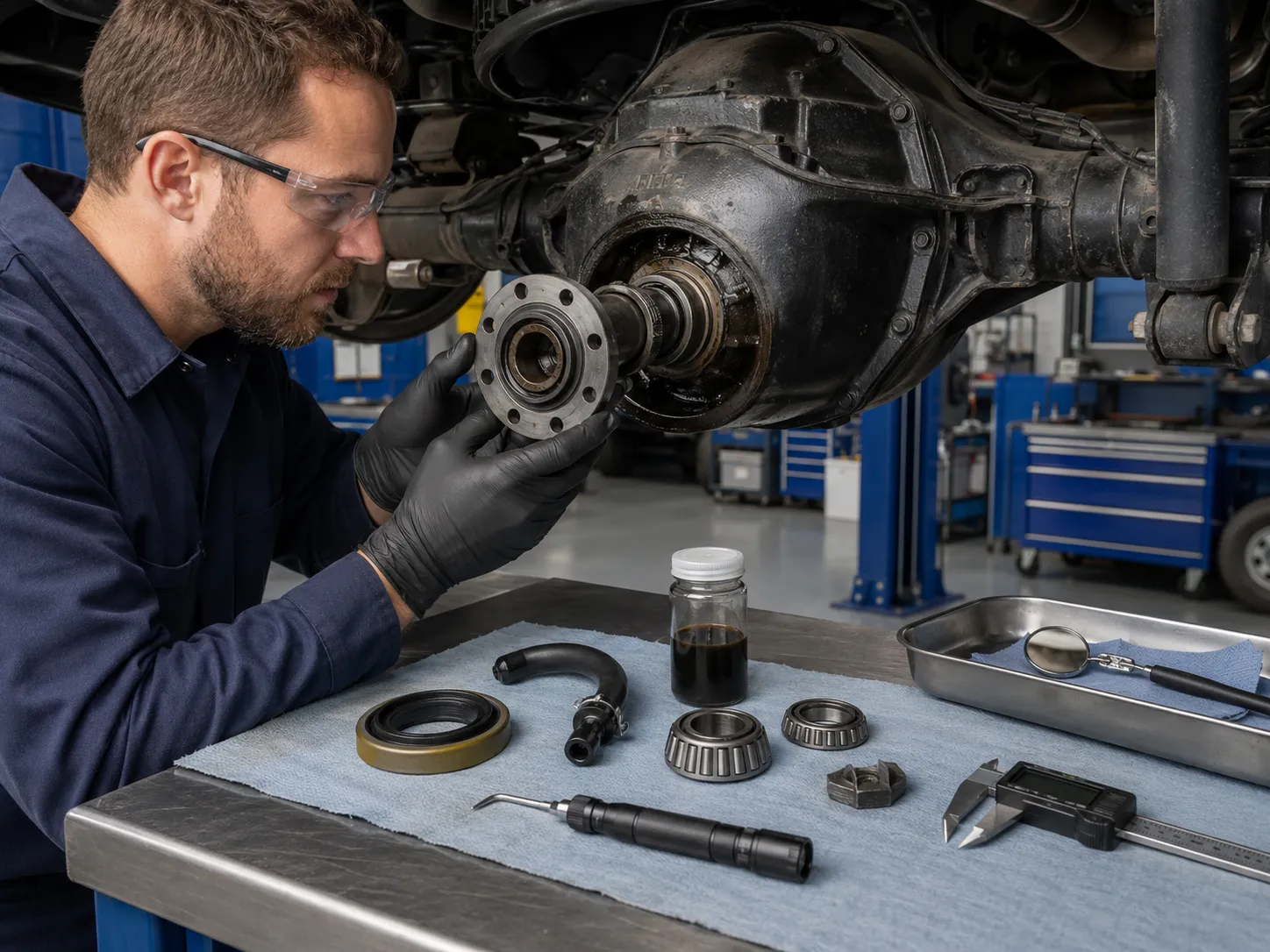
Differential Seal Replacement Overview
Differential seal replacement procedures vary significantly by seal location and vehicle design.
A pinion seal replacement is different from an axle shaft seal replacement. A front differential side seal is different from a differential cover gasket repair.
The correct procedure should always follow the vehicle or equipment service specification.
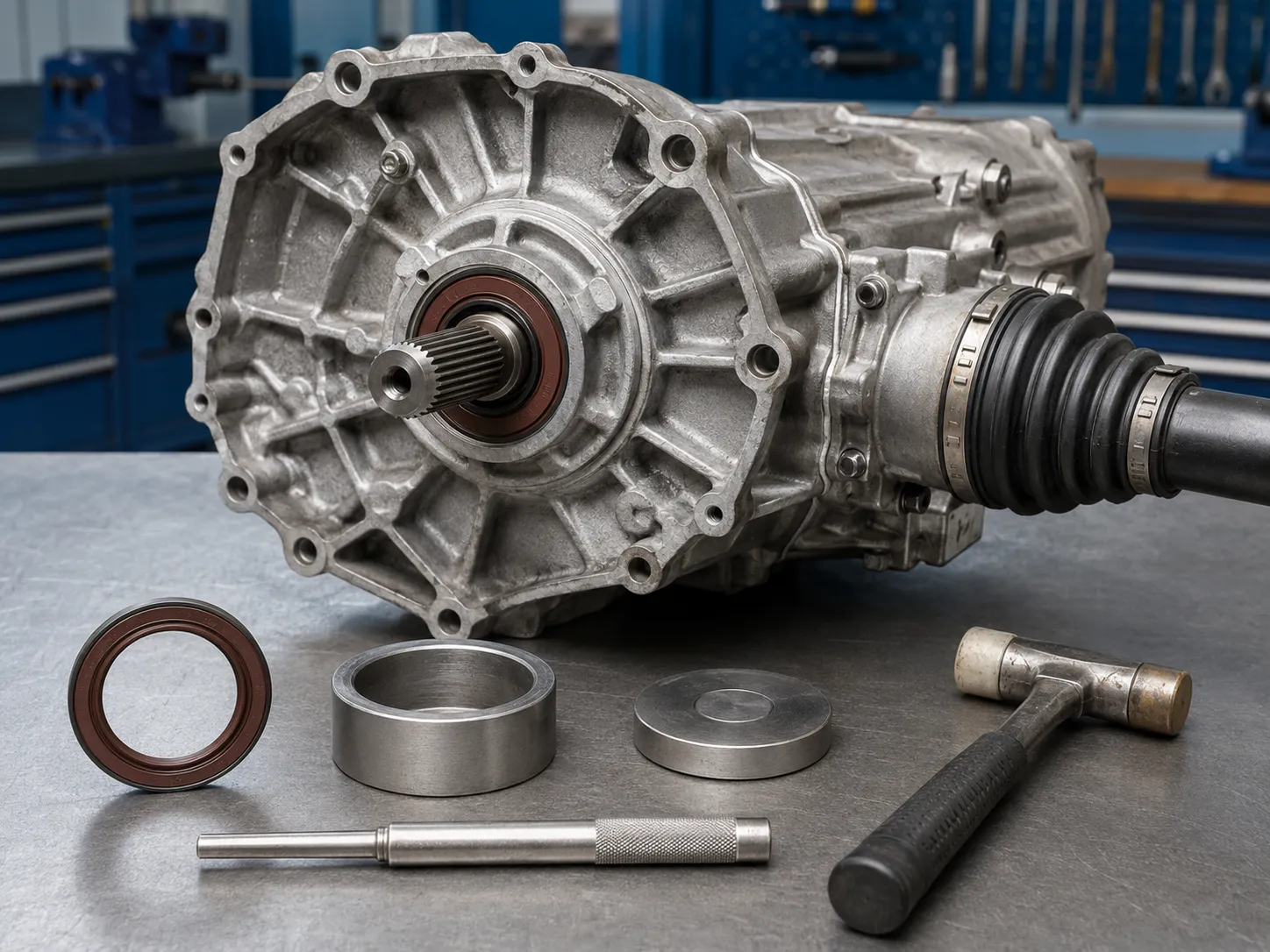
Pinion Seal Replacement
A pinion seal replacement may involve:
Removing the driveshaft
Marking the flange or yoke position where required
Checking rotational resistance or preload as required by the manufacturer
Removing the pinion flange or yoke
Removing the old seal carefully
Inspecting the flange sealing surface
Installing the new seal at the correct depth
Reinstalling the flange using the correct procedure
Confirming torque, preload, and drivetrain alignment as required
Checking or refilling the correct gear oil
Inspecting for leakage after operation
This repair can be sensitive because incorrect pinion nut tightening or preload changes may affect bearing condition and gear setup.
Axle Shaft Seal Replacement
An axle shaft seal replacement may involve:
Removing the wheel and brake components
Removing the axle shaft or hub assembly
Removing the old seal
Inspecting the axle shaft sealing surface
Checking bearing condition
Installing the new seal squarely
Reassembling axle and brake components
Checking or refilling gear oil
Inspecting for brake contamination and leakage
When gear oil has reached brake pads, shoes, rotors, or drums, those components should be inspected carefully.
Differential Side Seal Replacement
A front differential or transfer case side-seal replacement may involve:
Removing the wheel and suspension components as required
Removing the axle shaft or inner CV axle
Removing the old seal from the housing
Inspecting the axle sealing surface
Checking shaft splines and installation edges
Installing the new seal with a suitable tool
Reinstalling the axle without damaging the lip
Refilling the correct drivetrain fluid
Checking for fresh leakage after operation
Differential Cover Gasket Replacement
A cover gasket repair may involve:
Draining the gear oil
Removing the differential cover
Cleaning the cover and housing mating surfaces
Inspecting the inside of the differential for debris or damage
Installing a new gasket or approved sealant
Tightening bolts in the correct sequence
Refilling with the correct lubricant
Checking for leaks after operation
What Should Be Checked Before Replacing a Differential Seal?
Before installing a new seal, inspect the complete sealing system.
Important checks include:
Shaft, flange, or axle sealing surface
Wear grooves
Scratches, corrosion, or pitting
Bearing condition
Shaft movement or runout
Housing bore condition
Differential breather system
Correct lubricant level
Lubricant condition
Correct seal ID, OD, and width
Correct seal material
Lip design and dust-lip requirement
Installation direction
Seal installation depth
Previous repair quality
Brake contamination near wheel-end leaks
A new seal can fail quickly when installed over a damaged shaft, in a worn housing, or in a differential with excessive internal pressure.
How to Prevent Repeat Differential Seal Leaks
A reliable repair should correct both the visible leak and its underlying cause.
Key prevention steps include:
Confirm the exact leak source before ordering parts
Select the correct seal size and profile
Match the material to the lubricant and temperature
Inspect the pinion flange, axle shaft, or output shaft surface
Repair or replace damaged sealing surfaces when necessary
Check bearings for excessive movement
Inspect and clean the differential breather
Clean the housing bore before installation
Install the seal squarely and at the correct depth
Protect the seal lip from splines and sharp edges
Use the correct gear oil specification
Maintain the correct fluid level
Avoid overfilling
Reinspect after initial operation
A differential seal works as part of a larger drivetrain system. The seal, shaft, housing, bearings, breather, lubricant, and installation method all affect long-term performance.
When Should You Seek Professional Repair?
Professional repair is recommended when:
The leak source is unclear
The pinion seal requires preload or rotational torque checks
Gear whine, growling, vibration, or bearing noise is present
The differential fluid contains metal particles
Brake components are contaminated with gear oil
The vehicle has four-wheel drive or all-wheel drive
The differential uses a limited-slip unit or special lubricant requirement
The pinion flange or axle shaft is damaged
The leak returns after a previous repair
The repair requires special pullers, seal tools, torque procedures, or fluid-level procedures
The vehicle is used for towing, commercial service, heavy loads, or off-road operation
A pinion seal repair can be more sensitive than many other external seal repairs because differential gear setup and bearing condition may be affected if the repair is not completed correctly.
Conclusion
A differential seal leak can come from several locations, including the pinion seal, axle shaft seal, side seal, output seal, or another drivetrain sealing point.
Common symptoms include gear oil under the vehicle, wetness around the driveshaft flange, fluid near the wheel area, oily dirt buildup, burning smell, and drivetrain noise caused by low lubricant levels.
The most common causes are aging seals, shaft wear, bearing movement, blocked breathers, contamination, incorrect fluid level, installation damage, or the wrong replacement seal.
A minor seep may allow limited driving when fluid level remains correct and there are no warning signs. However, heavy leakage, low gear oil, wheel-area contamination, brake contamination, smoke, gear noise, or drivetrain vibration should be treated as urgent.
Before replacing a differential seal, identify the exact leak source, inspect the shaft and housing, check bearing condition, verify breather operation, and use the correct seal type, material, dimensions, and installation procedure.
For differential seal selection, SealVendor can support pinion seals, axle seals, side seals, wheel-end seals, gearbox seals, and custom oil seal requirements through sample identification, OEM-reference matching, material selection, and drawing-based support.