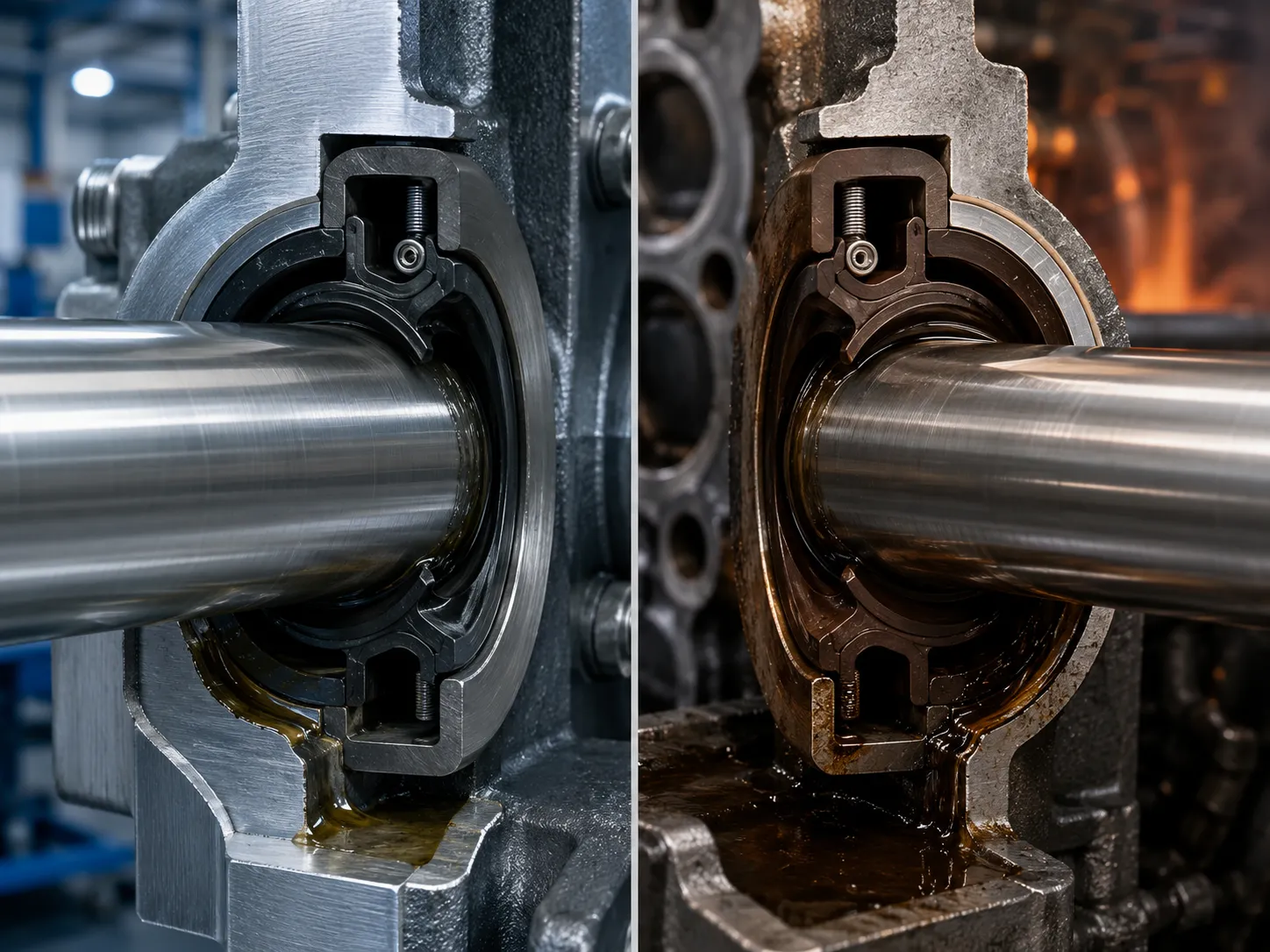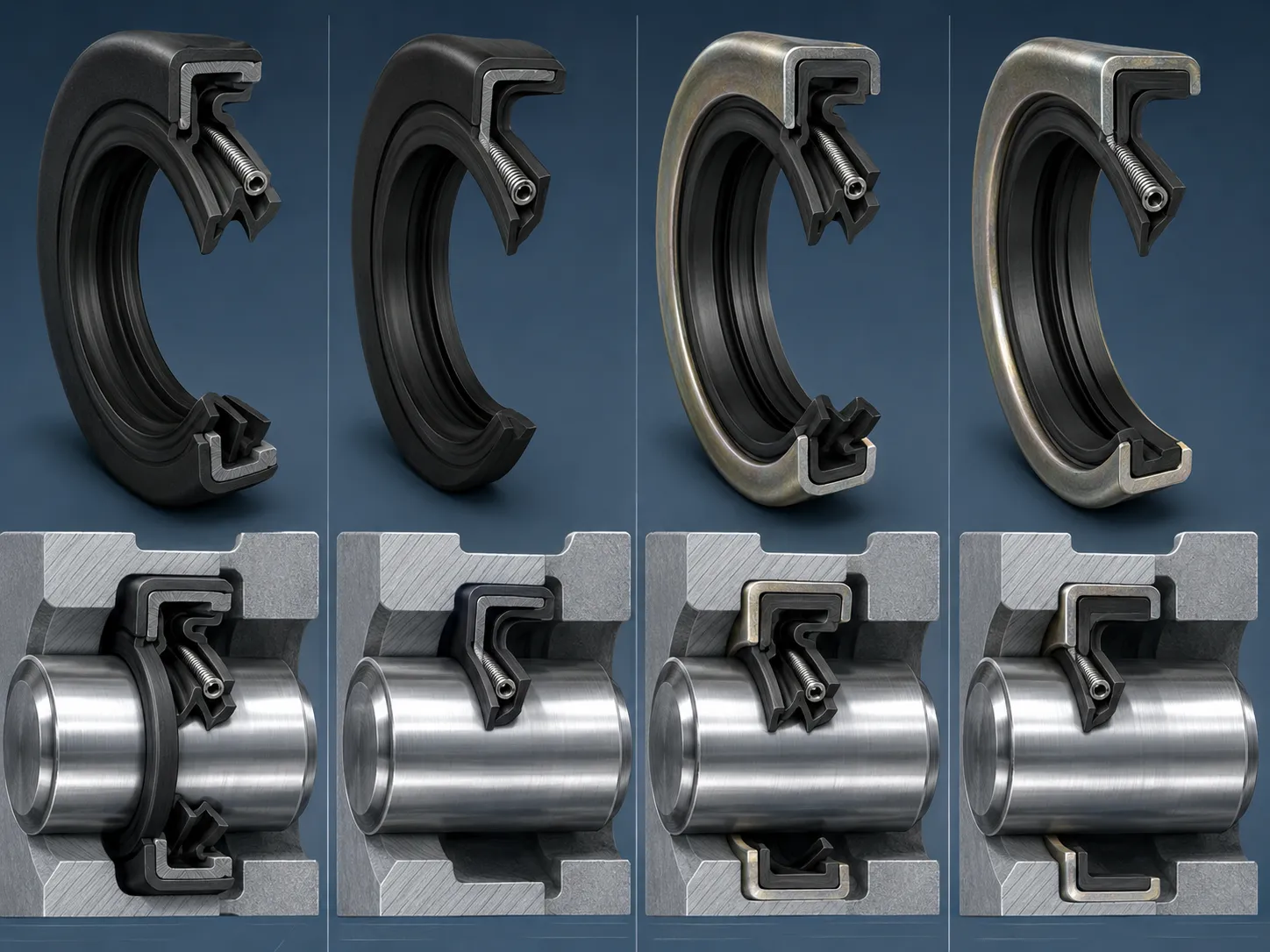
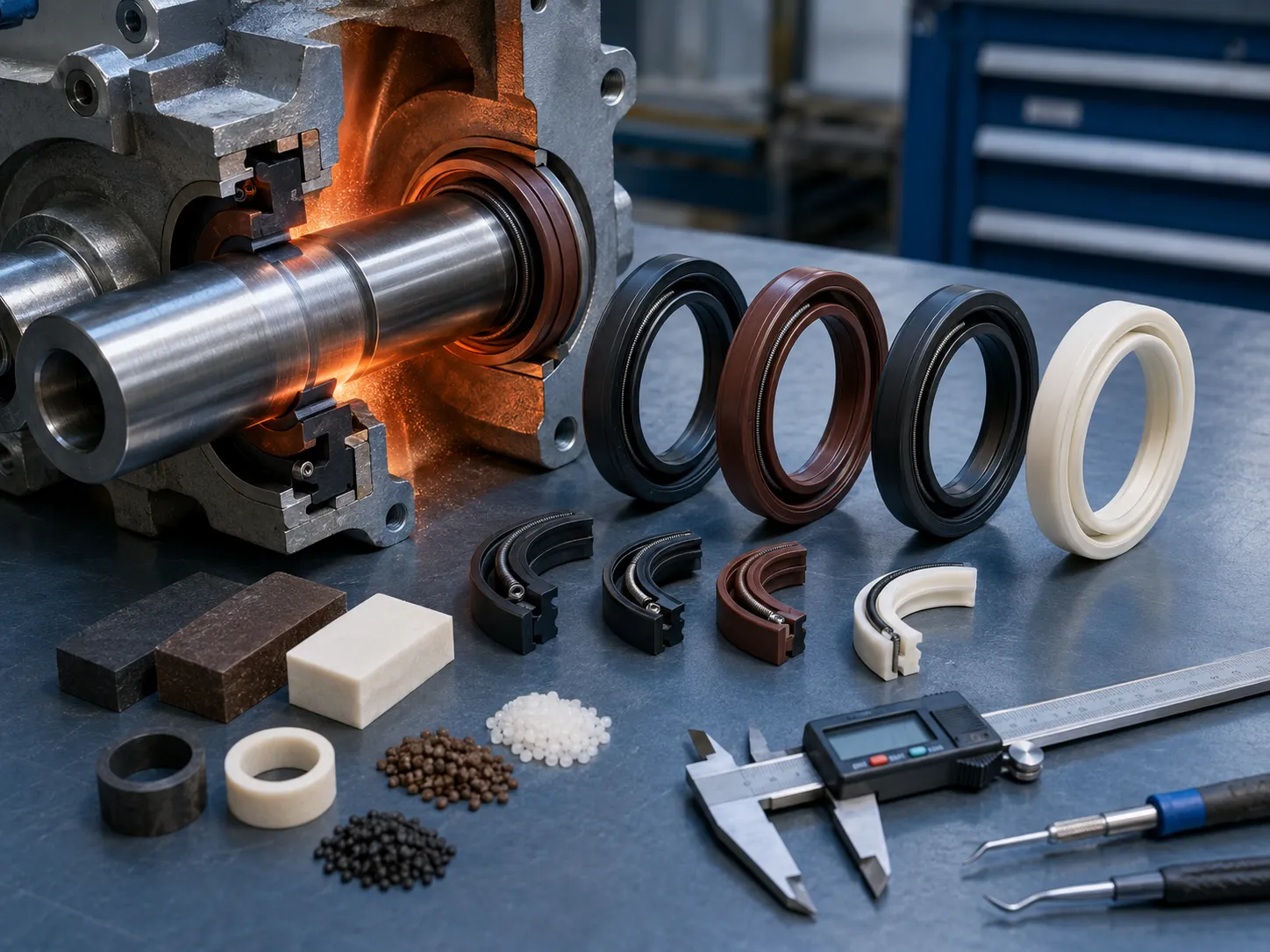
High temperature is one of the most common reasons standard oil seals begin to harden, crack, lose flexibility, or leak.
However, choosing a high-temperature oil seal is not as simple as selecting the material with the highest temperature rating.
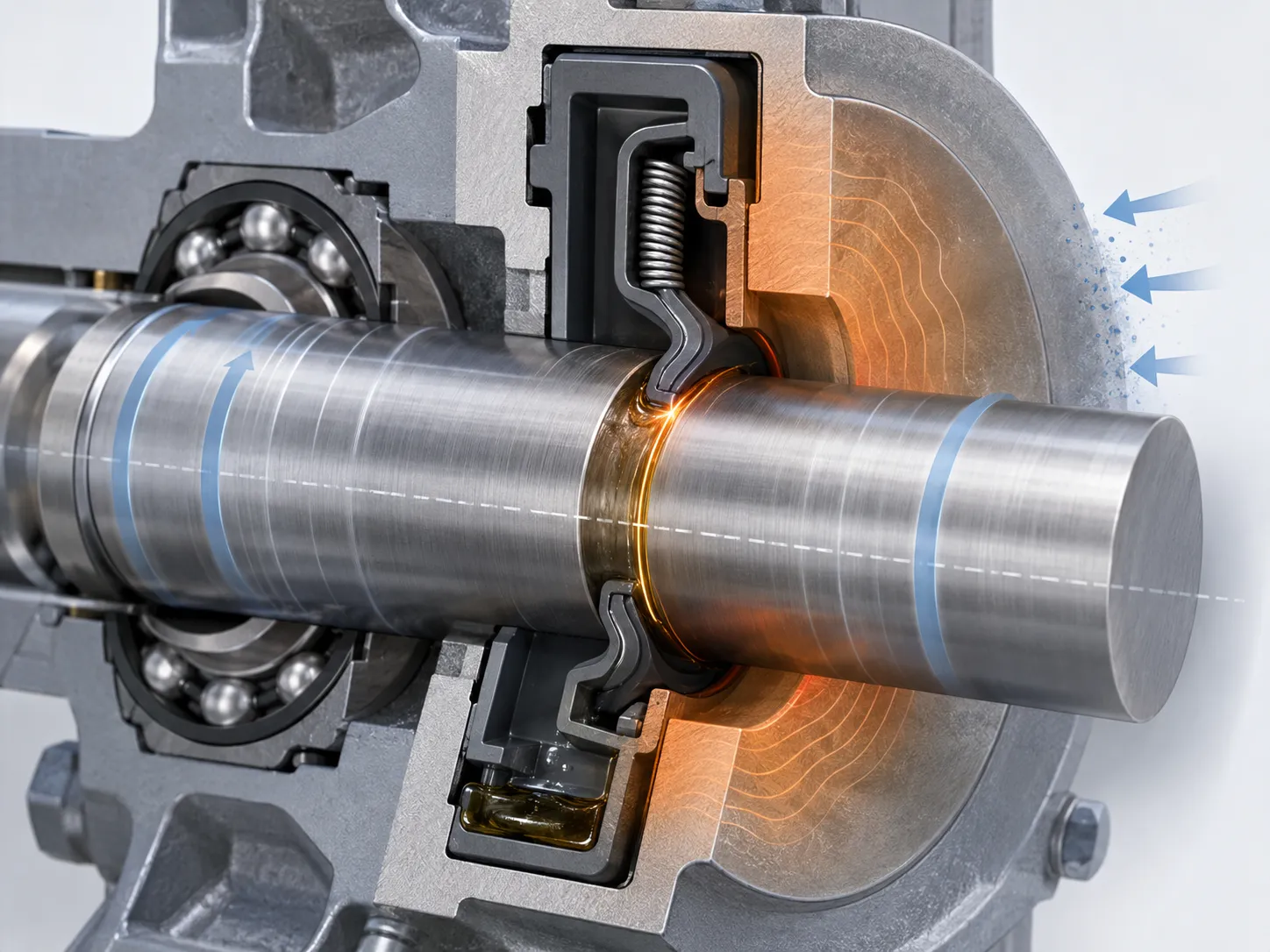
A rotary oil seal operates at the contact point between a sealing lip and a rotating shaft. The actual temperature at that contact area can be higher than the surrounding air or oil temperature because of friction, shaft speed, pressure, poor lubrication, misalignment, shaft roughness, and heat transfer from nearby components.
This means a material that appears suitable based on a general temperature range may still fail early if the seal design, fluid, shaft condition, or operating environment is not appropriate.
FKM, ACM, PTFE, and silicone are commonly considered for higher-temperature sealing applications. Each material has different strengths in heat resistance, oil compatibility, chemical resistance, low-temperature flexibility, wear resistance, and dynamic sealing performance.
This guide explains when each material may be suitable, where its limitations appear, and how to select the correct high-temperature oil seal for real operating conditions.
What Makes an Oil Seal a High-Temperature Seal?
A high-temperature oil seal is not defined only by the material used in the sealing lip.
The complete seal system must be suitable for the actual application, including:
Operating temperature
Short-term temperature peaks
Shaft speed
Shaft diameter
Lip friction
Lubrication condition
Fluid type
Fluid additives
Pressure condition
Shaft surface finish
Shaft runout
Shaft misalignment
Dust and contamination exposure
Seal lip design
Spring material
Outer diameter structure
Installation depth
Housing condition
For example, an engine oil seal located near an exhaust-side camshaft may experience much higher local heat than an oil seal in a lightly loaded gearbox.
A seal used in a high-speed pump may also generate more lip heat than a seal in a slow-moving shaft application, even when the bulk fluid temperature is similar.
The best high-temperature oil seal is therefore the seal material and design that matches the full operating condition.
Why General Temperature Ratings Are Not Enough
Material temperature ranges are useful starting points, but they should not be treated as universal operating limits.
The maximum usable temperature of a rotary oil seal may be lower than the general temperature limit of the elastomer or polymer because the sealing lip is exposed to additional heat from friction and shaft movement.
Actual seal temperature can rise because of:
High shaft speed
Dry running or limited lubrication
Pressure at the sealing lip
Incorrect lip contact force
Excessive shaft runout
Shaft misalignment
Rough or damaged shaft surface
Heat transfer from nearby engine or gearbox components
High fluid temperature
Restricted cooling
Poor ventilation
Contamination under the sealing lip
Incorrect installation depth
Excessive seal lip drag
A material may survive a short temperature peak but still age quickly when exposed to continuous high temperature.
For this reason, material selection should consider both:
Continuous operating temperature
Short-duration temperature peaks
The seal manufacturer should also confirm whether the stated material range applies to a static gasket, an O-ring, a hydraulic seal, or a dynamic rotary shaft seal.
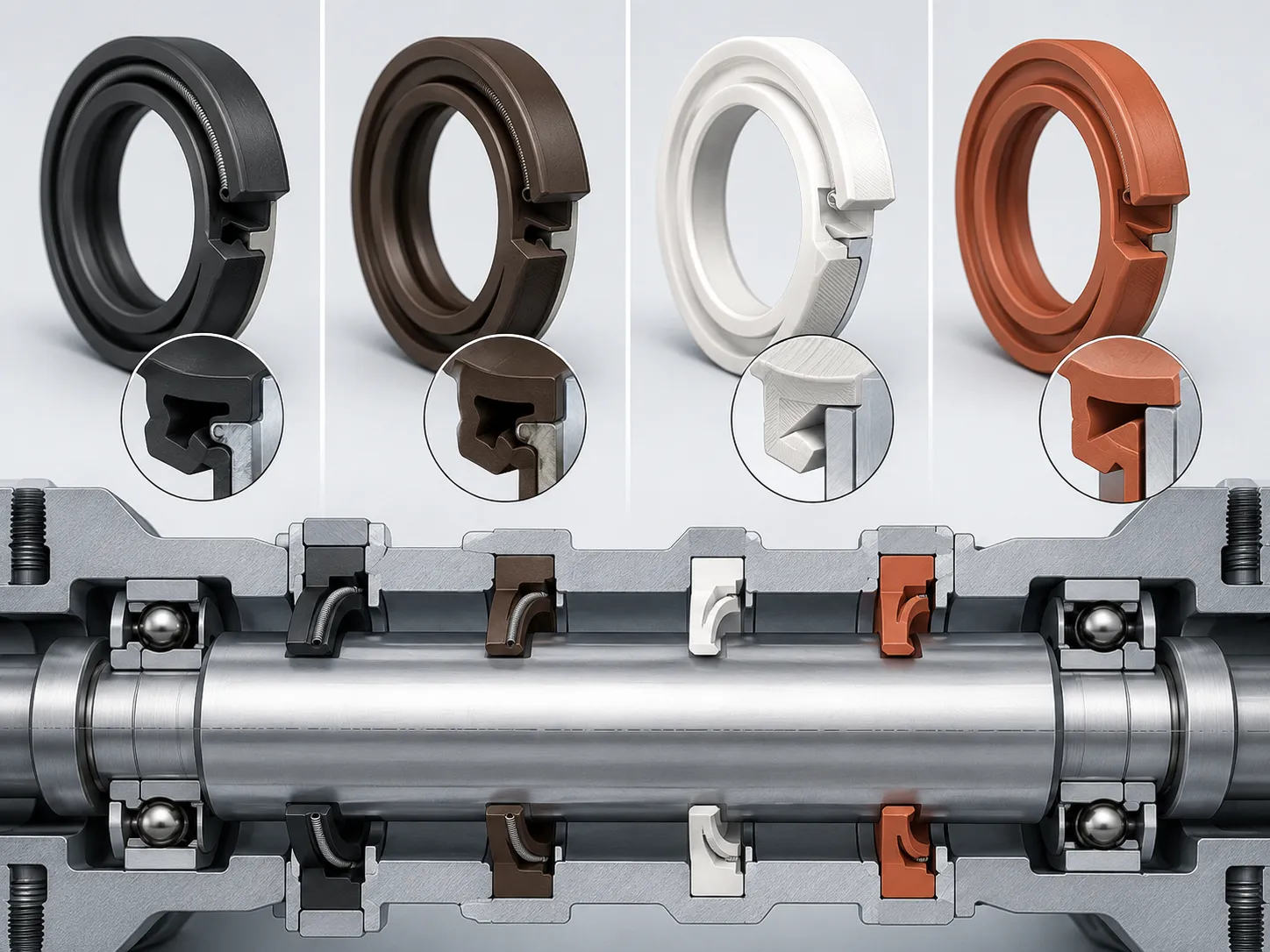
High-Temperature Oil Seal Material Comparison
Material | General High-Temperature Strength | Common Oil and Fluid Resistance | Dynamic Rotary Seal Suitability | Key Limitation |
|---|---|---|---|---|
FKM | Strong heat resistance for demanding oil, fuel, and lubricant applications | Very good resistance to many oils, fuels, and aggressive fluids | Common choice for high-temperature rotary oil seals | Can be less flexible at low temperature and costs more than NBR or ACM |
ACM | Good resistance to hot petroleum-based oils and automatic transmission fluids | Well suited to many lubricating oil applications | Common in automotive engine and transmission sealing | Not suitable for every chemical, fuel, or extreme-temperature condition |
PTFE | Excellent high-temperature capability, chemical resistance, and low friction | Broad chemical and fluid resistance | Useful for specialized high-speed, high-temperature, or demanding rotary applications | Requires correct shaft surface, installation method, and seal design |
Silicone | Very good high- and low-temperature flexibility | Limited oil and abrasion resistance compared with FKM or PTFE | More common in static sealing and selected specialized applications | Lower tear and abrasion resistance can limit use in conventional rotary lip seals |
NBR | Cost-effective for standard oil applications | Good resistance to many mineral oils and greases | Suitable for moderate-temperature applications | Usually not the preferred choice for sustained high-temperature service |
There is no single material that is best for every high-temperature application.
FKM is often the practical choice for demanding engine, transmission, fuel, and industrial oil applications.
ACM is commonly used where hot lubricating oil resistance is needed, especially in automotive drivetrain applications.
PTFE is often selected when heat, speed, chemical resistance, low friction, or limited lubrication create conditions that conventional elastomer lip seals may not handle well.
Silicone provides excellent temperature flexibility but is not automatically the best choice for a rotating oil seal because abrasion resistance, tear resistance, fluid compatibility, and lip design must also be considered.
FKM Oil Seals for High-Temperature Applications
FKM, often referred to as fluorocarbon rubber, is one of the most commonly selected materials for high-temperature oil seals.
It is widely used where the seal must handle elevated temperature, engine oil, transmission fluid, fuel exposure, synthetic lubricants, aggressive additives, ozone, and long-term heat aging.
FKM is often considered for:
Engine crankshaft seals
Camshaft seals
Transmission seals
Turbocharger-related sealing areas
Fuel-system-related applications
High-temperature gearboxes
Pumps and compressors
Industrial rotating equipment
Equipment exposed to synthetic lubricants
Applications requiring improved heat-aging resistance
Why FKM Is Popular
FKM offers a strong balance of:
Heat resistance
Oil resistance
Fuel resistance
Chemical resistance
Ozone resistance
Weather resistance
Aging resistance
Compression-set resistance
Long-term performance in demanding environments
In many high-temperature oil applications, FKM is a practical upgrade from NBR.
For example, when a standard NBR oil seal hardens or leaks because of elevated engine heat, synthetic oil, aggressive additives, or long service intervals, FKM may offer better long-term stability.
FKM Limitations
FKM is not automatically the correct material for every high-temperature seal.
Potential limitations include:
Higher cost than NBR or ACM
Reduced low-temperature flexibility in some compounds
Material performance differences between compounds
Possible incompatibility with certain fluids or chemicals
Need for correct lip design and spring selection
Need for proper shaft finish and installation
Limited ability to solve mechanical problems such as shaft grooves or excessive runout
A high-quality FKM seal can still fail early if it is installed on a damaged shaft or used in an application with excessive pressure, side loading, poor ventilation, or severe contamination.
ACM Oil Seals for Hot Engine and Transmission Oil
ACM, also called polyacrylate rubber, is widely used in applications involving hot petroleum-based oils and lubricants.
It is commonly associated with automotive sealing applications, especially where resistance to hot engine oil, transmission fluid, oxidation, and ozone is important.
ACM may be suitable for:
Engine oil seals
Camshaft seals
Transmission seals
Gearbox seals
Automotive drivetrain applications
Oil pump-related seals
Moderate-to-high-temperature lubricating oil systems
Applications where NBR heat resistance is insufficient but FKM may not be necessary
Why ACM Is Used
ACM can provide a useful balance between cost and high-temperature oil resistance.
Compared with standard NBR, ACM generally offers better resistance to elevated lubricating-oil temperatures and heat aging.
It can be a practical material for applications that operate above the comfortable range of standard NBR but do not require the broader chemical resistance or more demanding temperature capability of FKM.
ACM Limitations
ACM should not be treated as a direct replacement for FKM in every application.
Potential limitations include:
Less broad chemical resistance than FKM
Not ideal for every fuel-related application
Lower low-temperature flexibility in some formulations
Material performance varies by compound
May not be suitable for severe chemical exposure
May not be suitable for very high-speed or highly specialized rotary sealing conditions
ACM selection should be based on the actual lubricant, temperature profile, shaft speed, and seal location.
For a standard hot engine-oil or transmission-oil application, ACM may be suitable. For a more severe high-temperature, fuel-exposed, synthetic-fluid, or chemically demanding environment, FKM or PTFE may be a better choice.
PTFE Oil Seals for High Heat, High Speed, and Low Friction
PTFE is a high-performance polymer used in specialized rotary seal designs.
Unlike a conventional elastomer lip seal, a PTFE oil seal often uses a different lip construction and may require a specific shaft surface, installation sleeve, or assembly procedure.
PTFE can be considered when the application involves:
High shaft speed
High temperature
Low friction requirement
Aggressive chemicals
Synthetic lubricants
Fuel exposure
Limited lubrication
Dry-running risk during startup
High-performance engines
Industrial pumps
Compressors
Process equipment
Heavy-duty rotating machinery
Specialized gearbox or motor applications
Why PTFE Is Different
PTFE has several characteristics that make it useful in demanding applications:
High heat resistance
Broad chemical resistance
Low friction
Good resistance to many oils and fluids
Strong resistance to many aggressive additives
Ability to operate in applications where elastomer seals may age quickly
Potential for improved performance at higher shaft speeds
Better tolerance of limited lubrication in selected seal designs
PTFE can be especially valuable when a conventional elastomer lip seal is exposed to a combination of high speed, high temperature, chemical exposure, and friction.
PTFE Limitations
PTFE is not a simple universal upgrade.
A PTFE seal may require:
Correct shaft surface finish
Correct shaft hardness
Correct installation sleeve or guide tool
Proper lip orientation
Specific shaft lead-in geometry
Careful handling during installation
Application-specific sealing-lip design
Appropriate housing geometry
Correct preload or lip interference
A compatible dynamic operating condition
PTFE seals may also be less forgiving of poor installation or incorrect shaft preparation than a standard elastomer oil seal.
A PTFE seal should not be selected only because the application is hot. It should be selected when the full operating condition justifies a PTFE-based rotary sealing system.
Silicone Oil Seals for Wide Temperature Flexibility
Silicone rubber, often referred to as VMQ, is known for its ability to remain flexible across a wide temperature range.
It can offer strong resistance to heat, cold, weathering, ozone, and ultraviolet exposure.
Silicone may be considered for:
Wide-temperature static seals
Selected engine and industrial gasket applications
Heat exchanger sealing
Equipment exposed to both cold starts and elevated temperatures
Applications where temperature flexibility is more important than abrasion resistance
Specialized low-torque or low-load sealing designs
Why Silicone Can Be Useful
Silicone can maintain flexibility at temperatures where some other elastomers become hard.
This can make it useful when an application must handle both:
Very low startup temperature
Elevated operating temperature
Silicone may also be useful in applications exposed to weather, ozone, and UV conditions.
Silicone Limitations in Rotary Oil Seals
Silicone is not automatically the preferred material for a conventional rotary oil seal.
Compared with FKM or PTFE, standard silicone may have limitations in:
Tear resistance
Abrasion resistance
Tensile strength
Dynamic wear resistance
Resistance to some petroleum-based fluids
Resistance to high-contact-load lip applications
Long-term durability in dirty rotating environments
For this reason, silicone is more common in gaskets, static seals, and selected specialized sealing applications than in standard high-load rotary shaft seals.
When an application requires silicone-like low-temperature flexibility together with improved fuel or oil resistance, fluorosilicone may be worth evaluating.
FKM vs ACM vs PTFE vs Silicone: Which Material Is Best?
The correct material depends on the actual application.
Choose FKM When:
The seal is exposed to elevated engine or drivetrain temperature
Fuel resistance is important
The lubricant contains demanding additives
Synthetic oils are used
Long-term heat aging is a concern
The application requires strong resistance to oil, ozone, and weathering
A conventional elastomer rotary oil seal is still appropriate
The equipment operates in a demanding industrial or automotive environment
Choose ACM When:
The application uses hot petroleum-based engine oil or transmission fluid
The temperature is above standard NBR capability
The service environment is mainly automotive or drivetrain related
Cost needs to remain more controlled than a premium FKM solution
Fuel resistance and extreme chemical resistance are not the main requirements
The seal uses a standard lip-seal design and moderate-to-high oil temperature is the main concern
Choose PTFE When:
Shaft speed is high
Friction reduction is important
Temperature is high
Chemical resistance is critical
Synthetic lubricants or aggressive fluids are present
Lubrication may be intermittent
A conventional elastomer lip seal has already failed in a demanding application
The application can support proper shaft finish, installation, and seal design requirements
Choose Silicone When:
Wide temperature flexibility is the main priority
The application includes very low startup temperature and elevated heat
Weather, ozone, and UV exposure matter
The seal is static or lightly loaded
Abrasion and aggressive oil exposure are limited
The seal design is specifically developed for silicone use
High-Temperature Applications by Industry
Automotive Engines
Engine oil seals may operate near elevated temperatures because of engine heat, turbocharger proximity, exhaust routing, compact engine layouts, high-speed shafts, and long service intervals.
Common material choices may include:
ACM for selected hot engine-oil applications
FKM for more demanding engine, fuel, synthetic oil, and high-temperature conditions
PTFE for selected advanced crankshaft or high-speed applications
Silicone for selected gaskets or static sealing areas rather than standard high-load rotary lips
Crankshaft and camshaft seals should be selected based on oil type, shaft speed, temperature, lip design, and engine layout.
Transmissions and Gearboxes
Transmission and gearbox seals may be exposed to hot lubricants, automatic transmission fluid, synthetic gear oils, additive packages, high shaft speed, and pressure variation.
Possible material choices include:
ACM for many hot transmission-oil applications
FKM for elevated temperature, aggressive lubricant, or more demanding service
PTFE for high-speed shafts, low-friction requirements, or specialized transmission applications
NBR for moderate-temperature applications where the fluid and operating conditions are suitable
The correct choice depends on the actual fluid specification and operating temperature, not only on the transmission type.
Pumps and Compressors
Pumps and compressors may create a combination of heat, shaft speed, pressure, and fluid exposure.
PTFE may be useful when the application requires low friction, chemical resistance, higher temperature capability, or tolerance of limited lubrication.
FKM may be suitable when oil, fuel, compressor fluid, or elevated temperature are the main concerns and a conventional elastomer lip-seal design is appropriate.
Industrial Gearboxes and Motors
Industrial gearboxes and motors may operate continuously for long periods, making heat aging and shaft condition important.
Common selection factors include:
Oil type
Continuous temperature
Shaft speed
Shaft diameter
Pressure inside the housing
Ventilation quality
Contamination level
Dust-lip requirement
Shaft surface finish
Bearing condition
Misalignment or runout
FKM may be useful for hotter gearbox environments, while PTFE may be worth considering for high-speed, low-friction, or chemically demanding applications.
Heavy Equipment and Off-Road Machinery
Construction equipment, agricultural equipment, mining machinery, trailers, and commercial vehicles may combine heat with dust, water, mud, vibration, shaft movement, and heavy loads.
Material choice is important, but lip design and contamination protection are equally important.
A high-temperature FKM lip may not last if the application needs a dust lip, cassette seal, V-ring, heavy-duty wheel seal, improved shaft protection, or breather maintenance.
When Is NBR No Longer Suitable?
NBR remains a practical material for many standard oil-seal applications.
It is often cost-effective and performs well with many mineral oils and greases at moderate operating temperatures.
However, NBR may no longer be the best choice when the application involves:
Sustained high oil temperature
Frequent high-temperature peaks
Synthetic lubricants with demanding additives
Fuel exposure
Severe heat aging
High-speed shaft operation
Aggressive chemical exposure
Long maintenance intervals
Repeated hardening or cracking of previous NBR seals
Oil seal failure near hot engine or drivetrain components
When NBR seals repeatedly become hard, brittle, cracked, or lose flexibility in service, FKM, ACM, PTFE, or another material may be more appropriate.
The root cause should still be checked. A material upgrade cannot correct a grooved shaft, blocked breather, excessive pressure, poor installation, bearing movement, or overheating caused by another mechanical problem.
Seal Design Matters as Much as Material
A high-temperature material alone does not guarantee reliable sealing.
The seal design must also match the application.
Important design factors include:
Primary sealing-lip shape
Lip contact force
Garter spring material
Auxiliary dust lip
Lip contact position
Rubber-covered or metal outer diameter
Outer diameter sealing requirement
Pressure capability
PTFE lip design
Shaft surface requirement
Installation depth
Seal width
Housing bore condition
Shaft runout tolerance
Shaft misalignment tolerance
Lubrication condition
For example, a high-temperature FKM seal with the wrong lip profile may still leak.
A PTFE seal installed on a rough or damaged shaft may fail early.
A silicone seal may survive heat but wear too quickly in an abrasive rotating environment.
The correct material must be combined with the correct seal structure.
Common Mistakes When Selecting a High-Temperature Oil Seal
Selecting Only by Maximum Temperature
A quoted maximum temperature may represent a short-duration material limit rather than a continuous rotary sealing recommendation.
Always check the expected continuous temperature, temperature peaks, shaft speed, and fluid type.
Assuming FKM Is Always the Best Upgrade
FKM is a strong high-temperature material, but it is not always the most suitable choice.
ACM may be more appropriate for certain hot lubricating-oil applications. PTFE may be better for high speed or chemical resistance. Silicone may be useful where temperature flexibility matters more than dynamic wear resistance.
Ignoring Fluid Compatibility
Two oils that appear similar may use different additive packages or synthetic base stocks.
Material selection should consider the actual fluid specification rather than assuming all engine oils, gear oils, transmission fluids, or hydraulic fluids behave the same way.
Ignoring Shaft Condition
A new high-temperature seal can still leak if the shaft has:
Wear grooves
Corrosion
Pitting
Scratches
Excessive runout
Misalignment
Sharp installation edges
Incorrect surface finish
The shaft should be inspected before selecting the replacement seal.
Ignoring Pressure and Ventilation
A blocked breather, excessive internal pressure, or pressure spikes can force lubricant past a seal even when the material is correct.
Pressure-capable designs, backup support, improved ventilation, or a different sealing arrangement may be required.
Using a Standard Seal in a Specialized PTFE Application
PTFE seals often need different shaft preparation and installation methods.
Do not replace a PTFE seal with a standard elastomer seal unless the application has been reviewed carefully.
How to Choose the Right High-Temperature Oil Seal
Before selecting a material, confirm the following information:
Shaft diameter
Housing bore diameter
Seal width
Existing seal type
Original seal material, if known
Fluid type
Fluid additives
Continuous operating temperature
Maximum temperature peak
Shaft speed
Pressure condition
Rotation direction
Shaft surface condition
Shaft runout
Shaft misalignment
Dust, water, mud, or chemical exposure
Installation space
Existing seal failure pattern
OEM part number
Original seal sample
Equipment model
Required service life
A practical material-selection process may look like this:
Confirm whether the current seal failed from heat, wear, contamination, pressure, or installation damage.
Identify the actual fluid and operating temperature.
Inspect the shaft and housing.
Confirm the seal type, dimensions, lip design, and spring arrangement.
Compare FKM, ACM, PTFE, silicone, or another material against the real application.
Confirm whether an upgraded lip profile, dust lip, pressure-capable design, or custom seal is also needed.
Test samples when the application is non-standard, critical, high-speed, high-temperature, or expensive to repair.
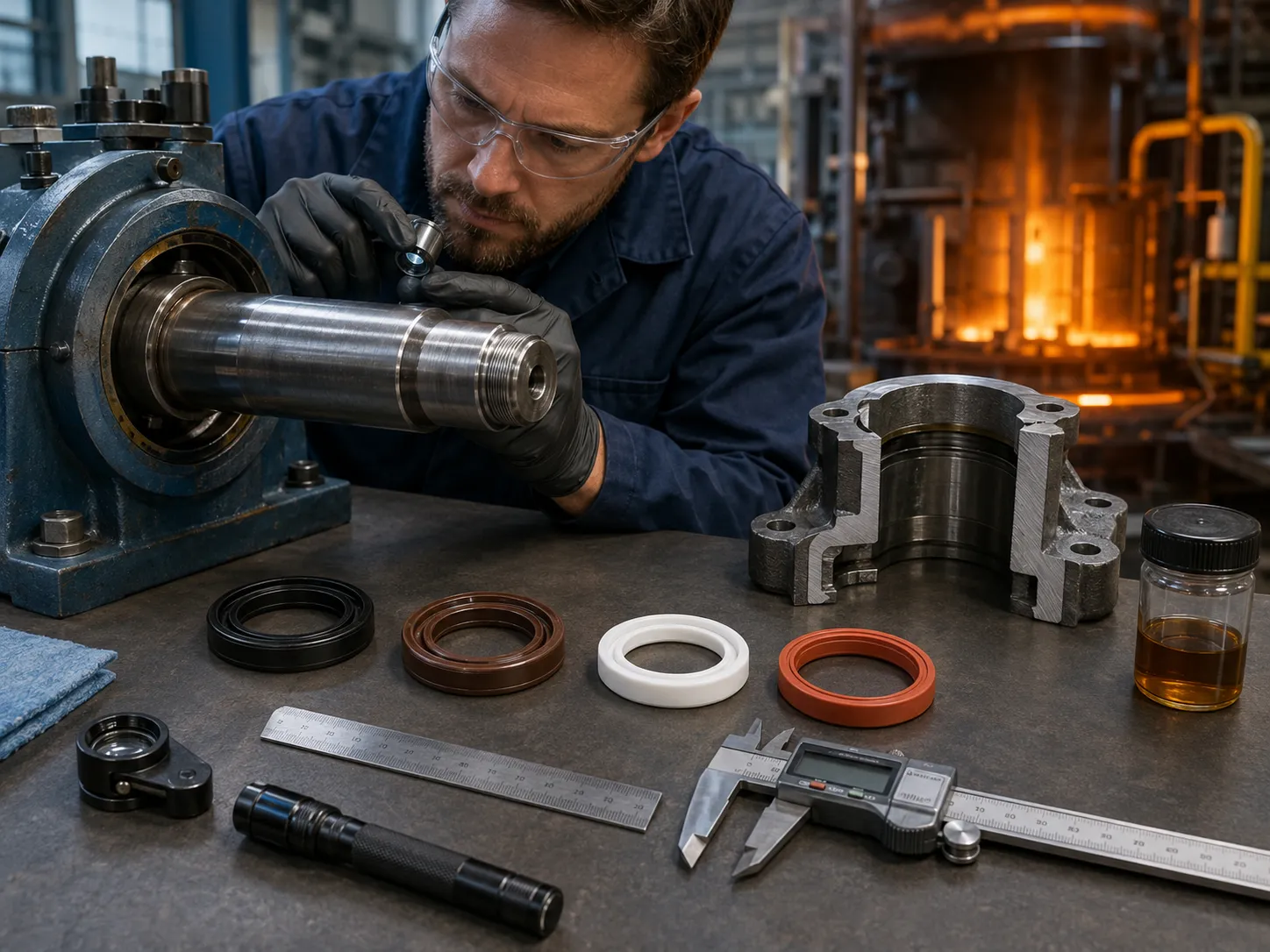
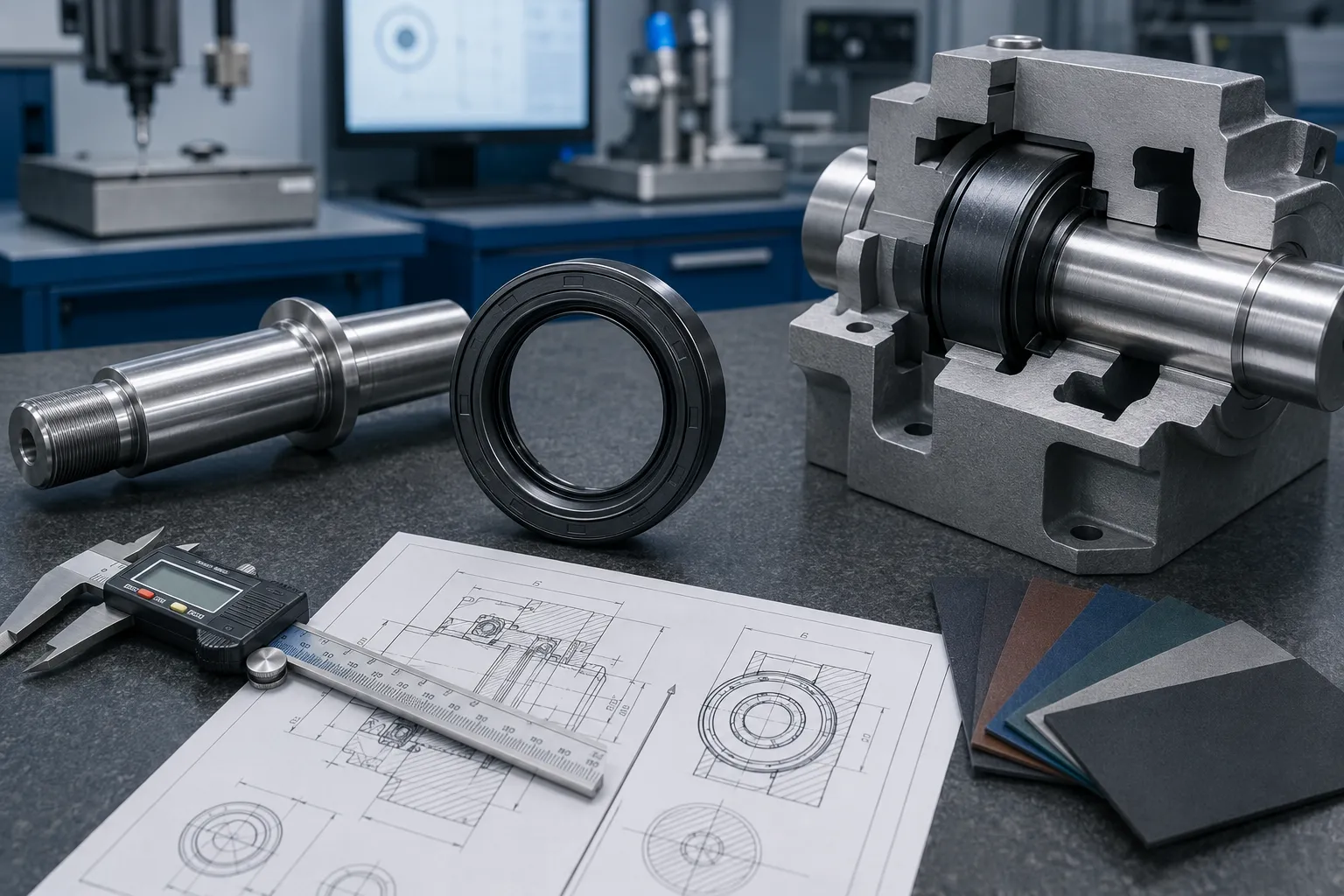
Technical workshop illustration showing the practical checks required before selecting a high-temperature oil seal, including shaft surface inspection, housing measurement, fluid sample review, material samples, and seal profile comparison.
When Should You Use a Custom High-Temperature Oil Seal?
A custom high-temperature oil seal may be needed when a standard catalog seal does not match the application.
Common reasons include:
Non-standard ID, OD, or width
Limited installation depth
Special shaft geometry
High shaft speed
Elevated temperature
Synthetic or aggressive fluid
Fuel exposure
Pressure condition
Need for a special lip position
Shaft wear groove that requires a different contact position
Heavy dust or contamination exposure
Custom spring material
Custom outer diameter design
OEM sample matching
Obsolete or unavailable replacement seal
For these applications, the material should be selected together with the lip design, shaft surface requirement, pressure condition, and installation method.
For more detail, see: Custom Oil Seal Manufacturer for Industrial Applications: Sizes, Materials, and OEM Support.
Conclusion
The best oil seal material for a high-temperature application depends on more than temperature alone.
FKM is often the most practical choice for demanding engine, transmission, fuel, and industrial oil applications because it combines strong heat resistance with good oil, fuel, and aging performance.
ACM can be a practical option for hot lubricating-oil applications, especially in automotive engines and transmissions where standard NBR is no longer sufficient.
PTFE is often the better choice for specialized high-speed, high-temperature, low-friction, or chemically demanding applications, but it requires the correct shaft condition and installation method.
Silicone provides excellent temperature flexibility, especially in wide-temperature applications, but its lower abrasion and tear resistance can limit its suitability for conventional rotating oil-seal lips.
Before ordering a replacement, confirm the full operating condition: temperature, fluid, shaft speed, pressure, shaft condition, seal design, contamination exposure, and installation requirements.
SealVendor supports high-temperature oil seal selection with FKM, ACM, PTFE, silicone-related options, standard rotary seal profiles, sample-based identification, OEM-reference checks, and drawing-based custom requirements.