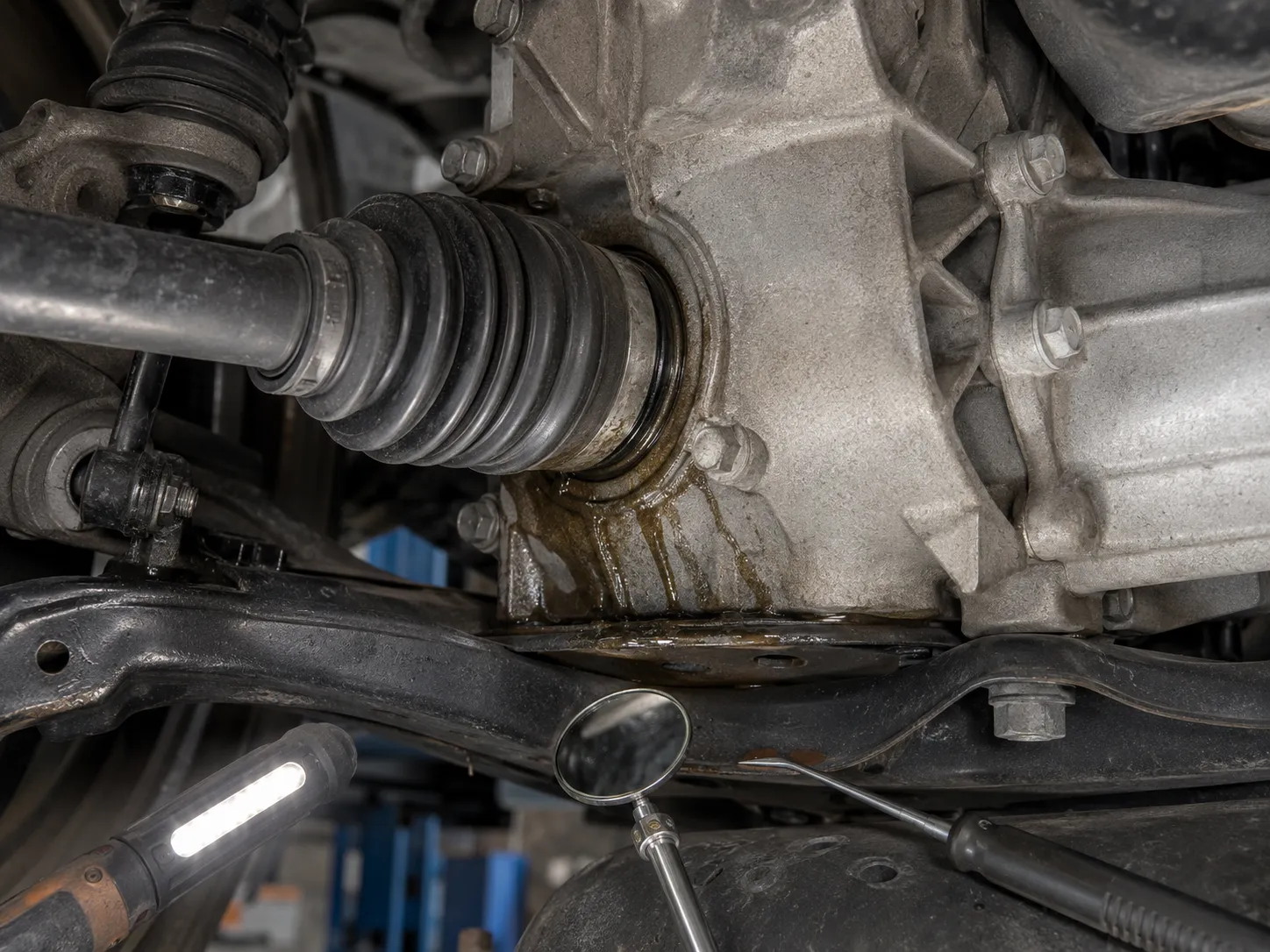
An axle seal leak is a common drivetrain problem, but the exact meaning of “axle seal” can vary by vehicle design.
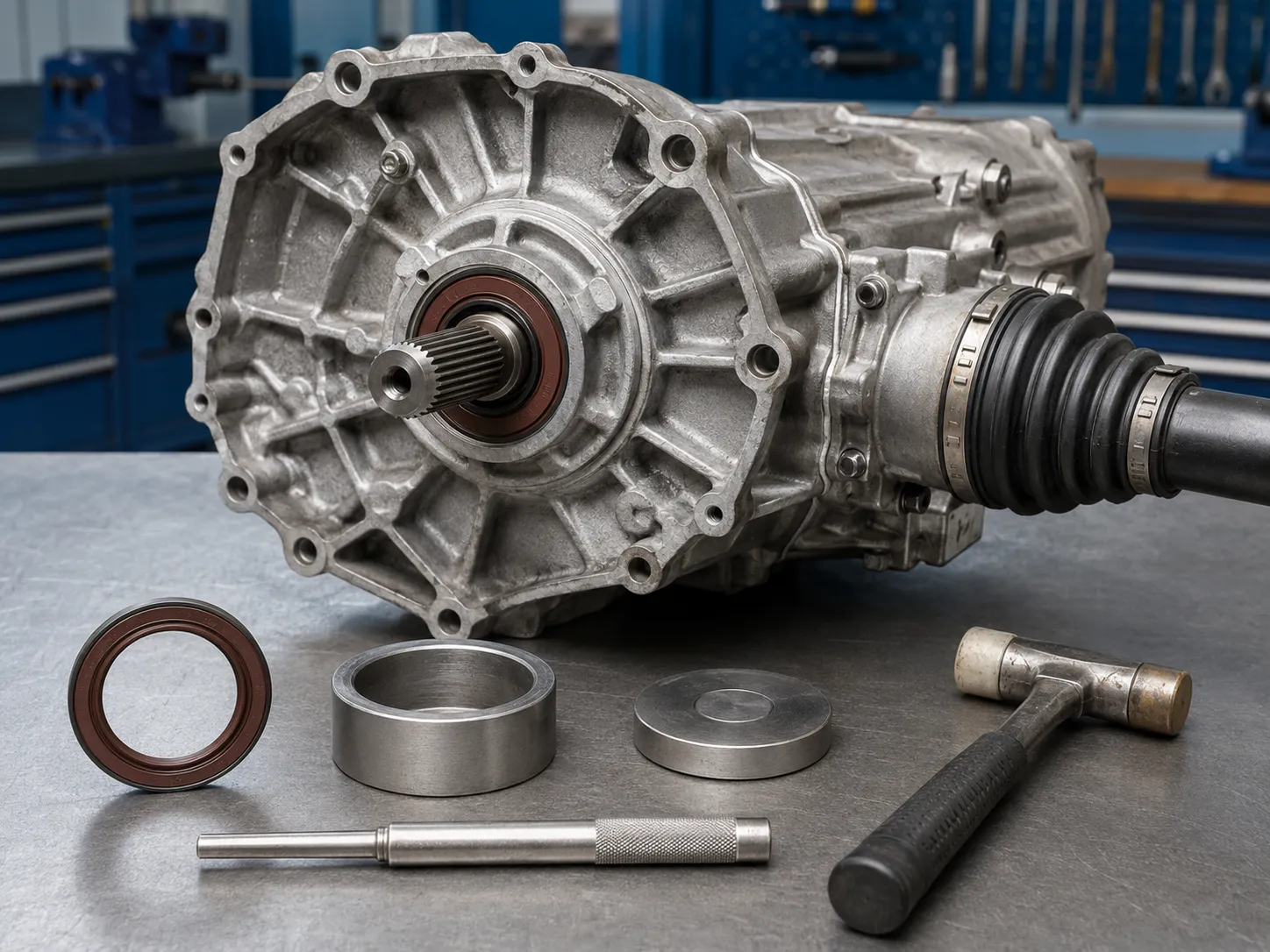
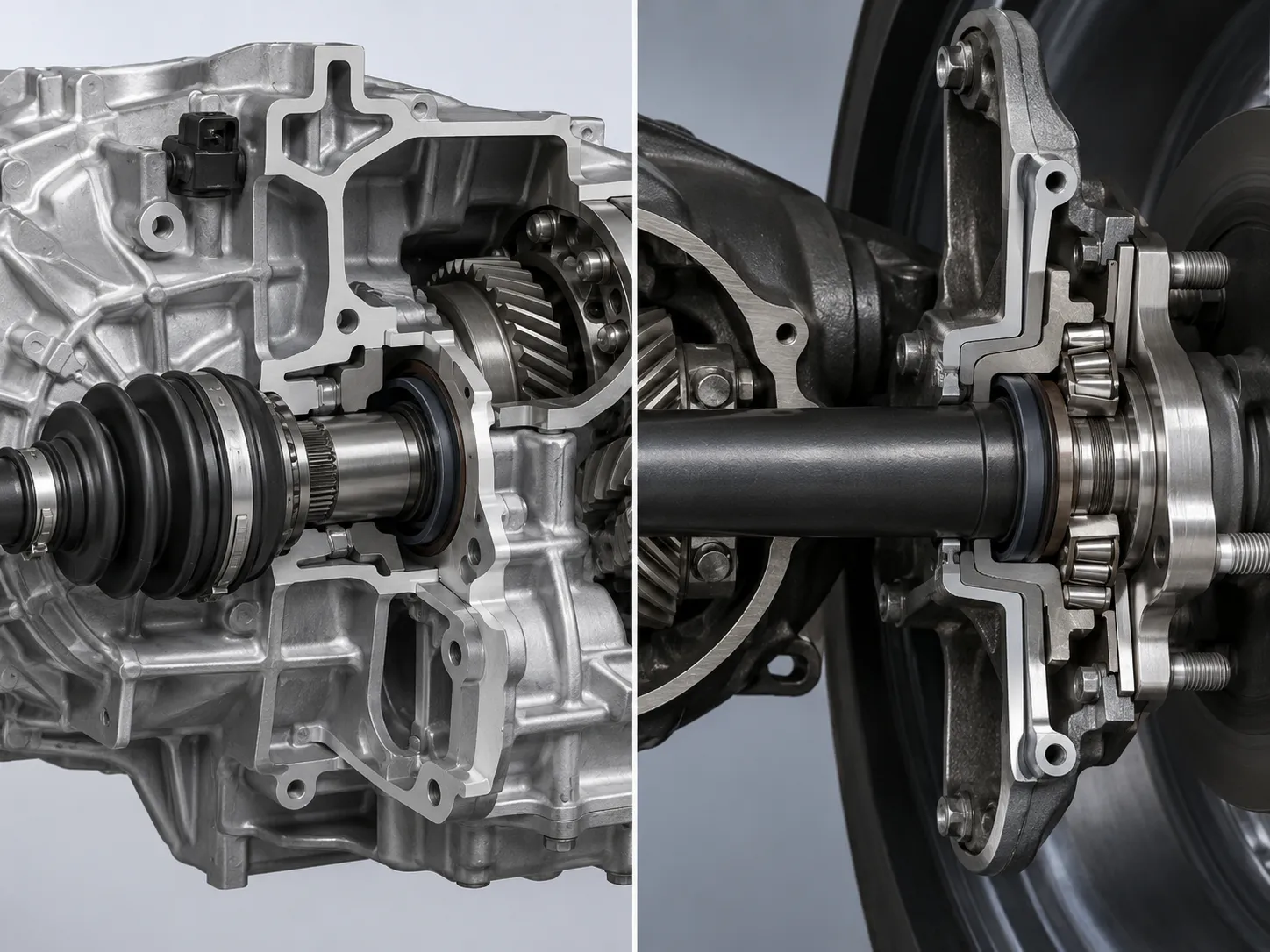
On many front-wheel-drive vehicles, the axle seal is installed where the inner CV axle enters the transmission or transaxle. Its job is to retain transmission fluid while allowing the axle shaft to rotate.
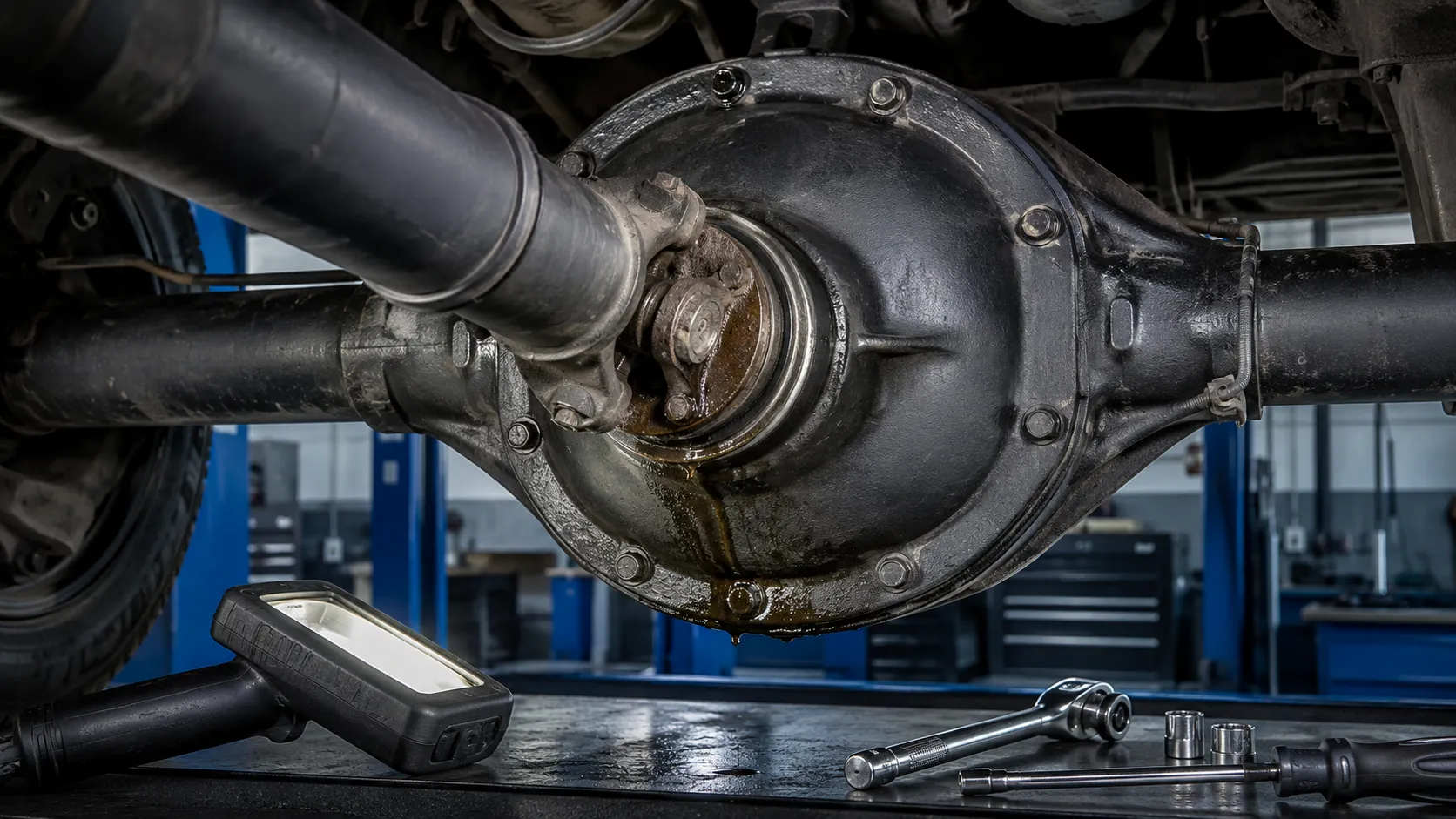
On rear-wheel-drive, four-wheel-drive, commercial, agricultural, and heavy-duty equipment, axle-related seals may be located near the axle shaft, wheel end, differential housing, or hub assembly. Depending on the design, they may retain gear oil, lubricating oil, or grease while helping keep dirt, water, and contaminants away from bearings and gears.
A small seep may not cause an immediate driving problem, but an active axle seal leak should not be ignored. Lost fluid can lead to transmission, differential, bearing, or axle damage. In some cases, leaked fluid can reach brake components, wheel areas, or hot exhaust parts, creating a more urgent safety concern.
This guide explains the common symptoms, causes, diagnosis steps, and replacement considerations for an axle seal leak.
What Is an Axle Seal?
An axle seal is a sealing component installed around an axle shaft or related rotating shaft. It helps retain lubricant inside the transmission, transaxle, differential, axle housing, or wheel-end assembly.
The exact position depends on vehicle and equipment design.
Common axle-related seal locations include:
Front transaxle axle seal
Inner CV axle seal
Rear axle shaft seal
Wheel-end axle seal
Differential axle seal
Hub seal
Transfer case output seal
Axle housing seal
Heavy-duty wheel seal
The seal is usually installed between a rotating shaft and a stationary housing. Its main job is to retain the correct lubricant while preventing dust, moisture, road debris, and other contamination from entering the system.
An axle seal may look like a simple rubber-and-metal component, but it operates in a demanding location. It can be exposed to heat, vibration, shaft movement, road contamination, suspension movement, heavy loads, gear oil, transmission fluid, and repeated temperature changes.
Front Axle Seal vs Rear Axle Seal
The symptoms and repair process can be different depending on whether the vehicle uses a front-wheel-drive transaxle, rear axle, four-wheel-drive system, or heavy-duty axle assembly.
Front Axle Seal
On many front-wheel-drive vehicles, the axle seal is installed where the inner CV axle enters the transaxle or transmission housing.
This seal usually retains transmission fluid.
A front axle seal leak may cause:
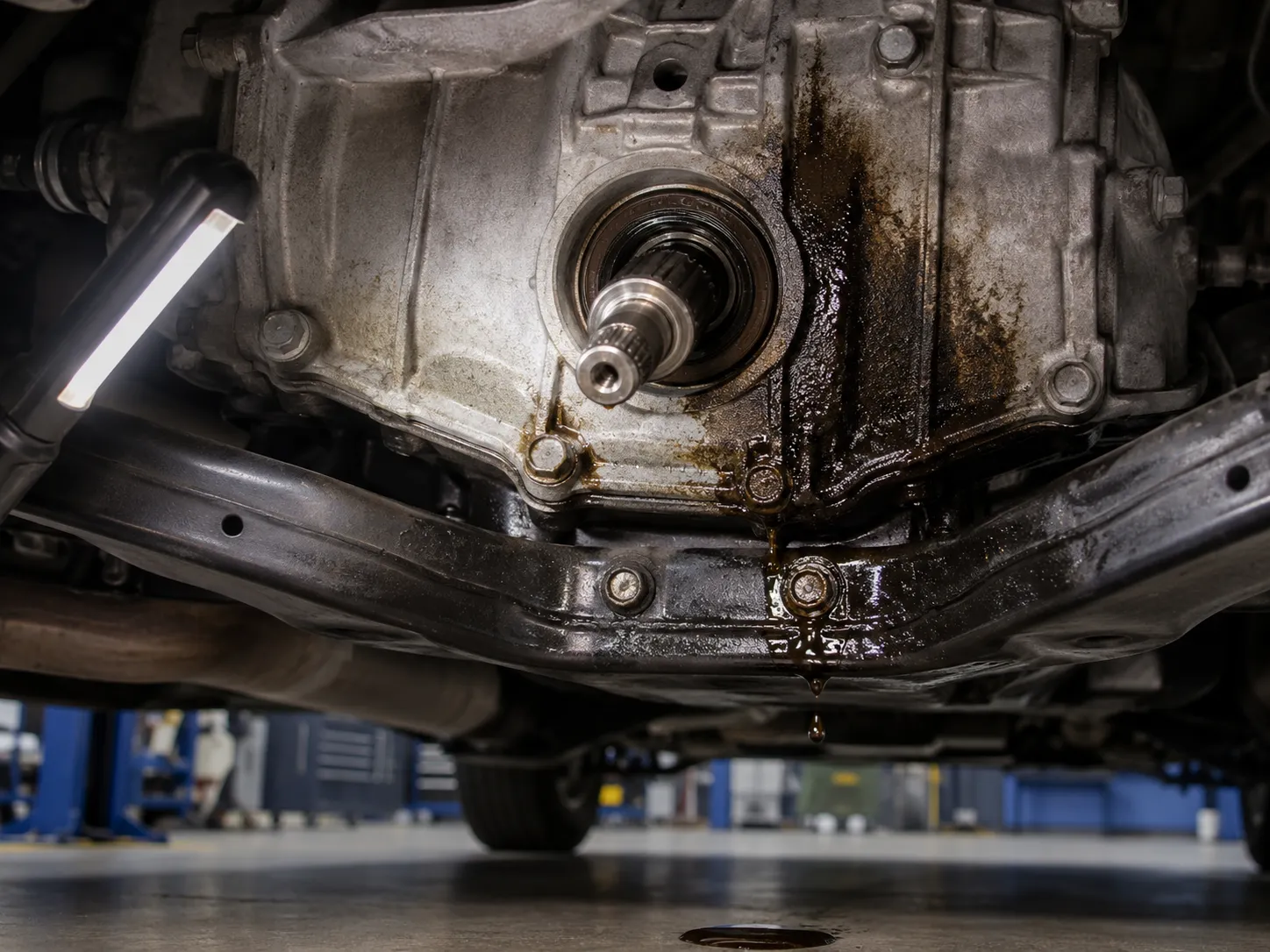
Transmission fluid around the inner CV joint area
Wet fluid near the transaxle housing
Drips near the lower side of the engine or transmission
Fluid loss over time
Transmission shift problems if the fluid level becomes low
The seal can be damaged during axle removal, suspension repair, transmission service, or CV axle replacement.
Rear Axle Seal
On rear-wheel-drive vehicles, trucks, trailers, and many heavy-duty applications, axle seals may be located near the axle shaft or wheel end.
These seals may retain differential gear oil or lubricant inside the axle housing.
A rear axle seal leak may cause:
Gear oil around the wheel hub or backing plate
Wetness near the axle tube or wheel area
Oil contamination on brake components
Differential fluid loss
Noise from bearings or gears if lubrication becomes low
On some rear axle designs, replacing the seal may involve removing the wheel, brake parts, axle shaft, retaining hardware, or wheel hub assembly.
Common Axle Seal Leak Symptoms
The symptoms of an axle seal leak depend on the leak location and the lubricant involved.
Fluid Near the Inner CV Axle
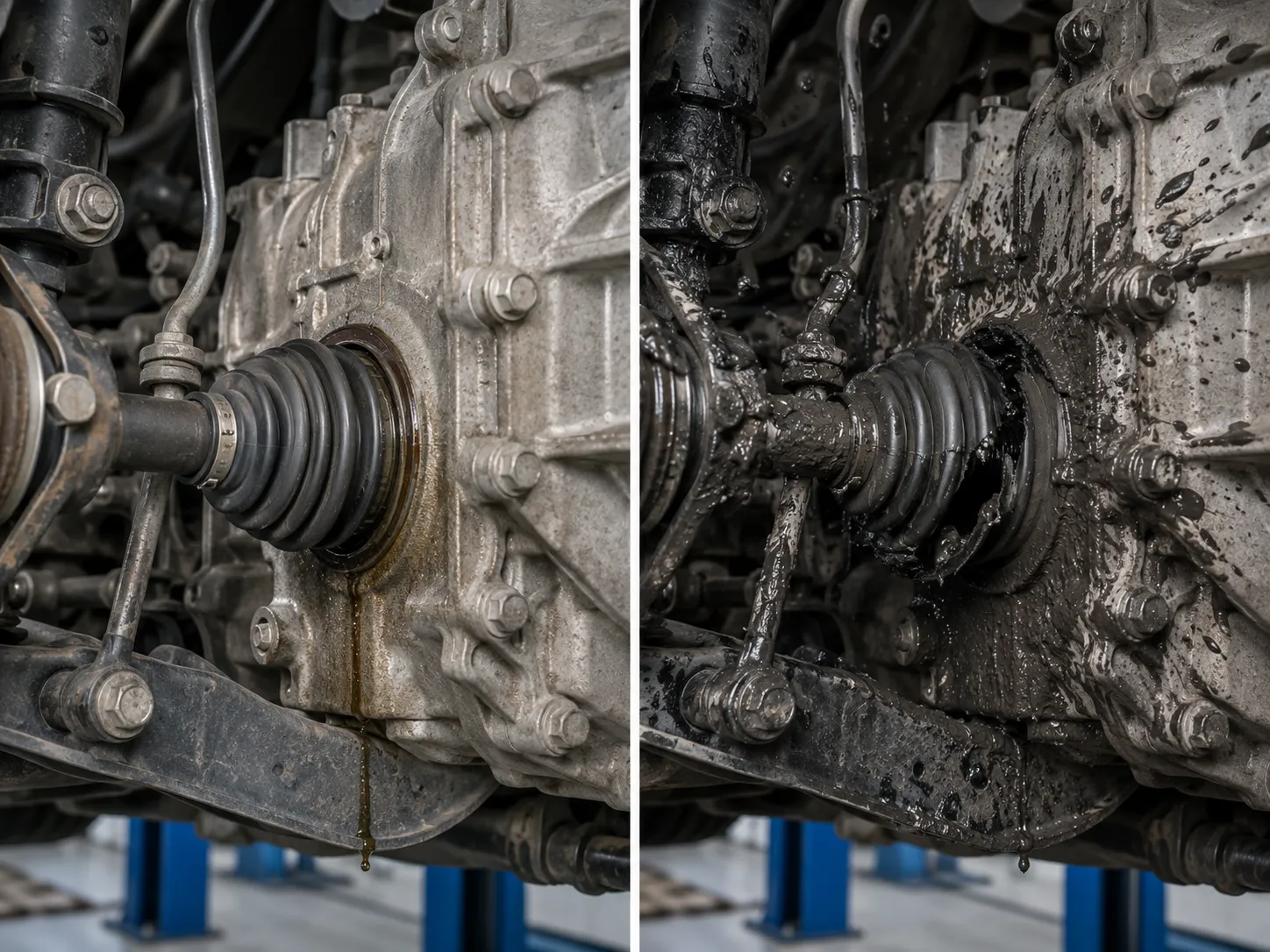
On front-wheel-drive vehicles, one of the most common signs is wet fluid around the point where the inner CV axle enters the transaxle.
The fluid may spread across:
Transmission housing
Inner CV joint area
Lower engine area
Subframe
Suspension components
Underbody panels
Transmission fluid can travel along the housing before it drips to the ground, so the lowest wet area is not always the original leak source.
Fluid Around the Wheel or Brake Area
On rear-wheel-drive and solid-axle vehicles, an axle seal leak may allow gear oil to reach the wheel-end area.
Possible signs include:
Wetness behind the wheel
Oil on the brake backing plate
Fluid on the inner wheel surface
Oily dirt around the axle tube or hub
Strong gear oil smell near the wheel
Brake performance changes if oil reaches brake components
Oil contamination near braking components should be inspected promptly.
Low Transmission or Differential Fluid
An axle seal leak can gradually reduce lubricant level.
Possible symptoms of low fluid may include:
Delayed transmission engagement
Rough or slipping shifts
Transmission whining
Differential humming or growling
Gear noise under acceleration or deceleration
Increased drivetrain temperature
Reduced lubrication performance
A small seep may take time to affect the fluid level. A larger leak can cause a noticeable drop between inspections.
Burning Oil or Gear Oil Smell
Leaked fluid may reach hot exhaust components or spread across heated drivetrain parts.
A burning smell can indicate that lubricant is contacting hot surfaces. It should not be ignored, especially when smoke is visible.
Dirt Buildup Around a Wet Seal Area
Oil attracts dust, road dirt, sand, and debris.
A seal may not appear to be actively dripping, but an oily dirt buildup around the axle or housing can indicate a slow leak.
This is common in older vehicles, agricultural machinery, off-road equipment, and exposed wheel-end applications.
Noise from Bearings or Gears
An axle seal leak does not always cause noise immediately.
However, if fluid loss continues, bearings and gears may operate with insufficient lubrication. This can lead to humming, grinding, whining, rumbling, or growling sounds.
Noise is often a later symptom. It may indicate that the issue has progressed beyond a simple external leak.
Axle Seal Leak vs CV Boot Leak
An axle seal leak is often confused with a torn CV boot.
These are different problems.
A CV boot contains grease around the CV joint. When it tears, grease may be thrown outward around the inside of the wheel, suspension, or underbody.
An axle seal leak usually involves transmission fluid or gear oil escaping where the axle enters the transaxle, differential, or axle housing.
Signs of a CV Boot Leak
A CV boot leak may involve:
Thick grease around the wheel or suspension
Grease sprayed in a circular pattern
Torn or cracked rubber boot
Clicking noise during turns if the joint is worn
Grease concentrated near the CV joint
Signs of an Axle Seal Leak
An axle seal leak may involve:
Thinner fluid near the transaxle or axle housing
Fluid around the inner axle connection
Gear oil or transmission fluid dripping under the vehicle
Wetness near the wheel-end seal area
Fluid level dropping in the transmission or differential
A damaged CV boot and an axle seal leak can happen in the same general area, but they require different repairs.
Common Causes of an Axle Seal Leak
Aging and Heat Exposure
Over time, the elastomer material in an axle seal can harden, shrink, crack, or lose flexibility.
Repeated heat cycles, road use, transmission temperature, differential temperature, and long service intervals can gradually reduce the seal’s ability to maintain contact with the shaft.
Older seals may begin with a light seep and eventually develop a more visible leak.
Shaft Wear or Surface Grooves
The axle shaft or sealing surface may become worn, scratched, corroded, or grooved.
A new seal installed on a damaged shaft surface may continue to leak because the sealing lip cannot maintain a consistent contact path.
Common shaft-related issues include:
Wear grooves from the old seal lip
Rust or corrosion
Scratches from previous repairs
Pitting
Rough shaft finish
Damage during axle removal or installation
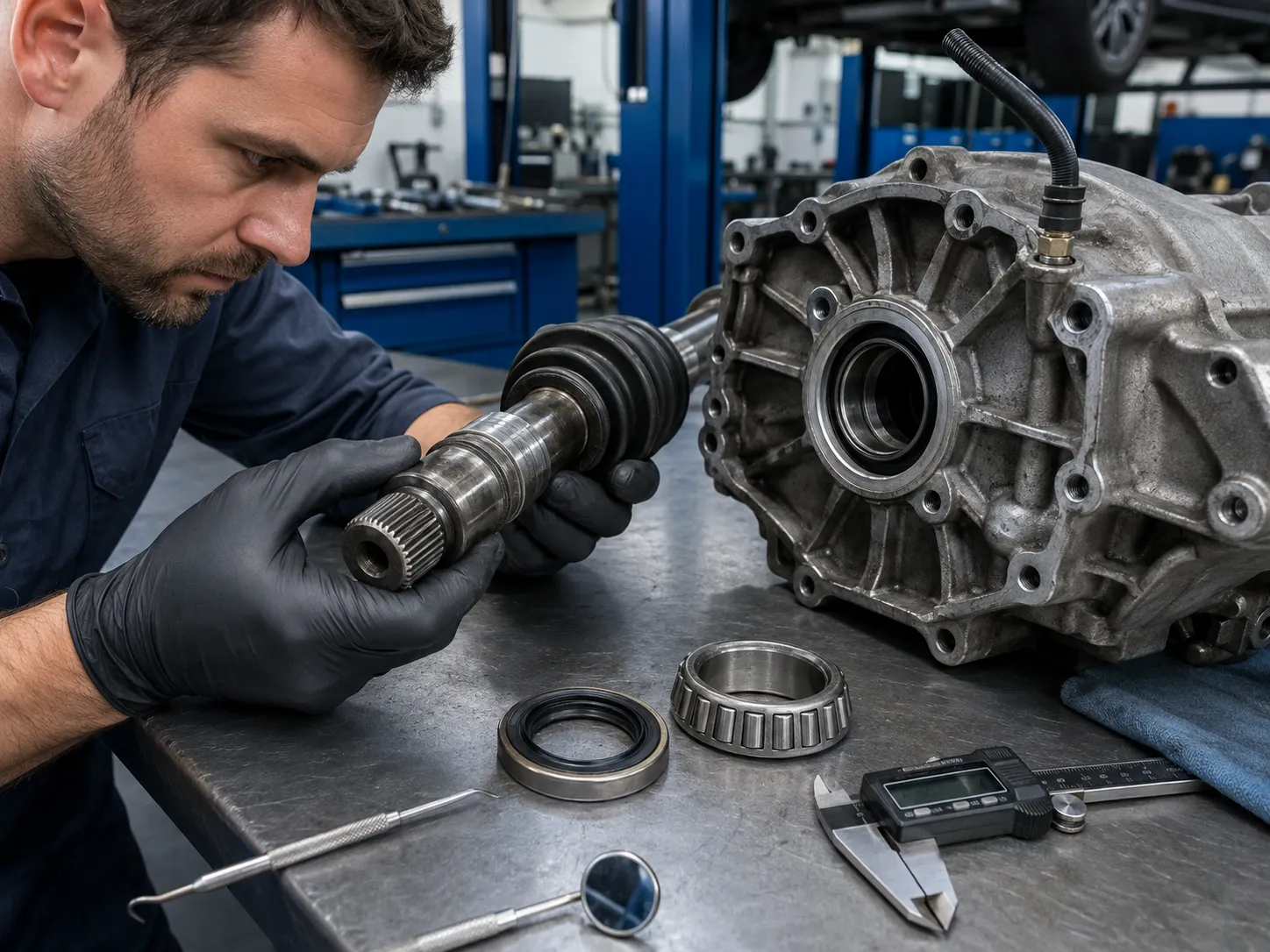
The shaft should be inspected before installing a new seal.
Excessive Bearing Wear or Shaft Movement
An axle seal is designed to work with a stable, correctly aligned shaft.
Worn wheel bearings, axle bearings, differential bearings, or transmission bearings can allow excessive shaft movement. This movement can wear the seal lip unevenly and create a leak.
Possible signs of related bearing problems include:
Wheel play
Axle movement
Humming or growling noise
Vibration
Uneven seal wear
Repeat leakage after replacement
Replacing the seal alone may not solve the problem if the bearing condition is the true cause.
Damaged Seal During Axle Removal or Installation
Axle seals can be damaged during repairs involving:
CV axle replacement
Transmission service
Suspension work
Wheel bearing replacement
Differential repair
Clutch replacement
Transfer case service
Axle shaft removal
The sealing lip may become cut, folded, stretched, or scratched when the axle is inserted.
Sharp splines, edges, or damaged shaft surfaces can also damage a new seal during installation.
Incorrect Seal Size or Type
A seal may leak if the ID, OD, width, lip position, material, or outer diameter design does not match the application.
Two seals can have similar dimensions but differ in:
Material
Main lip design
Dust lip arrangement
Spring configuration
Outer diameter structure
Pressure capability
Installation depth
Shaft contact position
The correct replacement should match the original design or be verified against the actual application.
Excessive Internal Pressure
Transmissions, differentials, and axle housings often rely on ventilation systems or breathers to manage pressure changes.
A blocked breather can allow internal pressure to build up and force lubricant past the axle seal.
This is especially important for:
Differential housings
Heavy-duty axles
Agricultural machinery
Construction equipment
Off-road vehicles
Gearboxes operating at higher temperatures
Replacing the seal without checking the breather can lead to repeat leakage.
Contamination and Water Ingress
Dirt, sand, mud, water, metal particles, and abrasive debris can damage the sealing lip or shaft surface.
This is more common in:
Off-road vehicles
Agricultural equipment
Construction machinery
Commercial vehicles
Trailers
Mining and industrial equipment
Vehicles used in wet or dusty environments
A standard seal may not provide enough protection in severe conditions. The application may require a dust lip, cassette seal, wheel seal, V-ring, or other protection system.
Is It Safe to Drive with an Axle Seal Leak?
A light axle seal seep may allow limited short-distance driving if the fluid level remains correct and the vehicle operates normally.
However, an active leak should be inspected and repaired as soon as practical.
Avoid continued driving when:
Fluid is dripping heavily
Fluid level is low or falling quickly
Transmission shifting becomes delayed, harsh, or erratic
Differential or axle noise develops
Fluid reaches brake components
Fluid is visible around the wheel or tire area
Smoke or burning smell is present
The vehicle is used for towing, off-road driving, long-distance travel, or heavy loads
A warning light appears
The source of the leak is unclear
The main risk is not the seal itself. The risk comes from lubricant loss, component contamination, and possible damage to transmission, differential, bearings, or braking components.
How to Diagnose an Axle Seal Leak
Correct diagnosis is important because several nearby components can leak fluid.
Step 1: Identify the Fluid
Look at the fluid carefully, but do not rely on color alone.
Transmission fluid, gear oil, engine oil, grease, brake fluid, and other fluids may appear different depending on age, temperature, contamination, and service history.
Check the relevant fluid level according to the vehicle manufacturer’s procedure.
Step 2: Clean the Area
A dirty leak area can make diagnosis difficult.
Clean the transaxle housing, axle connection, differential area, wheel-end area, and nearby components. After a short drive or operating period, inspect for fresh fluid.
Fresh fluid near the axle entry point may indicate an axle seal leak.
Step 3: Check the CV Boot
Inspect the inner and outer CV boots for tears, cracks, grease loss, or thrown grease.
A torn CV boot can look similar to an axle seal problem at first glance, especially near the inner axle connection.
Step 4: Inspect the Seal Location
Check the area where the axle shaft enters:
Transmission or transaxle housing
Differential housing
Axle tube
Wheel hub assembly
Transfer case output
Wheel-end assembly
Look for fresh fluid at the seal edge, shaft surface, or housing bore.
Step 5: Check for Bearing Play or Shaft Movement
Excessive axle or wheel movement may point to worn bearings.
A new seal may not last if the shaft or hub has excessive movement.
Step 6: Inspect the Breather System
For differential and axle-housing leaks, inspect the breather hose, vent fitting, and ventilation path.
A blocked breather can create internal pressure and push lubricant past seals.
Step 7: Confirm the Exact Seal Type
Before ordering a replacement, confirm:
Shaft diameter
Housing bore diameter
Seal width
Seal lip structure
Material requirement
Original part number
Axle or transmission model
Installation depth
Lubricant type
Dust-lip requirement
A vehicle-specific repair manual, OEM parts reference, original seal sample, or approved supplier cross-reference can help confirm the correct part.
Axle Seal Replacement Overview
Axle seal replacement procedures vary significantly by vehicle design.
A front-wheel-drive transaxle axle seal replacement may require removing the wheel, suspension connections, axle nut, brake components, and CV axle before the old seal can be removed from the transaxle.
A rear axle seal replacement may require removing the wheel, brake components, axle shaft, wheel hub, retaining clips, or differential components depending on the axle design.
A general replacement process may include the following steps.
1. Confirm the Leak Source
Do not replace the axle seal until the source of the leak is confirmed.
A wet axle area may be caused by a CV boot, transmission pan, differential cover, pinion seal, brake line, shock absorber, or another nearby component.
2. Prepare the Vehicle Safely
Support the vehicle using approved lifting equipment and follow the correct safety procedure.
The vehicle must be stable before wheels, axles, brakes, or drivetrain components are removed.
3. Remove the Required Components
Depending on the design, this may involve removing:
Wheel and tire
Axle nut
Brake caliper and rotor
Suspension connection
Steering connection
CV axle
Driveshaft
Axle shaft
Hub assembly
Retaining hardware
Differential cover or carrier components
The exact process should follow the vehicle-specific service procedure.
4. Remove the Old Seal Carefully
The old seal should be removed without scratching the housing bore or damaging the shaft surface.
Avoid levering directly against delicate aluminum housings, machined surfaces, or bearing areas.
5. Inspect the Shaft and Housing
Before installing the new seal, inspect:
Shaft sealing surface
Wear grooves
Rust or corrosion
Splines and sharp edges
Housing bore condition
Bearing condition
Shaft movement
Breather condition
Lubricant condition
If the shaft surface is damaged, replacing only the seal may not provide a lasting repair.
6. Install the New Seal Correctly
The replacement seal should be installed squarely and evenly using an appropriate installation tool.
Important checks include:
Correct installation direction
Correct depth
Protected sealing lip
Clean housing bore
Correct shaft lead-in
Proper support on the seal outer case
Correct lubricant or installation method where required
Do not strike the seal directly with a hammer. Do not force the lip over sharp splines or edges without a suitable guide or sleeve.
7. Reassemble and Refill the Correct Fluid
After installation, reinstall all components according to the vehicle-specific service procedure.
Refill or top up the correct transmission fluid, gear oil, or lubricant as required.
Do not use an unknown or incorrect fluid. Transmission, differential, and axle lubricant specifications vary by vehicle and application.
8. Check for Leakage After Repair
After a short test drive or operating period, inspect the repaired area again.
Check:
Fluid level
Fresh leakage
Seal position
Drivetrain noise
Transmission shift behavior
Wheel-end contamination
Brake condition if the leak was near the wheel
What Should Be Replaced at the Same Time?
The answer depends on the condition of nearby components and the amount of labor required for access.
Related parts that may need inspection or replacement include:
CV axle
CV boot
Wheel bearing
Axle bearing
Differential bearing
Retaining clip
Axle nut
Hub seal
Wheel seal
Transmission fluid
Differential gear oil
Brake pads or shoes contaminated by oil
Brake rotor or drum contaminated by oil
Breather hose or vent fitting
Shaft repair sleeve
Suspension components removed during access
It is not necessary to replace every nearby part automatically. However, oil-contaminated brake components, damaged bearings, worn shafts, or torn boots should not be ignored.
How to Prevent Repeat Axle Seal Leaks
A successful repair should correct both the leak and the reason the seal failed.
Key prevention steps include:
Use the correct seal size and design
Match the material to the lubricant and temperature
Inspect the shaft surface before installation
Repair grooves or use an appropriate repair sleeve when necessary
Check wheel, axle, and differential bearing condition
Confirm that the shaft has no excessive movement
Clean the housing bore thoroughly
Inspect axle and differential breathers
Install the seal squarely at the correct depth
Protect the sealing lip during axle installation
Refill with the correct lubricant
Avoid overfilling the axle, differential, or transmission
Inspect the area after initial operation
An axle seal is part of a larger drivetrain system. The shaft, bearings, housing, ventilation system, lubricant, and installation method all affect seal life.
When Should You Seek Professional Repair?
Professional repair is recommended when:
The leak source is unclear
Transmission fluid level cannot be checked correctly
The vehicle has an automatic transmission, CVT, or dual-clutch system with a specific service procedure
The differential requires internal disassembly
The seal leak is near brake components
The vehicle has wheel-bearing noise or axle play
The axle is difficult to remove
The vehicle uses four-wheel drive or all-wheel drive
The seal failed soon after a previous replacement
The shaft or housing appears damaged
The repair requires special tools, torque procedures, or fluid-level procedures
Some axle seal replacements are straightforward for experienced technicians. Others require drivetrain disassembly, alignment-sensitive reassembly, fluid-level procedures, or bearing inspection.
Conclusion
An axle seal leak can allow transmission fluid, gear oil, or lubricant to escape from the transaxle, differential, axle housing, or wheel-end assembly.
Common symptoms include fluid near the inner axle connection, wetness around the wheel area, low transmission or differential fluid, burning smell, oily dirt buildup, and drivetrain noise.
The most common causes are aging seals, shaft wear, bearing movement, damaged installation surfaces, improper installation, blocked breathers, contamination, or incorrect replacement seal selection.
A small seep may allow limited short-distance driving when fluid levels are correct and there are no warning signs. However, heavy leakage, low fluid, transmission problems, wheel-area contamination, brake contamination, smoke, or drivetrain noise should be treated as urgent.
Before replacing the seal, confirm the true leak source, inspect the shaft and housing, check bearing condition, verify the breather system, and select the correct seal type, material, and dimensions.
For axle seal selection, SealVendor can support standard transaxle, axle shaft, wheel-end, gearbox, and industrial oil seal options, including material matching, sample-based identification, OEM-reference checks, and drawing-based custom requirements.